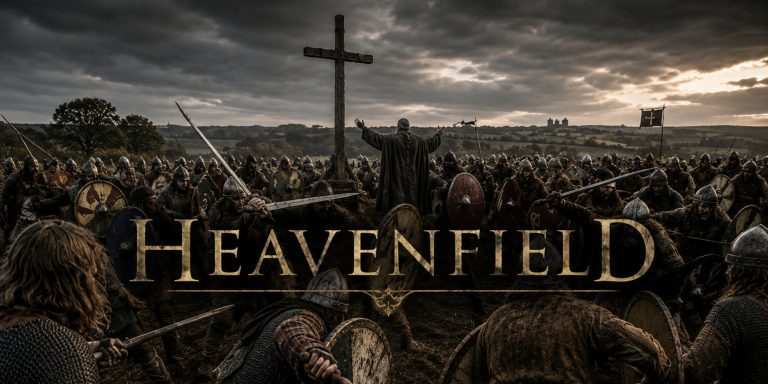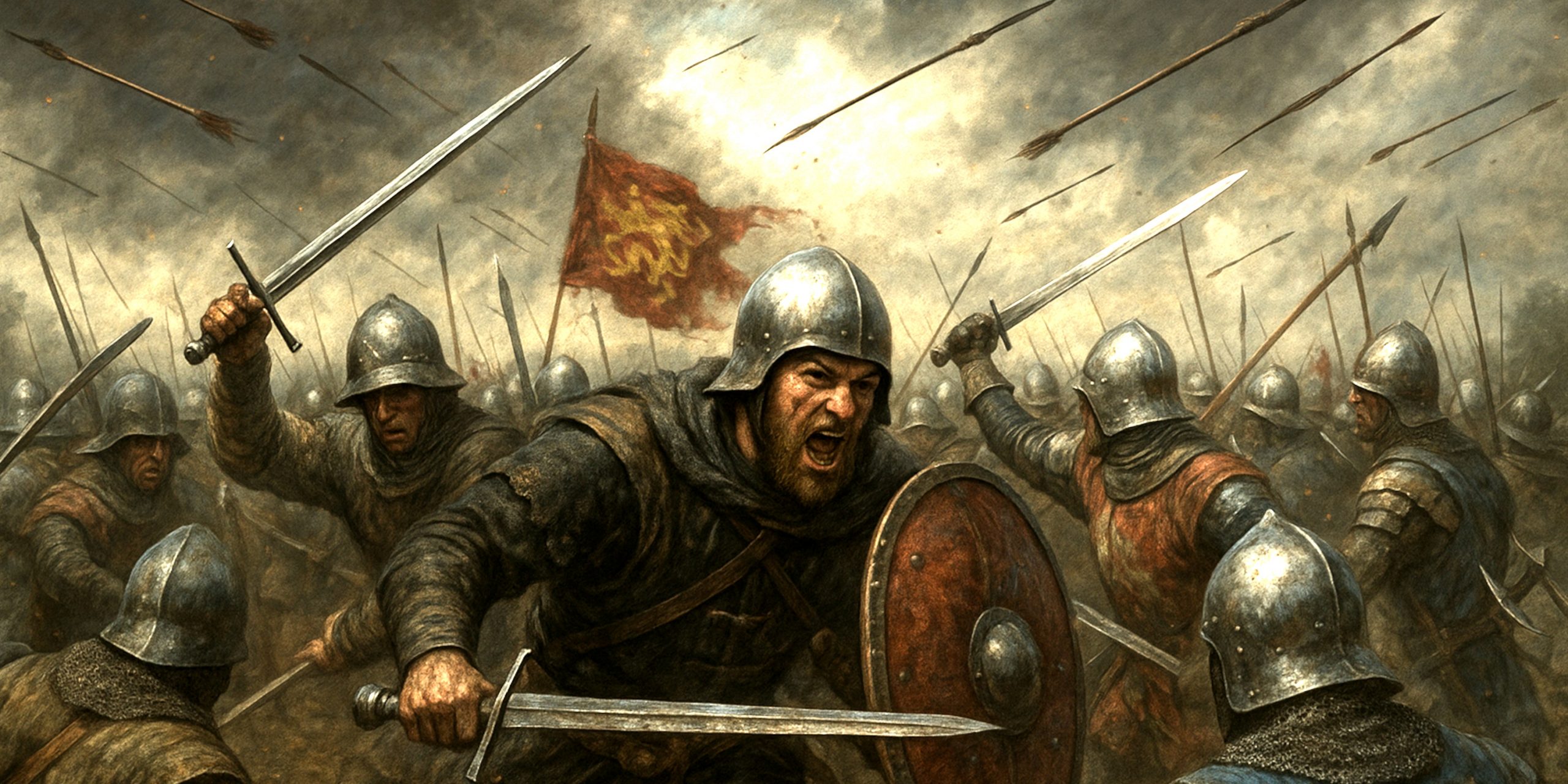
The Second Battle of St Albans, fought on 17 February 1461, has always struck me as one of those moments where the Wars of the Roses shows its unpredictable temperament. One month the Yorkists are confident, the next they are scrambling up Hertfordshire banks wondering how on earth the Lancastrians managed to outmanoeuvre them. The field north of the town witnessed a sharp, fast encounter that threw military reputations into question and reminded every noble present that loyalty in this age had the shelf life of a ripe pear.
Forces
The two armies at St Albans differed not only in number but also in spirit. Margaret of Anjou’s Lancastrian host carried the zeal of a faction fighting its way back from the brink. Warwick’s Yorkists, on the other hand, were stretched thin across winter roads and believed their well prepared defensive position would be enough.
Leaders
| Side | Principal commanders | Notes |
|---|---|---|
| Yorkist | Richard Neville, Earl of Warwick | Directed defences around St Albans. |
| Yorkist | Duke of Norfolk (absent) | Reinforcements that never arrived in time. |
| Yorkist | Earl of March (later Edward IV) | Not present, raising troops in the Welsh Marches. |
| Lancastrian | Queen Margaret of Anjou | Driving force behind the Lancastrian resurgence. |
| Lancastrian | Henry Beaufort, Duke of Somerset | Key battlefield commander. |
| Lancastrian | Andrew Trollope | Veteran tactician responsible for the crucial outflanking. |
Estimated Troop Composition
Figures vary, though contemporary comments suggest the Lancastrians held a clear numerical edge.
| Side | Estimate | Composition |
|---|---|---|
| Yorkist | c. 7,000 | Retainers from Warwick’s affinity, household men at arms, archers, billmen, some cavalry. |
| Lancastrian | c. 15,000 | Northern levies, men at arms, archers, light horse, and experienced Burgundian trained soldiers under Trollope. |
Arms and Armour
A February campaign in Hertfordshire would have been bitterly cold. The typical soldier carried equipment that blended familiarity, a dash of fashion, and whatever their lord could afford.
Yorkist forces
- Sallet helmets with long tail plates, brigandines, jack coats, splint arm defences.
- Longbows in large numbers, supplemented by bills and falchions.
- Men at arms typically carried arming swords with a stiff, tapered blade suitable for thrusting into armour gaps. Oakeshott type XV and XVI swords were common among retainers.
- Some heavier fighters used poleaxes, a favourite for cracking plate.
Lancastrian forces
- Similar protective kit, though northern levies often wore quilted jacks and kettle hats.
- A noticeable presence of billhooks and glaives.
- Veteran troops under Trollope favoured longer reach weapons such as pollaxes and halberds.
- Swords tended to be arming swords with straight quillons, sometimes accompanied by rondel daggers for close fighting.
History and Strategic Context
After the Yorkist victory at Northampton in 1460, King Henry VI was in Warwick’s custody. Queen Margaret rallied support across the north and marched south with a swelling army. Her aim was clear. Recover her captive husband and sweep the Yorkists aside before Edward, Earl of March, could join Warwick.
Warwick expected her advance and fortified St Albans with trenches, cannon placements, and barricades. He assumed Margaret would attack frontally. Few commanders have suffered so much from trusting their own diagrams.
Trollope identified a woodland track that curled behind the Yorkist line. The Lancastrians used it to turn the position and roll up the defences. The Yorkist army collapsed in patches, and panic in the streets of St Albans followed. Henry VI was found sitting beneath a tree, apparently serenely unaware of the fight. One does wonder how much easier fifteenth century politics would have been had everyone shared his detachment.
Battle Timeline
| Time | Event |
|---|---|
| Dawn, 17 Feb | Lancastrians advance from Dunstable, using wooded routes to mask movement. |
| Morning | Trollope’s detachment turns the Yorkist flank, striking unprepared positions. |
| Late morning | Warwick attempts to reorganise lines around the town’s approaches but is driven back. |
| Midday | Yorkist forces begin to disintegrate, many fleeing through the streets. |
| Afternoon | Lancastrians recover King Henry VI and re establish their authority. |
| Evening | Yorkist survivors retreat towards London, awaiting Edward of March’s arrival. |
Contemporary Voices
Paston letters and chroniclers offer vivid, if often partisan, impressions.
One Yorkist supporter wrote:
“Somerset came upon them in such wise that our men wist not which side to turn, nor could any stand fast long enough to draw breath.”
A Lancastrian chronicler claimed:
“The queen’s grace had the victory and that right graciously, for God favoured her cause.”
It must be said, God appears to have favoured nearly every cause at some point in the Wars of the Roses, which shows he had a generous sense of rotation.
Archaeology
Modern archaeology at St Albans faces the usual obstacle of urban development. Much of the battlefield has been altered by roads, houses, and gardens. Even so, surveys of the fields north of the town have produced a handful of late medieval arrowheads and buckles. These finds are consistent with archery skirmishing near the medieval road.
Topographical study has confirmed how wooded the area once was. The presence of dense tree lines supports the accounts of the Lancastrian flanking manoeuvre. Every so often, a metal detectorist unearths something small, like a strap end or rivet, that reminds us that entire armies once clattered through these quiet suburbs.
Outcome and Legacy
The battle gave Margaret a short lived resurgence. Henry VI was restored to his entourage, and Warwick’s aura of invincibility dimmed considerably. Yet Margaret’s triumph could not outweigh the momentum gathering under Edward of March. Within weeks, Edward entered London in triumph and was proclaimed King Edward IV. The Lancastrian victory at St Albans was a spark that failed to catch.
For historians, the battle remains a case study in the consequences of faulty assumptions. Warwick placed his faith in a static defence against a commander who preferred movement. It was a lesson the Yorkists absorbed quickly, though not always effectively, as Towton soon demonstrated.
Watch the documentary: