Ironclad makes medieval castle ownership look like an exceptionally poor investment. The walls are impressive, the views are decent, and then Paul Giamatti arrives with an army and a deeply personal objection to your continued existence.
Jonathan English’s 2011 action film turns the siege of Rochester Castle into a desperate stand against King John. James Purefoy supplies the battered heroism, Brian Cox brings conviction, and Giamatti behaves as though every limitation on royal authority has been introduced specifically to ruin his afternoon.
It is bloody, uneven and sometimes surprisingly effective. As a medieval action film, Ironclad has plenty to offer. As an account of 1215, it needs careful handling.
What Is Ironclad About?
Set during the conflict that followed Magna Carta, Ironclad follows a small band of defenders attempting to hold Rochester Castle against King John’s forces.
At its centre is Thomas Marshal, a fictional Templar knight played by James Purefoy. Alongside Baron Albany, played by Brian Cox, he joins a resistance whose survival depends on the castle’s defences, dwindling supplies and the possibility of help arriving before everything collapses.
The premise is essentially a last-stand adventure in medieval clothing. A handful of distinctive fighters face an overwhelming enemy, with personal loyalties tested as the siege tightens. The historical setting gives that familiar structure an unusually strong location. filmsandfestivals.britishcouncil.org
You do not need a working knowledge of Plantagenet politics to follow it. You do need a reasonable tolerance for dismemberment.
Cast and Performances
| Actor | Character | What they bring to the film |
|---|---|---|
| James Purefoy | Thomas Marshal | Physical conviction and a restrained, troubled central presence |
| Paul Giamatti | King John | Fury, wounded pride and an intimidating sense of entitlement |
| Brian Cox | Baron Albany | Authority and belief in the defenders’ cause |
| Kate Mara | Lady Isabel | A personal storyline within the siege |
| Derek Jacobi | Reginald de Cornhill | Anxiety and vulnerability inside the castle |
| Jason Flemyng | Becket | Rough humour and energy among the defenders |
| Mackenzie Crook | Marks | A distinctive supporting presence |
| Charles Dance | Archbishop Langton | Political and ecclesiastical authority |
The principal cast is a considerable strength, even when individual characters receive limited development.
Purefoy looks convincing as someone who has spent far too much of his life fighting. His restraint suits Marshal’s religious conflict, although the screenplay sometimes leaves him stranded between deliberate silence and a shortage of things to say.
Giamatti takes the opposite approach. His John is theatrical, vindictive and almost permanently offended. The performance will be excessive for some viewers, but it gives the film an energy that its quieter scenes occasionally lack.
Cox provides the necessary counterweight. He makes Albany’s commitment feel substantial enough to explain why anyone would remain inside this increasingly terrible accommodation.
Why the Siege Works
The castle is Ironclad’s strongest dramatic asset.
Its confined spaces give the fighting consequences beyond the immediate exchange of blows. A lost position means less room to manoeuvre. Damage to the defences makes the next attack harder to survive. Wounded defenders remain a problem after the action sequence ends.
I find the film most engaging when it stays with that practical pressure. The question becomes less about who is the finest swordsman and more about how long exhausted people can keep functioning.
There is also something effective about the absence of comfort. The interiors feel cold, the defenders look depleted, and safety is always provisional. Holding a fortress begins to resemble being trapped inside a building that everyone outside is determined to dismantle.
The limitation is repetition. Another assault can increase the body count without revealing much more about the people involved. At just over two hours, the film could have used tighter pacing between its major confrontations.
Sword Fighting, Weapons and Armour
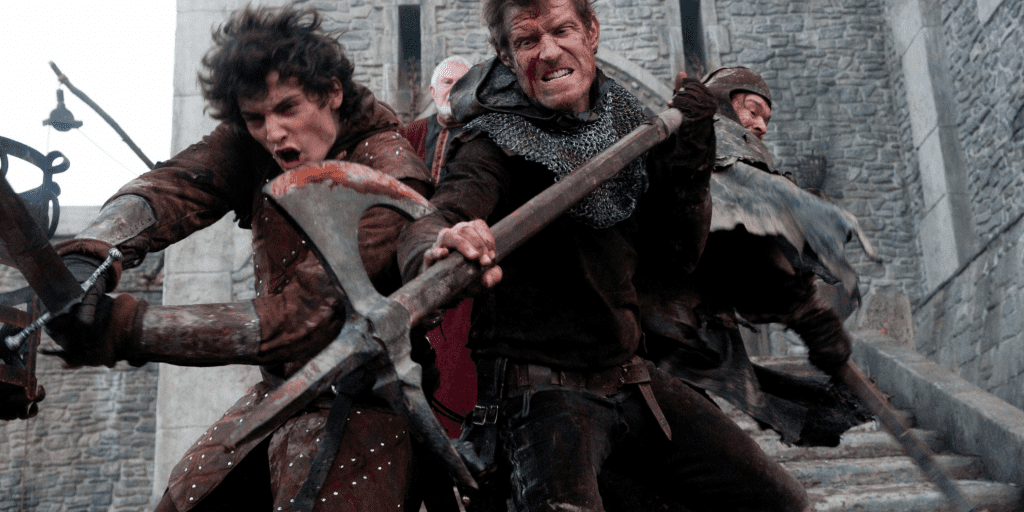
The combat is forceful, crowded and deliberately unpleasant. Fighters stumble, grapple and lash out in spaces that leave little room for elegant exchanges.
That physical disorder can be convincing. The exaggerated cutting power of the weapons is another matter.
A fight looking painful does not automatically make it historically accurate. Ironclad frequently uses spectacular injuries to communicate danger, sometimes at the expense of believable weapon behaviour.
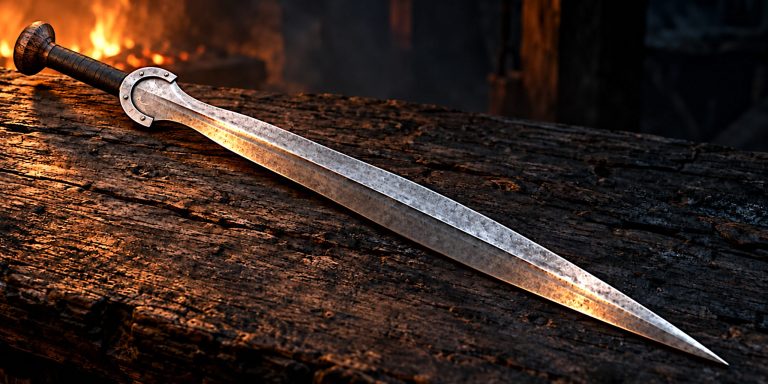
Marshal’s conspicuously large two-handed sword is especially worth questioning. A conventional knightly sword provides a more useful starting point for understanding the period: a straight, double-edged blade with a cruciform hilt. Surviving medieval examples demonstrate that recognisable form, although their proportions varied.
The film’s equipment should therefore be assessed as a mixture of period influence and cinematic styling.
| Element | How to read it |
|---|---|
| Mail and surcoats | Help establish the early medieval visual setting |
| Oversized swordplay | Gives the hero a distinctive silhouette, with questionable representativeness for 1215 |
| Grappling and close combat | Communicate the restrictions of fighting inside a fortress |
| Extreme cutting effects | Serve the action film’s appetite for spectacle |
| Battered equipment and exhausted fighters | Strengthen the atmosphere without proving technical authenticity |
For sword enthusiasts, there is plenty to discuss. Calling the choreography a reliable reconstruction of medieval fencing would be a considerable stretch.
How Historically Accurate Is Ironclad?
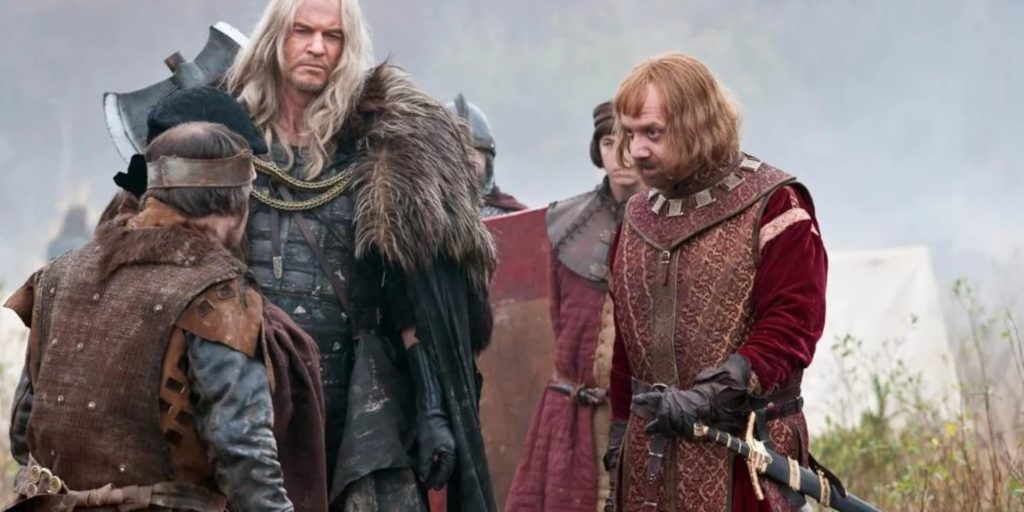
The siege was real. The film’s particular band of heroes and its political framing are heavily dramatised.
King John besieged Rochester Castle in 1215 during the First Barons’ War. Royal forces bombarded the keep and undermined its south-east corner. The defenders eventually surrendered through starvation. The film’s resolution should not be mistaken for that historical outcome.
Several distinctions matter.
Magna Carta was sealed, rather than signed. John accepted it under pressure in June 1215, but the settlement rapidly failed. Papal annulment followed in August, and civil war resumed.
The rebels were not campaigning for modern democracy. The charter addressed royal government, legal protections and powerful vested interests within a deeply unequal society. Its later constitutional significance should not be projected wholesale onto the motives of everyone fighting in 1215.
Marshal is a fictional protagonist. His presence allows the film to explore religious vows, violence and personal desire, but viewers should not read his story as the biography of a documented Rochester defender.
The film simplifies religion and allegiance. A struggle involving royal authority, baronial interests and papal intervention becomes a cleaner confrontation between tyranny and resistance. The real political landscape was considerably less convenient for a screenplay. The pope’s decision to annul Magna Carta is a particularly useful reminder of that complexity.
These liberties do not prevent the film from working. They do change what we can reasonably learn from it.
The Real Siege Detail Stranger Than Fiction
One of Rochester’s most memorable historical details involves pigs.
John’s engineers undermined the keep, supporting the excavated masonry with timber. Pig fat helped fuel the fire that burned those supports, bringing down the south-east corner. The defenders then continued resisting within the surviving portion of the building before hunger forced surrender.
It is an excellent example of siege warfare depending on labour, materials and engineering.
Films naturally favour the person swinging a sword. The person organising timber, digging and fuel can be rather more important to the outcome.
Where the Film Falls Short
The supporting defenders are memorable more often for their appearance or manner than for fully developed personalities. That keeps the story moving, but it reduces the emotional force when the siege begins taking its toll.
The relationship between Marshal and Isabel also has less room to develop than it needs. His vows create an obvious conflict, yet their connection sometimes feels like an obligation of the screenplay rather than something emerging naturally from these particular people.
Then there is the violence. Its severity initially establishes the stakes, but repeated mutilation can become numbing. Eventually, another appalling injury adds less than a better-written conversation might have done.
I would have traded a little of the anatomical enthusiasm for more time with the defenders.
Is Ironclad Worth Watching?
Ironclad is worth watching if you enjoy siege films, committed performances and medieval action with very little interest in restraint.
Its strongest qualities are the mounting pressure inside the castle, Purefoy’s physical presence and Giamatti’s spectacularly hostile king. Its weaknesses are thin characterisation, uneven pacing and a tendency to treat greater brutality as greater authenticity.
Viewers seeking careful political history or technically reliable sword fighting will find plenty to challenge. Those after a grim last stand may find its rough edges easier to forgive.
My verdict: an entertaining, flawed medieval action film whose atmosphere is more persuasive than its history. It gives Rochester’s siege a powerful sense of desperation, even while taking substantial liberties with the people, politics and outcome.