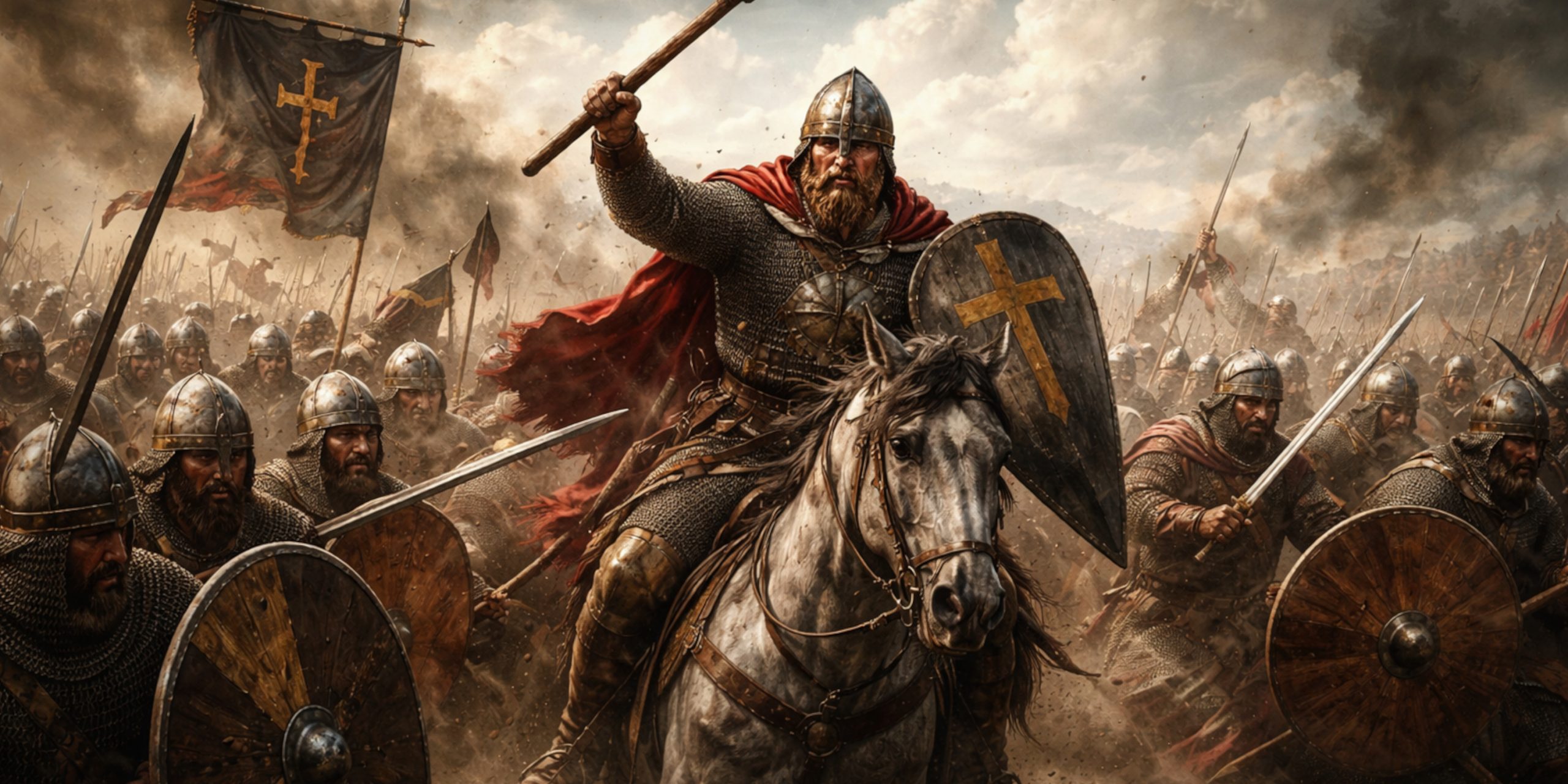
Charles Martel sits in that rare category of figures who changed the direction of a continent without ever wearing a crown. He ruled as Mayor of the Palace, not as king, yet his authority over the Frankish world was absolute. He fought almost constantly, reorganised how armies were raised and paid, and laid the foundations for the Carolingian dynasty that would soon dominate western Europe.
He is often reduced to a single moment at Tours in 732. That sells him short. Martel was not a one battle wonder. He was a hard edged political survivor, a ruthless consolidator of power, and a military organiser who understood that wars are won long before the first spear is raised.
Early Life and Rise to Power
Charles was born around 688, the illegitimate son of Pippin of Herstal, the most powerful Frankish noble of his day. Illegitimacy mattered, and when Pippin died in 714 Charles was sidelined, imprisoned, and written off by rivals who assumed the game was over.
It was not.
Within a few years Charles escaped confinement, gathered supporters, and fought his way back into relevance. By 718 he had defeated rival claimants and secured his position as Mayor of the Palace in Austrasia and Neustria.
This mattered because the Merovingian kings were effectively ceremonial by this point. Real power lay with the Mayor. Charles understood that title was enough, as long as he controlled land, armies, and loyalty.
Consolidation of the Frankish Realm
Once in control, Martel spent the next two decades putting out fires across the Frankish world.
Key challenges included:
- Rival Frankish nobles who resisted central authority
- Frisian and Saxon resistance along the northern frontiers
- Aquitaine, which operated as a semi independent southern power
His campaigns were not glamorous. They were repetitive, seasonal, and often brutal. That was the point. Martel aimed to make resistance pointless through exhaustion and inevitability.
By the late 720s, the Frankish heartlands were firmly under his control. This stability made everything else possible.
The Battle of Tours and Its Meaning
Context
In 732, an Umayyad raiding army under Abd al Rahman crossed into Gaul from Al Andalus, pushing north after earlier successes in Septimania and Aquitaine. This was not a full scale conquest force, but it was large, mobile, and confident.
Martel intercepted the army somewhere between Tours and Poitiers.
The Engagement
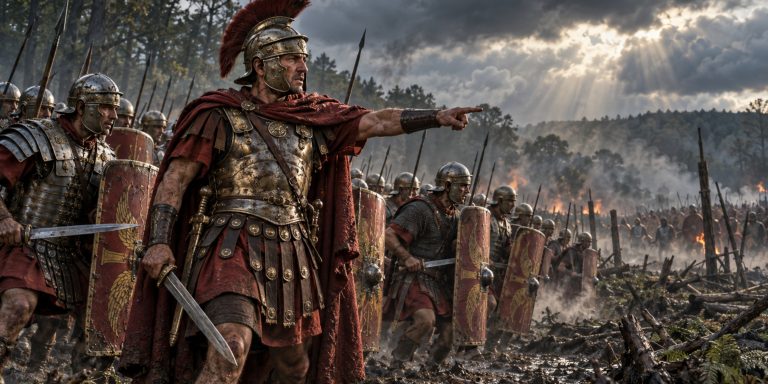
The Frankish army was built around disciplined infantry. Martel chose ground carefully, likely wooded or uneven, to blunt cavalry movement. His men formed a dense, shielded formation and absorbed repeated attacks.
When Abd al Rahman was killed during the fighting, Umayyad cohesion collapsed. The army withdrew under cover of night.
Why It Matters, and Why It Is Overstated
Tours did not single handedly save Europe. Islamic rule in Iberia remained strong for centuries. However, the battle mattered because:
- It halted northward Umayyad momentum into Frankish territory
- It confirmed Martel as the dominant military power in Gaul
- It reinforced the effectiveness of disciplined infantry against cavalry
Martel’s real achievement was not the victory itself, but the system that made it possible.
Arms, Armour, and the Frankish Army
Charles Martel inherited a military culture in transition and pushed it further.
Typical equipment included:
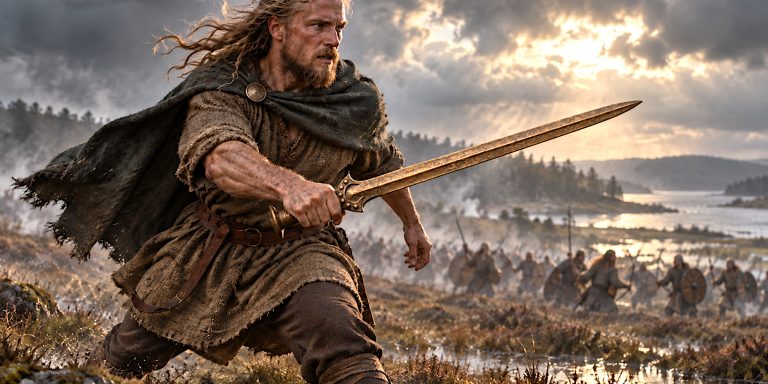
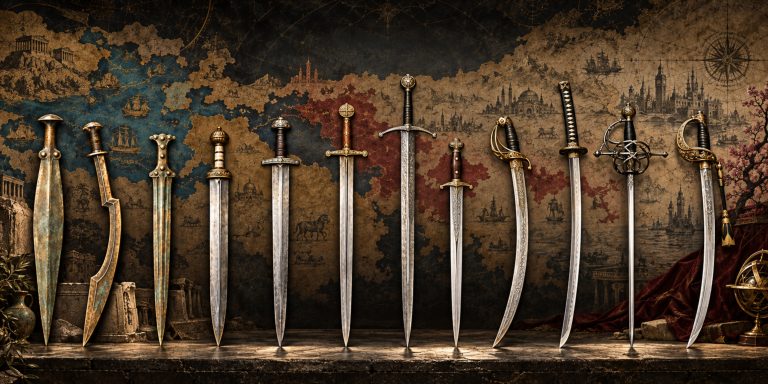
- Long spears and short thrusting swords, often pattern welded
- Large wooden shields with iron bosses
- Simple helmets, often spangenhelm types
- Minimal body armour, usually mail for elite warriors
What set Martel apart was organisation.
He seized church lands to fund mounted retainers and better equipped warriors, a controversial move that worked. These land grants evolved into early benefices, a crucial step towards feudal military structures.
This was not romantic chivalry. It was pragmatic war finance.
Relations with the Church
Martel’s relationship with the Church was complicated.
On one hand:
- He supported missionaries like Boniface
- He defended Christian territories against external threats
On the other:
- He confiscated church lands to pay soldiers
- He appointed loyalists to ecclesiastical positions
Contemporary churchmen criticised him for this, yet continued to rely on his protection. History tends to side with the winner, and Martel won consistently.
Personality and Leadership Style
Martel’s nickname, The Hammer, was not poetic. It was descriptive.
As a leader he was:
- Direct and unsentimental
- Patient when necessary, ruthless when useful
- Focused on outcomes rather than reputation
He did not chase legitimacy through ceremony. He built it through force, loyalty, and results. That mindset passed directly to his son Pippin and his grandson Charlemagne.
Contemporary Quotes and Near Contemporary Voices
Early medieval sources are sparse, but what survives is revealing.
The Chronicle of Fredegar, writing close to Martel’s lifetime, describes him as a man of immense energy who dominated both war and politics, noting his constant campaigning and control over the Frankish elite.
A later Carolingian source refers to Martel as a prince unmatched in battle, a telling phrase given that he was never king.
The Anglo Saxon scholar Bede, writing in Northumbria, mentions the Frankish victories over external enemies with clear approval, framing them as part of a wider Christian defence, even if he avoids detailed praise of Martel himself.
By the ninth century, Carolingian writers openly credited Martel with saving the Frankish realm through force of arms and discipline, emphasising his role as the architect rather than the beneficiary of power.
These voices show a shift from cautious acknowledgement to open admiration, mirroring the success of the dynasty he founded.
Death and Succession
Charles Martel died in 741. He did not name a king to succeed him, because he did not need to.
His sons, Pippin the Short and Carloman, inherited a stable, militarised state. Within a decade, Pippin would depose the last Merovingian king and take the crown himself.
That moment marks the true payoff of Martel’s career.
Legacy and Historical Judgement
Charles Martel is best understood as a builder rather than a saviour.
His lasting contributions include:
- Centralising military power in the Frankish state
- Establishing land based military obligations
- Creating the conditions for Carolingian kingship
- Demonstrating the value of disciplined infantry and planning
As a historian, I find him difficult to admire and impossible to ignore. He was not gentle, not pious in the modern sense, and not interested in moral approval. He cared about survival, dominance, and continuity.
Europe did not become medieval overnight. Charles Martel helped force it in that direction, one campaign at a time.
Watch the documentary: