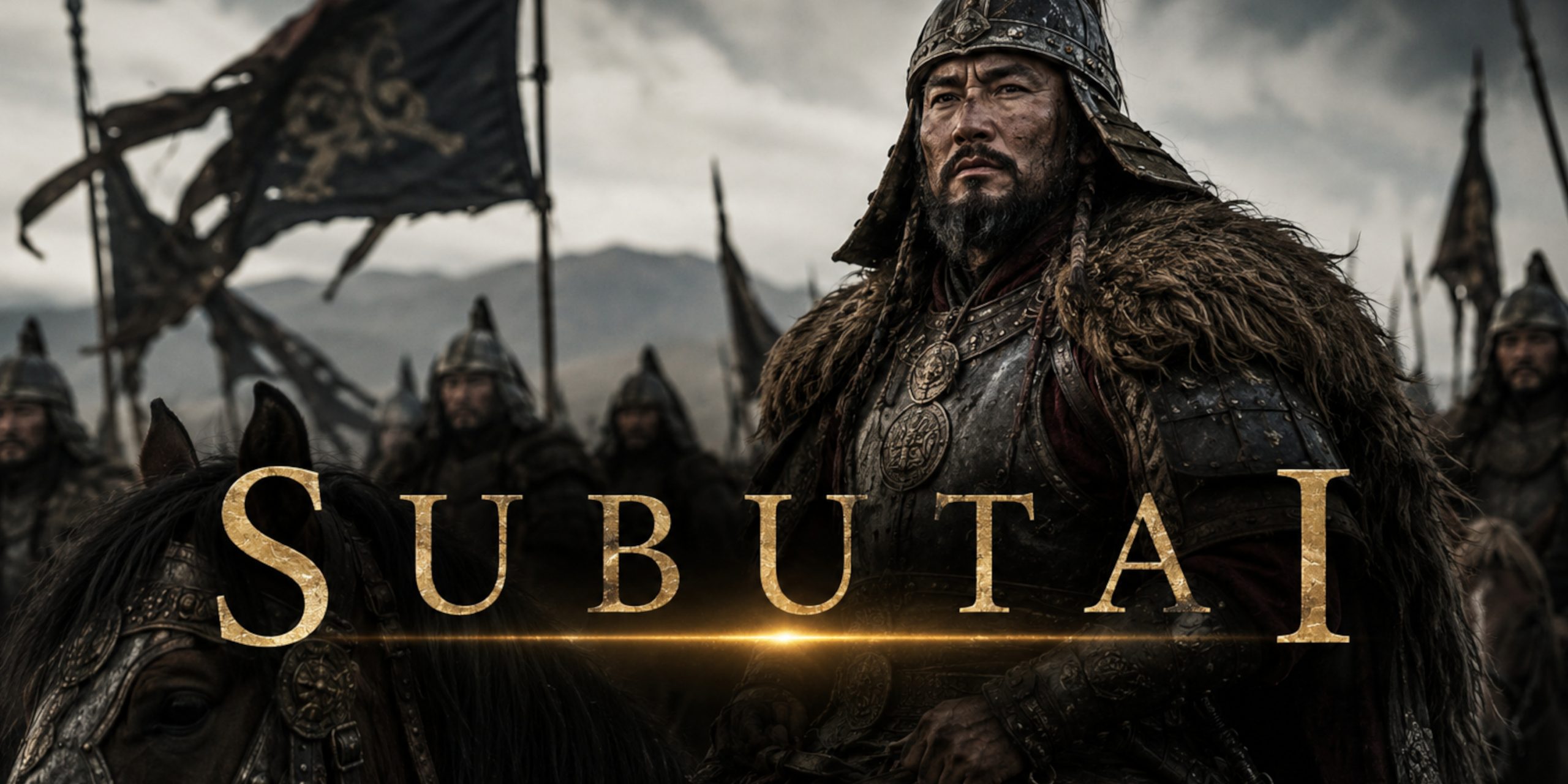
Few military commanders have shaped history as profoundly as Subutai. Unlike kings who inherited crowns or princes born into privilege, Subutai earned every promotion through remarkable intelligence, discipline and an almost uncanny ability to anticipate his enemies. He never claimed the spotlight, yet his campaigns stretched from northern China to the plains of Hungary, helping create the largest contiguous land empire the world has ever seen.
As a historian, I often find Subutai more fascinating than Genghis Khan himself. Conquerors naturally attract attention, but it is often their generals who quietly determine whether grand ambitions succeed or collapse. Subutai belonged firmly in that second category. He was the architect behind many of the Mongol Empire’s greatest victories, and unlike many celebrated commanders, he managed this without surrounding himself with myths of personal heroics. He simply kept winning.
Perhaps that is why he remains slightly overlooked today. He lacked the dramatic royal biography of Alexander the Great or Julius Caesar, but when measured purely by operational success, few commanders can match him.
Who Was Subutai?
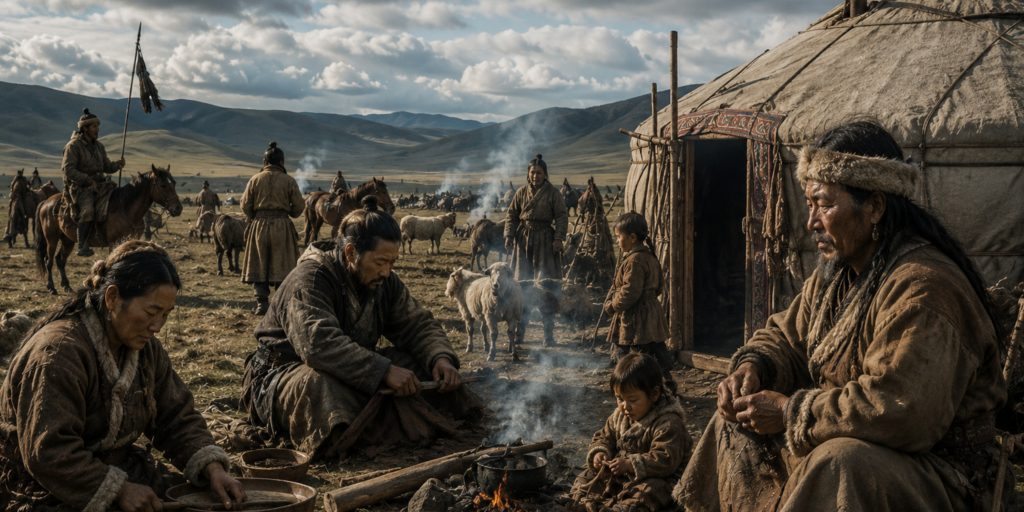
Subutai, sometimes written as Sübe’etei or Subedei, was born around 1175 into the Uriankhai tribe of Mongolia. His father was reportedly a blacksmith rather than an aristocrat, making his rise within the Mongol Empire particularly remarkable.
His elder brother Jelme became an early companion of Temüjin, the future Genghis Khan. Through this connection, Subutai entered Mongol service while still a young man.
Unlike many medieval societies where noble birth mattered enormously, the Mongols frequently promoted talent above pedigree. Few examples illustrate this better than Subutai. He rose through the ranks because he repeatedly demonstrated exceptional judgement.
By the time Genghis Khan unified the Mongol tribes in 1206, Subutai had become one of his most trusted commanders.
Quick Facts
| Feature | Details |
|---|---|
| Full Name | Subutai (Sübe’etei Ba’atur) |
| Born | c.1175 |
| Died | 1248 |
| Origin | Uriankhai tribe |
| Rank | Mongol General and Field Marshal |
| Served Under | Genghis Khan, Ögedei Khan |
| Major Campaigns | China, Khwarezm, Caucasus, Russia, Poland, Hungary |
| Famous For | Strategic planning, deep reconnaissance, multi-army coordination |
Rise Under Genghis Khan
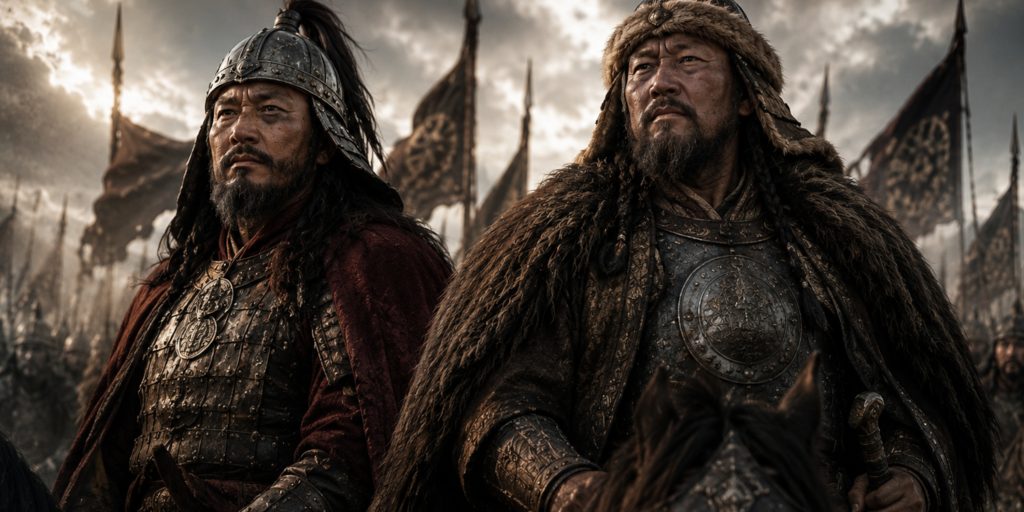
Subutai’s career accelerated during the Mongol expansion across Asia.
Rather than leading reckless cavalry charges, he specialised in planning campaigns that unfolded over months or even years. He gathered intelligence relentlessly, learned geography in extraordinary detail and coordinated armies separated by hundreds of miles.
Genghis Khan quickly recognised his rare abilities.
Subutai eventually joined a select group known as the “Dogs of War,” elite commanders entrusted with the empire’s most demanding operations. Alongside generals such as Jebe, he became responsible for campaigns that required independent decision making far from Mongolia.
That level of trust was extraordinary.
Military Philosophy
Subutai believed battles were won long before soldiers met.
His campaigns consistently reveal several principles.
Intelligence Above Everything
Mongol scouts travelled enormous distances gathering information about:
- Roads
- Rivers
- Mountain passes
- Food supplies
- Enemy morale
- Political rivalries
Subutai often knew more about an enemy kingdom than its own rulers.
Speed and Mobility
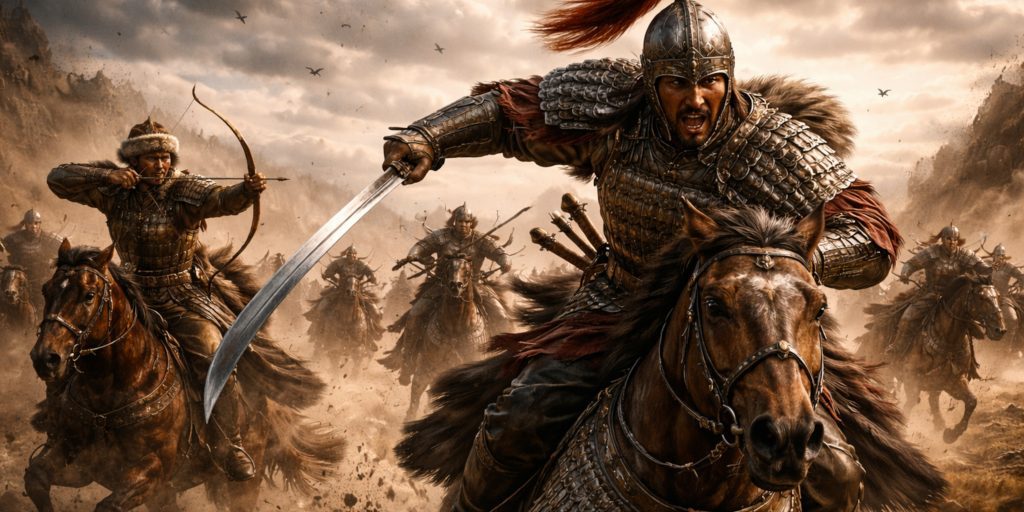
The Mongol army could travel astonishing distances thanks to multiple remount horses carried by each cavalryman.
Rather than advancing slowly with huge baggage trains, Subutai’s armies moved with breathtaking speed, appearing where opponents least expected them.
European chroniclers frequently described Mongol armies as seeming almost supernatural.
The reality was rather less mystical and rather more organised.
Deception
False retreats became one of Subutai’s trademarks.
Enemy armies believed they had forced the Mongols into flight before pursuing them into carefully prepared ambushes.
Many commanders fell for the same trick despite hearing stories from survivors.
Military history occasionally resembles a classroom where nobody completed the assigned reading.
Major Campaigns
The Jin Dynasty Campaigns
Subutai played an important role in the long wars against the Jin Dynasty in northern China.
Here he refined techniques involving siege warfare, engineering and cooperation with Chinese specialists.
The Mongols learned rapidly, adapting foreign technologies rather than relying solely on cavalry.
This willingness to evolve became one of their greatest strengths.
The Khwarezm Campaign (1219 to 1221)
The invasion of the Khwarezmian Empire remains one of history’s most devastating military campaigns.
Following the execution of Mongol envoys, Genghis Khan ordered a full invasion.
Subutai coordinated multiple army groups that struck cities from unexpected directions.
Major centres including Bukhara, Samarkand and Urgench eventually fell.
The campaign demonstrated extraordinary logistical planning across deserts, mountains and vast distances.
The Great Reconnaissance of the Caucasus
Following victory in Central Asia, Subutai and Jebe embarked on one of the boldest reconnaissance expeditions ever attempted.
Rather than returning home, they continued west.
Their forces crossed the Caucasus Mountains, defeated Georgian armies, fought the Cumans and encountered numerous nomadic peoples before reaching the Russian principalities.
This was effectively a strategic survey of Eastern Europe years before the main Mongol invasion.
Modern military planners would recognise it immediately as long range intelligence gathering.
The Battle of the Kalka River (1223)
The coalition of Kievan Rus’ princes and Cuman allies believed they had cornered the Mongols.
Instead, Subutai conducted a carefully staged withdrawal lasting several days.
The allied army abandoned cohesion while pursuing.
Only then did the Mongols turn and destroy them.
The defeat shocked Eastern Europe.
It also demonstrated that Subutai viewed patience as a weapon.
The Invasion of Europe (1236 to 1242)
Subutai reached the height of his career during the great European campaign under Ögedei Khan.
Rather than sending one massive army westward, he divided his forces into multiple independent columns.
These armies invaded simultaneously through different routes, confusing defenders and preventing coordinated resistance.
Few medieval commanders possessed the confidence or communication systems necessary to attempt such an operation.
Subutai somehow made it work.
The Battle of Legnica (1241)
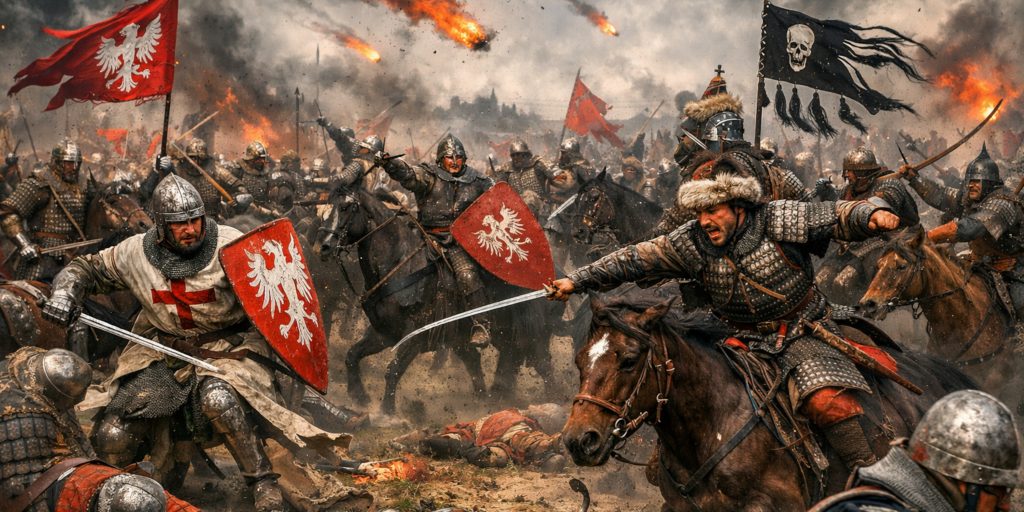
One Mongol force defeated a coalition led by Duke Henry II of Silesia in present day Poland.
Although Subutai was not physically commanding every battlefield, the wider campaign reflected his strategic planning.
The victory prevented Polish and German armies from assisting Hungary.
It was operational warfare centuries ahead of its time.
The Battle of Mohi (1241)
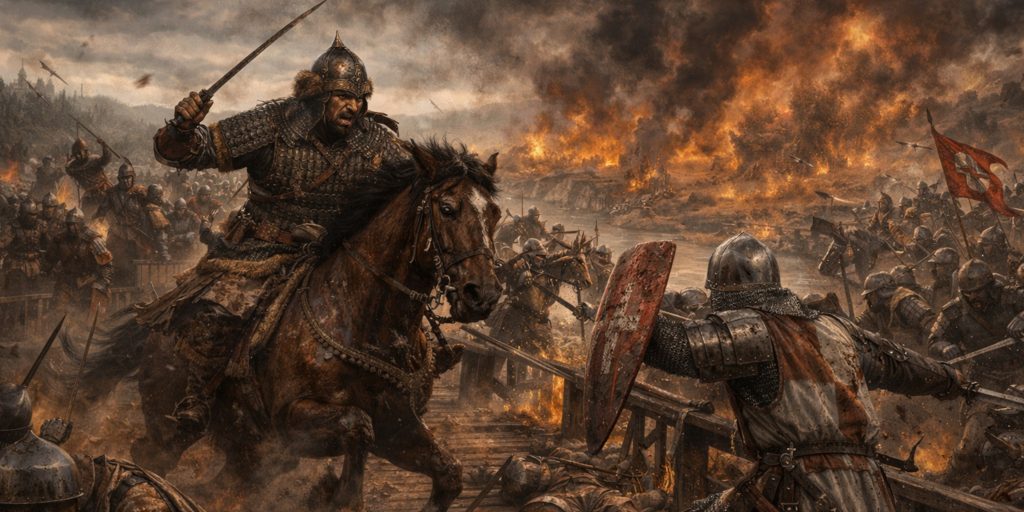
Mohi stands among Subutai’s greatest masterpieces.
The Hungarian army established a defensive position behind the River Sajó.
Subutai identified weaknesses in their deployment and ordered engineers to construct a temporary bridge downstream while another assault distracted defenders at the main crossing.
Hungarian forces suddenly faced attacks from multiple directions.
The battle ended in catastrophic defeat for King Béla IV.
The road into Hungary lay open.
Military Innovations
Subutai’s campaigns introduced concepts that remain familiar today.
These included:
- Simultaneous offensives across multiple fronts
- Long range reconnaissance
- Flexible battlefield command
- Rapid operational movement
- Sophisticated intelligence networks
- Psychological warfare
- Engineering integrated into field armies
- Extensive use of feigned retreats
His ability to coordinate armies separated by hundreds of kilometres remains one of his most remarkable achievements.
Arms, Armour and Equipment
Subutai himself likely wore practical equipment rather than lavish ceremonial armour.
Typical Mongol commanders used:
| Equipment | Description |
| Lamellar Armour | Leather or iron plates laced together for flexibility |
| Helmet | Iron helmet with face protection and neck guards |
| Bow | Composite recurve bow with exceptional range and power |
| Sabre | Curved Mongol sabre for mounted combat |
| Lance | Light cavalry lance for charges |
| Mace | Used against heavily armoured opponents |
| Dagger | Utility weapon and sidearm |
Unlike many European knights, Mongol commanders valued mobility above heavy protection.
Leadership Style
Subutai inspired loyalty through competence rather than theatrical speeches.
Historical sources consistently suggest he listened to experienced officers, rewarded initiative and adapted quickly when circumstances changed.
He also showed remarkable restraint.
Unlike some conquerors who pursued glory for its own sake, Subutai generally focused on achieving operational objectives with ruthless efficiency.
He rarely wasted lives when manoeuvre could achieve the same result.
Contemporary Accounts
Persian historian Ata-Malik Juvayni praised the discipline and effectiveness of Mongol commanders, while later chroniclers repeatedly highlighted the astonishing coordination of Mongol armies.
European observers struggled to comprehend how cavalry forces could appear simultaneously hundreds of miles apart.
Some attributed this to sorcery.
Logistics, thankfully, usually provides a more convincing explanation than magic.
Legacy
Subutai retired during the reign of Ögedei Khan and died in 1248.
His influence, however, endured for centuries.
Military historians frequently compare his operational thinking with commanders such as Napoleon Bonaparte, Helmuth von Moltke the Elder and Erich von Manstein.
Many principles associated with modern warfare were already visible in his campaigns.
Despite commanding over sixty major campaigns and reportedly winning almost all of them, his name remains surprisingly unfamiliar outside military history.
Perhaps that is fitting.
Subutai never appeared interested in fame.
He was interested in results.
Judging by the map of Eurasia during the thirteenth century, those results speak rather loudly.
Where to See Artefacts Related to Subutai
Although no confirmed personal possessions belonging to Subutai survive, visitors can explore Mongol military history through important museum collections.
Notable locations include:
- The National Museum of Mongolia, Ulaanbaatar
- Inner Mongolia Museum, Hohhot
- The State Hermitage Museum, St Petersburg
- The Hungarian National Museum, Budapest, which houses material relating to the Mongol invasion of Hungary
- Regional museums across Mongolia containing excavated Mongol period weapons and horse equipment
Archaeology and Recent Research
Recent archaeological work across Mongolia, Kazakhstan and Hungary has improved our understanding of Mongol logistics.
Studies of horse remains, camp sites and battlefield archaeology suggest Mongol armies were even more organised than earlier historians believed.
Research into the Battle of Mohi continues to identify probable crossing points along the River Sajó, supporting contemporary descriptions of carefully coordinated bridge construction and multiple crossing operations.
Meanwhile, advances in landscape archaeology and GIS mapping continue to reshape our understanding of how Subutai planned campaigns across enormous distances with remarkable precision.
Takeaway

History often remembers rulers because they wore crowns. Generals, meanwhile, tend to become footnotes despite doing much of the difficult work.
Subutai deserves better.
He combined strategic imagination with practical discipline in a way that few commanders have ever matched. He mastered intelligence gathering, logistics, engineering and manoeuvre long before these became formal military doctrines. His victories were rarely accidents. They were carefully designed.
As someone who spends an unreasonable amount of time reading medieval campaign accounts, I still find myself pausing at the sheer scale of his achievements. Marching thousands of cavalry across continents was difficult enough. Doing it repeatedly while coordinating multiple armies without modern communications borders on astonishing.
Subutai may never enjoy the popular recognition of Alexander or Caesar, but among military historians he belongs comfortably in their company.