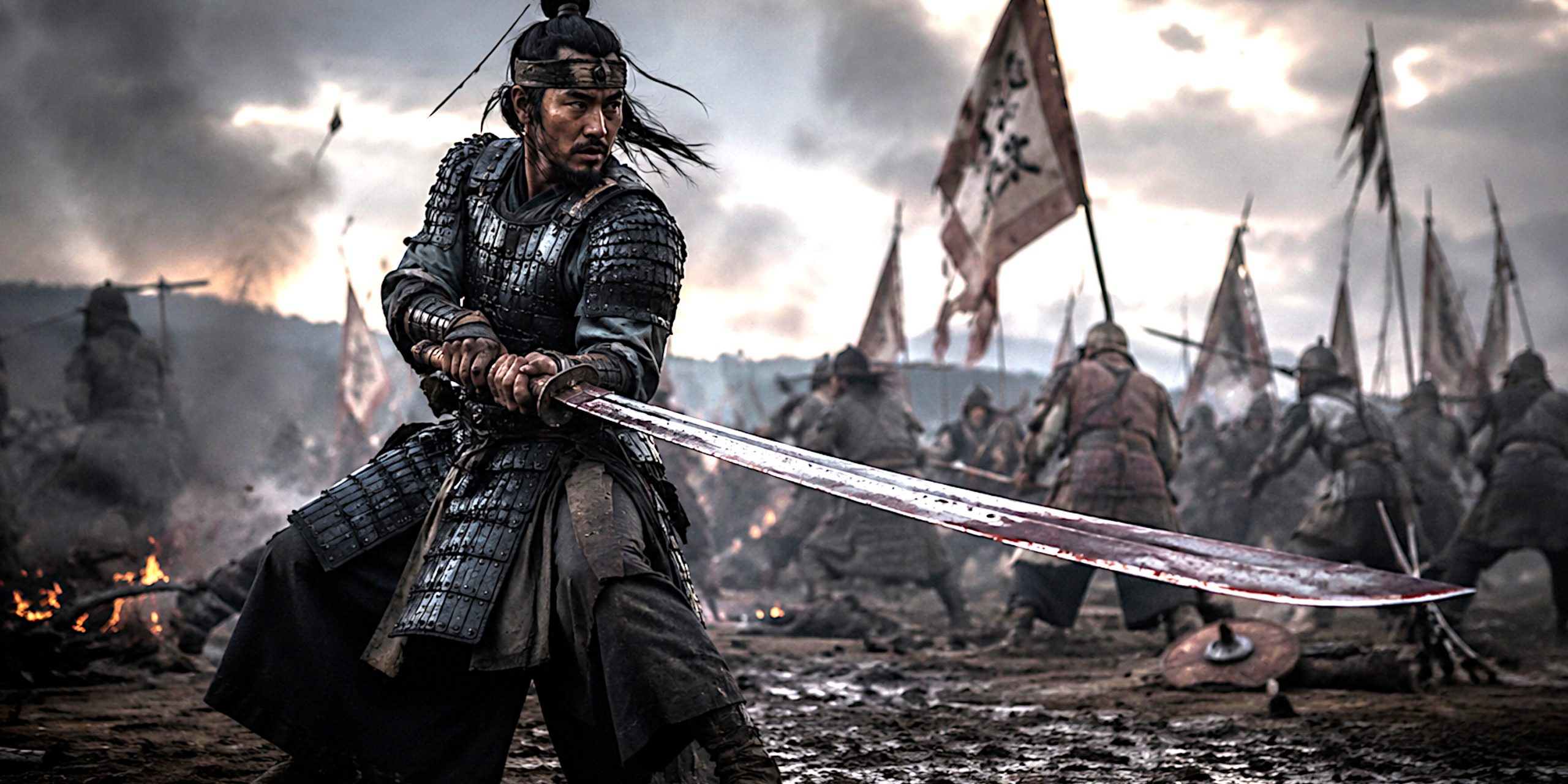
The zhanmadao (斬馬刀) occupies a slightly awkward place in the history of Chinese weapons. Its name translates roughly as “horse-cutting sabre”, which has encouraged some fairly heroic claims about soldiers neatly removing horses from the battlefield with a single swing. The historical reality is more interesting.
Rather than describing one completely standardised weapon across two thousand years, zhanmadao was a name applied at different periods to large cutting weapons associated with exceptional power and, later, with infantry warfare against cavalry. The best documented military examples belong to the Song dynasty, while Qing military regulations show that a weapon bearing the same name remained part of the Chinese arsenal centuries later.
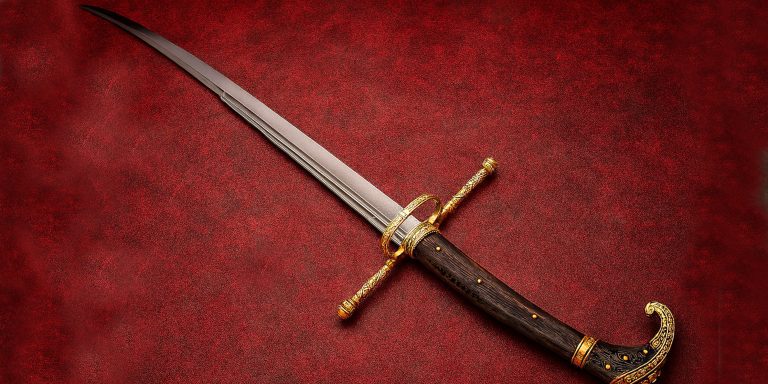
At its most recognisable, the zhanmadao was a long, single-edged dao intended for two-handed use. Reach, leverage and cutting power mattered more than the convenience of carrying a shorter sidearm.
For an infantryman confronted by mounted troops, those were useful qualities indeed.
Zhanmadao Specifications
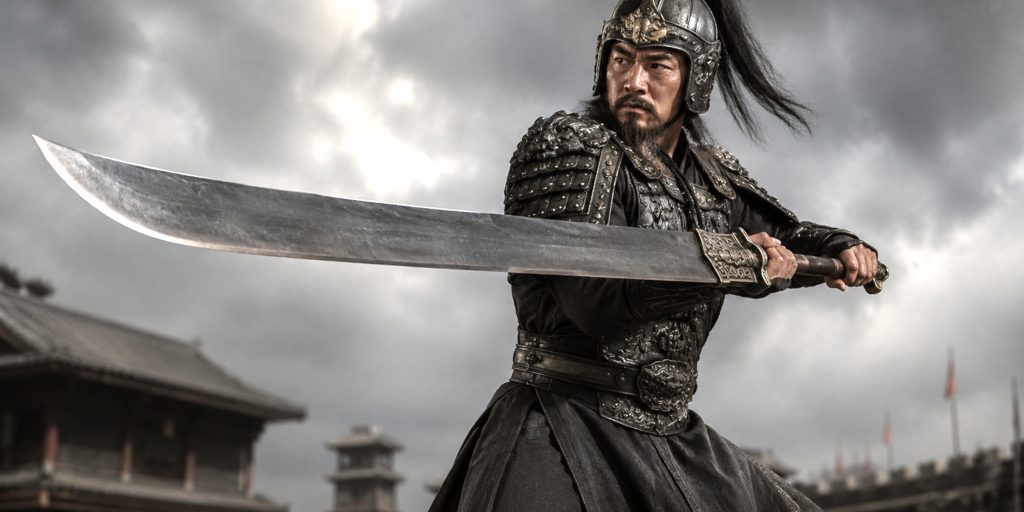
There is no single specification that can accurately describe every weapon called a zhanmadao. This is one of the first things worth correcting in many modern descriptions of the sword.
A Song account preserved in the Xu Zizhi Tongjian Changbian describes a zhanmadao with a blade of roughly 93.6 cm and a hilt around 31.2 cm long, ending in a ring pommel. Qing regulations describe a substantially larger Green Standard Army zhanmadao, approximately 168 cm overall, with a blade around 119 cm long.
| Feature | Historical characteristics |
|---|---|
| Chinese name | 斬馬刀 |
| Romanisation | Zhǎnmǎdāo |
| Literal meaning | Horse-cutting sabre or horse-cutting blade |
| Weapon family | Dao |
| Edge | Single edged |
| Primary handling | Two handed |
| Song blade length | Approximately 94 cm in one documented specification |
| Song hilt length | Approximately 31 cm |
| Qing overall length | Approximately 168 cm in the 1766 regulations |
| Qing blade length | Approximately 119 cm |
| Qing grip | Wooden, long enough for two-handed control |
| Guard | Disc or relatively simple guard on later forms |
| Primary role | Heavy infantry weapon, strongly associated with anti-cavalry warfare |
The Qing regulation is particularly valuable because it provides something close to an official military specification. The blade was forged iron or steel, the hilt was wooden and wrapped in leather, and the weapon was carried in a wooden scabbard with iron fittings.
What did a zhanmadao actually look like?
The safest answer is that its appearance depended heavily on the period.
Broadly, expect:
- A long single-edged blade
- A substantial two-handed grip
- A relatively simple military construction
- Strong blade geometry intended for cutting
- More restrained curvature than many later Chinese sabres
- A balance intended to generate powerful cuts without turning the weapon into a polearm
It should not automatically be imagined as an enormous fantasy cleaver. Historical Chinese long sabres could be surprisingly elegant weapons.
What Does Zhanmadao Mean?
The name deserves more attention because it has caused much of the confusion surrounding the weapon.
Zhan means to cut or chop, ma means horse, and dao refers to a single-edged blade or sabre.
Hence:
斬馬刀: “horse-cutting sabre.”
Yet the earliest related expression does not necessarily describe an anti-cavalry weapon at all.
A zhanmajian, or “horse-cutting sword”, appears in accounts associated with the Han dynasty. Crucially, this was a jian, meaning a double-edged sword. The famous Han reference concerns an imperial weapon whose name appears to have signified extraordinary cutting authority or power rather than a battlefield tool specifically designed for hacking at horses.
That distinction matters.
The familiar military zhanmadao is much more securely associated with later Chinese warfare.
History and Evolution
Han dynasty origins
The ancestry of the name can be traced to the Han dynasty, but we should resist simply projecting the later Song weapon backwards.
The Hanshu contains a reference to the Shangfang zhanmajian, an Imperial Workshops “horse-cutting sword”. It was associated with imperial authority and was a jian, not the later single-edged dao.
This tells us that the concept of a weapon powerful enough to “cut a horse” was already culturally meaningful. It does not prove that Han infantry were carrying the later form of zhanmadao into battle.
That difference is small linguistically and enormous historically.
Tang dynasty and the modao question
The Tang dynasty employed large infantry blades, most famously the modao. Later writers connected the modao with earlier horse-cutting swords, and modern discussions sometimes treat it as an early zhanmadao.
The connection is plausible as part of a broader tradition of heavy infantry cutting weapons, but the exact physical relationship remains uncertain.
Tang armies certainly employed long blades in formation fighting. Contemporary descriptions of troops armed with such weapons suggest their effectiveness depended upon disciplined collective action rather than individual swordsmanship.
The problem is archaeological. Securely identified surviving Tang modao are lacking, making confident reconstructions difficult.
For that reason, I would describe the Tang weapon as an important precursor or relative, rather than simply calling it a zhanmadao.
The Song dynasty zhanmadao
This is where the evidence becomes much firmer.
The Song state faced an enduring strategic problem. Powerful northern opponents could deploy effective cavalry, while Song military strength depended heavily upon infantry.
The response was not one magical anti-horse weapon. Song armies used crossbows, spears, fortifications, disciplined formations and various long blades. The zhanmadao belonged to that larger tactical system.
In the fifth year of the Xining reign period, during the 1070s, the government ordered the production of zhanmadao. Historical descriptions refer to a blade more than three chi long, a substantial hilt and a large ring pommel. Production was organised through government workshops and large numbers were reportedly distributed to frontier forces.
This is the zhanmadao at its most convincing historically: a state-produced military weapon designed for serious infantry service.
Fighting the northern cavalry powers
The Song fought the Liao, Western Xia and Jin, all military powers in which mounted warfare could play an important role.
Long two-handed sabres offered several advantages against cavalry:
- Greater reach than an ordinary sidearm
- Powerful downward and diagonal cuts
- The ability to threaten the horse as well as the rider
- Strong leverage when parrying or binding another weapon
- Considerable striking power against armour and equipment
The famous “horse-cutting” label should still be treated sensibly. A soldier did not necessarily stand patiently waiting to sever a galloping horse’s legs.
Battlefields rarely cooperate with demonstrations.
The more important point is that the weapon allowed disciplined infantry to threaten the large target presented by horse and rider while delivering considerably more force than a conventional one-handed dao.
Ming developments
By the Ming period, Chinese long-sabre traditions had changed considerably.
Contact and conflict with Japanese and Sino-Japanese raiders encouraged renewed interest in very long two-handed sabres. Chinese military writers discussed weapons generally called changdao, dandao or wodao, some clearly influenced by Japanese sword forms.
These should not all be labelled zhanmadao.
What they demonstrate is the persistence of the same basic military logic: give an infantryman a long blade, let him control it with both hands and exploit reach and cutting power against an opponent.
Qing dynasty zhanmadao
The zhanmadao name survived into the Qing military system.
The 1766 Huangchao Liqi Tushi, an illustrated set of imperial regulations, describes a zhanmadao for the Green Standard Army.
Its specified dimensions were approximately:
- Overall length: 168 cm
- Blade: 119 cm
- Grip: approximately 48 cm
- Blade width: approximately 5.25 cm
- Guard: iron disc
- Grip covering: red and yellow leather
- Scabbard: wood with iron fittings
The same regulations distinguish it from other long sabres including the changren dadao, shuangshou daidao, beidao and wodao.
That distinction is valuable because it shows that “long Chinese sabre” and “zhanmadao” are not interchangeable terms.
How the Zhanmadao Was Used
The weapon’s dimensions strongly favour large movements generated through the shoulders, hips and torso.
Likely techniques included:
- Descending cuts against rider or mount
- Diagonal cuts across an approaching target
- Horizontal cuts where formation space permitted
- Deflections followed immediately by counter-cuts
- Powerful cuts against limbs, weapons and armour
- Use of the long grip to rapidly change leverage and direction
Its effectiveness would have depended heavily upon spacing.
A single swordsman caught in open ground by organised cavalry remained in a thoroughly unpleasant situation. Several ranks of disciplined infantry supporting one another with long weapons were a different proposition.
This is why the zhanmadao makes most sense as part of an infantry system rather than as an isolated wonder weapon.
Advantages of the Zhanmadao
Exceptional cutting power
A long blade combined with a two-handed grip provides considerable leverage and tip velocity. Against an exposed limb, lightly protected rider or horse, the consequences could be severe.
Reach
The zhanmadao allowed an infantryman to engage an opponent farther away than was possible with a normal one-handed sabre.
Against cavalry, every additional centimetre was welcome.
Two-handed control
The long grip was not simply there to make the weapon larger. Two hands allowed the wielder to control a substantial blade while accelerating, stopping and redirecting it.
Anti-cavalry potential
The horse presented a much larger target than its rider. Threatening the animal could disrupt a mounted attack even without producing the spectacular amputations implied by the weapon’s English nickname.
Formation value
In trained groups, long cutting weapons could create a threatening zone in front of an infantry formation and complement spears, missile weapons and other troops.
Disadvantages of the Zhanmadao
Space requirements
A long sword becomes considerably less charming when someone is standing six inches from your face.
Confined terrain, narrow gateways, dense formations and close grappling could all restrict its usefulness.
Limited defensive equipment
Two-handed use meant the soldier could not simultaneously carry a conventional shield.
Training requirements
Reach and power are useful only if the wielder can control them. Poor recovery after a committed cut could leave the swordsman exposed.
Fatigue
Even a well-balanced long weapon places demands on the arms, shoulders and torso during prolonged combat.
Vulnerability to longer polearms
A spear or other dedicated polearm could exceed the zhanmadao’s reach while being relatively inexpensive to manufacture.
This probably helps explain why large swords never displaced polearms as China’s dominant infantry weapons.
Zhanmadao Compared with Similar Weapons
| Weapon | Origin | Design | Typical role | Comparison with Zhanmadao |
| Zhanmadao | China | Long single-edged two-handed dao | Heavy infantry and anti-cavalry | Baseline |
| Modao | Tang China | Large infantry blade, precise form debated | Formation warfare | Possible conceptual predecessor |
| Changdao | China | Long two-handed sabre | Infantry combat | Often narrower and associated particularly with Ming traditions |
| Wodao | Ming/Qing China | Long sabre with Japanese influence | Infantry swordsmanship | Generally lighter and more agile in later systems |
| Miaodao | China | Narrow two-handed sabre | Martial and military traditions | Modern terminology is considerably later and sometimes retroactively applied |
| Podao | China | Heavy blade with extended haft | Infantry and anti-cavalry | Closer to a short polearm |
| Ōdachi | Japan | Very long curved Japanese sword | Battlefield weapon | Similar emphasis on reach but developed within Japanese sword traditions |
| Nagamaki | Japan | Long blade with exceptionally long grip | Infantry combat | Superficially very similar proportions in some examples |
| Zweihänder | Europe | Large double-edged two-handed sword | Formation warfare | Similar reach and leverage, but very different blade and hilt construction |
| Glaive | Europe | Cutting blade mounted on pole | Infantry polearm | Greater reach but mechanically a polearm rather than a sword |
The comparison with the Japanese ōdachi is tempting, but direct equivalence should be avoided. Large two-handed blades can evolve independently because they solve similar tactical problems.
Zhanmadao Versus Miaodao
These two weapons are frequently confused.
The modern miaodao is generally a relatively narrow, long two-handed sabre. Historical terminology surrounding the miaodao is complicated, and the familiar modern name cannot simply be projected backwards onto every Chinese long sword.
Qing regulations actually list several distinct long sabres while treating the zhanmadao as its own type.
The safest distinction is:
| Zhanmadao | Miaodao |
| Historically documented name by the Song period | Modern terminology developed much later |
| Strong anti-cavalry association | Broader martial and military application |
| Often relatively substantial blade | Usually narrower |
| Particularly associated with powerful cutting | Greater emphasis on mobility in surviving martial traditions |
They belong to related traditions, but they are not simply two names for precisely the same sword.
The Legacy of the Zhanmadao
The zhanmadao represents something broader than one oversized sword.
It reflects the continual adaptation of Chinese infantry warfare to mounted opponents.
Chinese military culture repeatedly experimented with long blades, including:
- Modao
- Zhanmadao
- Changdao
- Wodao
- Shuangshou dao
- Various long dadao forms
Some were indigenous developments, others incorporated outside influences, and terminology changed considerably over the centuries.
The zhanmadao also illustrates one of the hazards of studying historical weapons. Names survive much more easily than objects. A familiar term can therefore create the illusion of a single design existing unchanged for centuries.
The evidence suggests something messier, and therefore more interesting.
The idea of the horse-cutting weapon endured, while its physical form evolved.
Where to See Historical Zhanmadao and Related Chinese Sabres
Finding a museum object securely catalogued as a Song dynasty zhanmadao is considerably harder than many online guides suggest. Claims that particular major Western museums hold definite examples should be checked against their current catalogues rather than repeated automatically.
Surviving Chinese arms from the Qing period provide much stronger comparative material.
Metropolitan Museum of Art, New York
The Metropolitan Museum of Art possesses an important collection of Chinese arms and armour, including Qing sabres. Philip M. W. Tom’s study of the museum’s Qing sabres provides particularly useful material for understanding Chinese blade construction and the development of the dao.
Palace Museum, Beijing
The imperial collections preserve extensive Qing material and provide some of the best comparative evidence for weapons manufactured under official regulations.
Chinese military and regional museums
Collections in China can contain Song, Ming and Qing arms, archaeological blades and representations of military equipment. Identification can vary, however, and a long dao should not automatically be assumed to be a zhanmadao.
Historical illustrations
For the Qing zhanmadao, the 1766 Huangchao Liqi Tushi is exceptionally important. Its illustrated regulations provide a much firmer basis for reconstruction than modern fantasy interpretations.
Collecting a Zhanmadao
A genuine, securely provenanced early zhanmadao is an exceptionally difficult object to buy.
Collectors are much more likely to encounter:
- Modern reproductions
- Modern martial arts zhanmadao
- Qing long sabres
- Qing military dao
- Antique blades fitted with later mounts
- Weapons described vaguely as “horse cutters”
- Modern Chinese swords deliberately aged to resemble antiques
That final category deserves particular attention.
What to check before buying
- Provenance: A convincing history of ownership matters enormously.
- Blade construction: Look for construction consistent with the proposed period.
- Patina: Artificial ageing is common.
- Tang: Inspect for signs of modern welding or reconstruction.
- Mounts: Blade and fittings may not be contemporary with one another.
- Dimensions: Compare them with documented historical specifications.
- Terminology: “Zhanmadao” is sometimes used by sellers simply because a sword is unusually large.
- Restoration: Heavy polishing can remove important evidence of age and manufacture.
- Documentation: A confident dynasty attribution without supporting evidence should be treated cautiously.
Be suspicious of “ancient” examples
An alleged Song or Tang zhanmadao offered online for a surprisingly modest sum should generate questions rather than excitement.
Early Chinese iron and steel weapons with strong provenance are scarce archaeological and historical objects. An apparently pristine thousand-year-old sword accompanied by a paragraph about a mysterious private collection is not provenance.
It is a story.
Zhanmadao Auction Prices
There is not enough transparent auction data for securely identified early zhanmadao to produce a meaningful dedicated price index.
That distinction is important. Prices for ordinary Qing dao cannot simply be presented as confirmed zhanmadao sales.
Comparable Chinese swords nevertheless show how wide the market can be. At a Bonhams sale, two nineteenth-century Qing peidao sold for £2,250 and £4,000 including premium, despite estimates of only £500 to £700. These were not zhanmadao, but they demonstrate the demand for authentic Chinese military swords with identifiable period construction.
A practical collector’s guide looks something like this:
| Category | Approximate market level | Comments |
| Decorative reproduction | £100 to £300 | Primarily display pieces |
| Functional production reproduction | £300 to £800 | Quality varies considerably |
| Custom forged reconstruction | £800 to £2,500+ | Historical accuracy and smith reputation affect value |
| Antique Qing military dao | £1,500 to £5,000+ | Broad guide only, depending heavily on condition and provenance |
| High-quality or unusual Qing sword | £4,000 to £15,000+ | Fine mounts and documented provenance can increase value sharply |
| Important Chinese long sabre | £10,000+ | Specialist market |
| Secure Song zhanmadao | No reliable standard market price | Extreme rarity would make provenance decisive |
These figures should be treated as market guidance rather than formal valuations. Antique Chinese swords vary enormously in price according to attribution, condition, mounts, inscriptions and provenance.
Most importantly, a seller calling something a zhanmadao does not make it one.
Is an Authentic Zhanmadao a Good Investment?
For collectors, authenticity is more important than the name attached to the listing.
A documented Qing long sabre with original mounts is generally a much more sensible purchase than a supposedly Song “horse cutter” whose history begins with an online marketplace account created three weeks ago.
Serious collectors should prioritise:
- Established auction houses
- Specialist Asian arms dealers
- Documented provenance
- Published collections
- Expert examination
- Comparable museum pieces
Early Chinese swords deserve particular caution because restoration, composite construction and incorrect dating can dramatically affect value.
Zhanmadao FAQs
Was the zhanmadao really used to cut horses in half?
The weapon was genuinely associated with anti-cavalry warfare, particularly during the Song period, but claims of routinely cutting horses in half should be treated as martial hyperbole. Attacking a horse’s legs, head, neck or rider is considerably more plausible.
How heavy was a zhanmadao?
Reliable historical specifications usually give dimensions rather than convenient modern weight figures. Modern claims that all zhanmadao weighed several kilograms should therefore be treated cautiously. Historical fighting weapons needed to remain controllable.
Was the zhanmadao a sword or polearm?
It is normally classified as a dao, a single-edged sword or sabre. Some related Chinese long weapons blur the distinction between sword and polearm, but documented zhanmadao forms include clear two-handed sabres.
Did the zhanmadao influence the Japanese ōdachi?
Direct influence is difficult to demonstrate. China and Japan both developed traditions of long two-handed blades, and military technology moved between East Asian cultures in several directions over many centuries.
Are there surviving Song zhanmadao?
Securely identified examples are extremely rare. Later Chinese long sabres and Qing regulation weapons are much better represented in collections.
Is the zhanmadao the same as the miaodao?
No. The weapons belong to the broader Chinese tradition of long two-handed sabres, but their terminology, chronology and historical contexts differ.
Takeaway
The zhanmadao deserves better than its usual description as a gigantic sword capable of chopping cavalry horses apart.
What interests me most about it is the military problem sitting behind the weapon.
Song China repeatedly faced states whose armies could field formidable mounted forces. Infantry needed ways to survive that encounter. Crossbows, spears, formations and fortifications formed much of the answer, but the zhanmadao gave selected soldiers something more aggressive: a long two-handed blade capable of threatening horse and rider alike.
It was not a medieval chainsaw. Nor was it a single design frozen in time from the Han dynasty to the Qing.
The name changed meaning. The weapons evolved. Later armies produced their own long sabres, and by the Qing period the zhanmadao had become one member of a surprisingly varied family of regulation military blades.
That complicated history makes the weapon far more interesting than the legend.