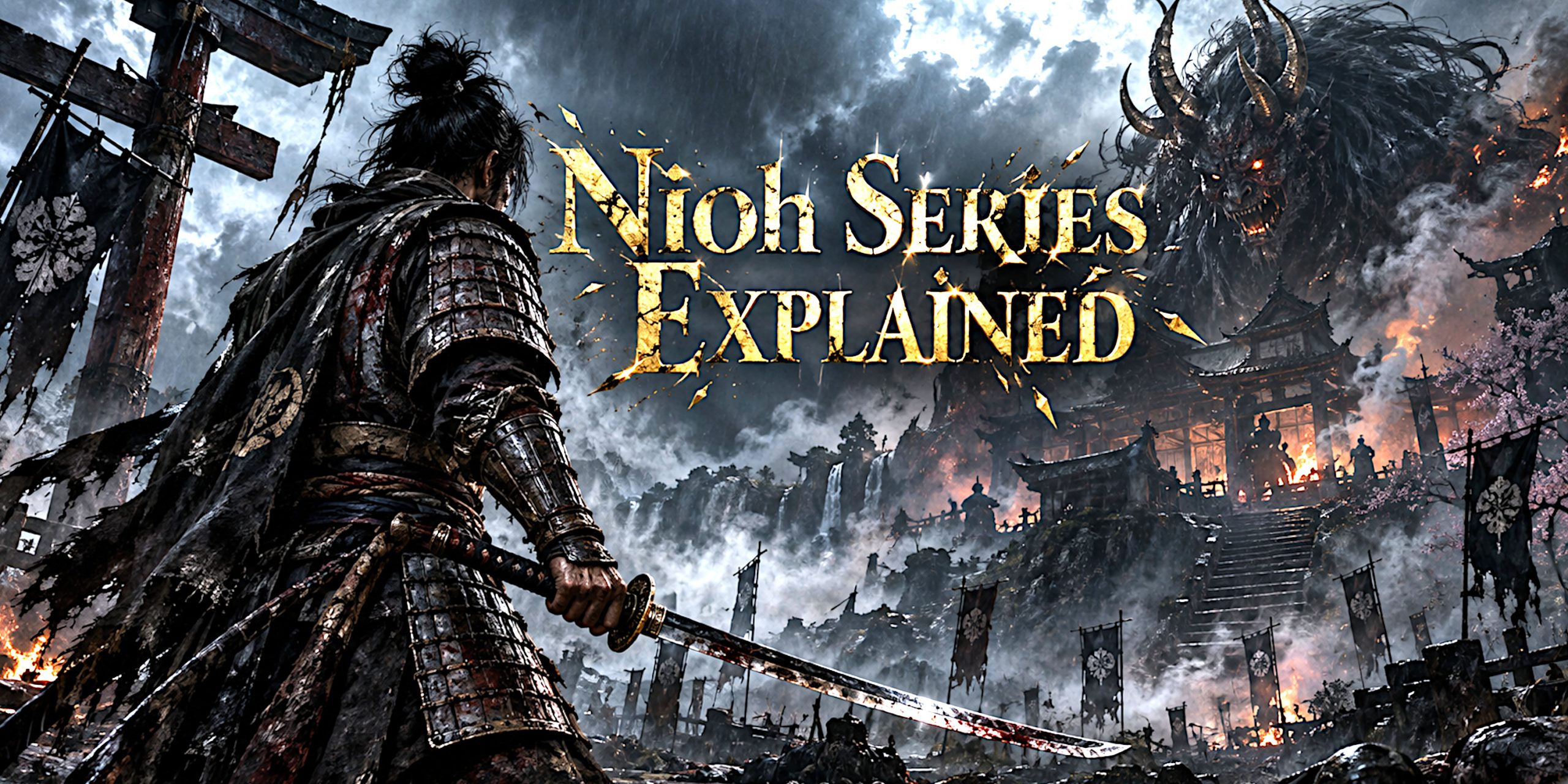
Few action RPGs demand quite as much from the player as Nioh. Team Ninja’s series expects you to manage stamina, change combat stance, learn elaborate weapon skills and sort through enough discarded armour to stock a moderately successful castle.
The comparisons with Dark Souls are understandable, but they only tell part of the story. Nioh combines Soulslike progression with the speed of Ninja Gaiden, the build-making obsession of a loot-driven RPG and a heavily fictionalised journey through Japanese history.
With Nioh 3, the series has become broader and more adventurous. Open-field exploration, two interchangeable combat styles and several historical periods now sit alongside the familiar Ki Pulses, Guardian Spirits and deeply unpleasant yōkai.
This is the complete story of the Nioh series, from William Adams to Tokugawa Takechiyo.
Nioh Series at a Glance
| Game | Release | Setting | Playable character |
|---|---|---|---|
| Nioh | 2017 | Late Sengoku period | William |
| Nioh 2 | 2020 | Sengoku period | Hide |
| Nioh 3 | 2026 | Multiple Japanese periods | Tokugawa Takechiyo |
Nioh 3 was released on 6 February 2026 for PlayStation 5 and PC. It supports solo play and online multiplayer for up to three players, according to Team Ninja’s official game information.
What Is the Nioh Series About?
Nioh is a series of historical fantasy action RPGs developed by Team Ninja and published by Koei Tecmo. Each game places a fictional or fictionalised warrior within a recognisable period of Japanese history.
Real warlords, battles and political disputes are woven together with yōkai, magic and glowing stones called Spirit Stones. Historical accuracy therefore comes and goes according to what would make the most dramatic boss fight.
The broad themes remain consistent across the trilogy:
- The struggle for political control of Japan
- The corrupting influence of supernatural power
- Human ambition becoming more dangerous than any monster
- Warriors caught between personal loyalty and historical destiny
- The uneasy boundary between the human and yōkai worlds
You do not need a degree in Japanese history to follow the series, although knowing the difference between Oda Nobunaga, Toyotomi Hideyoshi and Tokugawa Ieyasu certainly helps. The games have a habit of introducing famous figures as though everyone has recently revised the Sengoku period.
Nioh: The Game That Finally Escaped Development
The original Nioh was released in 2017 after an exceptionally long and troubled development. Early versions of the project were connected to an unfinished Akira Kurosawa screenplay, but the final game bore little resemblance to its earliest conception.
Instead, Team Ninja produced a fast and technical action RPG set around the beginning of the seventeenth century.
The Story of Nioh
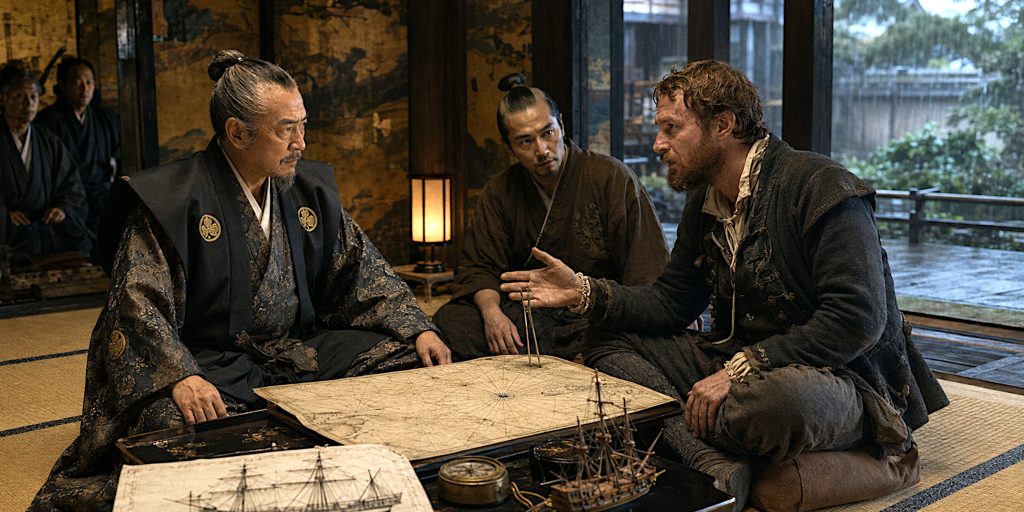
The protagonist is William, a fictionalised version of the English navigator William Adams. The historical Adams reached Japan in 1600 and later served Tokugawa Ieyasu, receiving samurai status and an estate.
The game’s William arrives in Japan while pursuing Edward Kelley, an alchemist using Spirit Stones to encourage warfare and summon supernatural creatures. His journey brings him into contact with major historical figures including:
- Tokugawa Ieyasu
- Hattori Hanzō
- Ishida Mitsunari
- Tachibana Muneshige
- Date Masamune
- Sanada Yukimura
The conflict builds towards the Battle of Sekigahara in 1600, the decisive confrontation that established Tokugawa dominance.
Naturally, the historical battle did not involve quite so many towering demons.
What Nioh Got Right
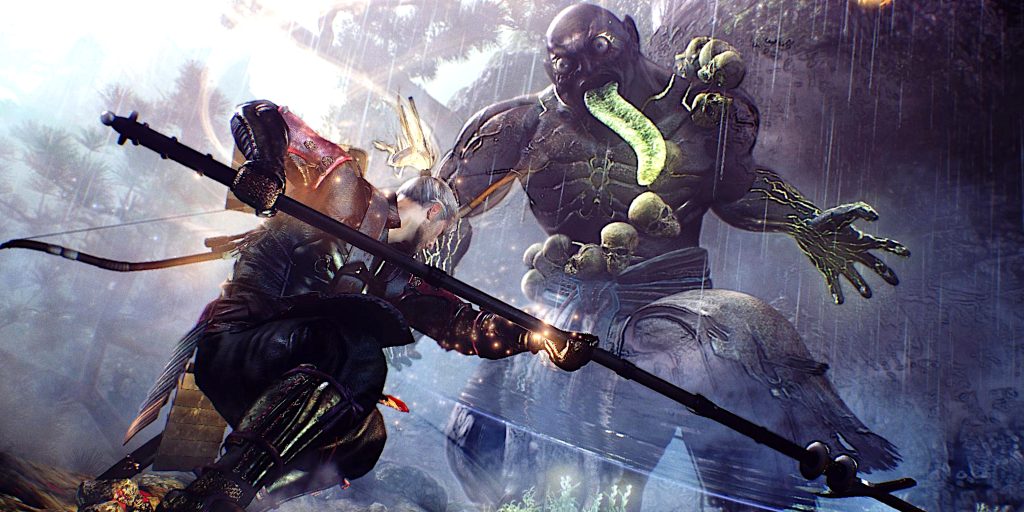
The first game established almost every system that would define the series:
- High, middle and low weapon stances
- Ki management and Ki Pulses
- Guardian Spirits
- Living Weapon transformations
- Extensive weapon skill trees
- Randomised equipment and armour sets
- Mission-based levels filled with shortcuts
- Revenants created from fallen players
Its combat remains excellent. A skilled player can switch stances during a combination, recover Ki immediately and respond to an enemy without breaking the rhythm of the fight.
The less glamorous side is inventory management. Nioh throws weapons at the player with extraordinary enthusiasm, most of which are examined for three seconds before being dismantled or offered at a shrine.
Where Nioh Struggled
The first game’s environments could become repetitive, particularly when side missions reused familiar areas. Its loot system was also rather dense for new players.
William was an interesting historical choice, but his restrained personality left much of the emotional work to the supporting cast. He often reacted to supernatural catastrophe with the air of a man whose train had been mildly delayed.
Nioh 2: A Prequel With Better Ideas
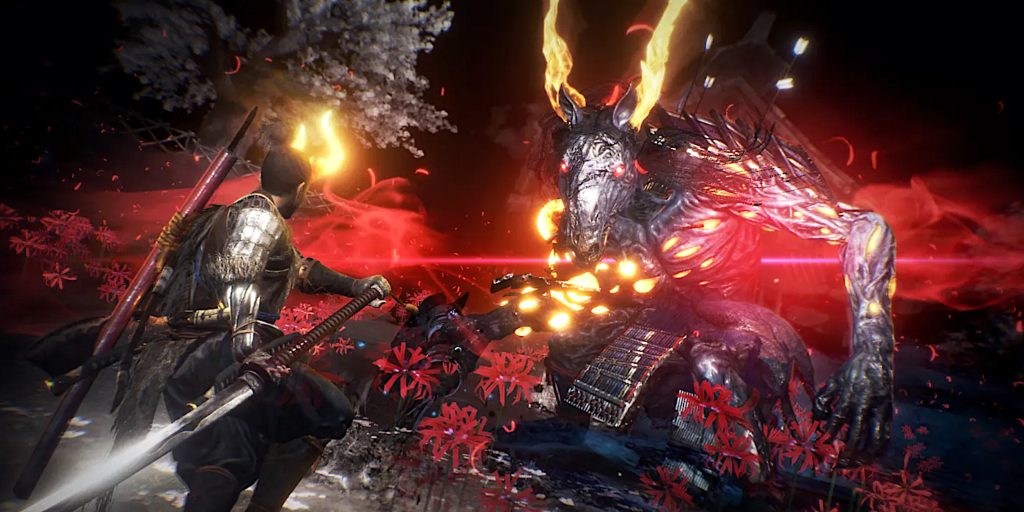
Nioh 2 was released in 2020 and is largely set before the original game. Rather than retaining William, Team Ninja allowed players to create a new protagonist called Hide.
Hide is a Shiftling, born to a human father and a yōkai mother. This dual identity becomes central to both the story and combat.
The Rise of Hideyoshi
Hide forms a partnership with the ambitious merchant Tokichiro. Together, their names become the title Hideyoshi, connecting them to the historical Toyotomi Hideyoshi.
That relationship provides the emotional centre of the game. Tokichiro’s transformation from cheerful opportunist to a man corrupted by power parallels the political unification of Japan.
The story follows several decades of conflict and includes figures such as:
- Oda Nobunaga
- Nōhime
- Takenaka Hanbei
- Honda Tadakatsu
- Tokugawa Ieyasu
- Akechi Mitsuhide
- Saika Magoichi
Nioh 2 does not offer a reliable history lesson, but it does use historical personalities more confidently than its predecessor.
How Nioh 2 Improved Combat
The sequel retained the weapon and stance systems while introducing yōkai abilities.
Defeated monsters could drop Soul Cores, allowing Hide to reproduce specific attacks. These ranged, defensive and transformational abilities were powered by Anima rather than Ki.
Burst Counters also gave players a way to interrupt dangerous red attacks. Correctly timing one against an aggressive boss remains one of the series’ most satisfying moments. Incorrectly timing one usually leads to being flattened, which is less satisfying but quite educational.
Other improvements included:
- A customisable protagonist
- More varied weapons
- Deeper skill trees
- Yōkai Shift transformations
- Improved cooperative play
- Greater enemy variety
- More flexible character builds
The Main Problem With Nioh 2
The game added more systems without removing much complexity. New players were expected to understand stance changes, Ki Pulses, Soul Cores, Burst Counters, Guardian Spirits, equipment weight, weapon scaling and several forms of magic.
It was brilliantly deep, but hardly shy about it.
The story could also become difficult to follow if the player lacked some knowledge of the Sengoku period. Characters regularly entered, betrayed one another and died before many players had worked out which warlord they served.
Nioh 3: The Series Opens Up
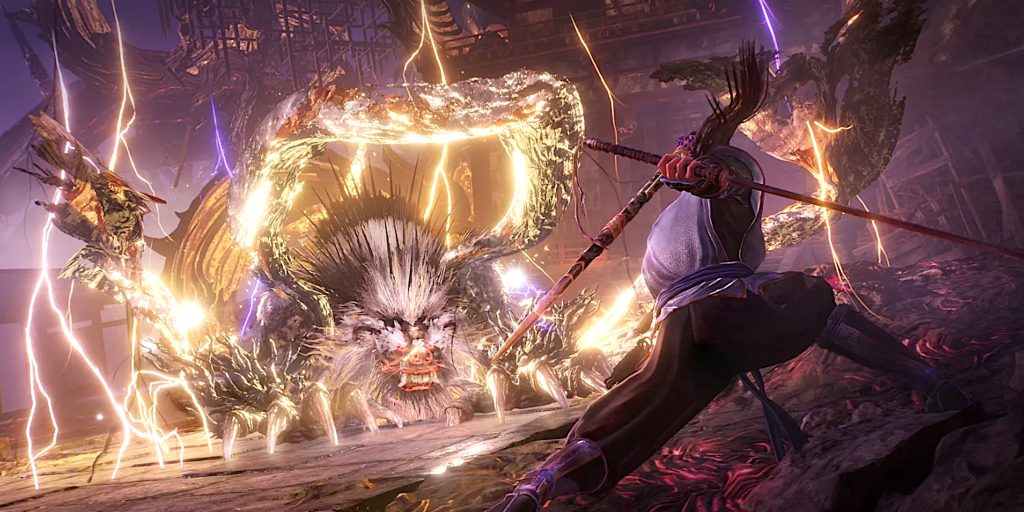
Nioh 3 follows Tokugawa Takechiyo, a young warrior destined to become shogun. His brother Kunimatsu, consumed by hatred and supernatural power, seizes control of Japan and unleashes a yōkai-infested nightmare.
Takechiyo travels through time in an attempt to change this ruined future. This allows the story to visit several periods of Japanese history rather than concentrating on a single generation.
The featured eras include:
- The Heian period
- The Sengoku period
- The early Edo period
- The Bakumatsu period
It is an ambitious structure. Famous people separated by centuries can appear within the same wider narrative, while each period provides different architecture, armour, political tensions and enemies.
The story still has to compete with the immediate concern of a demon trying to turn the protagonist into floor decoration, but its historical range is much greater than before.
Samurai and Ninja Combat Styles in Nioh 3
The defining mechanical change in Nioh 3 is the ability to switch between Samurai and Ninja styles during combat.
These are not minor stances or temporary modes. Each style has its own equipment, weapons, skills and methods of controlling a fight.
Samurai Style
Samurai style develops the traditional Nioh combat system.
It retains:
- High, middle and low stances
- Ki Pulses
- Weapon-based martial arts
- Blocking and deflection
- Heavier melee weapons
- Deliberate pressure against enemy Ki
An Arts Gauge can empower strong attacks and martial arts without consuming Ki. The result feels familiar but more aggressive, particularly when style switching is used to extend combinations.
Ninja Style
Ninja style is built around speed, evasion and Ninjutsu.
Its features include:
- Faster movement
- Rapid weapons
- Increased back damage
- Shuriken, caltrops and elemental tools
- Mist evasion
- Lower dependence on conventional Ki Pulses
Mist creates a shadowy decoy while moving the player away from danger. It replaces the Samurai style’s Ki Pulse and gives combat a more evasive rhythm.
The two styles can be changed instantly, allowing the player to break an enemy’s guard as a Samurai before switching to Ninja style to attack from behind. It sounds excessive because it is excessive. It is also extremely fun once the buttons stop feeling like an exam.
Open-Field Exploration
The first two games used separate missions built around relatively contained levels. Nioh 3 replaces much of that structure with larger open-field maps.
This is not one continuous open world. Instead, each historical period contains broad connected areas with villages, temples, caves, enemy camps, side missions and hidden routes.
The change gives players more freedom when facing a difficult boss. Rather than repeatedly running into the same very large fist, they can explore elsewhere, improve their equipment and return stronger.
Open-field activities include:
- Purifying corrupted areas
- Entering dangerous Crucibles
- Clearing enemy strongholds
- Finding Kodama and other friendly yōkai
- Completing character-driven side missions
- Discovering new martial arts and Ninjutsu
- Opening shortcuts through hostile regions
Exploration is more focused than in many open-world games. The maps still contain carefully arranged combat spaces, traps and shortcuts that feel recognisably Nioh.
Some objectives repeat, but the freedom helps break up the old mission structure.
What Are the Crucibles?
Crucibles are areas overwhelmed by concentrated supernatural corruption. Entering one limits the player’s ability to recover health normally and exposes them to particularly dangerous enemies.
They function as high-pressure combat zones rather than ordinary map regions. The environment becomes hostile, navigation grows more difficult and a powerful central opponent must usually be defeated before the area can be purified.
Lesser Crucibles provide smaller versions of the same idea, while later updates expanded their available rewards.
The system suits Nioh remarkably well. Its combat has always been strongest when the player is forced to manage several risks at once. Crucibles simply make the danger more visible and considerably ruder.
Weapons Across the Nioh Series
The series offers historical Japanese weapons alongside more theatrical designs. Each weapon class has a full move set rather than acting as a simple collection of damage statistics.
| Weapon | Main strength | Main limitation |
|---|---|---|
| Katana | Balance and counterattacks | Requires precise timing |
| Dual swords | Speed and sustained pressure | Limited reach |
| Spear | Range and crowd control | Can feel awkward in confined spaces |
| Axe | High damage and Ki destruction | Slow recovery |
| Kusarigama | Range, grappling and flexibility | Complex move set |
| Odachi | Reach and heavy strikes | High Ki use |
| Tonfa | Rapid Ki damage | Short reach |
| Hatchets | Mobile melee and throwing attacks | Moderate raw damage |
| Switchglaive | Versatility and stance combinations | Mechanically demanding |
| Splitstaff | Long combinations and range | Attacks can overextend |
| Fists and cestuses | Aggression and close pressure | Very short reach |
Nioh 3 divides weapons between Samurai and Ninja builds, encouraging players to think about how two contrasting loadouts can support one another.
The weapons are inspired by real examples, but their movements are deliberately exaggerated. Historical warriors did not perform every spinning combination shown in the games, partly because battlefields rarely provide a convenient lock-on camera.
How Historically Accurate Is Nioh?
Nioh uses history as a framework rather than a restriction.
Many characters, battles, castles and political alliances are based on real history. Armour often reflects recognisable Japanese styles, while weapons draw from genuine military traditions.
However, the games alter chronology, motivation and personal relationships to serve the supernatural narrative.
Elements Grounded in History
- William Adams did reach Japan in 1600.
- Tokugawa Ieyasu emerged victorious from the struggle surrounding Sekigahara.
- Oda Nobunaga and Toyotomi Hideyoshi played central roles in Japanese unification.
- The Tokugawa succession involved complex questions of family and legitimacy.
- Several battlefields and castles recreate identifiable historical locations.
- The Bakumatsu period brought firearms, Western influence and political unrest.
Elements Based on Folklore
The supernatural enemies are drawn from a vast range of Japanese legends and religious traditions.
Recurring creatures include:
- Oni
- Tengu
- Kappa
- Nue
- Rokurokubi
- Yuki-onna
- Kasha
- Umibōzu
- Tsuchigumo
These creatures are not presented as careful reproductions of one definitive tradition. Folklore changes across regions and periods, and Team Ninja adapts each monster into something suitable for combat.
That usually means making it larger, angrier and surprisingly capable of tracking a dodge roll.
Every Nioh Game Ranked
3. Nioh
The original deserves enormous credit for establishing the series. Its combat remains sharp, William provides an unusual perspective and several boss encounters are still among Team Ninja’s best.
It ranks third because its sequels expanded almost every part of its design. Repeated environments and relentless loot management are more noticeable when returning from the later games.
Best for: Players who want William’s story and the purest version of the original formula.
2. Nioh 2
Nioh 2 offers exceptional build variety and arguably the trilogy’s most coherent blend of weapon combat and yōkai powers. Hide’s abilities make the player feel connected to the supernatural world rather than merely visiting it.
Its complexity is both its greatest strength and its most obvious obstacle. There are enough overlapping mechanics here to make a beginner briefly consider farming instead.
Best for: Players who want dense character building and the strongest traditional mission-based structure.
1. Nioh 3
Nioh 3 takes first place because its Samurai and Ninja systems transform combat without discarding what made the series distinctive. Open-field exploration also gives players more control over progression.
It is not flawless. Loot remains excessive, some activities become repetitive and the storytelling still struggles to make every historical character memorable. Visual presentation and performance can also vary between locations.
Yet the freedom to explore, change fighting style and move across historical periods makes it the most complete entry.
Its critical reception reflects that strength. The game holds a generally favourable critic score of 86 on Metacritic, while reviews have particularly praised the dual combat styles and open-field design. Criticism has centred on recycled material, uneven visuals and the continued abundance of disposable loot.
Best for: Newcomers and experienced players who want the broadest, most flexible version of Nioh.
Which Nioh Game Should You Play First?
Nioh 3 is now the most accessible starting point. Its open-field structure allows players to leave a difficult encounter, explore and return with stronger equipment.
However, the best starting game depends on what you want:
| Player preference | Recommended game |
|---|---|
| Experience the story in release order | Nioh |
| Create a custom protagonist | Nioh 2 |
| Explore larger environments | Nioh 3 |
| Focus on traditional Samurai combat | Nioh or Nioh 2 |
| Mix Samurai and Ninja abilities | Nioh 3 |
| Play the most refined overall entry | Nioh 3 |
Playing in release order makes the mechanical progression easier to appreciate. Beginning with Nioh 3 may make the older mission structure feel restrictive when you eventually go backwards.
Is Nioh a Soulslike?
Yes, although the label can be misleading.
Nioh uses several familiar Soulslike ideas:
- Experience is dropped upon death.
- Shrines serve as checkpoints.
- Resting restores health and respawns ordinary enemies.
- Bosses require pattern recognition.
- Character statistics influence weapon effectiveness.
- Levels contain locked doors and looping shortcuts.
Its combat identity comes from elsewhere. Stance switching, Ki Pulses, large move sets and fast animation cancelling make it closer to a technical character-action game than a conventional Dark Souls imitation.
Calling Nioh a Soulslike is accurate. Assuming it should be played exactly like Dark Souls is an excellent way to spend an evening being killed.
Is the Nioh Series Worth Playing?
The Nioh trilogy is worth playing for anyone interested in difficult melee combat, Japanese weaponry or supernatural history.
Its weaknesses remain consistent. The stories can be confusing, the loot economy is needlessly busy and difficulty spikes sometimes arrive without the courtesy of an introduction.
The strengths are far more distinctive. Very few RPGs give players this much control over individual attacks, defensive movement and weapon technique. Every improvement feels earned because success depends on understanding the systems rather than simply acquiring a larger sword.
Nioh 3 confirms that the series still has room to change. It opens the landscape, stretches across Japanese history and lets Samurai and Ninja combat exist side by side. Somehow, beneath all those skill trees, item statistics and angry demons, the central pleasure remains wonderfully simple: learning how to fight better.
Frequently Asked Questions
Is Nioh 3 a direct sequel?
Nioh 3 continues the series thematically and includes connections to established history and lore, but it introduces Tokugawa Takechiyo as its central protagonist. Its time-travel structure allows it to explore events beyond the periods covered by the first two games.
Is Nioh 3 open world?
It uses an open-field structure rather than one uninterrupted open world. Players explore several large maps containing connected regions, missions, Crucibles and optional encounters.
Can Nioh 3 be played cooperatively?
Yes. It supports online play for up to three players.
Is William in every Nioh game?
William is the protagonist of the first Nioh. Nioh 2 follows the customisable Hide, while Nioh 3 centres on Tokugawa Takechiyo.
Which Nioh game has the best combat?
Nioh 3 offers the greatest flexibility through its interchangeable Samurai and Ninja styles. Some players may still prefer the more concentrated yōkai combat system of Nioh 2.
Do I need to play Nioh and Nioh 2 before Nioh 3?
No. Knowledge of the earlier games adds context, but Nioh 3 introduces a new protagonist and can be played independently.