My first instinct in a strategy game is usually to buy the most impressive cavalry available and assume the details will sort themselves out. The details tend to include spears.
Browser wargames reward a little more thought. You command troops, read the battlefield and try to make better decisions than the opposing commander. Depending on the game, that might mean holding a bridge, protecting an army’s morale or accepting that charging uphill was an expensive expression of optimism.
The appeal is how quickly you can reach those decisions. Open a game in your browser, learn its basic controls and start experimenting.
Here is how browser wargames work, what to look for before playing and how to approach your first battle without turning the tutorial into a casualty report.
What Is a Browser Wargame?
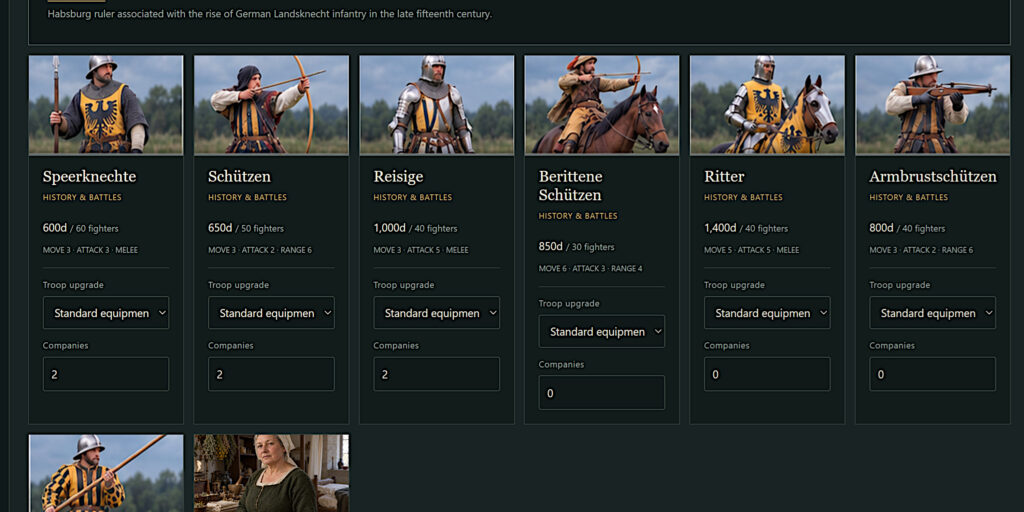
A browser wargame is a military strategy game played through a web browser. You typically control units or armies rather than steering an individual soldier.
Some focus on a single battlefield. Others cover entire campaigns, with recruitment, diplomacy and resource management between engagements. Their settings range from ancient warfare to fictional conflicts.
The browser describes how you access the game, rather than how complicated it is. A simple-looking map can still demand careful decisions about movement, positioning and timing.
It also helps to distinguish a tactical wargame from a broader empire-building game. One asks how you will take that hill. The other may first require you to build the economy that pays for the soldiers.
Turn-Based or Real-Time: What Is the Difference?
The pace of play has a considerable effect on how a wargame feels.
| Format | How it works | What to expect |
|---|---|---|
| Turn-based | Players take turns issuing orders | Time to inspect units and consider moves |
| Phase-based | Actions are separated into stages such as shooting and movement | Careful attention to action order |
| Real-time | Units act while the battle continues | More pressure on reactions and attention |
Some games combine these approaches or use simultaneous orders.
I like having time to think, particularly when I am still working out which symbol represents the archers. However, a turn-based game is only forgiving about the clock. It can still punish a poor move quite thoroughly.
Choose a Small Battle First
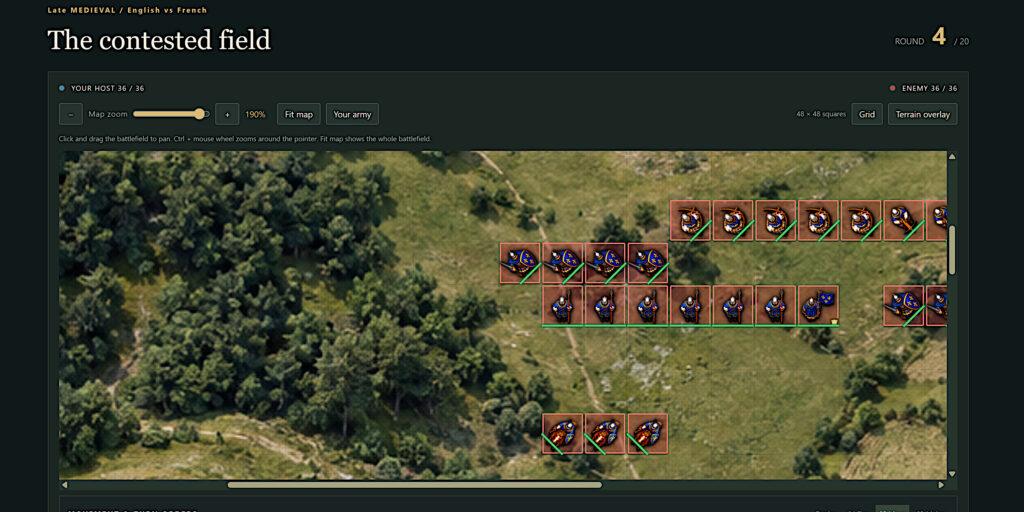
For your first game, look for a tutorial, practice battle or small scenario with a clear objective.
A manageable starting battle should make it reasonably easy to understand:
- What you need to do to win.
- Which troops you control.
- How movement and combat work.
- When the enemy gets to respond.
- Whether the battle has a turn limit.
Resist the temptation to begin with the largest army available. More units mean more interactions to track, and it becomes harder to understand why something went wrong.
A small defeat that teaches you something is more useful than a huge battle you spend mostly scrolling around.
Before committing, check whether the game requires an account, how saving works and whether its controls suit your device. These details vary between titles.
Read the Victory Conditions Before Moving
Winning the fighting and winning the scenario are not always the same thing.
A battle might require you to capture objectives, survive a set number of rounds, protect a commander or destroy the enemy army. Each condition changes what sensible play looks like.
If the aim is to hold a crossing, chasing retreating troops into the distance may actively harm your chances. If the scenario rewards survival, preserving a battered unit can matter more than landing one final attack.
Look for three things before your opening move: the objective, the time limit and the conditions that cause defeat.
That brief check can save you from an impressive military performance in entirely the wrong place.
Learn What Each Unit Is For
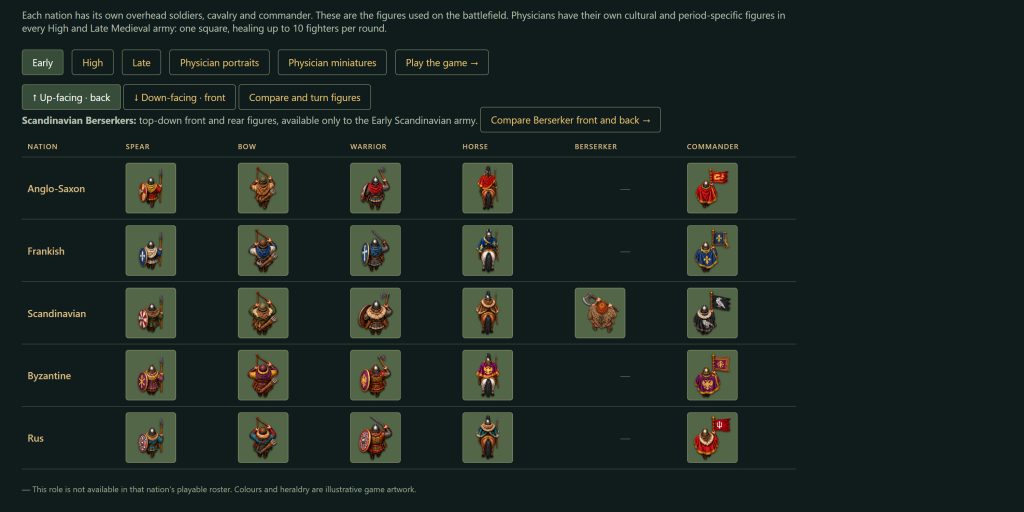
You do not need to memorise every statistic immediately. Start by understanding the jobs your troops can perform.
In many medieval wargames, the broad roles look something like this:
| Unit type | Common role | What to check |
|---|---|---|
| Infantry | Hold ground and support the battle line | Defence, movement and staying power |
| Missile troops | Inflict damage at range | Range, line of sight and vulnerability |
| Cavalry | Threaten flanks and exploit openings | Charge rules, terrain and enemy counters |
These are starting points, rather than universal rules. A mounted archer behaves very differently from an armoured lancer. Cheap infantry might be useful for guarding an objective even if you would rather avoid sending them into the hardest fight.
Read unit descriptions alongside the numbers. A special rule can explain a unit’s purpose more clearly than its attack rating.
For an early army, I would favour a dependable infantry core, some ranged support and a manageable mobile force. You want to learn how the parts work together.
Treat Terrain as Part of Your Plan
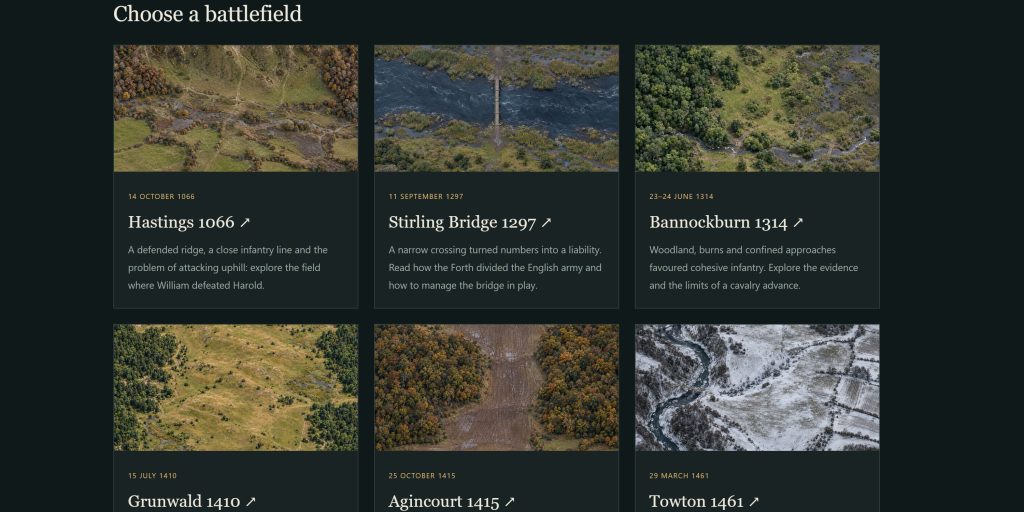
A battlefield is a collection of opportunities and restrictions.
Before deploying, inspect hills, woods, rivers, settlements and narrow approaches. Check what the game actually says they do. Attractive high ground is not automatically useful if your troops cannot see or shoot from it.
Ask yourself:
- Where can the enemy reach me quickly?
- Which routes restrict movement?
- Can my missile troops see their intended targets?
- Is there space to support or withdraw a unit?
- Does the ground interfere with cavalry?
A strong position should help your army perform its role. Archers need useful firing opportunities. Mobile troops need room to move. A defensive line needs somewhere worth defending.
Putting everyone on the nearest hill is a plan, technically. Whether it is a good one depends on what happens next.
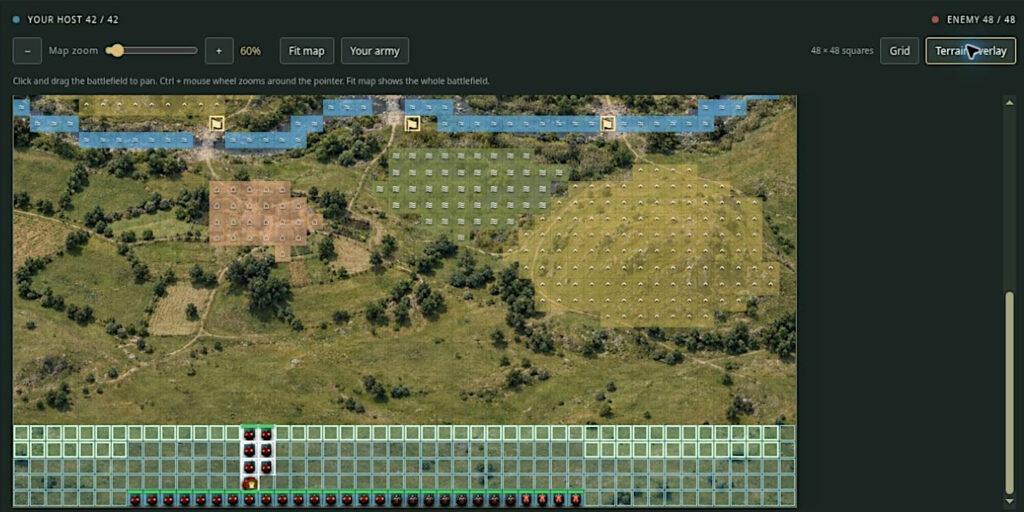
Levy & Lance Terrain Overlay
Make Your Opening Moves Support Each Other
Your first few actions should create a position you can fight from.
Move units with a shared purpose. Keep support close enough to matter and avoid sending your fastest troops far beyond the rest of the army simply because their movement allowance permits it.
If the rules allow, retain a small reserve. An uncommitted unit gives you options when a flank comes under pressure or an unexpected opening appears.
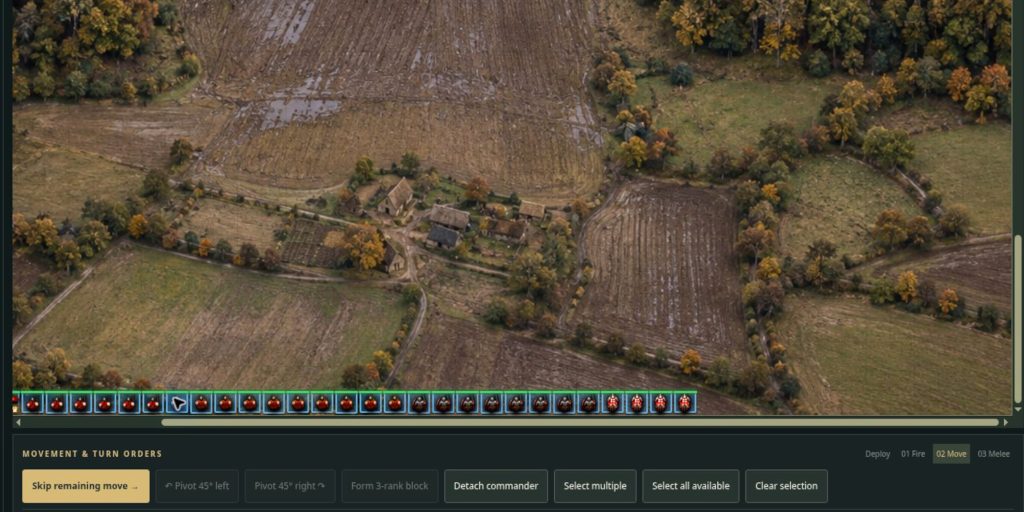
Before ending a turn or phase, inspect the enemy’s likely response. Which of your units can they reach? Have you exposed a flank? Have you blocked your own route forward?
This is where browser wargames become interesting for me. A move that looks excellent in isolation can become deeply questionable once you remember the other player also gets a go.
Check Morale, Facing and Combat Predictions
Troop numbers rarely tell the whole story.
Where a game models them, morale, fatigue, disorder and facing can change how a unit performs. A depleted formation might still hold a vital position. A larger one might be close to breaking.
Likewise, combat predictions deserve a careful read. Check what they include, whether outcomes involve chance and what retaliation the target can make.
A favourable attack is not automatically worth taking. It might leave the attacker exposed, abandon an objective or commit your last reserve.
I find it useful to ask one question before attacking: what position will this leave me in afterwards?
It is considerably more helpful than asking whether the charge will look good.
Try a Medieval Browser Battle in Levy & Lance
For a medieval starting point, Levy & Lance is SevenSwords’ free browser wargame with a growing legion of fans. Its current beta offers solo play against the computer without an account, with three medieval periods and a choice of battlefields.
Its rounds proceed through rally, missile fire, movement and melee. That order gives you a useful framework for thinking about a battle: assess your troops, use your ranged opportunities, reposition and then resolve close combat.
For your first attempt, keep the army manageable and read the selected mode’s victory conditions. Concentrate on maintaining support between units and understanding the effect of the ground.
Leave elaborate manoeuvres for the point at which you can explain why they should work. “It felt medieval” is a difficult argument to present to the survivors.
What to Do After Your First Defeat
Replay the battle with one specific change.
Perhaps you advanced too quickly, left missile troops exposed or committed cavalry before a useful opening appeared. Choose the clearest mistake and test a different approach.
Changing everything at once makes it harder to learn what helped. Keeping the same army and battlefield gives you a more useful comparison.
Wins deserve the same scrutiny. Did your position create an advantage, or did a risky attack happen to succeed? Both are enjoyable. Only one is a dependable plan.
Your first battle does not need to prove that you are a tactical prodigy. Aim to understand the objective, make your units support each other and finish with a clearer idea of what to try next. That is a perfectly respectable beginning for a commander whose previous military experience involved clicking the cavalry portrait.