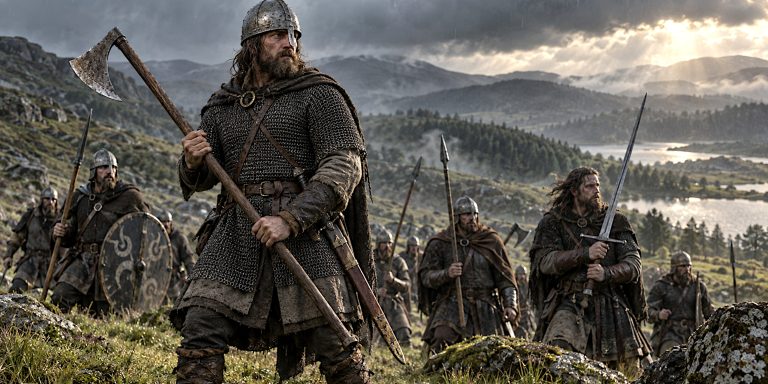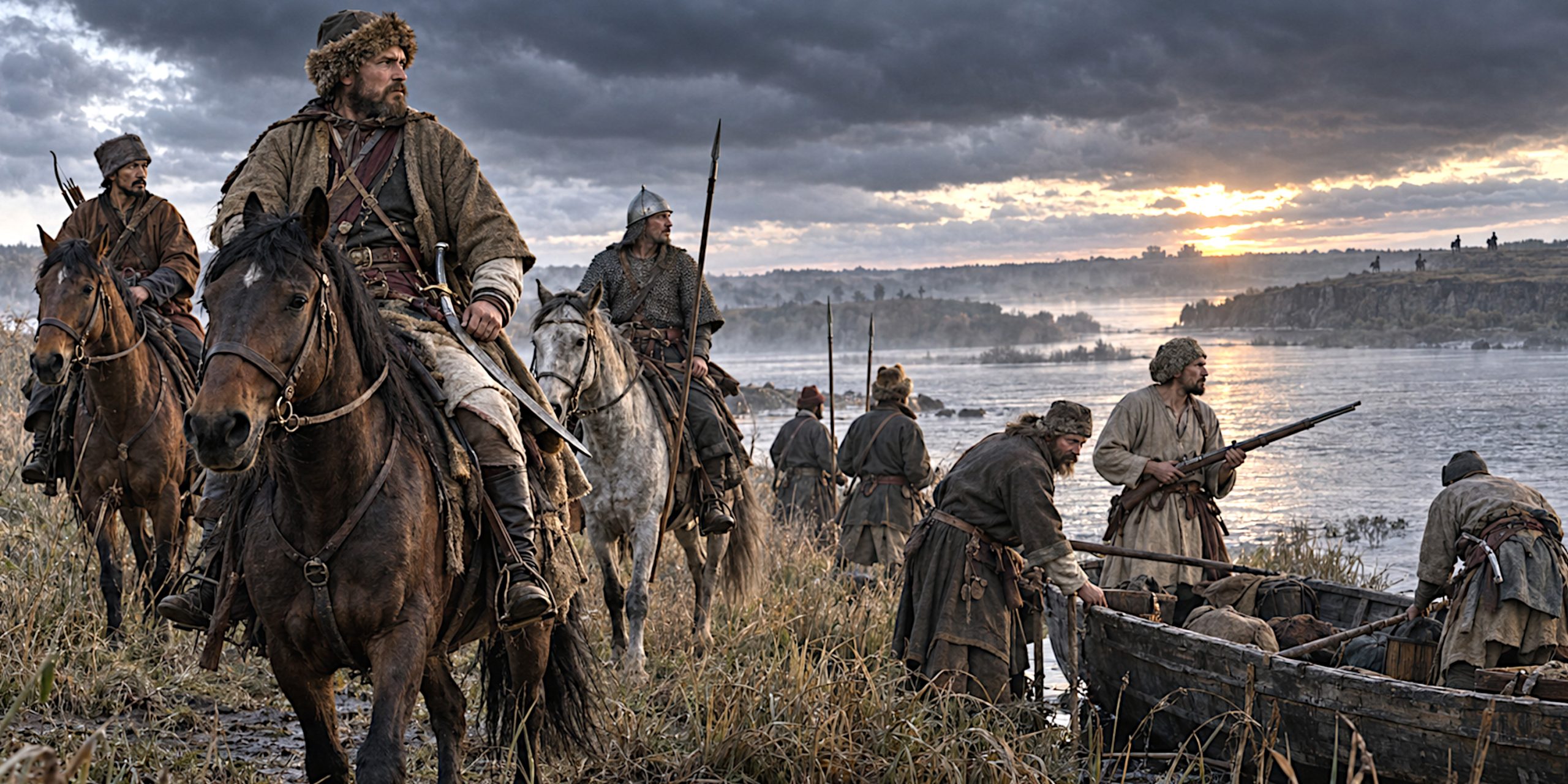
The late medieval Cossack was not yet the colourfully dressed warrior of seventeenth-century paintings. There were no vast registered hosts, established hetmanates or neatly organised Sich communities. Even the famous shaved scalp, broad trousers and curved sabre belong more securely to later periods.
Instead, the first Cossacks emerged from the dangerous borderlands north of the Black Sea during the fifteenth and early sixteenth centuries. They were hunters, fishermen, scouts, mercenaries, raiders and frontier soldiers. Some served princes and royal officials. Others recognised authority only when it happened to be useful.
They lived between the settled territories of Lithuania, Poland and Muscovy and the open grasslands contested by the Crimean Khanate, the Nogai Horde and the Ottoman Empire. It was a hard country in which to survive. It was also precisely the sort of country in which an independent military culture could take root.
As a historian, I find the earliest Cossacks more interesting than their polished descendants. Their identity was still being formed, their loyalties remained negotiable and the surviving evidence is maddeningly incomplete. History has provided us with a frontier full of armed men, then misplaced most of their personal details.
Who Were the Late Medieval Cossacks?
The word Cossack comes from the Turkic term qazaq or kazak. Depending upon context, it could describe a free person, wanderer, adventurer or someone who had separated from conventional political authority.
It did not originally describe a single ethnic group.
During the medieval period, similar terms were used across the Eurasian steppe. Turkic warriors, displaced retainers, brigands and independent fighting men might all be described in this way. By the late fifteenth century, however, written sources were increasingly applying the name to armed frontier communities associated with the Dnieper and Don regions.
The early Cossacks probably included people from several backgrounds:
- Ruthenian peasants and townsmen from Kyiv, Cherkasy, Kaniv and neighbouring districts
- Hunters, fishermen and salt workers who travelled seasonally into the steppe
- Runaway serfs, criminals and debtors
- Impoverished nobles and military retainers
- Orthodox Christians escaping political or economic restrictions
- Turkic converts, defectors and steppe inhabitants
- Mercenaries employed by Lithuanian, Polish, Muscovite or regional authorities
They were united less by ancestry than by occupation and environment. Frontier life demanded horsemanship, knowledge of rivers, familiarity with firearms and the ability to disappear before a stronger enemy arrived.
Early Cossack identity was therefore something a man could adopt. It was a way of living before it became a formal military estate.
When Did the Cossacks First Appear?
There is no single foundation date for the Cossacks. Their formation was a process rather than an event.
The northern Black Sea frontier had supported semi-independent warriors for centuries. Earlier populations such as the Brodniki, Turkic steppe groups and Ruthenian frontier guards may have contributed practices or individuals. Direct descent from any one of these communities remains difficult to prove.
The most important late medieval references appear during the closing decades of the fifteenth century.
| Date | Event |
|---|---|
| 1489 | Armed men associated with the Dnieper frontier reportedly guided Polish forces during operations against Tatars. Later historians have connected them with the developing Cossack population |
| 1492 | Crimean Khan Meñli I Giray complained that men from Kyiv and Cherkasy had attacked a ship near Tiahyn |
| 1493 | Bohdan Hlynsky led another attack against the Crimean-Ottoman frontier, including the fortress of Ochakiv |
| Early 1500s | References to Cossacks became increasingly common in Lithuanian, Polish, Muscovite and Crimean correspondence |
| 1520s and 1530s | Frontier officials began attempting to organise Cossack forces more consistently |
| 1550s | Dmytro Vyshnevetsky established a fortified base on Mala Khortytsia, an important step towards the later Zaporozhian Sich |
The 1492 complaint is often treated as the first clear documentary appearance of Ukrainian Cossacks. It describes them as subjects from the frontier towns of Kyiv and Cherkasy rather than members of a fully independent state.
That distinction matters. The Cossacks already existed as recognisable armed groups, but their political institutions were still developing.
The World That Created Them
The early Cossacks emerged within a region sometimes called the Wild Fields, a vast belt of steppe between the settled northern territories and the Black Sea.
The name can be misleading. The country was not empty. It contained rivers, seasonal camps, grazing routes, fishing grounds, abandoned settlements, fortifications and long-distance trading connections. It was also crossed by Crimean and Nogai raiding parties seeking captives and livestock.
Several major powers competed around this frontier:
- The Grand Duchy of Lithuania controlled Kyiv and much of the upper and middle Dnieper region
- The Kingdom of Poland exercised growing influence in Ruthenian lands
- The Crimean Khanate dominated much of the northern Black Sea steppe
- The Ottoman Empire controlled important coastal fortresses and supported the Crimean khans
- Muscovy expanded southwards and employed its own frontier warriors
- The Nogai Horde operated across the eastern steppe
Royal governments claimed enormous territories but could not police them continuously. Cossack bands flourished in the resulting gaps.
The frontier offered valuable resources. Cossacks fished in the Dnieper, hunted animals for fur and meat, gathered honey, kept livestock and extracted salt. These activities carried them deep into exposed country, where peaceful labour and military readiness became practically indistinguishable.
A fishing expedition might turn into a reconnaissance mission. A hunting camp might become a temporary fort. A group formed for self-defence might decide that raiding an enemy vessel was considerably more profitable. Medieval frontiers rarely respected tidy job descriptions.
The First Recorded Cossack Campaigns
One of the earliest well-documented clashes occurred near Tiahyn on the lower Dnieper in 1492.
Cossacks from the Kyiv and Cherkasy districts attacked a Crimean or Ottoman vessel, seized property and took prisoners. Crimean Khan Meñli I Giray complained to Alexander Jagiellon, Grand Duke of Lithuania.
In translation, the khan’s complaint states:
“Your people, the Kyivans and Cherkasians, came down the Dnieper, attacked our ship near Tiahyn, destroyed it, and captured one man.”
He then asked, with understandable irritation:
“How can we live in brotherhood and friendship now?”
Alexander replied that the attack had occurred without his knowledge and promised an investigation. This exchange reveals an arrangement that would remain familiar for centuries. The state found frontier warriors useful, struggled to control them and denied responsibility whenever their activities became diplomatically inconvenient.
In 1493, Bohdan Hlynsky, governor of Cherkasy, reportedly led Cossacks against Ochakiv. The fortress was strategically important because it controlled access between the Dnieper-Bug estuary and the Black Sea.
These operations established several enduring features of Cossack warfare:
- Movement along the Dnieper
- Attacks on ships and riverside fortifications
- Cooperation with frontier officials
- Retaliatory raids against Crimean and Ottoman positions
- A political relationship based on partial control and plausible denial
Organisation and Leadership
The first Cossack communities lacked the elaborate administration known from the later Zaporozhian Host.
Bands were probably organised around experienced leaders chosen for a particular journey, raid or season. Authority depended upon reputation, success, generosity and the ability to keep followers alive. A leader who failed too often was unlikely to enjoy a long administrative review process.
Early commanders were sometimes called otamans. The word probably had Turkic or Germanic roots transmitted through the military cultures of Eastern Europe. Leadership could also be exercised by regional governors and noble patrons.
Decisions may have been discussed collectively, particularly when bands divided plunder or selected leaders. Later Cossack councils probably developed from these practical arrangements, although it is dangerous to assume that the institutions of the seventeenth century already existed in their mature form during the 1490s.
Temporary groups could range from small scouting parties to forces numbering several hundred men. They gathered for:
- Hunting and fishing expeditions
- Escort duties
- Frontier defence
- Reconnaissance
- Retaliatory raids
- Mercenary service
- Attacks on Ottoman and Crimean shipping
- Rescue or recovery of captives
Membership was fluid. A frontier townsman might farm or practise a trade for part of the year before joining an expedition into the steppe.
How the Early Cossacks Fought
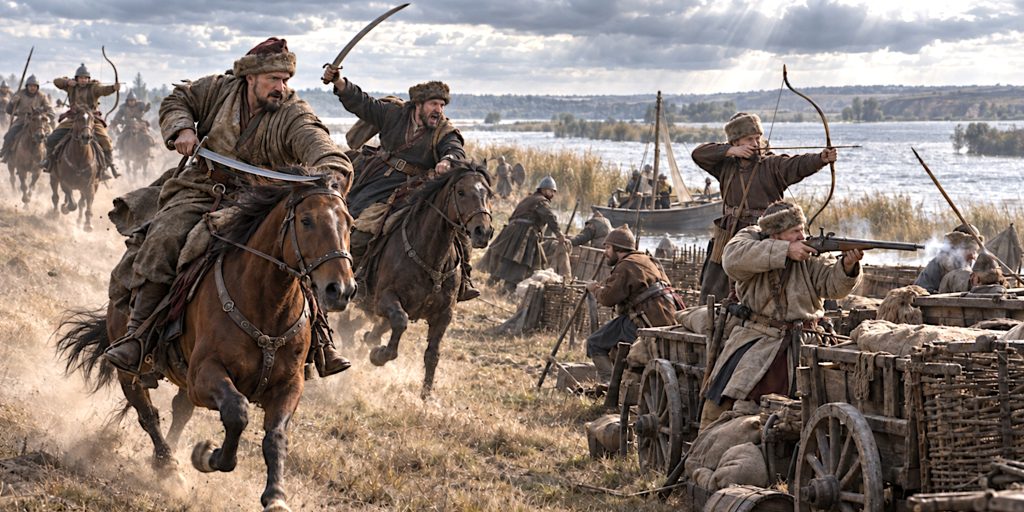
Mobility was the foundation of Cossack warfare.
They avoided set-piece battles against stronger armies whenever possible. Raiding parties depended upon speed, surprise and detailed knowledge of river crossings, islands, reed beds and steppe tracks.
Mounted Cossacks could scout over considerable distances, pursue raiders or strike poorly defended settlements. Men travelling by river used small boats suitable for the Dnieper’s channels and rapids. The celebrated chaika boats of later Cossack naval campaigns developed from this river-going tradition, although detailed descriptions belong mainly to the early modern period.
A typical operation might involve:
- Gathering men and supplies in a frontier town
- Moving downriver or across the steppe
- Establishing a concealed camp
- Observing enemy routes and patrols
- Attacking quickly at dawn or during poor weather
- Seizing horses, weapons, livestock or prisoners
- Withdrawing before a larger response could be organised
Early Cossacks could fight on foot as well as on horseback. Against cavalry, men might use carts, riverbanks or improvised earthworks as defensive positions. Missile weapons and firearms allowed them to weaken attackers before close combat.
They were not invincible horsemen casually sweeping aside every army placed before them. Their real strength lay in operating where conventional forces found movement, supply and communication difficult.
Arms and Armour
The equipment of a late medieval Cossack varied enormously. There was no standard uniform and no central armoury issuing matching weapons.
A wealthy leader or noble retainer might possess a mail shirt, helmet, sabre and good horse. A fisherman newly attached to a Cossack band might carry a bow, knife and whatever axe was already being used to cut firewood.
Swords and sabres
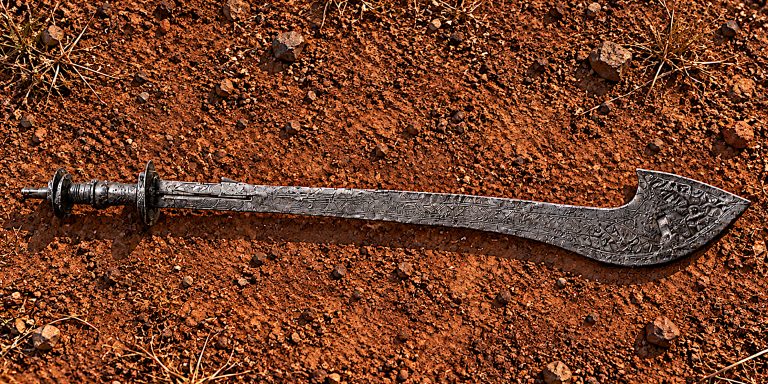
The curved sabre became the weapon most strongly associated with Cossack culture. During the late fifteenth and early sixteenth centuries, frontier sabres reflected a mixture of Central European, Hungarian, Tatar, Ottoman and eastern European influences.
Specific sword forms included:
- Hungarian-style sabres: Curved, single-edged weapons designed primarily for cutting from horseback
- Tatar sabres: Light cavalry weapons with curved blades and relatively simple guards
- Ottoman kilij-type blades: Strongly curved cutting swords, although classic later kilij forms should not be projected too confidently into the fifteenth century
- Polish-Hungarian sabres: Weapons combining eastern blade forms with fittings used in the Polish and Lithuanian military world
- Straight medieval swords: Double-edged swords remained in circulation, particularly among nobles, retainers and warriors supplied through central European networks
- Falchions and single-edged hangers: Practical cutting weapons suited to men who fought both mounted and on foot
The sabre was useful because it was relatively light, could be drawn easily on horseback and delivered powerful cuts without requiring the armour-piercing thrust of a stiff longsword.
That does not mean every early Cossack owned one. Good blades were expensive. Weapons were inherited, purchased, captured or presented as payment.
Polearms and axes
Spears were common and considerably cheaper than swords. Mounted warriors used lances for pursuit and shock attacks, while foot soldiers carried shorter spears.
Other weapons probably included:
- Battle axes
- Utility axes capable of serving in combat
- Maces
- War hammers
- Short polearms
- Clubs and cudgels
The mace later became a symbol of Cossack command, particularly in the form of the bulava. Its symbolic role was not yet fully developed during the earliest period.
Bows and firearms
Composite bows remained important across the steppe. Cossacks lived among military cultures in which mounted archery was highly developed, and some undoubtedly adopted Tatar-style bows, quivers and shooting techniques.
Firearms became increasingly important during the late fifteenth and sixteenth centuries. Early handguns included matchlock arquebuses and heavier firearms suitable for defence from boats, carts or prepared positions.
Gunpowder weapons did not immediately replace bows. Bows fired more rapidly, worked in wet or mobile conditions and required no powder supply. Firearms offered greater penetrative power and demanded less lifelong training. For a time, sensible warriors used both.
Armour and protection
Armour was determined by wealth, availability and role.
| Armour type | Likely use |
|---|---|
| Mail shirt | Flexible protection for experienced or prosperous warriors |
| Padded coat | Affordable defence worn alone or beneath mail |
| Lamellar armour | Associated particularly with steppe and eastern military traditions |
| Brigandine | Fabric garment lined with overlapping metal plates |
| Scale armour | Present in eastern European and steppe equipment traditions |
| Kettle hat | Practical European helmet offering broad protection |
| Conical helmet | Common form influenced by Ruthenian, Tatar and eastern styles |
| Mail aventail | Protection for the neck and sides of the face |
| Small shield | Useful for mounted combat, although firearms gradually reduced its importance |
Many Cossacks probably fought without substantial body armour. Speed mattered, particularly during long-distance raids. Heavy protection was useful in battle but less charming when crossing miles of summer steppe with limited water.
Clothing and Appearance
The iconic visual image of a Zaporozhian Cossack belongs mainly to the sixteenth, seventeenth and eighteenth centuries. Applying it wholesale to the 1490s creates a costume drama rather than a reconstruction.
Early Cossack clothing probably reflected the cultural mixture of the frontier. Garments may have included:
- Linen shirts
- Woollen trousers
- Leather boots
- Kaftans and long coats
- Fur caps
- Woollen cloaks
- Sashes used to carry knives or small equipment
- Clothing captured or traded from Tatars and Ottomans
Some men may have worn the long forelock later called the oseledets, but firm evidence for its universal use among the earliest Cossacks is lacking.
There was no official Cossack appearance. Men wore what they could afford, acquire and repair.
Horses, Boats and Frontier Logistics
The Cossack military system depended upon practical transport.
Steppe horses were generally smaller and tougher than the great animals associated with heavily armoured western knights. They could survive on sparse grazing and travel over demanding terrain. Cossacks used remounts when possible, allowing them to maintain speed over long distances.
River travel was equally important. The Dnieper connected the settled north with the Black Sea, but its rapids and channels required local knowledge. Small boats could transport men, food, weapons and captured goods while avoiding some overland patrols.
Expeditions relied on dried food, grain, fish and whatever could be obtained locally. Camps were placed near water but hidden from established routes. Islands below the Dnieper rapids offered natural refuges.
The later fortified Sich emerged from this geography. It was not simply a castle dropped into the wilderness. It developed from generations of seasonal camps, river bases and defensive gathering places.
Religion and Identity
Most Ukrainian Cossacks were Eastern Orthodox Christians, but religious identity was not necessarily the original cause of Cossack formation.
During the late fifteenth century, economic opportunity, frontier defence and resistance to outside control were probably more immediate concerns. Orthodox identity became increasingly central during the sixteenth and seventeenth centuries as political and confessional tensions intensified within the Polish-Lithuanian Commonwealth.
The frontier also allowed cultural exchange. Cossacks borrowed weapons, clothing, vocabulary and tactics from their Tatar opponents. Men who fought one another could still trade, negotiate, ransom captives and imitate useful equipment.
This makes early Cossack identity difficult to fit into simple national stories. They were products of the Ruthenian world, but also of the wider Black Sea frontier. Their culture developed through conflict and contact with Crimean Tatars, Nogais, Ottomans, Lithuanians, Poles, Moldavians and Muscovites.
Relations with the Crimean Tatars
Cossack and Tatar history is often presented as a permanent religious war. The reality was less obliging.
Crimean and Nogai raiders attacked Ruthenian settlements and carried captives towards Black Sea slave markets. Cossacks pursued raiding parties, attacked Crimean positions and sometimes attempted to free prisoners.
Yet Cossacks and Tatars also traded, negotiated and occasionally fought as allies. Frontier politics encouraged temporary partnerships. A Cossack band might oppose a Tatar force one year and cooperate with another faction the next.
They shared aspects of the same military environment:
- Reliance on horses
- Rapid raids
- Decentralised leadership
- Knowledge of the steppe
- The taking and ransoming of captives
- Use of composite bows and curved sabres
- Avoidance of heavily defended positions unless surprise was possible
The Cossacks learned from steppe warfare rather than developing in isolation from it.
Early Cossack Leaders
The names of most fifteenth-century Cossacks have not survived. Documentary sources usually mention rulers, governors and diplomatic complaints rather than the ordinary men who carried out expeditions.
Bohdan Hlynsky
Bohdan Hlynsky was a frontier official associated with Cherkasy. He appears in accounts of campaigns against Crimean and Ottoman positions during the 1490s.
His role illustrates the blurred line between government action and independent Cossack warfare. Frontier governors could recruit, encourage or accompany Cossack bands, even when central authorities preferred not to accept responsibility.
Ostap Dashkevych
Ostap Dashkevych served as starosta of Cherkasy and Kaniv during the early sixteenth century. He organised frontier defence and used Cossack forces against Tatar incursions.
Later traditions sometimes present him as one of the first Cossack hetmans. That title should be treated cautiously, but his importance as an organiser of Cossack military power is genuine.
Predslav Liantskoronsky
A Polish noble and frontier commander, Predslav Liantskoronsky participated in campaigns against the Tatars. Like Dashkevych, he was later included in heroic lists of early Cossack leaders.
Neither man founded the Cossacks. Both demonstrate how state officials tried to employ forces that had arisen more organically along the frontier.
Dmytro Vyshnevetsky
Vyshnevetsky belongs mainly to the mid-sixteenth century, but no account of early Cossack development can sensibly ignore him. Around the 1550s, he established a fortified base on Mala Khortytsia near the Dnieper rapids.
This was not necessarily the first Sich in the later institutional sense. It was, however, an important experiment in concentrating Cossack manpower within a fortified centre.
Archaeology and Material Evidence
Archaeology offers a necessary counterweight to heroic chronicles, but identifying a specifically late medieval Cossack object is difficult.
A sabre, arrowhead or cooking pot found beside the Dnieper does not announce the occupation of its former owner. Similar objects were used by soldiers, hunters, Tatars, Ruthenian settlers and Ottoman troops.
Early Cossack camps were often temporary. Light structures, seasonal occupation and repeated flooding along the river have left limited archaeological traces. Later construction also disturbed many possible sites.
Tiahyn
The fortress and settlement at Tiahynka are particularly important because of their connection with the documented confrontation of 1492.
Archaeological work in the area has investigated fortifications and material associated with the Crimean, Ottoman and frontier worlds. The site helps historians reconstruct the contested lower Dnieper environment in which the first named Cossack attacks occurred.
It does not provide a tidy collection labelled “property of the first Cossacks”. Archaeology is rarely that considerate.
Khortytsia and the Dnieper rapids
Khortytsia and the islands around the Dnieper rapids preserve evidence from many periods. Finds include weapons, ammunition, tools, ceramics, coins and traces of fortifications.
Much of the clearly identifiable Cossack material dates from later centuries. Nevertheless, the landscape itself explains why the region attracted early communities. Islands, channels and difficult approaches offered concealment and defensible bases close to routes leading south.
Weapons and stray finds
Weapons recovered from rivers and settlement sites include:
- Sabre fragments
- Spearheads
- Arrowheads
- Axe heads
- Lead shot
- Gun components
- Knives
- Horse equipment
- Buckles and belt fittings
Dating such finds depends upon their archaeological context. Objects removed without proper recording lose much of their historical value. A sword without provenance may still be beautiful, but it becomes a very expensive question mark.
Limits of the evidence
The archaeology of early Cossack life remains less substantial than that of the seventeenth and eighteenth-century Sich settlements. Later sites such as Chortomlyk, Oleshky and Kamianka reveal organised dwellings, workshops, ceramics, firearms and economic activity, but they cannot simply be used as direct models for the 1490s.
The surviving material suggests continuity in the use of river islands, fishing grounds, fortified camps and mixed civilian-military equipment. It does not prove that a complete Zaporozhian political system existed during the late medieval period.
Contemporary Descriptions and Their Problems
The earliest documentary references were written by outsiders. Crimean khans described Cossacks as attackers. Lithuanian officials treated them as troublesome subjects or useful fighters. Polish chroniclers often viewed them through the interests of the Crown.
Even the word Cossack could be flexible. It might identify a social condition, military occupation or style of frontier life rather than membership of a permanent community.
The 1492 complaint from Meñli I Giray is valuable because it names the attackers by their connection to Kyiv and Cherkasy. It shows that organised groups were travelling down the Dnieper and attacking shipping by the end of the fifteenth century.
Alexander Jagiellon’s response claimed the raid had happened:
“Without our knowledge and command.”
The wording captures the political problem perfectly. Cossacks belonged to the frontier territories of the grand duke, but possession on a map was not the same as obedience in a boat.
Detailed eyewitness accounts appear much later. Guillaume Le Vasseur de Beauplan’s seventeenth-century description of Ukraine discusses Cossack seamanship, councils, warfare and customs, but it records a society that had already undergone more than a century of development. It is invaluable evidence for later Cossack life, not a direct description of their medieval beginnings.
Did Women Live Among the Early Cossacks?
The surviving military sources concentrate overwhelmingly on men, but frontier society could not have functioned without women.
Women lived in the towns and farming communities from which many Cossacks came. They managed households, property, food production and trade during male absences. Women also faced enslavement during raids and participated in the defence of exposed settlements.
The earliest seasonal camps beyond the Dnieper rapids may have been predominantly male. Permanent communities, however, required wider networks of families, merchants, craftspeople and suppliers.
Later stories of the Sich as an exclusively male warrior society should not be used to erase women from the broader Cossack frontier.
Were the Late Medieval Cossacks Ukrainian or Russian?
Modern national labels must be used with care.
The Cossacks documented around Kyiv, Cherkasy, Kaniv and the lower Dnieper emerged mainly from the Ruthenian population of territories that now form part of Ukraine. They are therefore central to Ukrainian history and to the development of the Zaporozhian Cossacks.
Separate Cossack communities also developed around the Don and other frontier regions connected with Muscovy. These would contribute to Russian imperial and regional histories.
During the late fifteenth century, identities were shaped by religion, locality, ruler, language, occupation and family connection. A man could be Ruthenian, Orthodox, a subject of the Lithuanian grand duke and a Cossack without considering those identities contradictory.
Calling every early Cossack either straightforwardly Ukrainian or Russian flattens a complicated frontier. Equally, describing them as rootless wanderers with no regional identity goes too far in the other direction.
From Frontier Bands to the Zaporozhian Host
During the sixteenth century, Cossack society became larger and more organised.
Several developments encouraged this transformation:
- Increased Crimean and Nogai raiding
- Greater Polish-Lithuanian interest in frontier defence
- Expansion of noble estates and pressure on peasants
- Wider availability of firearms
- Growth of Dnieper river warfare
- Establishment of more permanent fortified bases
- Religious conflict within the Polish-Lithuanian Commonwealth
- Attempts by rulers to register and pay selected Cossacks
The Crown wanted disciplined frontier troops. It did not want thousands of armed men choosing their own leaders, launching unauthorised wars and negotiating with foreign rulers. Unfortunately for the Crown, these qualities arrived together.
By the later sixteenth century, the Zaporozhian Cossacks possessed stronger institutions, elected commanders and fortified centres. The Cossack was becoming more than a temporary frontier adventurer. He belonged to a recognised military community with political ambitions.
Historical Myths and Misconceptions
The Cossacks appeared fully formed
They did not. Cossack society developed gradually from mixed frontier populations and occupations.
All Cossacks were escaped serfs
Runaways contributed to their numbers, particularly in later periods, but the early communities also contained townsmen, hunters, nobles, retainers and professional soldiers.
They were always enemies of the Tatars
Cossacks fought Crimean and Nogai forces frequently, but alliances and trade also occurred.
Every Cossack carried a sabre and pistol
Weapons depended on wealth and period. Bows, spears, axes and knives remained important. Pistols became characteristic later.
The first Sich existed in the fifteenth century
Temporary camps and river bases certainly existed. Evidence for a permanent Sich with the developed institutions of later centuries is lacking.
Cossacks were simply medieval knights
Their martial culture could embrace ideas of honour and Christian defence, but their warfare was based on mobility, raiding, communal organisation and adaptation. They were frontier soldiers, not eastern copies of western European chivalry.
Legacy
The late medieval Cossacks began as a loose frontier population occupying the uncertain ground between powerful states. Their success came from understanding that landscape better than the governments claiming to rule it.
They combined Ruthenian settlement traditions with the military methods of the steppe. They used European firearms, Tatar-style sabres, local boats and whatever armour could be acquired. Their early political identity remained flexible, but their independence was already apparent.
By the seventeenth century, Cossacks would lead rebellions, establish governments and influence the balance of power across eastern Europe. None of that was inevitable in 1492.
The first Cossacks were not yet nation-builders or the uniformed heroes of later paintings. They were armed communities learning how to survive beyond the secure reach of castles and courts. Their world was violent, mobile and opportunistic. It was also fertile ground for an identity built around freedom, military fellowship and resistance to distant authority.
That identity would prove remarkably difficult to contain.
Sources and Further Reading
- Encyclopedia of Ukraine
- Guillaume Le Vasseur de Beauplan, A Description of Ukraine
- National Museum of the History of Ukraine
- Institute of Archaeology of the National Academy of Sciences of Ukraine
- Arheologia, Institute of Archaeology academic journal
- Mykhailo Hrushevsky, History of Ukraine-Rus’
- Serhii Plokhy, The Cossacks and Religion in Early Modern Ukraine
- Paul Robert Magocsi, A History of Ukraine
- Victor Ostapchuk, “The Zaporozhian Cossacks and the Dnipro River Refugium”