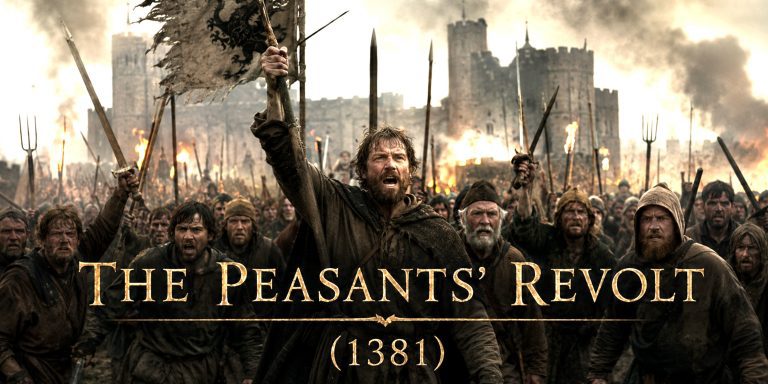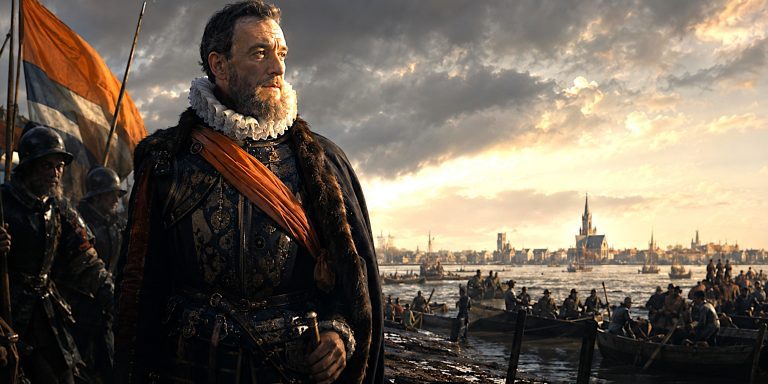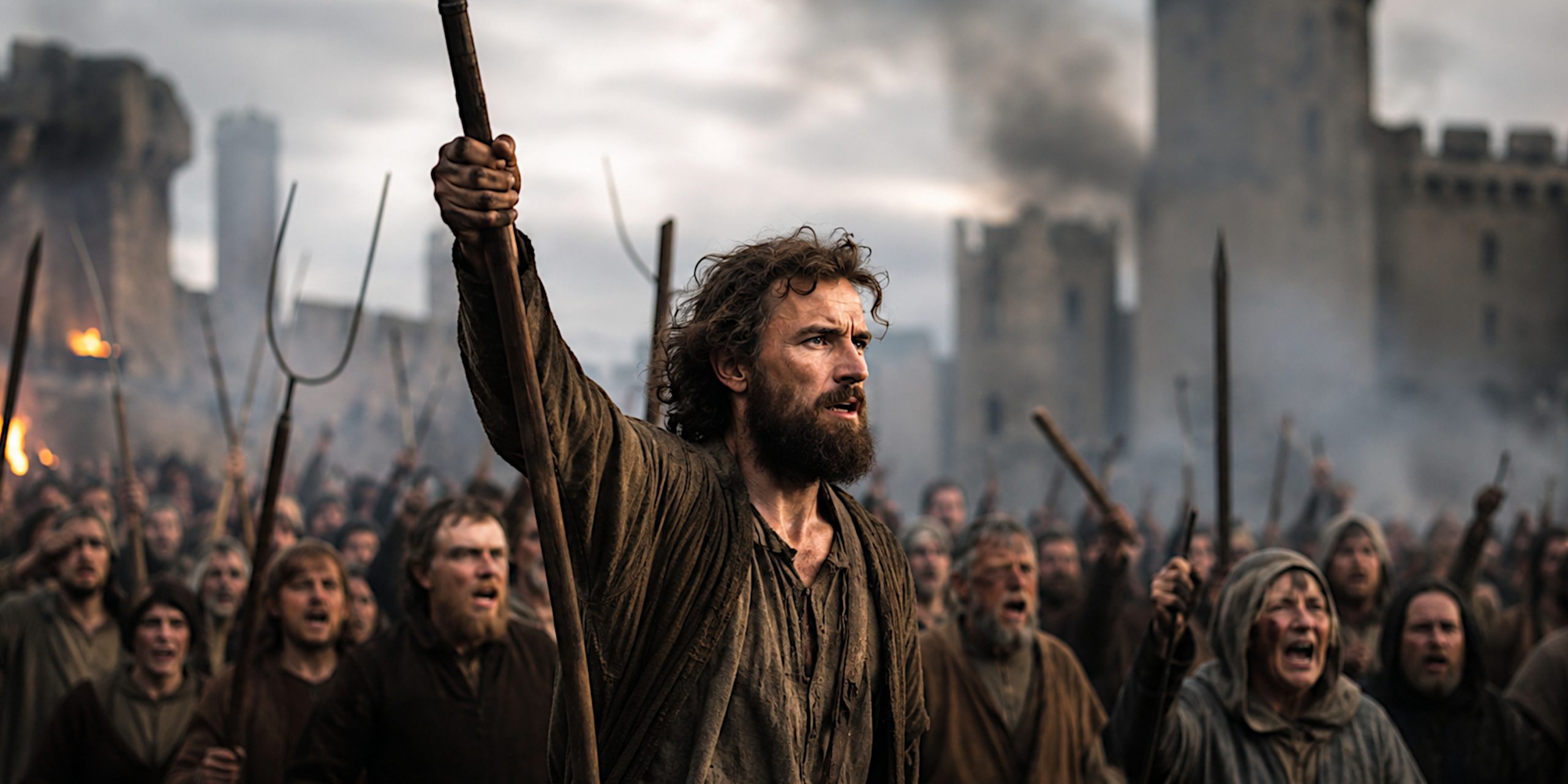
Few men of humble birth have left such a deep mark on English history as Wat Tyler. For a handful of extraordinary days in June 1381, an artisan from Kent led thousands of ordinary people into London, confronted a fourteen-year-old king, and came closer than anyone in medieval England to overturning the established social order.
His rebellion ultimately failed. Tyler himself died beneath the walls of Smithfield, cut down while negotiating with Richard II. Yet the memory of his actions survived far longer than many victorious kings. Chroniclers condemned him, reformers praised him, and historians continue to debate exactly who he was.
The remarkable truth is that one of England’s most famous rebels remains an elusive figure. Almost everything written about him comes from enemies.
That alone should encourage a little caution before accepting every colourful medieval story at face value.
Who Was Wat Tyler?
Wat Tyler emerged from relative obscurity during the Peasants’ Revolt of 1381.
His exact birthplace remains unknown. Medieval writers generally associated him with Kent, although some later traditions connected him with Essex. His occupation is equally uncertain. Various chronicles describe him as a tiler, roofer, craftsman or village artisan. The surname “Tyler” itself probably reflects his trade rather than his family name.
Unlike noble rebels, Tyler left no estate records, correspondence or legal documents. He appears suddenly in the historical record during the uprising before disappearing just as dramatically with his death.
That lack of evidence has encouraged centuries of speculation.
England Before the Revolt
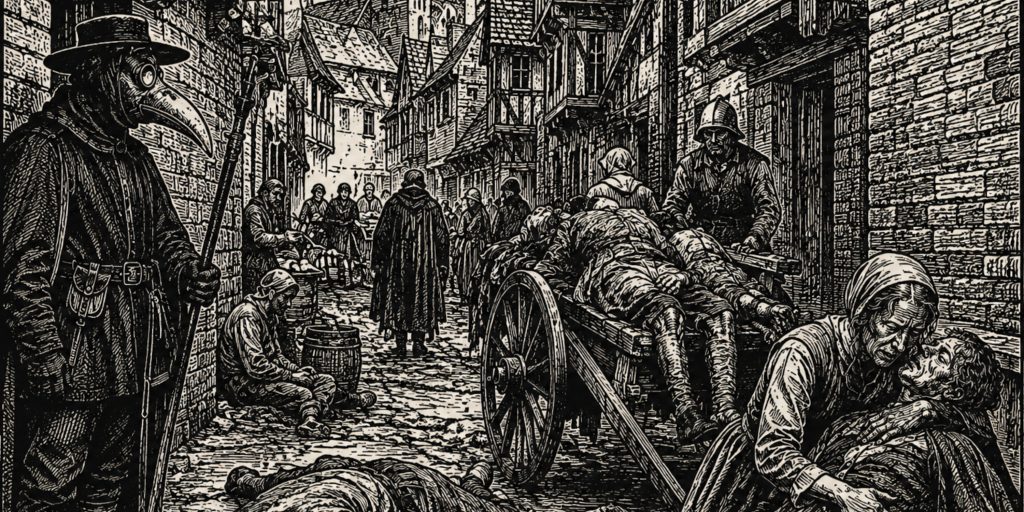
To understand Tyler’s rise, one must first understand the frustrations simmering across England.
The country had endured decades of hardship.
- The Black Death had devastated the population.
- Labour shortages increased wages.
- The Crown attempted to freeze wages through legislation.
- Heavy taxation funded the Hundred Years’ War.
- Three increasingly unpopular Poll Taxes burdened ordinary people.
The third Poll Tax of 1381 proved particularly explosive.
Collectors frequently used intimidation and humiliation while assessing households. One widely repeated story describes a tax official assaulting a young woman to determine whether she was old enough to pay. Whether entirely true or not, such stories reflected genuine public anger towards royal officials.
The revolt spread rapidly across Essex and Kent.
Wat Tyler soon emerged as its recognised leader.
The Making of a Revolutionary Leader
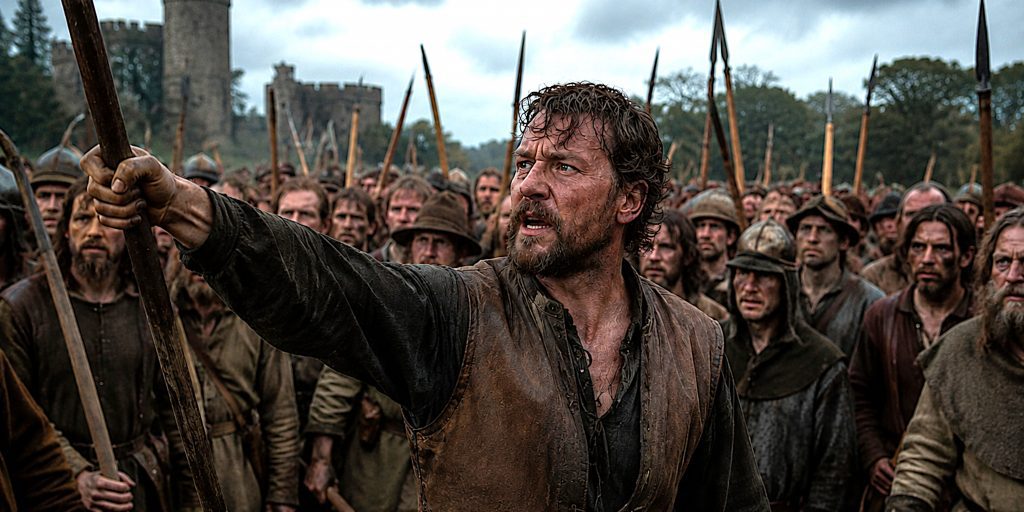
Unlike many spontaneous uprisings, the rebels displayed surprising organisation.
Tyler appears to have possessed genuine leadership qualities.
Contemporary accounts describe him as:
- Confident
- Disciplined
- Intelligent
- Charismatic
- Militarily capable
Rather than leading an uncontrolled mob, Tyler coordinated thousands of marchers who generally avoided unnecessary destruction until reaching London.
His followers targeted symbols of royal authority.
These included:
- Tax records
- Legal archives
- Wealthy officials
- Royal ministers
- Lawyers associated with unpopular government policies
The destruction was deliberate rather than random.
Records represented obligations.
Destroying them meant destroying debts.
March on London
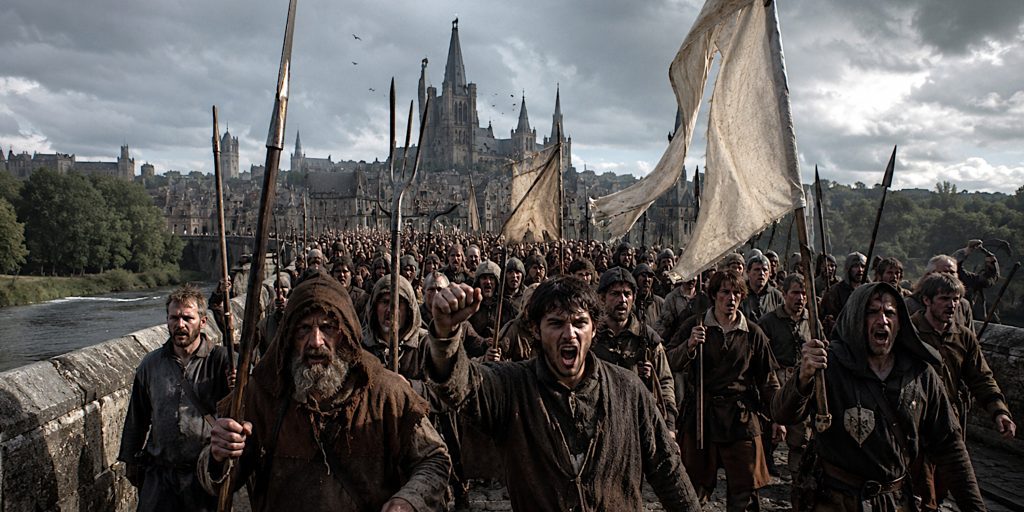
By June 1381, thousands of rebels had crossed London Bridge.
The capital itself was deeply divided.
Many ordinary Londoners sympathised with the movement. City gates were opened, allowing the rebels to enter with relatively little resistance.
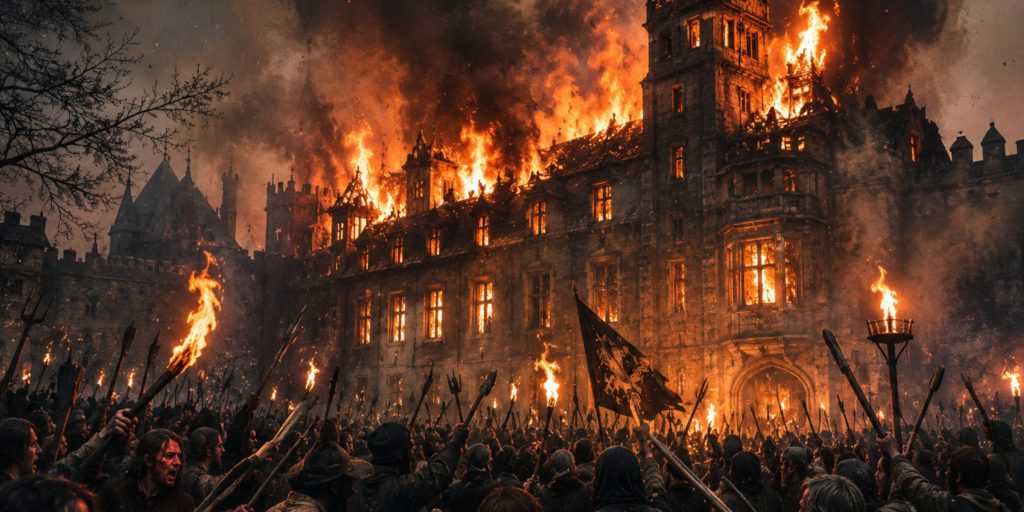
Once inside London, they attacked several major targets.
Among them were:
| Target | Reason |
|---|---|
| Savoy Palace | Residence of John of Gaunt |
| Fleet Prison | Symbol of royal justice |
| Temple legal buildings | Associated with lawyers |
| Government archives | Destroy tax and legal records |
John of Gaunt’s magnificent Savoy Palace became one of medieval London’s most spectacular fires.
Interestingly, chroniclers noted that rebels prevented widespread looting.
According to several accounts, valuables thrown into the Thames rather than stolen demonstrated that many participants saw themselves delivering justice rather than enriching themselves.
That is not the behaviour usually associated with an undisciplined mob.
Meeting Richard II
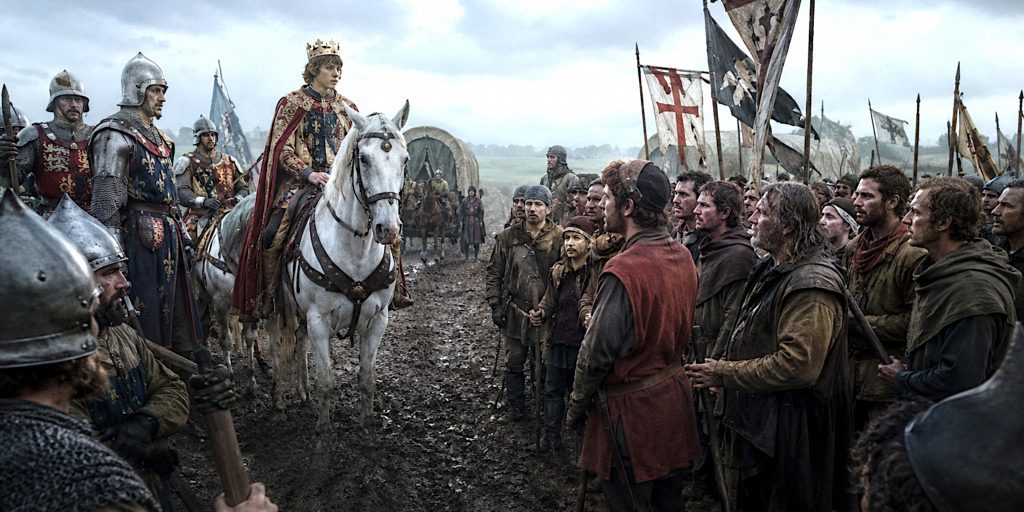
The rebellion reached its dramatic peak when King Richard II agreed to meet the insurgents.
The first meeting took place at Mile End.
Richard appeared willing to grant major concessions.
These reportedly included:
- Abolition of serfdom
- Fairer rents
- Pardons for participants
- Greater economic freedoms
While negotiations continued, another group of rebels stormed the Tower of London.
Several senior royal officials were executed.
Among them were:
- Simon Sudbury, Archbishop of Canterbury
- Sir Robert Hales, Treasurer of England
The revolt had now become the greatest political crisis England had faced for generations.
The Smithfield Confrontation
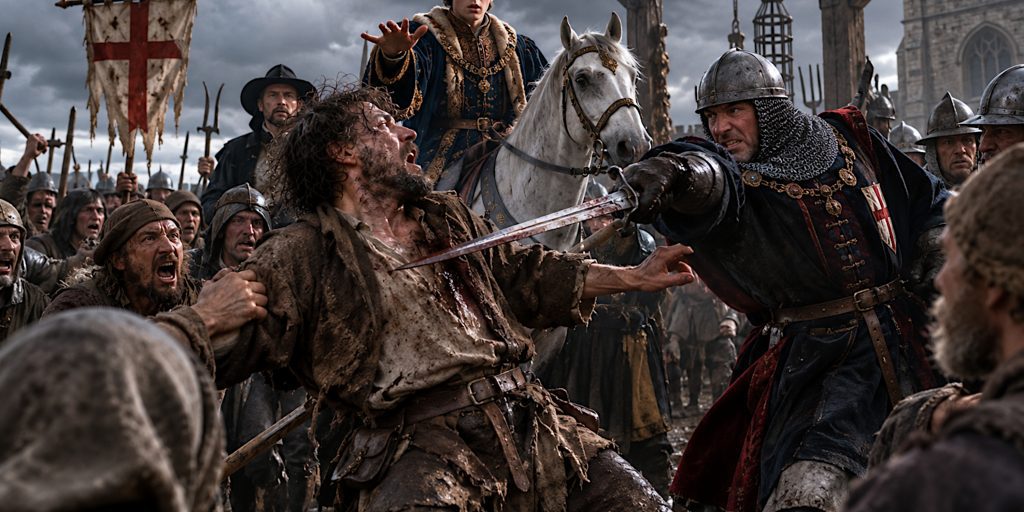
Everything came down to one extraordinary meeting on 15 June 1381.
Richard II met Tyler at Smithfield outside London’s walls.
What happened next remains disputed because every surviving account was written by observers loyal to the Crown.
Most chronicles agree on the broad sequence.
Tyler approached the king.
Negotiations became heated.
London’s Mayor, William Walworth, intervened.
Tyler was struck with a sword.
He was then attacked by royal attendants before being carried away by his followers.
Shortly afterwards he died.
The exact cause remains uncertain.
Some chroniclers portrayed Tyler as arrogant or threatening.
Others exaggerated his behaviour to justify killing him.
Modern historians generally treat these accounts with considerable scepticism.
Conveniently, every royal writer managed to prove that killing the rebel leader had been entirely necessary.
History has a habit of becoming rather tidy when written by the victors.
Richard II’s Remarkable Bluff
Tyler’s death could easily have triggered open battle.
Instead, fourteen-year-old Richard II displayed extraordinary composure.
He rode directly towards the confused rebels and reportedly declared:
“Sirs, will you shoot your king? I am your captain; follow me.”
Whether these were his precise words remains uncertain, but contemporary sources consistently praise his calm leadership at this critical moment.
The rebels hesitated.
Without Tyler directing them, their organisation collapsed.
Royal reinforcements soon arrived.
The rebellion effectively ended.
What Did Wat Tyler Want?
Although later writers portrayed him as an anarchist, Tyler’s demands appear surprisingly coherent.
Among the rebels’ objectives were:
- Ending serfdom
- Lower taxation
- Freedom to buy and sell land
- Removal of corrupt officials
- Greater legal equality
- Fairer local government
Some radical voices associated with the movement demanded broader social reforms.
The famous priest John Ball reportedly declared:
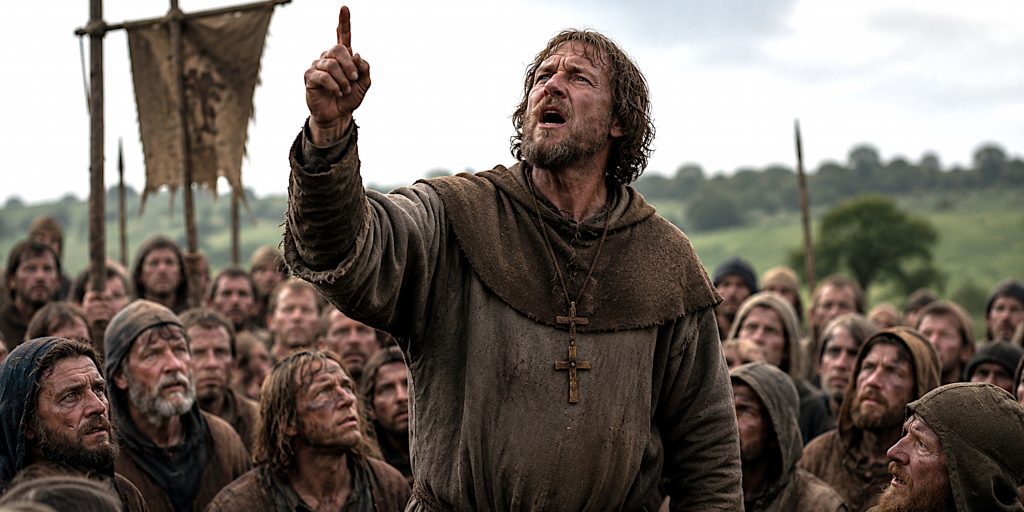
“When Adam delved and Eve span, who was then the gentleman?”
The phrase became one of the defining slogans of medieval social protest.
It questioned inherited privilege with remarkable simplicity.
Contemporary Views of Wat Tyler
Most surviving chroniclers despised Tyler.
The anonymous author of the Anonimalle Chronicle nevertheless acknowledged his influence.
Thomas Walsingham, writing from St Albans Abbey, described the rebels in deeply hostile terms, reflecting the fears of England’s ruling classes rather than detached observation.
Jean Froissart, writing in France, produced one of the best-known accounts, although he relied heavily upon second-hand information and courtly sources.
Their hostility reminds us that medieval history often survives through remarkably one-sided testimony.
If Tyler ever explained his own motives in writing, those words have vanished.
Contemporary Quotes
Several contemporary voices capture the mood of 1381.
From John Ball:
“When Adam delved and Eve span, who was then the gentleman?”
Richard II, according to several chronicles:
“I am your captain; follow me.”
Thomas Walsingham described the rebels as men who wished to overturn “all law and order.”
The wording varies slightly between surviving manuscripts, but the hostility is unmistakable.
Was Wat Tyler a Hero or a Traitor?
The answer depends largely upon when the question is asked.
To medieval authorities he was unquestionably a dangerous criminal.
To Victorian reformers he became a champion of liberty.
Modern historians tend to adopt a more balanced view.
Tyler neither sought democracy in the modern sense nor attempted to abolish monarchy altogether.
Instead, he represented widespread frustration with taxation, corruption and legal inequality.
His movement reflected real grievances rather than simple lawlessness.
Even though the revolt failed, governments afterwards became far more cautious about imposing direct taxation upon ordinary people.
That alone marks Tyler as a figure whose influence extended well beyond his lifetime.
Archaeological Evidence
Unlike many medieval battles, the Peasants’ Revolt left relatively little archaeological evidence directly associated with Wat Tyler himself.
Important surviving sites include:
| Site | Historical Importance |
|---|---|
| Smithfield, London | Place of Tyler’s death |
| Tower of London | Executions of royal officials |
| Savoy Palace site | Burned during the uprising |
| Canterbury | Major centre of Kentish mobilisation |
Excavations around the Savoy have revealed evidence consistent with the extensive destruction recorded in contemporary chronicles.
Archaeological work across medieval London has also helped reconstruct the city’s layout during the revolt.
Timeline
| Date | Event |
|---|---|
| May 1381 | Revolt begins in Essex |
| Early June 1381 | Kent joins uprising |
| 12 June | Rebels enter London |
| 13 June | Savoy Palace destroyed |
| 14 June | Meeting with Richard II at Mile End |
| 14 June | Tower of London stormed |
| 15 June | Wat Tyler killed at Smithfield |
| Late June | Royal suppression of revolt |
How History Remembered Wat Tyler
Wat Tyler never ruled England.
He never won a battle against the king.
His rebellion collapsed within days.
Yet his name became synonymous with resistance to injustice.
Shakespeare referred to him.
Political reformers invoked him.
Trade unionists later celebrated him.
Modern historians continue debating whether he was an accidental leader or a gifted organiser waiting for the right moment.
Perhaps the most remarkable aspect of Tyler’s story is how briefly he occupied centre stage.
For scarcely a week he dominated English politics.
Seven centuries later, people are still arguing about him.
That is a rather respectable achievement for a village craftsman whose enemies hoped history would forget him.
Legacy
Wat Tyler remains one of England’s defining popular leaders.
His revolt exposed deep fractures within medieval society and demonstrated that even the most powerful monarchy could be challenged by organised common people.
Although the Crown crushed the uprising, many of the economic forces behind it proved impossible to reverse. Serfdom gradually declined during the following century, while the revolt entered English political memory as a symbol of resistance against oppression.
Whether viewed as a rebel, revolutionary or reluctant spokesman for ordinary people, Tyler’s place in English history is secure.
He reminds us that history is not shaped solely by kings, queens and great generals. Occasionally, it is transformed by a craftsman who refuses to accept that the established order is beyond question.