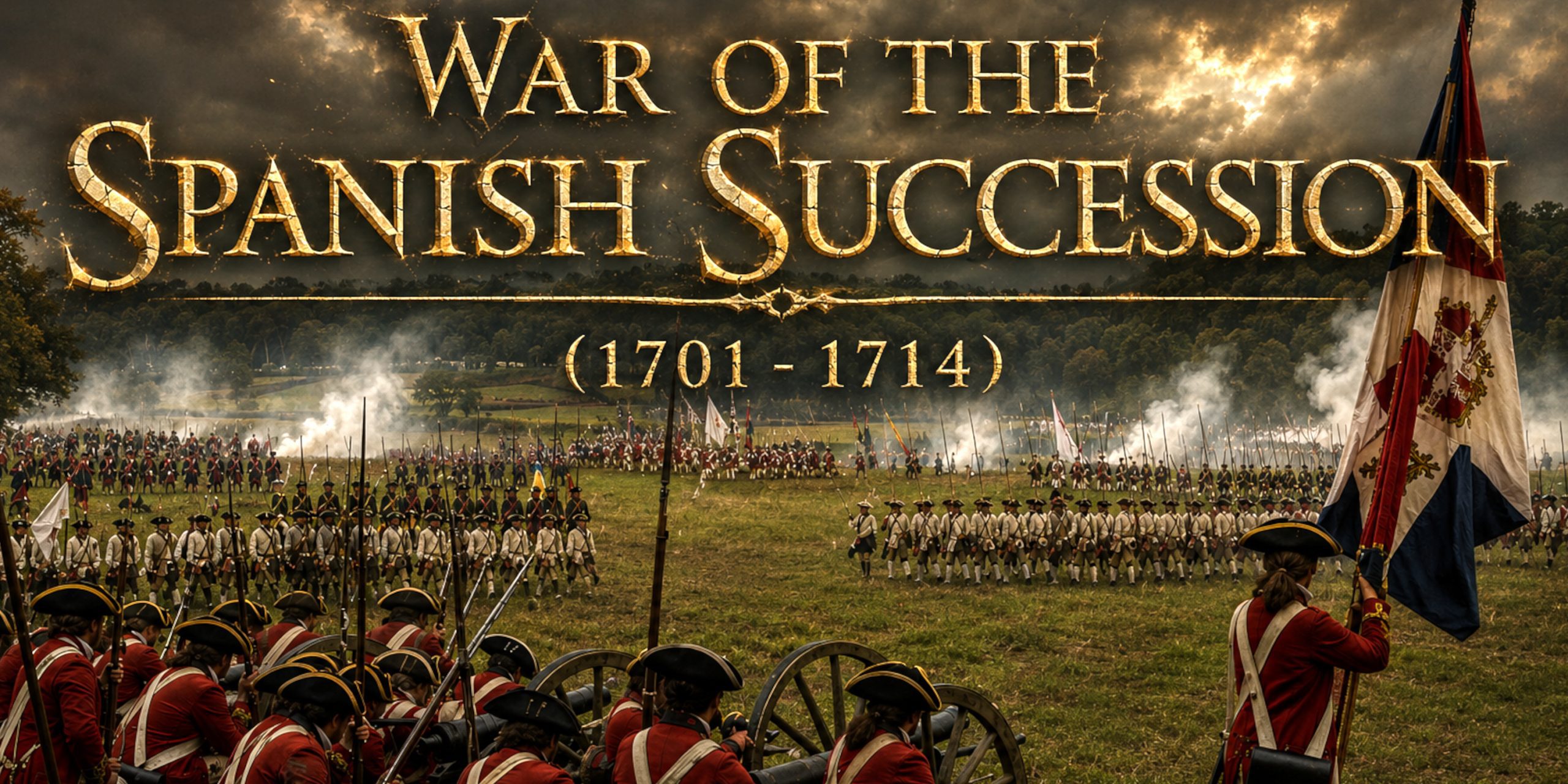
The War of the Spanish Succession lasted from 1701 to 1714, yet its consequences stretched across centuries. It began as a dynastic dispute over who should inherit the vast Spanish Empire, but quickly became something much larger. Every major European power recognised that whoever controlled Spain and its overseas possessions might also dominate the balance of power across the continent.
At first glance, it appears to be another quarrel between ambitious monarchs. In reality, it was one of Europe’s first truly global wars. Fighting spread across Flanders, Germany, Italy, Spain, North America and the Caribbean. Merchant fleets, colonial settlements and distant trading posts all became part of the struggle.
The conflict also produced some of history’s greatest commanders, particularly John Churchill, Duke of Marlborough, and Prince Eugene of Savoy. Their campaigns are still studied in military academies for their speed, deception and logistical brilliance.
For Britain, the war marked its emergence as a major European and maritime power. For France, it represented the final great military challenge of Louis XIV’s long reign. For Spain, it ended centuries of Habsburg rule and ushered in the Bourbon dynasty that continues today.
Why Did the War Begin?
The roots of the conflict lay in the death of Charles II of Spain in November 1700.
Charles left no children. His inheritance was immense.
It included:
- Spain
- The Spanish Netherlands
- Naples
- Sicily
- Milan
- Vast territories across the Americas
- The Philippines
The obvious candidates belonged to two rival dynasties.
The Bourbons of France supported Philip, Duke of Anjou, grandson of Louis XIV.
The Austrian Habsburgs supported Archduke Charles.
Charles II’s final will named Philip as his heir.
Louis XIV accepted the inheritance, placing his grandson on the Spanish throne as Philip V.
To many European governments this was alarming. If France and Spain united under one Bourbon family, the political balance established over generations could collapse.
England, the Dutch Republic and the Holy Roman Empire therefore formed the Grand Alliance to oppose Bourbon expansion.
As one English politician observed at the time:
“The balance of Europe must be preserved.”
That simple principle became the guiding purpose of the war.
Europe on the Brink
The conflict quickly spread across multiple theatres.
Major campaigns occurred in:
- Flanders
- Bavaria
- Northern Italy
- Catalonia
- Castile
- Portugal
- The Atlantic
- North America, where the conflict became known as Queen Anne’s War
Unlike many earlier wars, no single battlefield decided everything.
Victories in one theatre often compensated for defeats elsewhere.
The result was a remarkably fluid struggle lasting more than a decade.
The Major Powers
| Grand Alliance | Bourbon Alliance |
|---|---|
| England (later Great Britain) | France |
| Dutch Republic | Spain under Philip V |
| Holy Roman Empire | Bavaria |
| Prussia | Electorate of Cologne |
| Portugal (later) | Various French allies |
| Savoy (after changing sides) |
Political alliances shifted repeatedly.
Even Savoy famously switched sides, reminding everyone that eighteenth century diplomacy could be almost as exhausting as eighteenth century warfare.
The Great Commanders
John Churchill, Duke of Marlborough
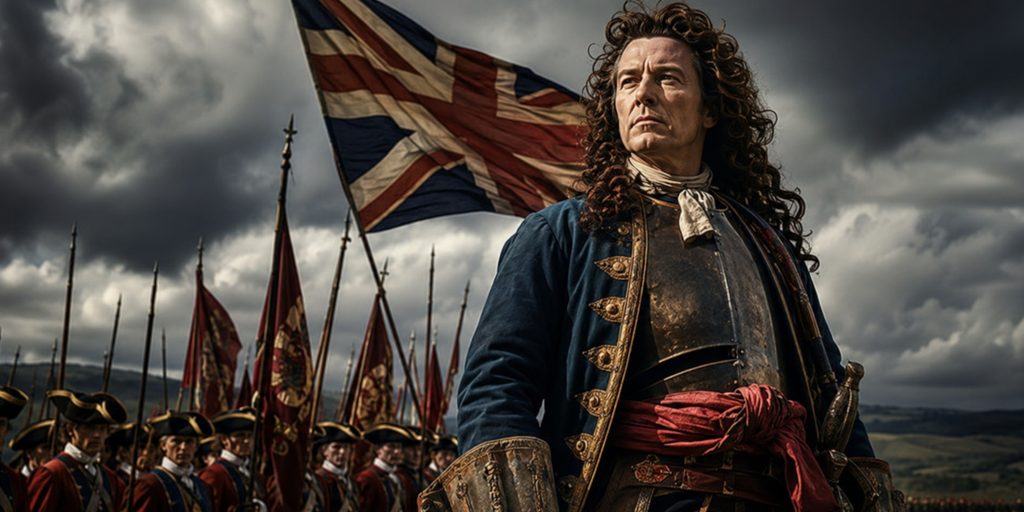
Marlborough remains one of Britain’s greatest generals.
His strengths included:
- Rapid manoeuvre
- Careful logistics
- Coalition diplomacy
- Coordinated infantry and cavalry attacks
Unlike many commanders, he rarely relied on luck. His victories resulted from meticulous planning and relentless preparation.
Voltaire later wrote:
“He never besieged a town which he did not take.”
That may simplify matters slightly, but it reflects the immense respect Marlborough inspired.
Prince Eugene of Savoy
Prince Eugene complemented Marlborough perfectly.
Aggressive where Marlborough could be cautious, Eugene excelled in difficult campaigns across Italy and Central Europe.
Together they formed one of history’s finest military partnerships.
Louis XIV
Although no longer leading armies personally, Louis XIV directed French strategy throughout the conflict.
His kingdom possessed Europe’s largest standing army, but years of war steadily drained French finances and manpower.
The Most Important Battles
Battle of Blenheim (1704)
Perhaps the decisive battle of the war.
Marlborough marched hundreds of miles from the Low Countries to Bavaria, surprising both allies and enemies.
The Franco-Bavarian army suffered catastrophic losses.
The victory prevented Vienna from falling and destroyed French hopes of ending the war quickly.
Military historians often rank Blenheim among Europe’s greatest operational campaigns.
Battle of Ramillies (1706)
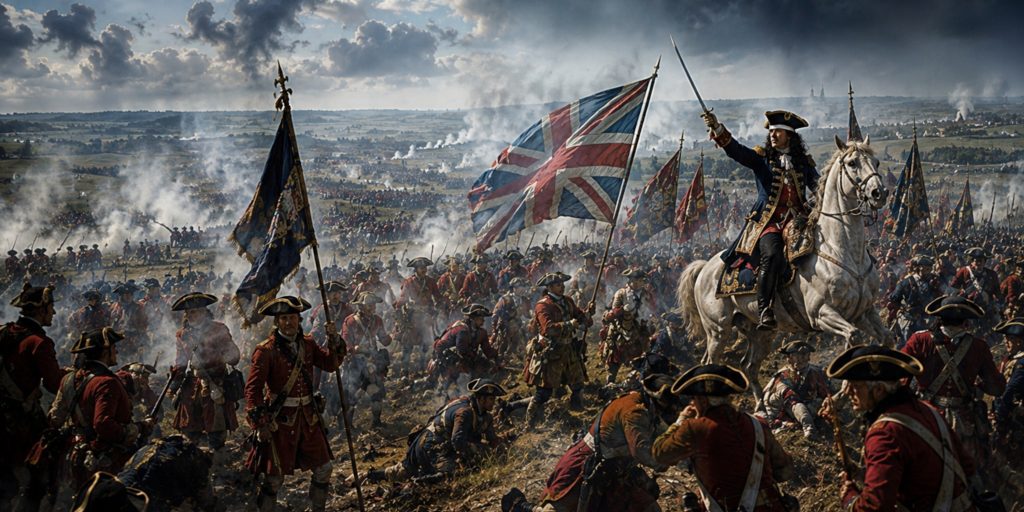
Ramillies secured much of the Spanish Netherlands for the Grand Alliance.
Marlborough exploited French weaknesses with remarkable speed, breaking their line before they could recover.
The victory transformed the strategic situation in Flanders.
Battle of Turin (1706)
Prince Eugene lifted the French siege of Turin.
Northern Italy was effectively lost to France after this defeat.
It also strengthened Savoy’s growing importance in European politics.
Battle of Oudenarde (1708)
French attempts to regain momentum failed.
Marlborough and Eugene again demonstrated exceptional coordination.
French forces retreated after suffering heavy casualties.
Siege of Lille (1708)
One of the longest and most demanding sieges of the war.
Despite formidable French defences designed by Vauban, the Allies eventually captured the fortress.
The siege highlighted how engineering often mattered as much as battlefield heroics.
Battle of Malplaquet (1709)
Malplaquet was technically an Allied victory.
It was also one of the bloodiest battles fought in Europe before the Napoleonic Wars.
The Allies forced the French to retreat but suffered such severe losses that public enthusiasm for continued war diminished considerably.
Sometimes winning feels suspiciously similar to losing.
Battle of Villaviciosa (1710)
Philip V secured control over Spain after defeating Allied forces.
Although the Allies enjoyed successes elsewhere, this battle effectively confirmed Bourbon control of the Spanish throne.
Warfare and Military Innovation
The war showcased armies becoming increasingly professional.
Infantry fought in disciplined linear formations armed with flintlock muskets fitted with socket bayonets.
Artillery became more mobile and better coordinated.
Supply systems improved dramatically.
Rather than living entirely off the land, armies increasingly depended upon organised magazines and carefully planned logistics.
This administrative revolution often mattered more than battlefield brilliance.
Life for the Ordinary Soldier
Campaign life remained harsh.
Disease killed more soldiers than combat.
Marches covered enormous distances.
Food shortages were common.
Medical care remained primitive.
Soldiers often survived on coarse bread, salted meat and beer, with fresh food appearing only when local supplies allowed.
Many veterans later described the endless marching as worse than the battles themselves.
The War at Sea
Naval warfare played a critical role.
The Royal Navy steadily expanded its influence.
Important developments included:
- Protection of merchant shipping
- Blockades of French ports
- Colonial expeditions
- Control of Mediterranean sea routes
The capture of Gibraltar in 1704 proved especially significant.
Britain still controls Gibraltar today, making it one of the war’s most enduring territorial legacies.
Archaeology and Material Evidence
Unlike medieval battlefields, archaeological evidence from the early eighteenth century is often remarkably well preserved.
Excavations across Belgium and Germany have uncovered:
- Musket balls
- Flintlock mechanisms
- Bayonets
- Cannon shot
- Uniform buttons
- Belt fittings
- Coins
- Camp equipment
The battlefield at Blenheim has produced ammunition concentrations that closely match historical accounts of infantry exchanges.
At Malplaquet, surveys continue to identify defensive earthworks, abandoned trenches and projectile distributions that help reconstruct troop movements.
Modern techniques such as LiDAR, metal detecting under archaeological supervision and GIS mapping have greatly improved understanding of battlefield landscapes.
These discoveries occasionally correct contemporary maps, reminding historians that even eyewitnesses could become rather confused when thousands of men, horses and clouds of black powder smoke filled the countryside.
Contemporary Voices
The Duke of Marlborough wrote after Blenheim:
“The victory has been very great.”
The phrase sounds wonderfully understated considering the scale of the triumph.
Louis XIV reportedly told his grandson Philip V:
“There are no longer any Pyrenees.”
The statement reflected hopes for close Bourbon cooperation between France and Spain, though political reality proved considerably more complicated.
Jonathan Swift, reflecting growing war weariness in Britain, later observed:
“War is the health of ministers.”
His satire captured increasing public frustration with the expense of prolonged conflict.
The Treaty of Utrecht
Peace negotiations finally produced the Treaty of Utrecht in 1713.
Further agreements followed in 1714.
The settlements achieved several major outcomes.
Philip V remained King of Spain.
France and Spain agreed never to unite under a single crown.
Britain gained:
- Gibraltar
- Minorca
- Valuable trading rights with Spanish America
Austria received much of Spain’s former European possessions, including the Spanish Netherlands and territories in Italy.
The balance of power survived.
No single monarchy emerged dominant.
Legacy
The War of the Spanish Succession fundamentally reshaped Europe.
Britain emerged as an increasingly powerful maritime empire.
France remained influential but no longer appeared unstoppable.
Austria strengthened its position in Central Europe.
Spain entered a new Bourbon era that modernised parts of its administration while accepting the loss of many European possessions.
Military thinkers continued studying Marlborough’s campaigns for generations.
Napoleon admired aspects of his operational manoeuvre.
Modern staff colleges still analyse Blenheim alongside campaigns by Frederick the Great and Napoleon.
The war also demonstrated that diplomacy, finance and logistics had become just as decisive as battlefield courage.
Where Can You See Artefacts Today?
Several museums preserve important collections connected with the conflict.
National Army Museum, London
Displays include British uniforms, weapons, campaign equipment and material connected with Marlborough’s army.
Blenheim Palace, Oxfordshire
Although better known as Marlborough’s family home, the palace preserves portraits, documents and military memorabilia connected with the Duke’s campaigns.
Musée de l’Armée, Paris
Contains French military artefacts from the reign of Louis XIV, including weapons, uniforms and artillery.
Royal Armouries, Leeds
Features early eighteenth century firearms, swords, bayonets and military equipment that illustrate the technology used throughout the conflict.
Takeaway
The War of the Spanish Succession was far more than a dispute over royal inheritance. It transformed diplomacy, warfare and the global balance of power. It produced commanders whose reputations still stand among the greatest in military history and demonstrated that victory depended as much upon supply wagons and political alliances as battlefield brilliance.
For historians, it marks the moment when Europe began to resemble the interconnected international system that would dominate the eighteenth century. Dynastic ambition lit the fuse, but the resulting explosion altered trade, empire, military science and diplomacy for generations. It is a conflict that deserves to stand alongside the Thirty Years’ War and the Napoleonic Wars as one of the defining struggles of European history.