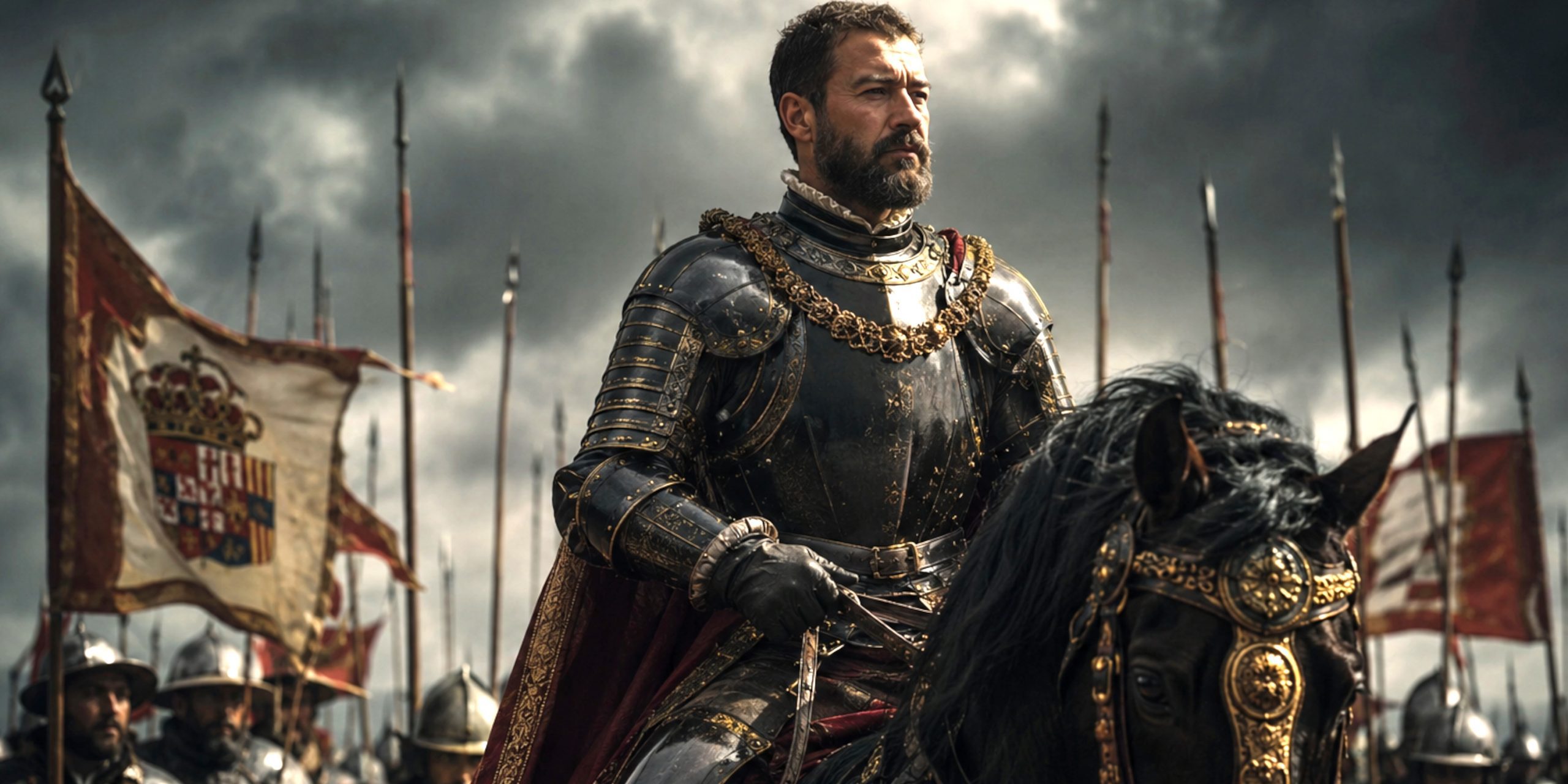
Few rulers have ever inherited as much responsibility as Charles V. At the age of just nineteen he found himself master of a political jigsaw that stretched from Spain to the Low Countries, from Austria to southern Italy, while Spain’s newly conquered American territories poured unimaginable wealth across the Atlantic. Then, in 1519, he became Holy Roman Emperor.
It sounds like the perfect foundation for universal rule. In reality it was closer to inheriting the world’s largest collection of headaches.
Charles spent almost his entire reign at war. He battled France for dominance in Italy, fought the Ottoman Empire across Central Europe and the Mediterranean, struggled to contain Protestant reform within Germany and dealt with revolts across Spain and the Low Countries. Even the Pope occasionally became an enemy. Few monarchs have ridden so many roads or slept in so many military camps.
Historians often describe him as the last emperor to genuinely pursue the medieval ideal of a united Christian Europe. Whether that dream was ever achievable is another question entirely. Charles possessed determination, military experience and immense resources, but even his vast empire proved too large to govern effectively.
His reign marked the transition from the medieval world into the early modern age. Knights still charged into battle, yet gunpowder increasingly determined victory. Chivalry remained fashionable, but bureaucracy and finance were becoming just as important as swords.
Early Life
Charles was born on 24 February 1500 in Ghent.
His family connections made him perhaps the most fortunate heir in European history. Through his mother Joanna he inherited Castile, Aragon, Naples, Sicily and Spain’s growing overseas empire. Through his father Philip the Handsome he inherited Burgundy and the wealthy Low Countries. His grandfather Maximilian I eventually passed on the Austrian Habsburg lands.
Few expected all these inheritances to fall into the hands of one individual, yet circumstance and premature deaths transformed Charles into Europe’s dominant ruler before reaching adulthood.
He spoke several languages throughout his life, although not always fluently. According to later tradition he joked that he spoke Spanish to God, Italian to women, French to men and German to his horse. Whether he actually said it remains uncertain, but the quote reflects how multinational his empire truly was.
Becoming Holy Roman Emperor
In 1519 Charles was elected Holy Roman Emperor after a fiercely contested election.
His chief rival was Francis I of France, who also sought the imperial crown. Charles secured victory partly through diplomatic skill and partly through generous financial support from the Fugger banking family.
The election fundamentally shaped European politics.
Francis never accepted defeat and the rivalry between France and the Habsburgs dominated Western Europe for decades.
The Empire at its Greatest Extent
Charles ruled territories including:
- Spain
- The Kingdom of Naples
- Sicily
- Sardinia
- The Duchy of Milan
- The Low Countries
- Austria
- Parts of modern Germany
- Bohemia
- Hungary through Habsburg influence
- Vast overseas colonies in the Americas
Contemporaries famously claimed that the sun never set on his empire.
For the first time in history, a European monarch ruled territories spanning Europe and the New World.
Battles and Military Acumen
Charles was not merely a ceremonial monarch.
He frequently travelled with his armies and understood logistics, fortifications and political warfare remarkably well. While outstanding commanders such as Fernando Álvarez de Toledo, Duke of Alba, and Charles de Lannoy often directed operations, Charles remained deeply involved in military planning.
His greatest strength lay in strategy rather than battlefield brilliance.
He recognised the importance of maintaining alliances, securing finances and moving armies across enormous distances. Modern historians increasingly note that sustaining campaigns often mattered more than winning individual battles.
Battle of Pavia (1525)
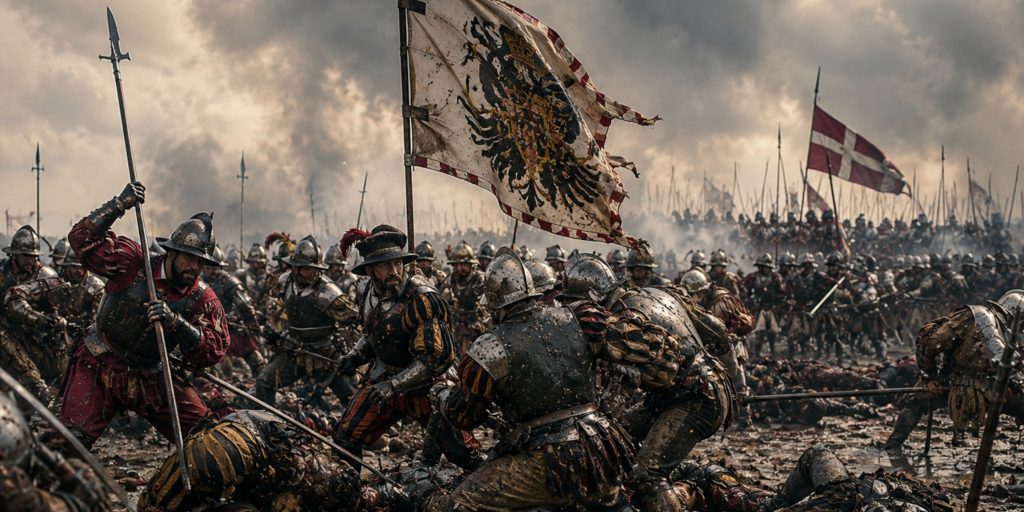
Pavia became Charles’s greatest military triumph.
Imperial troops defeated Francis I of France after fierce fighting outside the city.
Spanish arquebusiers devastated French cavalry while disciplined infantry formations demonstrated the growing effectiveness of combined arms warfare.
Francis himself was captured.
His famous letter reportedly declared:
“All is lost save honour.”
The victory transformed European politics and confirmed Habsburg military superiority.
The Italian Wars
Charles fought France repeatedly across northern Italy.
These campaigns saw:
- Rapid advances in artillery
- Professional infantry replacing feudal levies
- Greater reliance on firearms
- Increasing importance of engineers and siege specialists
Italy effectively became Europe’s military laboratory during Charles’s reign.
The Ottoman Wars
The Ottoman Empire under Suleiman the Magnificent represented perhaps Charles’s greatest long term challenge.
Major confrontations included:
- Defence of Vienna
- Campaigns in Hungary
- Naval warfare across the Mediterranean
- Defence of North African possessions
Although neither empire achieved decisive victory, Charles helped prevent Ottoman expansion into Central Europe.
Tunis (1535)
Charles personally led the expedition against Tunis.
The campaign captured the city from Ottoman backed corsair Hayreddin Barbarossa.
It became one of his most celebrated military successes and was widely commemorated in art, medals and tapestries.
The Schmalkaldic War
Charles eventually turned his attention towards the Protestant princes within the Holy Roman Empire.
At the Battle of Mühlberg in 1547, imperial forces achieved a decisive victory.
Titian’s famous equestrian portrait depicts Charles after this triumph, presenting him as the ideal Christian emperor.
Yet military success failed to resolve Germany’s religious divisions.
Politics ultimately succeeded where armies could not.
Arms and Armour
Charles ruled during one of the finest periods of European armour making.
Imperial workshops at Augsburg, Innsbruck and Milan produced magnificent pieces that balanced protection with ceremonial splendour.
His armour reflected both Renaissance artistry and practical battlefield requirements.
Armour
Charles owned numerous complete field harnesses.
Common characteristics included:
- Fluted Maximilian style plate armour
- Deep breastplates designed to resist firearms
- Reinforced tournament armour
- Etched and gilded decorative work
- Classical Roman inspired ornamentation
As firearms became increasingly powerful, armour gradually thickened despite the additional weight.
Several surviving suits show proof marks where armourers fired pistols directly at breastplates to demonstrate their strength.
Weapons
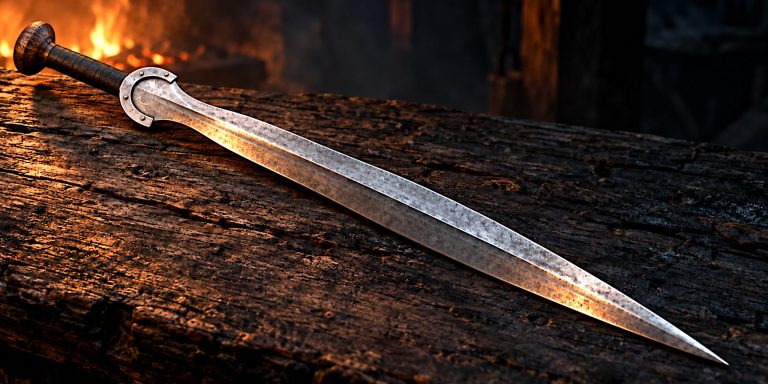
Charles likely carried several different weapons depending upon the campaign.
These included:
- Longswords
- Arming swords
- Estocs for armoured combat
- Pollaxes
- Maces
- Lances during mounted warfare
- Wheel lock pistols later in life
His ceremonial swords often displayed elaborate Renaissance craftsmanship alongside Habsburg heraldry.
Leadership Style
Charles possessed enormous personal discipline.
He travelled constantly, inspected fortifications, reviewed troops and involved himself deeply in administration.
Unlike rulers who delegated military affairs entirely to their generals, Charles sought first hand understanding of campaigns.
His leadership style combined medieval kingship with increasingly modern state administration.
He relied heavily upon professional soldiers, diplomats, financiers and legal officials.
Perhaps his greatest weakness was believing that every crisis required his personal attention.
Given the number of simultaneous conflicts facing him, that proved impossible.
Religion and the Protestant Reformation
Martin Luther’s challenge emerged during Charles’s reign.
Initially Charles hoped religious unity could be preserved.
At the Diet of Worms in 1521 he condemned Luther but struggled to enforce imperial authority because wars with France and the Ottomans continually diverted resources.
The Peace of Augsburg in 1555 finally accepted the principle that German princes could determine the religion of their own territories.
For Charles, this represented a deeply disappointing compromise.
His lifelong dream of religious unity had failed.
Abdication and Retirement
By the 1550s Charles suffered from severe gout, exhaustion and declining health.
Years of relentless campaigning had taken their toll.
Between 1555 and 1556 he abdicated in stages.
Spain, the Netherlands and overseas territories passed to his son Philip II.
The imperial title eventually went to his brother Ferdinand.
Charles retired to the Monastery of Yuste in western Spain.
There he continued following politics while living a surprisingly modest existence compared with his former splendour.
He died on 21 September 1558.
Character
Contemporary descriptions portray Charles as reserved, intelligent and intensely conscientious.
He was not naturally charismatic in the style of Francis I, nor possessed Suleiman’s theatrical magnificence.
Instead, he inspired respect through diligence.
As a historian, I often find Charles more fascinating than immediately likeable. He could be stubborn to the point of frustration, yet his persistence is remarkable. Reading his correspondence leaves the impression of a ruler who never truly escaped work. Even retirement failed to separate him from government papers. Some people cannot switch off. Charles simply happened to govern half of Europe while proving the point.
Artefacts from His Reign
A remarkable collection of surviving objects allows historians to study Charles and his world.
Important artefacts include:
- Several complete suits of armour made for Charles
- State swords and ceremonial weapons
- Imperial seals and charters
- Coins minted throughout his empire
- Renaissance tapestries celebrating the Tunis campaign
- Titian’s portraits of Charles
- Personal correspondence and state papers
- Tournament equipment commissioned for the imperial court
These objects illustrate both imperial power and the extraordinary craftsmanship of sixteenth century Europe.
Where to See Artefacts Today
Many important collections survive in museums across Europe.
Royal Armoury, Madrid
One of the finest surviving collections of Charles V’s personal armour and weapons.
Kunsthistorisches Museum, Vienna
Outstanding Habsburg collections including armour, ceremonial objects and portraits.
Hofburg Imperial Treasury, Vienna
Imperial regalia, crowns, relics and objects associated with Habsburg rule.
Museo del Prado, Madrid
Titian’s famous portraits of Charles V remain among the defining images of Renaissance kingship.
Metropolitan Museum of Art, New York
Important examples of sixteenth century European armour from the imperial period.
Wallace Collection, London
Excellent Renaissance arms and armour that provide valuable context for Charles’s military world.
Latest Archaeological and Historical Discoveries
Research into Charles’s reign continues through archaeology and scientific analysis.
Recent work has focused on:
Battlefield Archaeology
Excavations around Pavia continue revealing musket balls, artillery fragments and battlefield distributions that help reconstruct troop movements with remarkable precision.
Armour Conservation
Advanced imaging techniques have identified hidden manufacturing marks, repairs and impact damage on surviving imperial armour.
Microscopic examination has also revealed details about polishing methods and decorative finishes.
Shipwreck Research
Investigations into sixteenth century Mediterranean wrecks continue uncovering weapons, artillery and trade goods linked to the naval conflicts between Habsburg and Ottoman forces.
Archival Discoveries
Digitisation projects across Spain, Austria and Belgium continue bringing thousands of administrative letters and military records into scholarly circulation.
These documents increasingly reveal how the empire actually functioned on a practical day to day basis rather than merely describing its grand political ambitions.
Legacy
Charles V inherited perhaps the greatest concentration of power Europe had ever witnessed.
Yet even he discovered that wealth, armies and titles had limits.
His reign accelerated the rise of professional armies, expanded global trade, strengthened Habsburg influence and reshaped European diplomacy. At the same time it demonstrated that no ruler, however powerful, could permanently suppress religious change or control a continent through military force alone.
His abdication symbolised more than personal exhaustion. It acknowledged that Europe had become too large, too diverse and too politically complex for any single emperor to dominate indefinitely.
That may be Charles’s greatest historical lesson. Even the most formidable empire eventually encounters the limits of ambition.
Timeline
| Year | Event |
|---|---|
| 1500 | Born in Ghent |
| 1516 | Became King of Spain |
| 1519 | Elected Holy Roman Emperor |
| 1521 | Diet of Worms |
| 1525 | Victory at the Battle of Pavia |
| 1535 | Capture of Tunis |
| 1547 | Victory at the Battle of Mühlberg |
| 1555 | Peace of Augsburg |
| 1555 to 1556 | Abdicated his various crowns |
| 1558 | Died at the Monastery of Yuste |