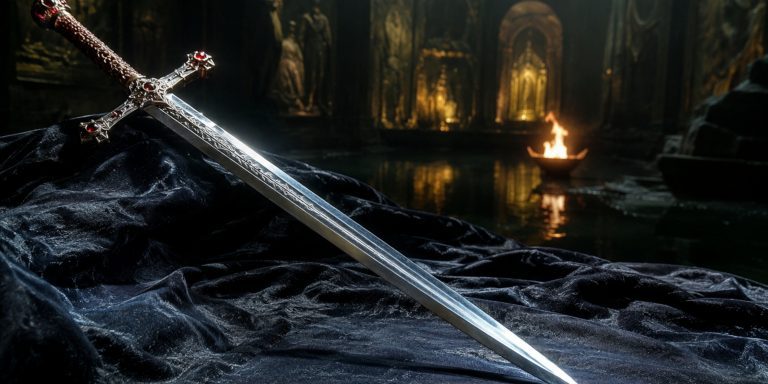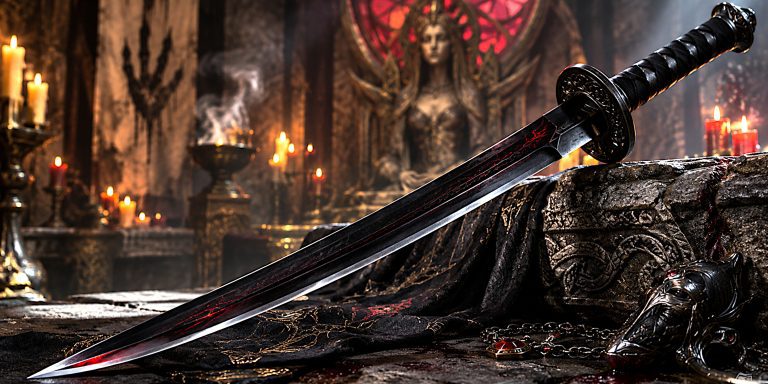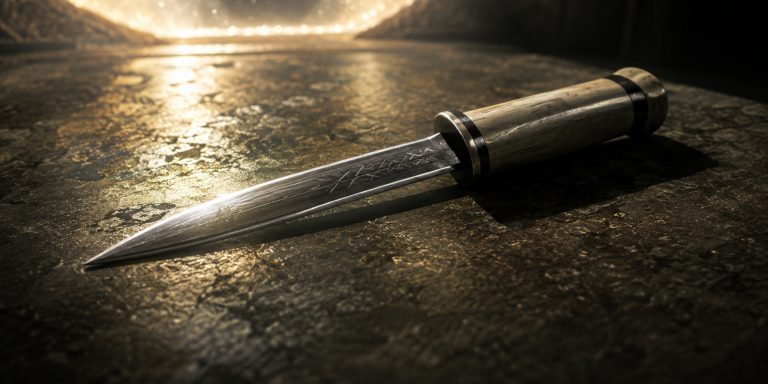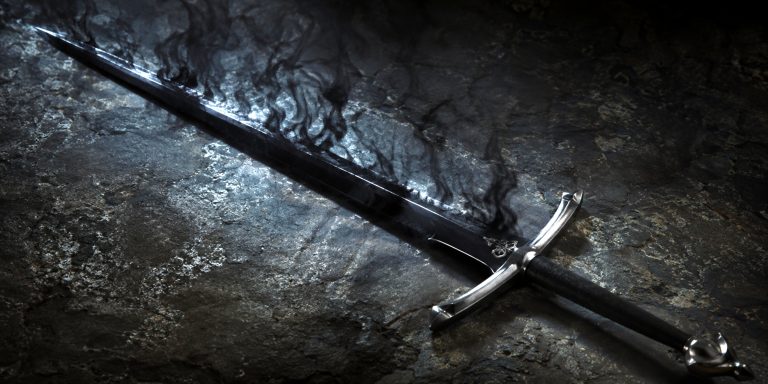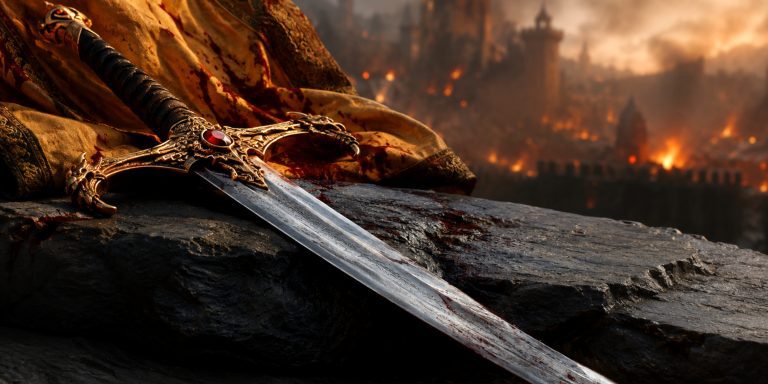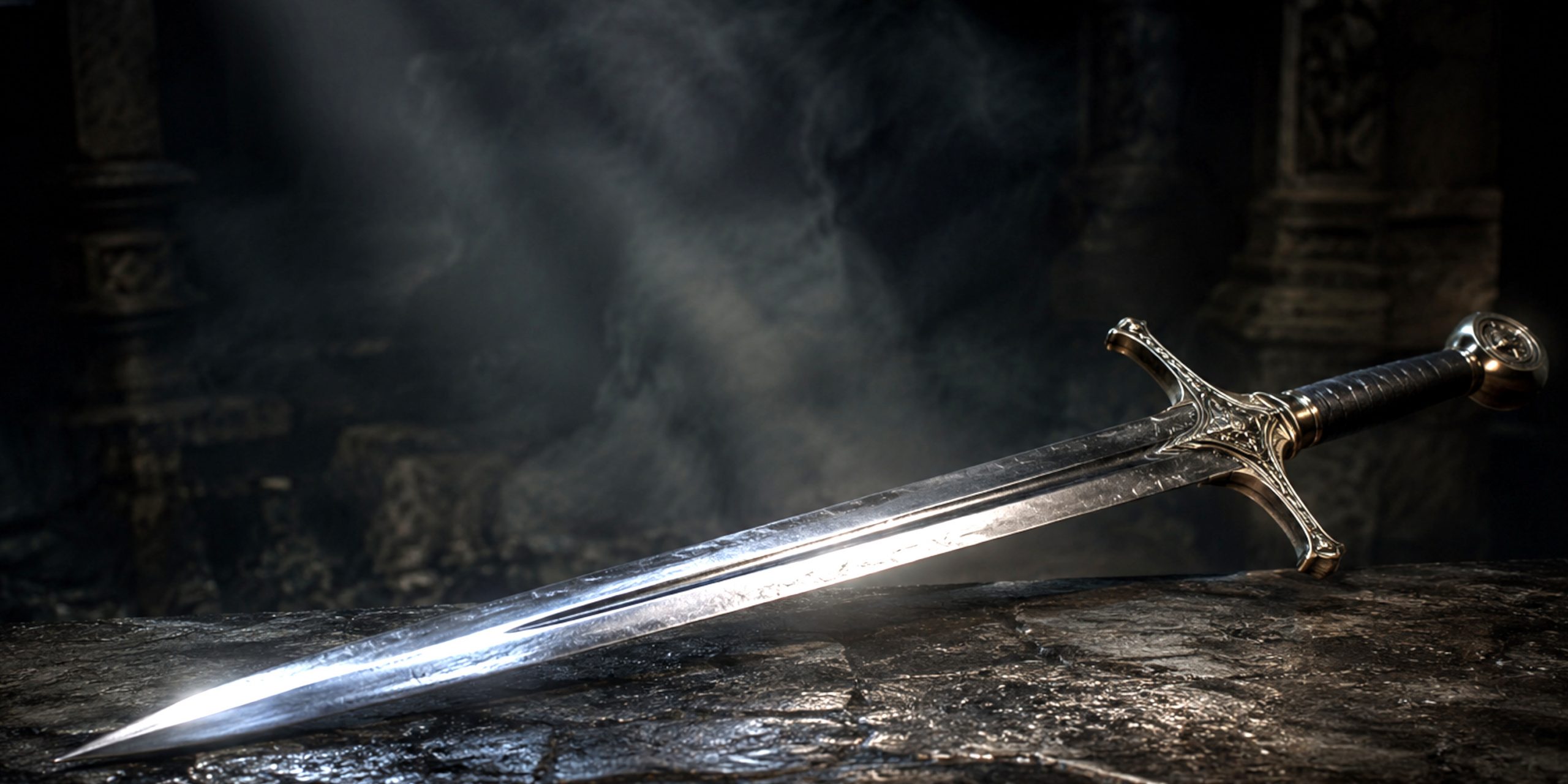
Few magical weapons have earned a reputation quite like the Sword of Sharpness. Plenty of enchanted blades hit harder or glow with impressive magical effects, but this weapon has a much simpler selling point. It cuts. It cuts exceptionally well. Sometimes it cuts things that really wish it had not.
Across decades of Dungeons & Dragons, the Sword of Sharpness has remained one of the game’s most recognisable magical swords. Whether it appears as a treasured family heirloom, a dragon’s prized possession or the reward at the end of a perilous dungeon, it immediately feels dangerous.
Part of its appeal is how straightforward it is. Instead of producing explosions or summoning storms, the Sword of Sharpness enhances what swords have always been designed to do. It slices through flesh, armour and, on particularly unlucky days, body parts.
What Is the Sword of Sharpness?
The Sword of Sharpness is a powerful magical weapon found throughout multiple editions of Dungeons & Dragons. It is classified as a very rare magic weapon in Fifth Edition and can take the form of any sword, including:
- Longsword
- Greatsword
- Scimitar
- Rapier
- Shortsword
Whatever its shape, the enchantment remains the same. The blade possesses an edge so unnaturally keen that it can sever limbs with frightening efficiency.
Unlike many legendary weapons, it has no famous owner permanently attached to its story. That freedom has allowed Dungeon Masters to place it into almost any campaign setting.
How the Sword Works in Fifth Edition
The modern version balances impressive power with enough randomness to keep encounters exciting.
Core Features
| Property | Effect |
|---|---|
| Rarity | Very Rare |
| Attunement | Required |
| Weapon Type | Any sword |
| Bonus | +3 to attack and damage rolls |
| Special Ability | Can sever limbs on exceptionally high attack rolls |
The blade grants a substantial +3 bonus, making it among the strongest standard magical weapons available.
Its signature feature activates when an attack roll is unusually high. Rather than simply dealing extra damage, the weapon may slice through an opponent’s arm, leg, tail or other appendage, depending on the creature.
Not every monster has removable limbs, thankfully for Dungeon Masters attempting to preserve dramatic boss fights.
The Famous Limb Severing Ability
This is what everyone remembers.
When the conditions are met, the sword can remove a limb instead of simply inflicting more hit points of damage.
Possible results include:
- Severed arms
- Lost legs
- Wings cut away
- Tails removed
- Tentacles sliced off
Whether the effect occurs depends heavily on the creature’s anatomy and the Dungeon Master’s judgement.
Some monsters simply cannot lose meaningful body parts. Good luck trying to amputate an ooze.
History Across Dungeons & Dragons Editions
The Sword of Sharpness has existed since the earliest years of the game.
Original Dungeons & Dragons
The earliest versions already portrayed the weapon as unnaturally sharp.
Rather than relying on flat bonuses, the sword featured tables that determined exactly what had been chopped off after a successful hit.
Combat could become unexpectedly memorable.
Advanced Dungeons & Dragons
During the AD&D era, the weapon became considerably more feared.
Critical hits often resulted in devastating injuries, especially against humanoid opponents. A fortunate attack could permanently change the course of an encounter.
This helped cement the Sword of Sharpness as one of the game’s most desirable treasures.
Third Edition
Third Edition shifted toward more structured combat mechanics.
The sword retained its identity but became more closely tied to critical hit rules and damage calculations.
Although still formidable, its abilities were generally less unpredictable than earlier incarnations.
Fourth Edition
Fourth Edition redesigned many iconic magic items.
The Sword of Sharpness appeared in updated forms suited to the edition’s more tactical combat system.
While effective, some players felt it lacked the dramatic flavour that had defined previous versions.
Fifth Edition
The Fifth Edition version strikes a balance between nostalgia and practical gameplay.
The weapon remains exciting without completely dominating encounters.
That balance has made it one of the edition’s most popular high level magical swords.
Lore and Origins
Unlike famous artefacts such as Blackrazor or the Holy Avenger, the Sword of Sharpness does not possess one universally accepted backstory.
Dungeon Masters often invent unique origins.
Common possibilities include:
- Forged by master dwarven smiths using magical metals
- Crafted by elven bladesingers seeking absolute perfection
- Blessed by gods of war or justice
- Created through forgotten arcane rituals
- Made from fragments of extraplanar materials
Its lack of fixed lore makes it wonderfully flexible.
Every campaign can make the weapon its own.
Why Players Love It
The Sword of Sharpness offers something surprisingly rare.
It rewards dramatic moments rather than complicated bookkeeping.
Players enjoy it because:
- The +3 bonus is consistently useful.
- Limb severing creates unforgettable stories.
- It feels powerful without requiring pages of special rules.
- Every critical moment becomes more exciting.
- It remains relevant at very high character levels.
There is also something deeply satisfying about solving a giant’s intimidation problem by reducing the number of arms involved.
Best Character Builds
Several classes make particularly effective use of the Sword of Sharpness.
Fighter
Perhaps the most natural pairing.
Multiple attacks each round increase the chance of triggering the sword’s signature ability while the +3 bonus complements the Fighter’s already excellent combat accuracy.
Paladin
Paladins combine the weapon’s consistent damage with Divine Smite, creating devastating bursts of melee damage.
The Sword of Sharpness becomes even more frightening when radiant energy joins the conversation.
Barbarian
A Barbarian’s Rage increases overall damage while Reckless Attack improves the chances of landing successful hits.
The combination creates an intimidating frontline warrior.
Ranger
Strength based Rangers can also benefit, especially those specialising in melee combat rather than ranged attacks.
Strengths and Weaknesses
| Strengths | Weaknesses |
|---|---|
| Excellent +3 bonus | Requires attunement |
| Memorable special ability | Limb effect depends on DM judgement |
| Effective against many enemy types | Less useful against creatures without limbs |
| Suitable for multiple sword types | Very rare and difficult to obtain |
Comparison With Other Legendary D&D Swords
| Weapon | Main Strength | Best For |
|---|---|---|
| Sword of Sharpness | Limb severing and +3 bonus | Frontline warriors |
| Holy Avenger | Anti evil abilities | Paladins |
| Blackrazor | Soul stealing powers | High level campaigns |
| Vorpal Sword | Instant decapitation | Critical hit specialists |
| Defender | Superior defence | Tank characters |
The Sword of Sharpness occupies an interesting middle ground.
It is more reliable than the Vorpal Sword but generally less campaign defining than Blackrazor.
Tips for Dungeon Masters
Introducing a Sword of Sharpness should feel like a significant event.
Good ways to use it include:
- Rewarding a long running quest.
- Hiding it within an ancient royal tomb.
- Making it the prized weapon of a defeated champion.
- Allowing it to become part of a player’s personal legend.
Remember that the sword is strongest when its dramatic moments remain relatively rare.
If every encounter ends with missing limbs, even the most spectacular ability eventually loses its surprise.
Could It Exist Outside Fantasy?
Historically, master swordsmiths worked tirelessly to create sharper, stronger blades.
Japanese katana, medieval European longswords and Persian shamshirs all developed reputations for exceptional cutting ability.
The Sword of Sharpness exaggerates these qualities into outright magic. It represents the fantasy version of every historical warrior’s dream weapon. One that never dulls, never chips and slices with impossible precision.
Physics, unfortunately, objects quite strongly to this arrangement.
Legacy
Few magical weapons have enjoyed the same longevity as the Sword of Sharpness.
Its mechanics have evolved across editions, yet its identity has remained remarkably consistent. It is not famous because it produces the largest damage numbers. It is memorable because every swing carries the possibility of an unforgettable story.
Many legendary weapons rely on elaborate lore to capture players’ imagination. The Sword of Sharpness needs only a single sentence.
Its edge is impossibly sharp.
Everything else follows naturally.
Frequently Asked Questions
Is the Sword of Sharpness better than a Vorpal Sword?
Not necessarily. The Vorpal Sword has a more spectacular instant kill effect against eligible targets, while the Sword of Sharpness provides a reliable +3 bonus and a powerful limb severing ability that is useful in a wider range of encounters.
Does the Sword of Sharpness work on every creature?
No. Creatures without removable limbs or comparable appendages are generally unaffected by its signature ability, though they still take normal weapon damage.
Does the weapon require attunement?
Yes. In Fifth Edition, a Sword of Sharpness requires attunement before its magical properties can be fully used.
Can it be any type of sword?
Yes. The enchantment can appear on several different sword types, allowing it to suit a variety of character builds.
Is it one of the strongest weapons in D&D?
It ranks among the most powerful very rare magic weapons. While legendary artefacts may surpass it in specific situations, the Sword of Sharpness remains one of the most dependable and entertaining magical swords available.