The Hittite chariot remains one of the defining military technologies of the Late Bronze Age. Fast, intimidating and remarkably adaptable, it helped transform the Hittite Empire into one of the great powers of the ancient Near East. Long before cavalry became the dominant arm of warfare, the chariot was the elite battlefield platform, carrying kings, nobles and highly trained warriors across the plains of Anatolia, Syria and Canaan.
What makes the Hittites particularly fascinating is that they did not simply copy earlier Egyptian or Mesopotamian designs. They adapted the chariot into something uniquely their own, creating heavier vehicles capable of carrying more men while still retaining impressive mobility. This balance between shock power and flexibility became one of their greatest military strengths.
Despite the thousands of years separating us from the Hittites, archaeology, royal inscriptions, diplomatic letters and Egyptian battle reliefs allow us to reconstruct their chariot forces in remarkable detail.
Who Were the Hittites?
The Hittites established their kingdom in central Anatolia around the seventeenth century BC, eventually expanding into an empire that rivalled Egypt, Assyria and Mitanni.
Their capital, Hattusa, lay in modern Türkiye and controlled trade routes linking Asia Minor, Syria and Mesopotamia. Chariots became central to both their military doctrine and royal identity.
Every major Hittite king, from Hattusili I to Suppiluliuma I and Muwatalli II, relied heavily upon chariot forces during campaigns.
Why Chariots Dominated Bronze Age Warfare
Before mounted cavalry became practical, horses lacked the breeding and strength needed to carry heavily armed warriors for long periods.
The solution was elegant.
Rather than carrying a soldier on horseback, horses pulled a lightweight vehicle carrying trained warriors and their weapons.
A chariot offered several advantages:
- Exceptional speed
- High battlefield visibility
- Mobility across open terrain
- Ability to strike rapidly before withdrawing
- Psychological impact
- Prestige for aristocratic warriors
Owning horses alone represented considerable wealth. Maintaining an entire chariot team required extensive resources, making chariot warriors members of the military elite.
Development of the Hittite Chariot
Early Anatolian chariots closely resembled those used elsewhere in the Near East.
During the fifteenth and fourteenth centuries BC, however, Hittite engineers made significant changes.
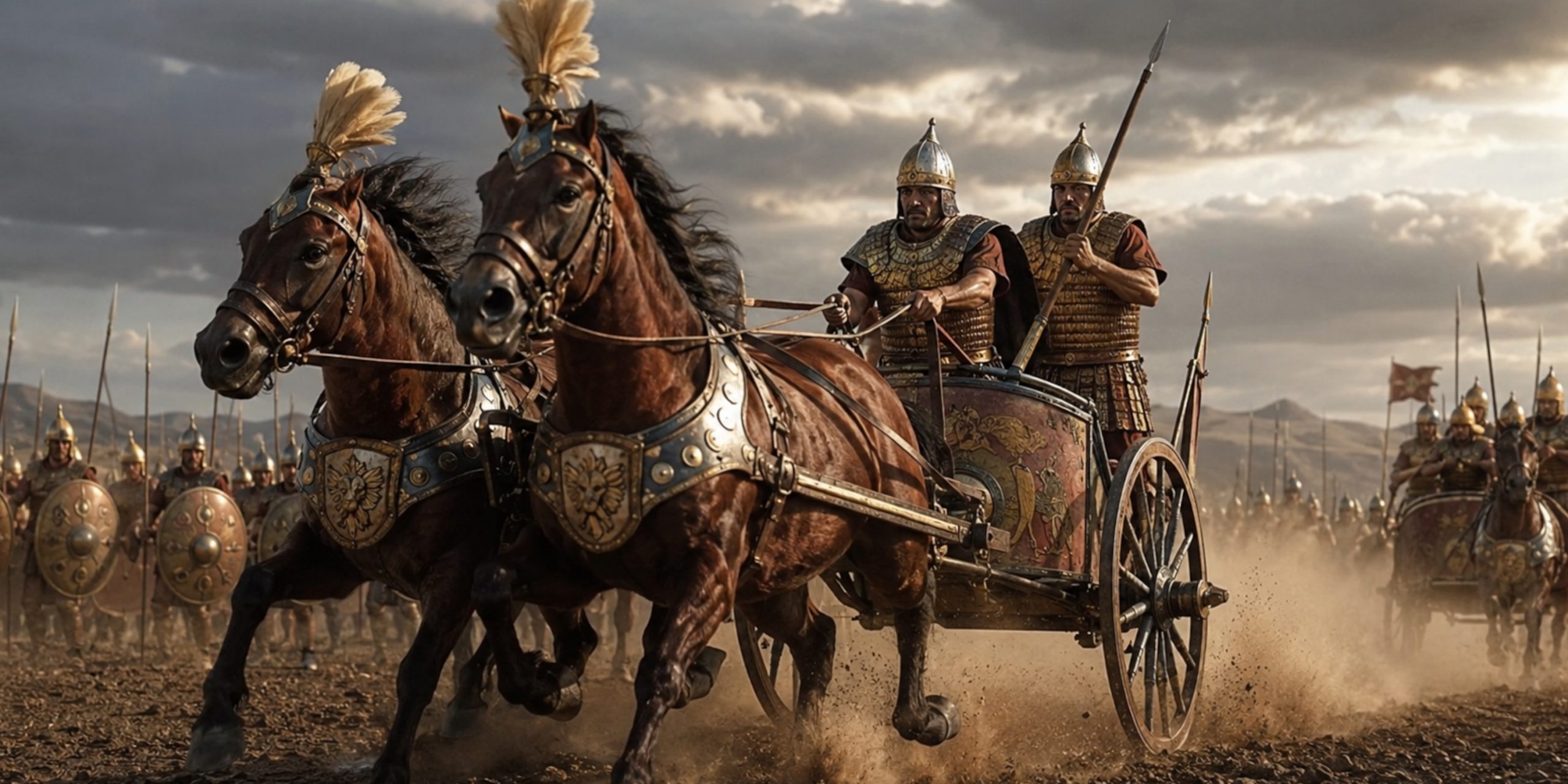
The most important innovation involved strengthening the vehicle to carry three men rather than the two commonly seen in Egyptian service.
This additional crew usually consisted of:
| Crew Member | Role |
|---|---|
| Driver | Controlled the horses |
| Spearman or shield bearer | Protected the crew |
| Warrior | Attacked with spear, bow or sword |
This arrangement gave the Hittite chariot greater staying power in close combat.
Rather than functioning purely as mobile archery platforms, they became effective assault vehicles capable of breaking enemy formations.
Construction and Design
The Hittite chariot represented sophisticated engineering.
Most were built using lightweight woods including elm, ash and other durable timbers.
Components included:
- Spoked wooden wheels
- Leather lashings
- Rawhide reinforcement
- Woven floor
- Wooden side rails
- Bronze fittings
- Leather suspension
The wheels usually featured four or six spokes depending upon the period and regional workshop.
Unlike solid wheels used centuries earlier, spoked wheels dramatically reduced weight while increasing speed.
The axle sat closer to the centre of the vehicle than on Egyptian examples, improving balance for the heavier three-man crew.
Horses and Training
The Hittites became famous for horse breeding.
One remarkable survival is the Kikkuli Text.
Written around the fifteenth century BC by a Mitannian horse trainer employed by the Hittites, it contains one of history’s earliest known equine training manuals.
Its programme lasted approximately 184 days and detailed:
- Feeding schedules
- Exercise routines
- Interval training
- Water management
- Rest periods
- Conditioning
Reading it today feels surprisingly modern. Apparently interval training was fashionable over three thousand years before expensive gym memberships.
The manual demonstrates that Hittite military success relied as much upon logistics and veterinary knowledge as battlefield courage.
Arms and Armour
The Hittite chariot crew carried a mixture of offensive and defensive equipment depending upon their role.
Primary Weapons
Spears
The spear remained the principal weapon during close engagements.
Long thrusting spears allowed warriors to strike infantry while remaining aboard the moving chariot.
Composite Bow
Composite bows made from wood, horn and sinew delivered impressive range and penetrating power.
They remained essential during the opening stages of battle.
Javelins
Some crews carried lighter throwing spears before closing with the enemy.
Sword Types
Several Bronze Age sword forms appear within Hittite territory.
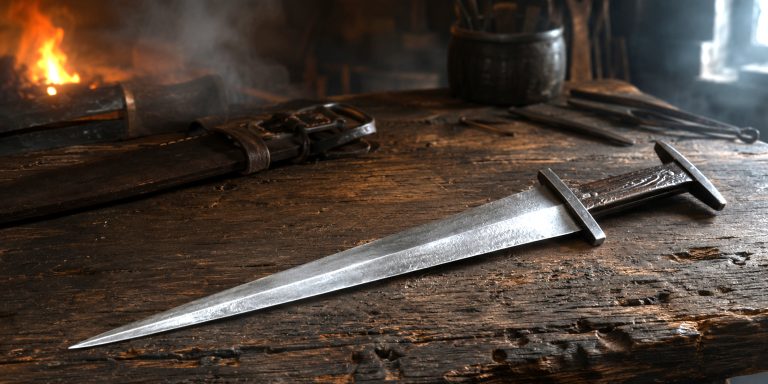
Type Naue II Sword
One of the most influential Late Bronze Age swords.
Features included:
- Leaf-shaped blade
- Strong central rib
- Effective cutting and thrusting capability
- Bronze construction
The Naue II eventually spread throughout the Mediterranean and remained influential into the early Iron Age.
Leaf-Shaped Bronze Swords
Earlier Hittite warriors frequently carried shorter leaf-shaped swords ideal for close combat following a chariot charge.
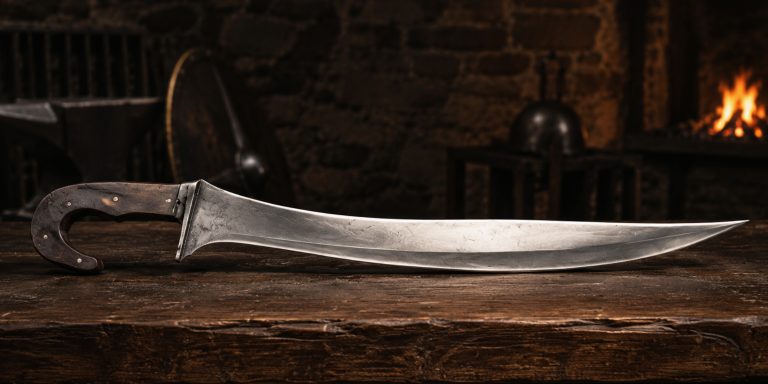
Long Bronze Slashing Swords
Elite warriors sometimes wielded longer blades suited to mounted or chariot fighting.
Although archaeological examples vary considerably, they demonstrate continual experimentation during the Late Bronze Age.
Defensive Equipment
Protection commonly included:
- Bronze helmets
- Scale armour
- Bronze or leather cuirasses
- Large shields
- Arm guards
- Greaves for wealthier warriors
Not every soldier wore full armour.
Elite chariot crews generally possessed better equipment than ordinary infantry.
Chariot Tactics
The Hittites used their chariots differently from the Egyptians.
Egyptian doctrine often emphasised mobile archery.
The Hittites increasingly favoured decisive shock action.
Typical battle sequence:
- Advance under missile fire
- Disrupt enemy formations
- Close rapidly
- Spearmen attack at close range
- Infantry exploit the resulting disorder
This cooperation between infantry and chariots became one of the hallmarks of Hittite warfare.
The Battle of Kadesh
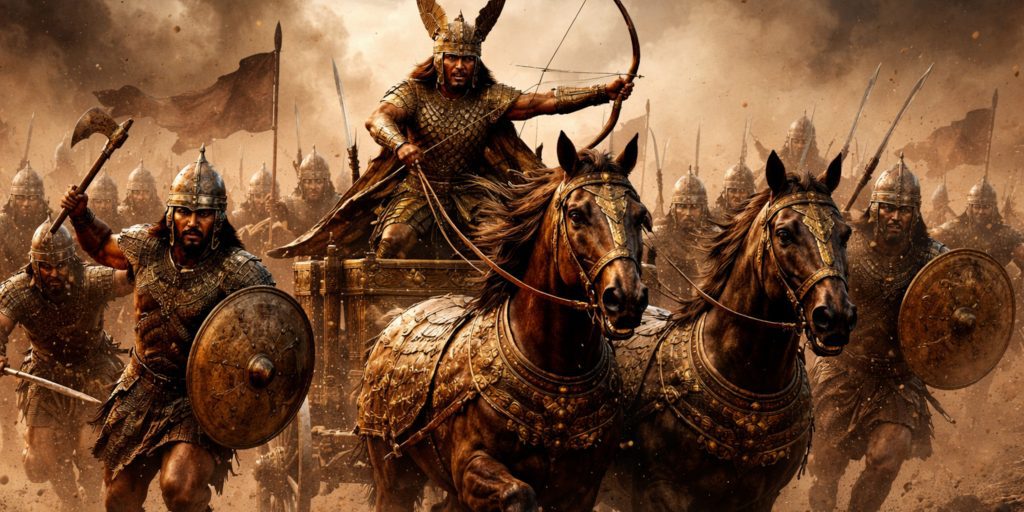
No discussion of Hittite chariots is complete without the famous Battle of Kadesh in around 1274 BC.
King Muwatalli II faced Ramesses II of Egypt near modern Syria.
The Hittites assembled what may have been over three thousand chariots, making it one of history’s largest chariot battles.
The Hittite attack caught the Egyptian divisions while they were still marching separately.
Their heavy chariots smashed into the Egyptian camp, creating widespread confusion.
Although Ramesses later claimed victory, modern historians generally regard the battle as strategically inconclusive.
The Hittites retained control of Kadesh after the battle, suggesting their campaign ultimately achieved its principal objective.
Famous Hittite Kings Who Used Chariots
Suppiluliuma I
Expanded the Hittite Empire dramatically through aggressive campaigning.
His victories relied heavily upon mobile chariot forces.
Mursili II
Continued extensive military operations throughout Anatolia and northern Syria.
Muwatalli II
Commanded the Hittite army at Kadesh and oversaw one of the greatest concentrations of chariot forces ever assembled.
Hattusili III
Later concluded the famous peace treaty with Egypt following years of conflict.
Archaeology
Although wooden chariots rarely survive, archaeology has revealed substantial evidence.
Important discoveries include:
Hattusa
The imperial capital has yielded:
- Bronze wheel fittings
- Horse harness components
- Weaponry
- Administrative tablets
- Military records
Yazılıkaya
Rock reliefs depict elite warriors, royal processions and military symbolism associated with Hittite power.
Alaca Höyük
Earlier royal burials reveal ceremonial wagons and wheeled vehicles illustrating the long tradition of elite transport in Anatolia.
Ugarit and Syrian Sites
Artefacts from Hittite controlled territories include:
- Harness ornaments
- Horse equipment
- Bronze weapons
- Administrative correspondence
Together these finds provide a surprisingly coherent picture despite the disappearance of the wooden vehicles themselves.
Contemporary Sources
The Hittites left relatively few narrative military accounts compared with Egypt.
Fortunately several important sources survive.
Egyptian Account of Kadesh
Ramesses II described the sudden Hittite assault:
“The vile foe of Hatti came with his many foreign countries.”
Like many royal inscriptions, this statement should be read with healthy scepticism. Ancient kings rarely admitted they had experienced an especially difficult afternoon.
The Treaty of Kadesh
The later peace treaty between Egypt and the Hittites remains one of history’s earliest surviving international agreements.
Its existence alone demonstrates that neither power achieved complete dominance.
Hittite Royal Annals
Royal inscriptions frequently describe campaigns supported by chariot contingents, emphasising royal leadership and divine favour.
Logistics Behind the Chariot Corps
The true achievement of the Hittites lay not simply in building chariots but sustaining them.
Each vehicle required:
- Skilled carpenters
- Bronze smiths
- Leather workers
- Horse breeders
- Veterinarians
- Wheelwrights
- Armourers
- Supply personnel
An army fielding thousands of chariots represented one of the most sophisticated logistical systems of the Bronze Age.
Strengths and Weaknesses
Strengths
- High mobility
- Strong battlefield shock effect
- Elite fighting platform
- Flexible tactical use
- Excellent command visibility
Weaknesses
- Expensive to maintain
- Dependent upon trained horses
- Less effective in mountainous terrain
- Vulnerable on muddy ground
- Required constant maintenance
Why Hittite Chariots Eventually Disappeared
Following the Bronze Age Collapse around 1200 BC, the political and economic systems supporting large chariot armies largely disappeared.
Iron weapons became increasingly common.
Horse breeding improved.
Mounted cavalry gradually replaced chariots because individual riders proved:
- Cheaper
- More flexible
- Easier to deploy
- Better suited to rough terrain
The military world changed, and the great chariot armies faded into history.
Legacy
The Hittite chariot represents one of the high points of Bronze Age military innovation.
Its influence extended across Anatolia, Syria and the eastern Mediterranean, shaping warfare for centuries.
Although later overshadowed by cavalry, the Hittites demonstrated that military success depended upon far more than bravery. It required engineering, logistics, animal husbandry and disciplined teamwork.
Whenever I study the reliefs, tablets and archaeological remains from Hattusa, I am struck by how modern many of the underlying principles feel. Train relentlessly, maintain your equipment, care for your horses and coordinate different branches of the army. Strip away three thousand years of technological change, and those lessons remain surprisingly familiar.
Frequently Asked Questions
How many men were carried in a Hittite chariot?
Most Late Bronze Age Hittite chariots carried three crew members consisting of a driver, a warrior and a shield bearer or spearman.
What weapons did Hittite chariot warriors use?
They fought with composite bows, spears, javelins and bronze swords, including Naue II and leaf-shaped sword types.
What was the largest Hittite chariot battle?
The Battle of Kadesh is generally regarded as the largest known Hittite chariot engagement, involving thousands of chariots on both sides.
Why were Hittite chariots heavier than Egyptian ones?
The additional crew member required a stronger chassis and altered weight distribution, making Hittite chariots better suited to close combat assaults.
Did any Hittite chariots survive?
No complete military chariots have survived. Archaeologists instead rely upon wheel fittings, harness equipment, reliefs, tablets and comparative reconstruction to understand their design and use.