There’s a moment in Chivalry 2 where you sprint headfirst into a screaming mob, swing wildly, and somehow survive long enough to throw a chicken at someone in full plate armour. It feels chaotic, ridiculous, and oddly convincing.
That mix is exactly why the question of accuracy is worth asking. The game clearly cares about history, but it also cares about fun, and those two don’t always get along. So where does it land? Closer to a medieval manuscript, or a pub brawl with swords?
Weapons and Combat
The weapons feel right in a broad sense. You have longswords, polearms, maces, axes, all with distinct weight and rhythm. That part reflects reality better than most games.
Historically, weapons were specialised tools. A mace or war hammer was far more effective against armoured opponents than a sword. Chivalry 2 leans into this, giving blunt weapons a clear edge against heavy armour. That is a solid nod to how medieval combat actually worked.
Where it stretches things is in speed and stamina. Real fights were shorter, more cautious, and far less forgiving. A single clean hit could end things quickly. In the game, fighters trade blows like they’ve got something to prove, which is fun but not especially authentic.
The directional combat system does deserve credit. Timing, spacing, and reading your opponent matter, which echoes real martial systems like those found in surviving European fight manuals.
Armour and Protection
Armour in Chivalry 2 looks excellent. Plate harness, chainmail, helmets, it is all visually grounded in real designs from the late medieval period.
The big win here is that armour actually feels protective. Heavily armoured classes can take a beating, which matches reality. Plate armour was not decorative, it was engineered to keep you alive.
That said, the game exaggerates how much punishment armour can absorb. Even the best plate had limits. Blunt force trauma, gaps in protection, and sheer fatigue were constant risks. Also, despite popular belief, armour did not turn knights into slow-moving statues. Real fighters could run, climb, and fight effectively in it, something the game captures better than most.
Battlefield Tactics and Scale
This is where things get messy, in a good way.
Real medieval battles were not constant all-out charges. They involved positioning, morale, terrain, and a lot of waiting around while commanders tried not to make fatal mistakes. Discipline often mattered more than individual heroics.
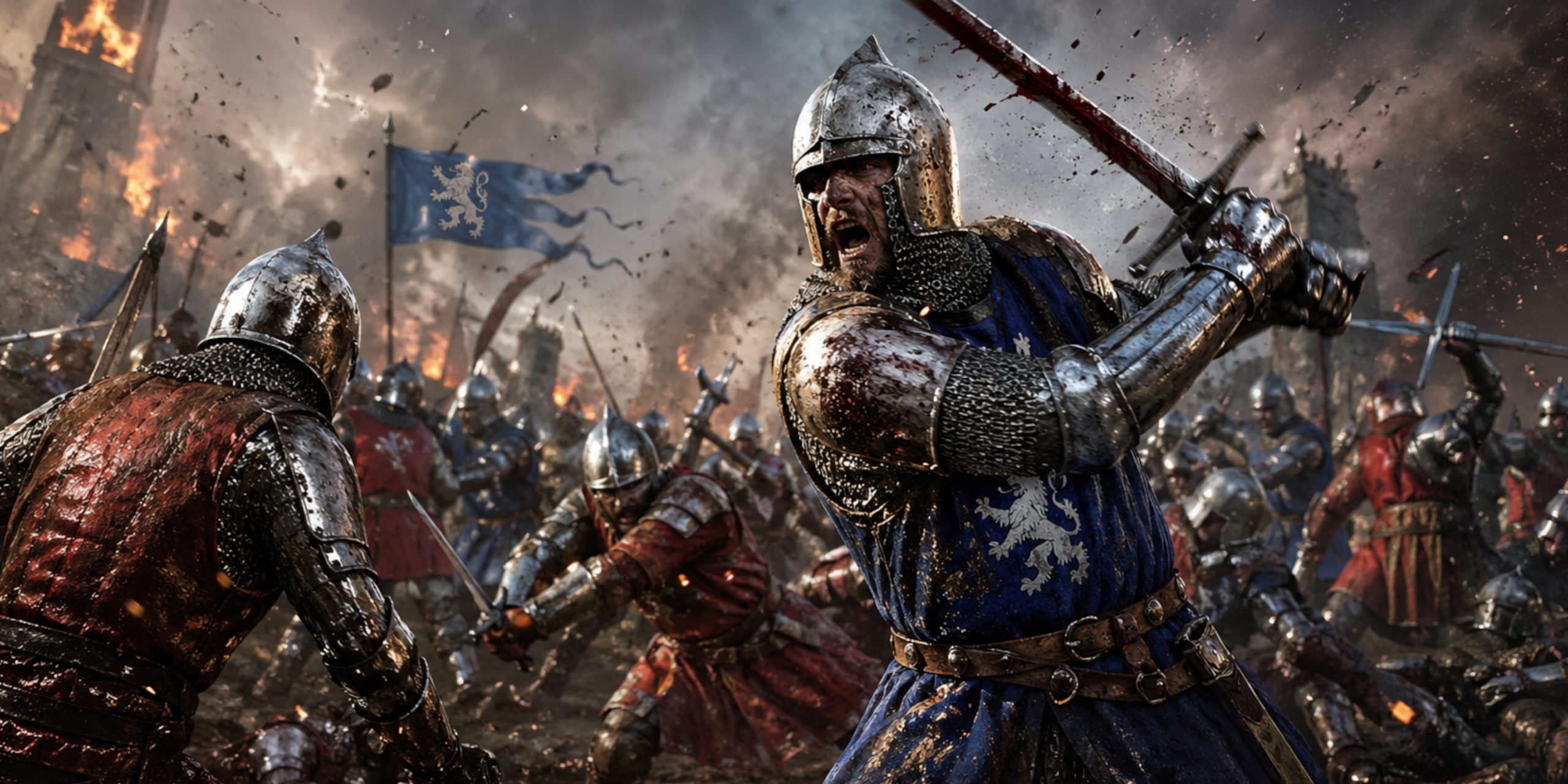
Chivalry 2 throws that out the window. Battles are loud, relentless, and packed with individual duels happening all at once. It captures the chaos of close combat but skips the structure that defined real warfare.
Sieges, on the other hand, land closer to the mark. Objectives like pushing siege equipment, breaking gates, or holding choke points reflect real tactics, even if they play out at a much faster pace.
Setting and Historical Inspiration
The game does not aim to recreate a specific war or period. Instead, it blends elements from across medieval Europe into a kind of greatest hits version of the era.
You will see armour styles and weapons that technically belong to different centuries sharing the same battlefield. Purists might wince at that, but it allows for variety and visual impact.
The factions themselves are fictional, which gives the developers room to exaggerate personalities and aesthetics. It is less a history lesson and more a stylised homage.
The Chaos Factor
This is probably the most honest part of the game.
Medieval combat was confusing, loud, and often terrifying. Visibility was limited, communication broke down, and things could turn quickly. In that sense, the frantic energy of Chivalry 2 feels closer to reality than slow, overly choreographed duels.
Where it goes off the rails is survivability. Real fighters did not shrug off multiple heavy blows or recover instantly. The game trades realism for spectacle, and it is hard to argue with the result when it works this well.
What It Gets Right
- Weapons behave in ways that broadly match their historical roles
- Armour provides meaningful protection
- Close combat feels chaotic and unpredictable
- Siege scenarios reflect real objectives and pressures
Where It Bends Reality
- Combat lasts far longer than it would in real life
- Fighters absorb unrealistic levels of damage
- Battles lack the discipline and structure of real medieval warfare
- Equipment and styles from different periods are mixed freely
Seven Swords Takeaway
Chivalry 2 sits in a comfortable middle ground. It respects the look and feel of medieval warfare without being chained to it. You get believable weapons, convincing armour, and flashes of tactical realism, all wrapped in a game that knows it should not take itself too seriously.
If you are looking for strict historical simulation, this is not it. If you want something that captures the spirit of medieval combat, with all the noise, panic, and questionable decision-making that comes with it, it gets surprisingly close.
And honestly, history probably had its fair share of chaotic moments that felt just as absurd, just with fewer flying chickens.