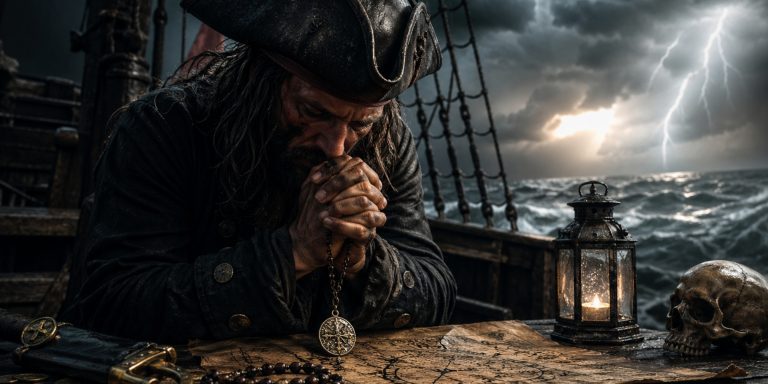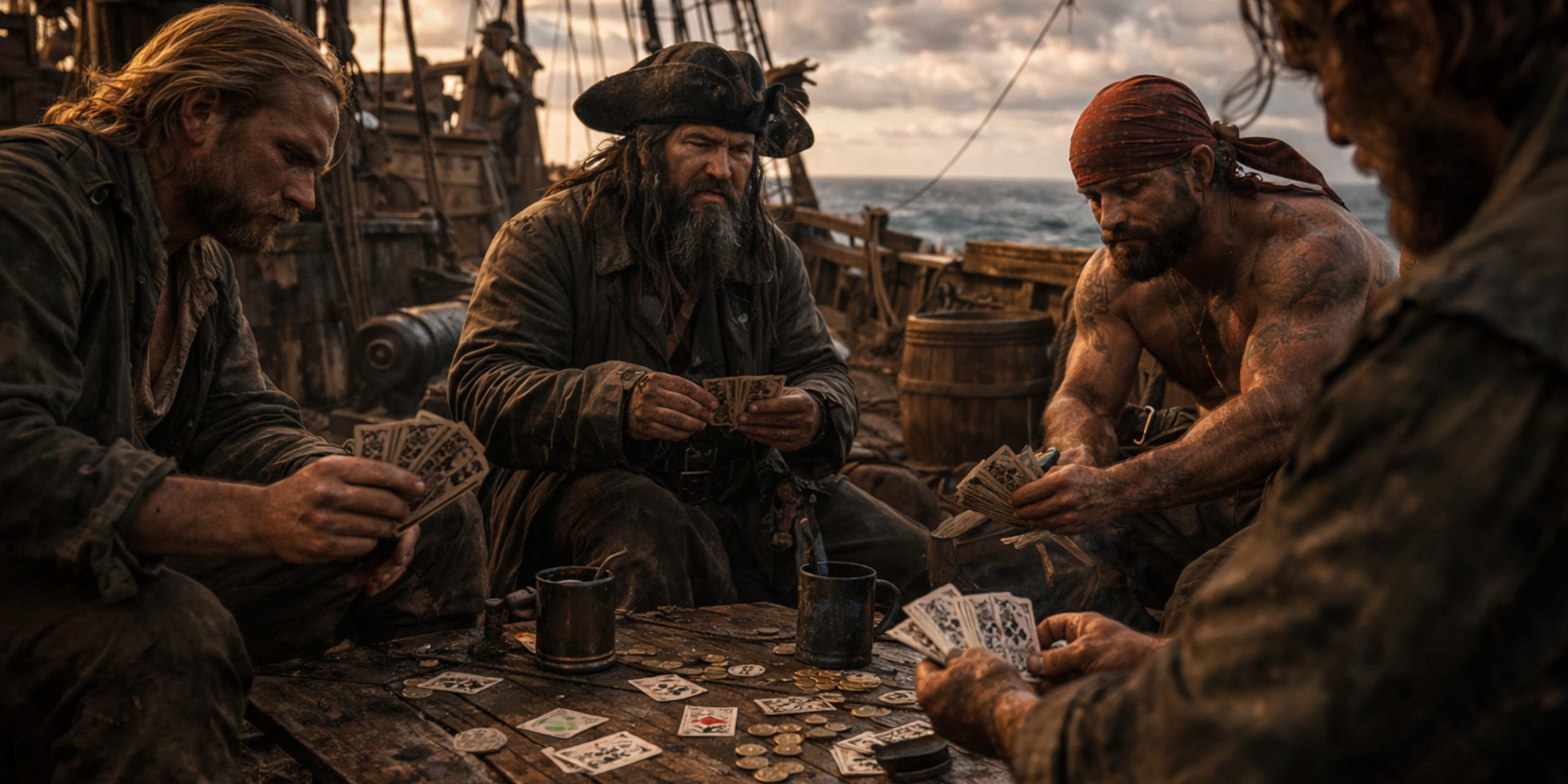
The popular image of pirates is loud, theatrical, and rather flattering. Colourful coats, overflowing treasure chests, and a carefree life beyond the law. It is a compelling myth, but the reality aboard a pirate vessel during the Golden Age of Piracy was far harsher and far more practical.
Between roughly 1650 and 1730, thousands of sailors abandoned the rigid discipline of merchant and naval fleets to join pirate crews. Some sought wealth. Others sought freedom from brutal captains, poor wages, and the general misery of maritime labour. A pirate ship could feel strangely democratic compared with the ships they fled.
Yet life at sea remained unforgiving. Hunger, storms, disease, and violent combat were constant companions. Even successful pirates spent most days dealing with the same tedious tasks as any other sailor.
If one strips away the theatrical tricorn hats and rum-soaked legends, pirate life appears both fascinating and surprisingly ordinary.
The World of the Golden Age of Piracy
The Golden Age of Piracy grew out of a chaotic Atlantic world. European empires fought constant wars. Trade routes stretched from the Caribbean to the Indian Ocean. Merchant ships carried enormous wealth but travelled slowly and often with minimal protection.
Many pirates began as privateers. These were government-backed raiders authorised to attack enemy shipping during wartime. When peace returned, thousands of experienced sailors suddenly found themselves unemployed yet still armed with ships and contacts.
Piracy became the obvious next step.
The Caribbean served as the centre of this maritime underworld. Ports such as Nassau, Tortuga, and Port Royal became gathering points for crews who operated across the Atlantic trade routes.
A sailor could join a pirate crew with little ceremony. If he could climb rigging, handle a blade, and tolerate the smell of a crowded wooden ship, he would likely find a place aboard.
Pirate Ships and Daily Routine
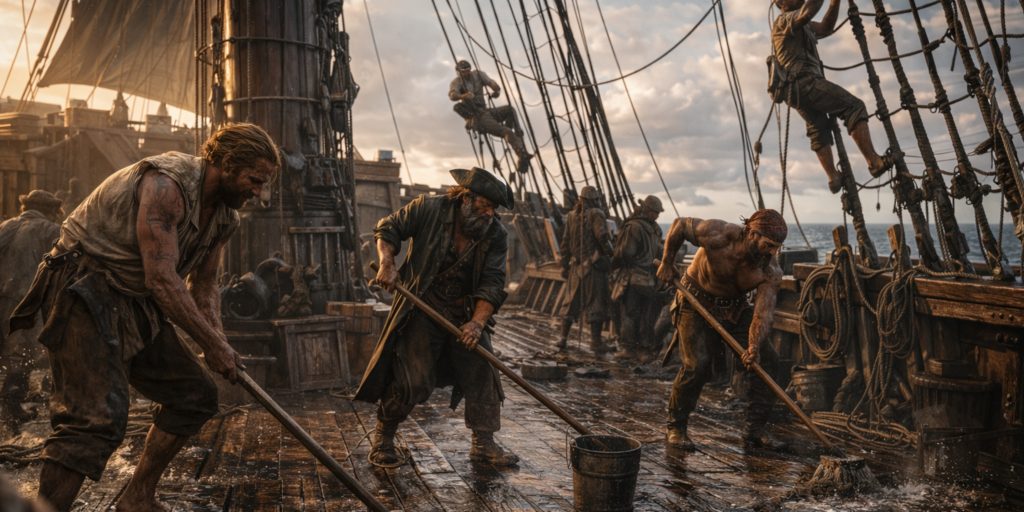
Contrary to romantic imagination, pirate ships were not floating parties. Most days were defined by hard work and strict routines.
Crews maintained sails, scrubbed decks, repaired rigging, and constantly watched the horizon for sails. A pirate vessel needed to move quickly and remain ready for sudden pursuit or attack.
Daily life included:
- Cleaning and maintenance of the ship
- Repairing sails and rigging
- Training with weapons
- Standing watch for approaching vessels
- Managing captured cargo
Food was basic and often unpleasant. Sailors survived on salted meat, dried peas, hard biscuits, and whatever fresh supplies could be seized or traded. Water spoiled quickly in wooden casks.
One contemporary sailor described shipboard provisions bluntly.
“Our biscuit was alive with worms, and the beef so salt that a man might thirst for a day after eating it.”
Even rum, which later became a pirate stereotype, was often watered down and rationed.
Pirate Discipline and Shipboard Democracy
Pirates are often imagined as chaotic criminals, yet many pirate crews followed written codes. These articles governed behaviour, shares of treasure, and punishments.
Compared with naval service, pirate ships could appear remarkably fair. Captains were elected by the crew and could be removed if they proved cowardly or incompetent.
A quartermaster often held equal authority to the captain. His job was to represent the crew and manage discipline.
The articles of the pirate captain Bartholomew Roberts included rules such as fair division of plunder and compensation for injuries.
A contemporary account recorded the principle clearly.
“Every man has a vote in affairs of moment and an equal title to the fresh provisions or strong liquors.”
Punishments still existed. Theft from fellow crew members could lead to marooning or worse. Pirate justice could be swift and unforgiving.
Still, compared with the harsh flogging common in naval fleets, pirate governance sometimes felt almost progressive.
Weapons and Combat
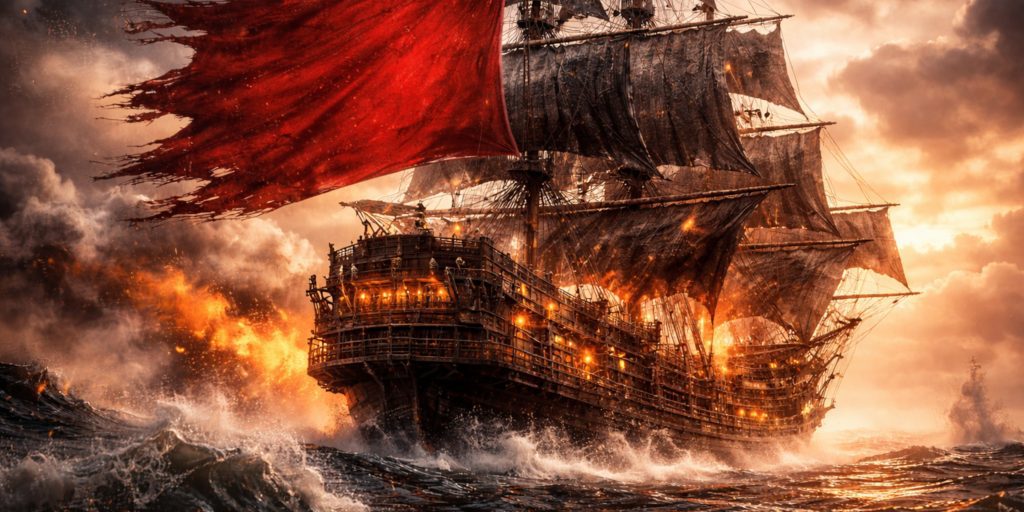
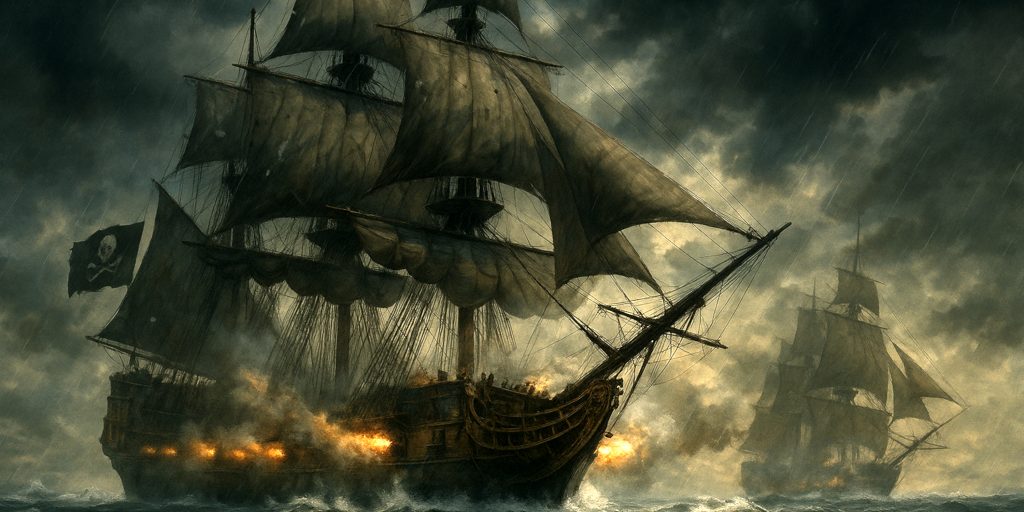
Pirates preferred speed and intimidation over prolonged battles. Merchant ships often surrendered once they realised resistance would be futile.
Typical pirate weapons included:
- Cutlasses
- Pistols
- Boarding axes
- Muskets
- Small cannon
The cutlass became the signature weapon of the pirate era. Short, curved, and sturdy, it worked well in the tight chaos of boarding actions.
Multiple pistols were also common. Reloading during combat was slow, so pirates often carried several loaded pistols at once.
Edward Teach, better known as Blackbeard, famously strapped pistols across his chest and lit slow-burning fuses in his beard to terrify enemies. One might question the comfort of this arrangement, though its theatrical effect was undeniable.
Health, Disease, and Survival
Pirate life was dangerous even without combat. Disease remained one of the greatest threats at sea.
Scurvy, caused by vitamin deficiency, plagued sailors who lacked fresh fruit and vegetables. Fever, dysentery, and infections spread easily aboard crowded ships.
Injuries during combat could prove fatal. Medical care was basic at best. A ship’s surgeon, if present at all, relied on simple tools and considerable nerve.
Amputation remained the common treatment for severe wounds. Pirate articles sometimes promised financial compensation for lost limbs. A strange form of maritime insurance.
Archaeology of Pirate Life
Archaeology has revealed far more about pirate life than romantic legends ever could.
Shipwrecks from the late seventeenth and early eighteenth centuries provide physical evidence of daily life. Weapons, personal belongings, tools, and trade goods help reconstruct the world these sailors inhabited.
The wreck believed to be Blackbeard’s flagship Queen Anne’s Revenge, discovered off the coast of North Carolina, has yielded a remarkable collection of artefacts.
Archaeologists recovered:
- Cannons and shot
- Medical instruments
- Navigational tools
- Pewter plates and cooking equipment
- Gold dust and trade goods
The medical tools discovered aboard the wreck surprised many researchers. They suggest pirate crews attempted serious medical treatment rather than simple brutality.
Another famous wreck, the Whydah Gally, commanded by the pirate Samuel Bellamy, sank in 1717 off Cape Cod. Excavations uncovered coins from multiple empires, weapons, and personal items belonging to crew members.
These finds reveal a diverse crew drawn from across the Atlantic world. Pirates were often former sailors, escaped slaves, and displaced labourers.
Archaeology turns pirates from theatrical villains into complex historical figures.
Contemporary Views of Pirates
Pirates fascinated and horrified contemporaries in equal measure. Governments condemned them as criminals, yet popular culture often treated them with reluctant admiration.
Captain Charles Johnson’s famous eighteenth century book A General History of the Pyrates described the strange mix of fear and allure surrounding these figures.
One passage captures the uneasy respect pirates commanded.
“Their courage was desperate and their conduct bold beyond measure.”
Sailors sometimes viewed pirate crews with envy. Compared with the brutal discipline of naval life, pirate ships offered better food, fairer shares, and the possibility of sudden wealth.
Of course, the risk of hanging at the end of a rope remained ever present.
The End of the Pirate Era
By the 1720s the great pirate fleets had begun to disappear.
European powers increased naval patrols across the Atlantic. Colonial governors offered pardons to pirates who surrendered, while aggressively hunting those who refused.
Famous figures such as Blackbeard, Charles Vane, and Calico Jack Rackham were hunted down and killed or captured.
Public executions became common spectacles. Pirates were often hanged at harbour entrances as warnings to others.
By the mid eighteenth century, organised piracy in the Caribbean had largely faded.
A Historian’s Reflection on Pirate Life
The reality of pirate life is both less glamorous and more interesting than the myths.
These were not carefree adventurers chasing buried treasure. They were working sailors who rejected one harsh system in favour of another that offered slightly more freedom.
Life aboard a pirate ship was cramped, dangerous, and deeply uncertain. Yet within that floating wooden world, one can glimpse something unusual for the age. A rough form of equality and shared risk.
Not exactly a utopia, but perhaps a rebellion against the rigid hierarchies of the early modern world.
And if one reads the accounts closely, pirates spent far more time repairing sails and arguing about provisions than burying gold.
History rarely resembles the films.
That is usually what makes it more interesting.