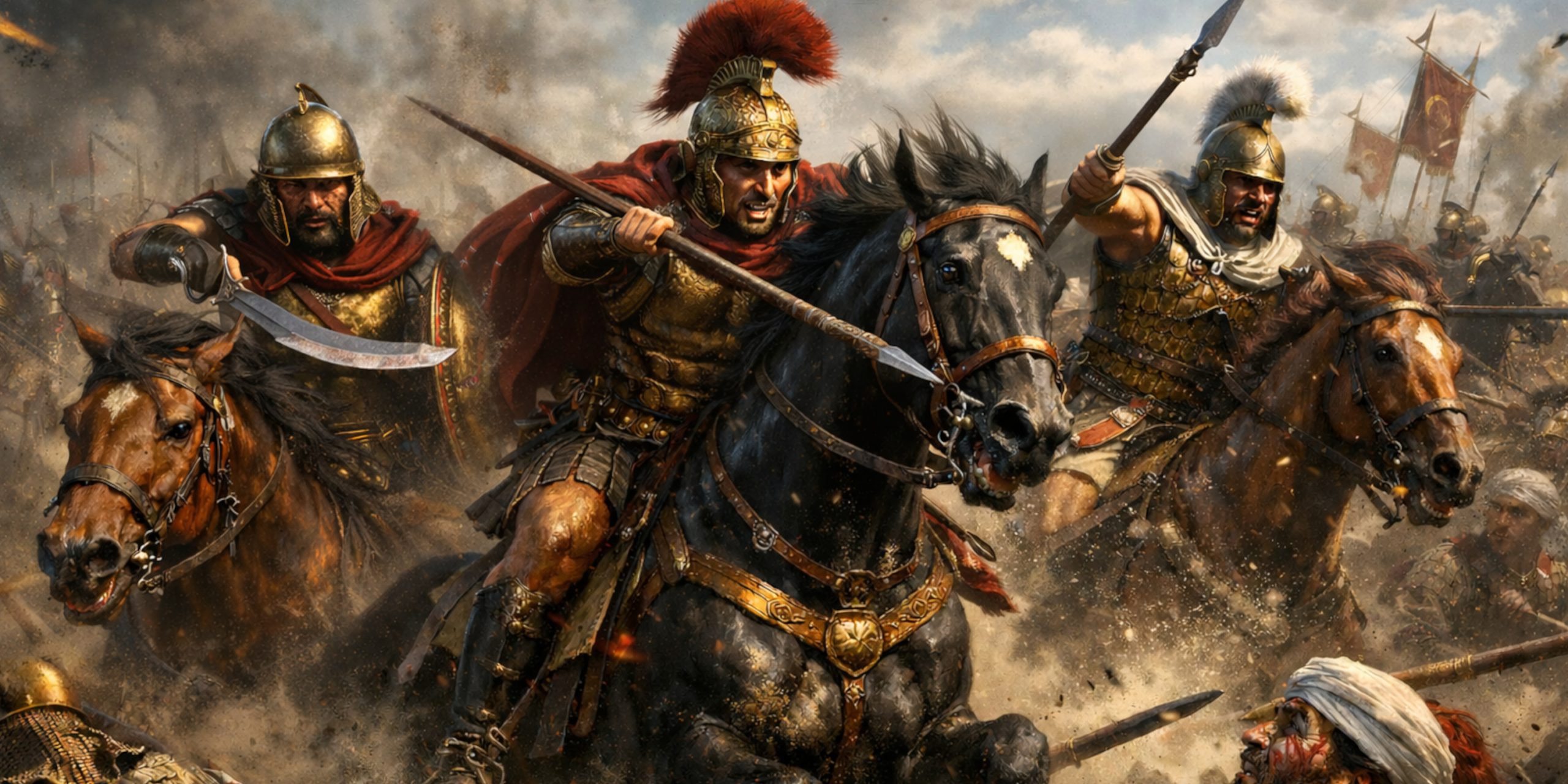
Few military formations from antiquity have achieved the reputation of the Macedonian Companion Cavalry, known in Greek as the Hetairoi. They were not merely cavalry in the conventional sense. They were the king’s companions in the literal and political meaning of the word. Aristocrats, landowners, and battlefield professionals who rode beside their monarch and often determined the outcome of battles.
When Philip II of Macedon rebuilt the Macedonian army in the fourth century BC, he did something rather clever. He combined a disciplined infantry phalanx with a decisive cavalry arm. The phalanx pinned the enemy. The cavalry smashed it.
Alexander the Great inherited this machine and drove it across Asia. The Companion Cavalry became the hammer in that system. When the moment came, they struck with a force that ancient historians struggled to describe without sounding slightly breathless.
Origins of the Companion Cavalry
The roots of the formation lie in the reforms of Philip II of Macedon during the mid fourth century BC. Earlier Greek warfare had relied mostly on infantry hoplites with limited cavalry support. Macedon, with its wide plains and horse breeding tradition, was better suited to mounted warfare.
Philip organised the cavalry into elite units recruited from the Macedonian nobility. These men had wealth, horses, armour, and a personal stake in the king’s success. In return they gained prestige and influence at court.
By the time Alexander took command in 336 BC, the Companion Cavalry had developed into a professional shock force capable of executing complex manoeuvres on the battlefield.
Organisation and Structure
The Companion Cavalry were organised into territorial squadrons known as ilai. Each squadron was drawn from a particular region of Macedon, which encouraged strong loyalty and competition between units.
Typical structure included:
- Royal Squadron (Agema) which rode directly with the king
- Several regional squadrons commanded by trusted officers
- Estimated strength between 1,800 and 2,500 cavalry
The Royal Squadron was the most prestigious. Alexander himself rode with it, often leading charges personally. This was not the safest management strategy in history, but it certainly inspired the men.
Battlefield Role and Tactics
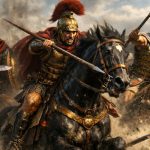
The Companion Cavalry served as shock cavalry, designed to break enemy formations with speed and concentrated force.
Typical tactical use followed a clear pattern:
• The Macedonian phalanx engaged and fixed the enemy infantry
• Light troops and allied cavalry secured the flanks
• The Companion Cavalry formed a wedge formation
• Alexander led a charge against a weak point in the enemy line
The wedge formation allowed riders to penetrate deep into enemy ranks. Once the line fractured, panic usually followed.
This tactic proved devastating at battles such as:
At Gaugamela in 331 BC, the Companion Cavalry drove directly toward Darius III after a gap opened in the Persian line. That moment effectively decided the battle.
Arms and Armour
The Companion Cavalry were heavily armed compared with most cavalry of the era. Their equipment balanced protection with mobility, allowing them to deliver decisive charges.
Primary Weapons
Xyston Cavalry Lance
- Length roughly 3 to 4 metres
- Used two handed without a shield
- Designed for thrusting during the charge
- Often carried a secondary spear if the first broke
- A forward curving single edged blade
- Ideal for powerful cutting strikes from horseback
- Particularly effective against lightly armoured opponents
- Straight double edged blade
- Shorter than the kopis
- Useful for thrusting in close combat
Many cavalrymen carried both spear and sword. Once the initial charge dissolved into close fighting, the sword became essential.
Armour
Typical armour included:
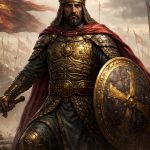
- Bronze helmet, often Phrygian or Boeotian style
- Linen cuirass (linothorax) or bronze muscle cuirass
- Greaves for leg protection
- Some cavalry used small cloaks or leather elements for flexibility
Unlike earlier Greek cavalry, the Companions typically did not carry shields. The two handed lance required both hands. This decision emphasised offensive power over defence.
Horses and Equipment
The horses themselves were carefully bred and trained. Saddles as we know them did not yet exist, so riders relied on skill and balance.
Horse gear often included:
- Decorative bridles
- Reinforced chest straps
- Occasional light horse armour in later campaigns
Alexander’s famous horse Bucephalus became almost as legendary as the king himself.
Archaeology and Material Evidence
Physical evidence of the Companion Cavalry comes from several sources across the Macedonian world.
Royal Tombs at Vergina
Excavations at Vergina, believed to be the ancient city of Aigai, revealed royal burials linked to the Macedonian court.
Finds include:
- Cavalry weapons
- Ornate armour pieces
- Horse equipment and decorative fittings
These objects demonstrate the wealth and craftsmanship associated with the Macedonian elite.
Sculptures and Reliefs
Carvings from the Alexander Sarcophagus and other Hellenistic monuments depict cavalrymen in action. They show:
- Long cavalry lances
- Boeotian helmets
- Dynamic wedge formations
The imagery confirms descriptions preserved in ancient texts.
Battlefield Sites
Archaeological work near known battlefields such as Gaugamela and Granicus has uncovered weapon fragments and equipment that align with Macedonian cavalry gear. While identifying specific units remains difficult, the material culture fits contemporary accounts.
Contemporary Accounts
Ancient historians provide vivid descriptions of the Companion Cavalry in battle.
The historian Arrian, writing in the second century AD but relying on earlier eyewitness sources, wrote:
“Alexander led the companions in a wedge and struck where the Persian line was weakest.”
The Roman historian Curtius Rufus described their aggressive style:
“The companions rode not merely to fight but to break the enemy by the weight of their charge.”
Even Persian sources acknowledged their effectiveness. Greek cavalry had existed for centuries, yet the Macedonian Companions were clearly something different.
Reputation and Legacy
The Companion Cavalry influenced cavalry doctrine for centuries. Later Hellenistic kingdoms maintained similar formations, though few matched the original discipline or leadership.
Their legacy includes:
- Establishing shock cavalry tactics in classical warfare
- Demonstrating the value of combined arms strategy
- Inspiring later cavalry traditions across Europe and Asia
Many historians consider them among the most effective cavalry units of the ancient world.
One cannot entirely separate their success from the man who led them. Alexander possessed the rare habit of riding directly into danger while his officers tried politely not to panic.
It worked rather well, though one suspects his generals occasionally wished he would stand slightly further back.
Takeaway
The Macedonian Companion Cavalry represented a fusion of aristocratic tradition and military innovation. Recruited from the nobility, armed with powerful lances and swords, and trained to fight as a disciplined formation, they formed the decisive striking arm of Alexander’s army.
Their charges helped dismantle the Persian Empire and reshaped warfare across the eastern Mediterranean and Near East.
Even in an age filled with famous military units, the Companions stand apart. When the moment came, they rode straight at the heart of the enemy line. More often than not, the enemy discovered that was a very bad place to be.