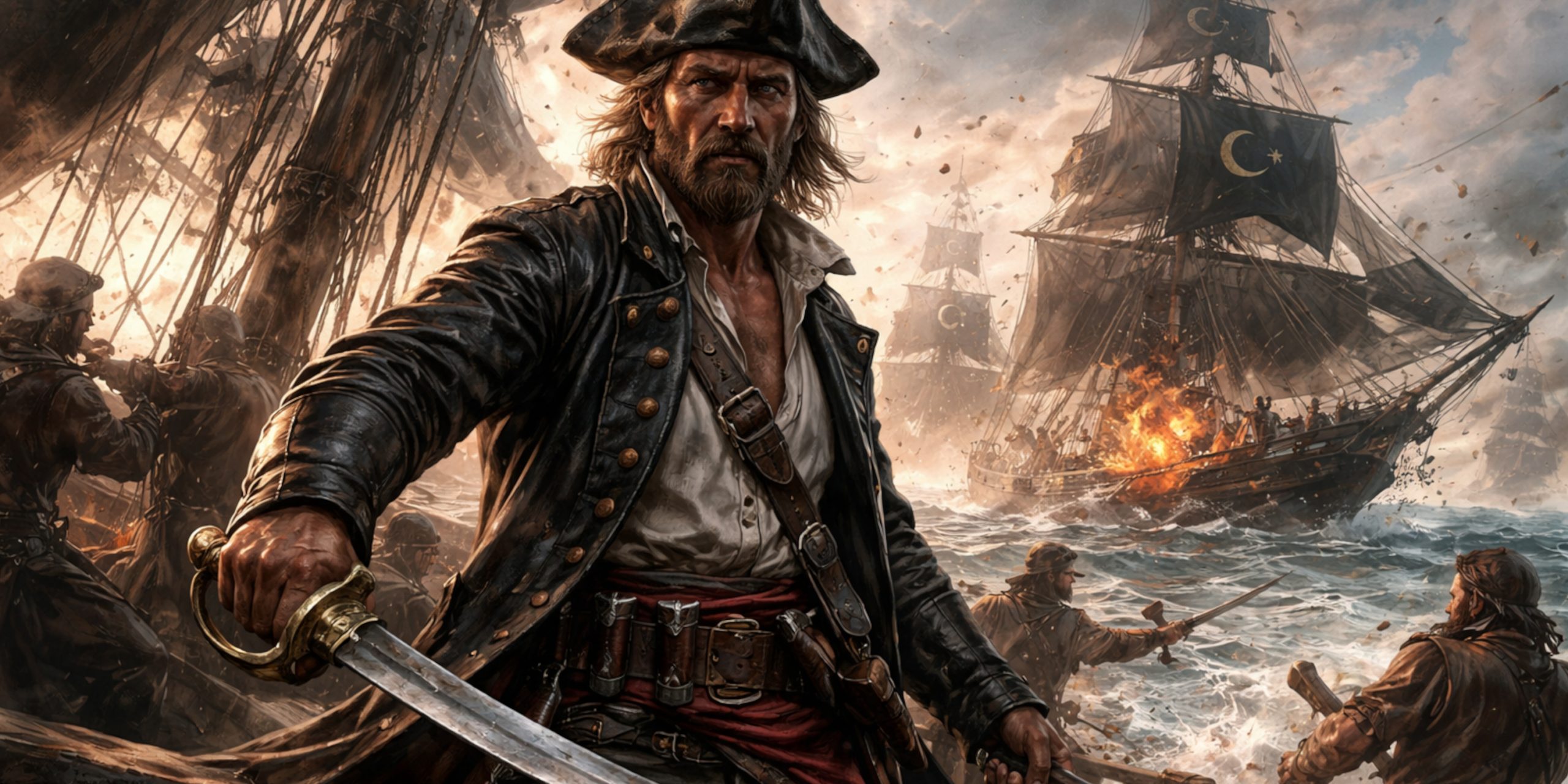
There is something irresistibly dramatic about a man who sails out of the North Sea as a Protestant privateer and ends his days commanding corsairs under the Ottoman flag. Jan Willems, better known in English sources as Yankey, did precisely that.
Born in the Dutch Republic in the late sixteenth century, he began as a licensed raider against Spanish shipping. By the 1620s he was one of the most feared corsair captains operating from Algiers, striking deep into the Atlantic and unsettling the maritime powers of Europe.
As a historian from York, raised among tales of Vikings and privateers, I admit a certain professional admiration for the audacity. Still, it must be said that the people he captured and enslaved likely found him rather less impressive.
Origins and Early Career
Jan Willems was born in the Dutch Republic, probably in the 1570s or 1580s, during the long Dutch Revolt against Spain. The sea was both highway and battleground in that conflict. Dutch captains received letters of marque to attack Spanish commerce, and Willems appears to have built his early reputation in this world of semi legal piracy.
By the early seventeenth century he was an experienced privateer. At some point, likely after being captured or after seeking better prospects, he entered the service of the corsair fleets of Algiers. There he converted to Islam and became known as Murad Reis the Younger. English and Dutch sources preferred the simpler nickname, Yankey, meaning the Dutchman.
The shift was not as unusual as it sounds. The Barbary regencies welcomed skilled northern European seamen. A capable captain was more valuable than his former loyalties.
Contemporary Descriptions
European observers wrote about him with a mix of alarm and grudging respect.
An English report from the 1620s referred to him as “that Dutch renegade, called Janke, who vexeth all the seas with his boldness.”
The French priest Pierre Dan described him as one of the most active corsair commanders of Algiers, noting the effectiveness of northern sailors in Barbary service.
Dutch accounts, understandably, were more uncomfortable. To them he was a renegade, a man who had turned his guns upon his former co religionists.
These descriptions share a common thread. He was regarded as bold, skilled and uncommonly daring.
Ships and Seamanship
Willems commanded fast, ocean going vessels rather than small coastal galleys. This was part of his innovation.
Types of Ships Associated with Yankey
- Light sailing frigates adapted for speed
- Armed merchant vessels converted for raiding
- Atlantic capable ships that could operate beyond the Mediterranean
Unlike many Mediterranean corsairs who relied heavily on oared galleys, Willems favoured sailing ships that could range far into the Atlantic. This allowed him to strike Ireland, Iceland and even waters near the English coast.
His ships were typically armed with:
- Broadside cannon, often medium calibre
- Swivel guns mounted on rails
- Small arms for boarding actions
His northern European background likely influenced this preference for sailing warships capable of blue water operations.
Weapons and Fighting Style
Boarding was central to corsair warfare. Artillery disabled or intimidated a target, but profit lay in capturing ship and crew intact.
Common weapons used by corsairs under his command would have included:
- Cutlasses and short sabres suited to close quarters
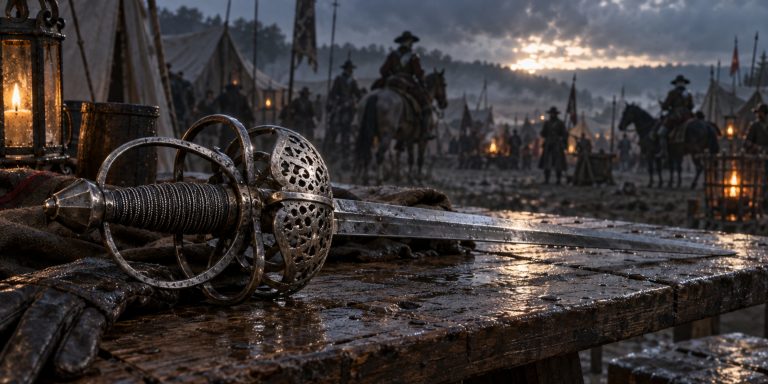
- Rapiers and backswords, particularly among European converts
- Pistols and matchlock muskets
- Boarding axes
The aim was speed and shock. A well timed volley, a grappling hook thrown across the rail, then a rush of armed men. Resistance was costly and often futile.
It is not romantic. It is efficient.
Bounty and Treasure
Corsair profit came in several forms.
- Cargoes of grain, wine, textiles and bullion
- Ransoms for wealthy passengers
- The sale of captives into slavery
- Seized ships resold or integrated into the corsair fleet
Exact figures are elusive, but records from Algiers show that successful captains could amass considerable wealth. The regency took a share, as did investors and crew. The remainder belonged to the captain.
When Willems raided Iceland in 1627, during the events known in Icelandic memory as the Turkish Abductions, hundreds were taken captive. The human toll was severe. For the corsairs, it was profitable.
One English source complained that he “returned to Argier laden with spoils and Christian captives.” That sentence alone tells us much about the economic logic of his enterprise.
Major Raids and Battles
Atlantic Raiding
Willems helped extend Barbary corsair operations beyond the Mediterranean. He struck at shipping around:
- The coasts of Ireland
- The English Channel
- The North Atlantic approaches
This expansion shocked European observers who had assumed that Barbary corsairs were a Mediterranean problem.
The Iceland Raid, 1627
Operating as Murad Reis, he participated in the raid on Iceland. Several hundred Icelanders were captured and transported to North Africa. Contemporary Icelandic accounts describe panic in coastal communities and the trauma of forced exile.
Though he was not the only commander involved, his leadership and experience were central to the operation’s success.
Engagements with European Navies
He inevitably faced retaliation. English and Dutch warships hunted corsairs aggressively in the 1620s. However, the wide operating area and political complexities of the Mediterranean made suppression difficult.
There is no record of a decisive battle in which Willems was defeated in open combat. His career suggests caution as much as bravery. A wise corsair did not fight fair if he could avoid it.
Reputation in Europe
In Protestant Europe he was viewed as a traitor. In Catholic Europe, a pirate and heretic. In Algiers, a valuable admiral.
The English diplomat Sir Thomas Roe complained bitterly of renegades who “teach the Turk to vex Christendom with our own arts.” Willems embodied that fear.
From a purely maritime perspective, he was a capable commander who understood Atlantic navigation, gunnery and logistics. His legacy is less about ideology and more about adaptability.
Fate and Death
Jan Willems, or Murad Reis the Younger, died in 1628. Sources suggest he was killed in action, likely during an engagement with European naval forces near the Strait of Gibraltar.
Unlike some corsairs who faded quietly into retirement, his end appears to have been violent, which feels grimly appropriate.
He left behind no romantic memoir, no treasure map tucked beneath a floorboard. His legacy survives in diplomatic correspondence, ransom records and the uneasy memory of coastal communities from Ireland to Iceland.
Assessment
It is tempting to cast him as a swashbuckling villain or a daring naval genius. The truth sits somewhere between.
He was a product of a brutal maritime age in which privateering blurred easily into piracy. He changed sides when it suited him. He commanded ships with skill. He profited from human misery.
From the cobbled streets of York, where I write with the Minster bells occasionally interrupting my thoughts, I find him fascinating precisely because he refuses easy categorisation. He was neither simple traitor nor romantic rogue. He was, above all, pragmatic.
And in the seventeenth century, pragmatism at sea could be lethal.
Seven Swords Takeaway
Jan Willems, known as Yankey, stands as one of the most striking examples of the renegade corsair tradition. From Dutch privateer to Ottoman admiral, he reshaped the geographical reach of Barbary raiding and unsettled European maritime powers.
His story reminds us that early modern identity was fluid, loyalty negotiable and the sea a place where ambition could redraw the map.
He left no buried chest of gold that we can point to today. What he left instead was disruption, fear and a chapter of maritime history that still feels uncomfortably modern.