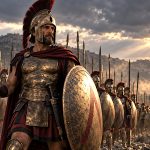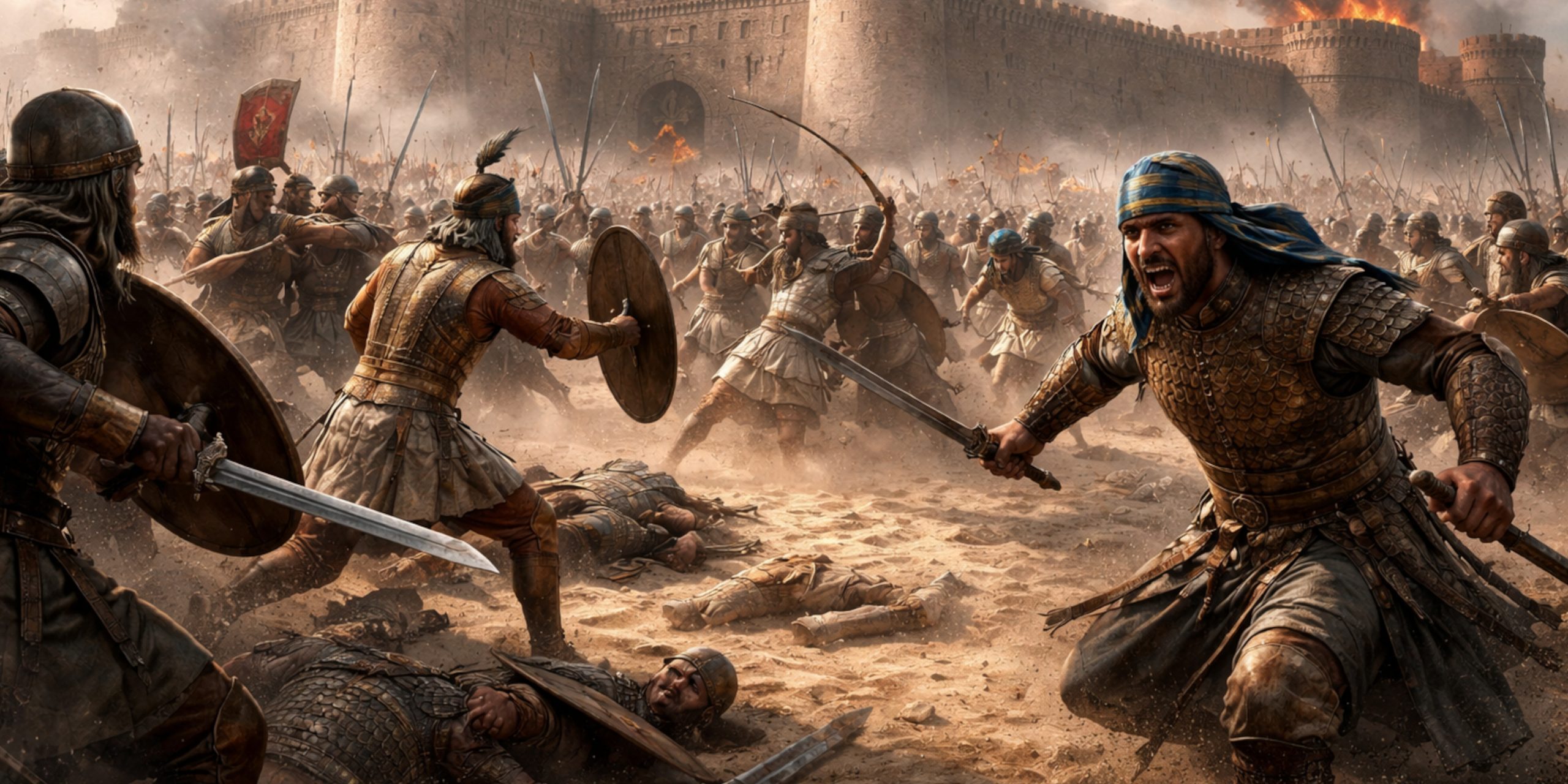
The Battle of Pelusium arrives with the hard edged efficiency of the Achaemenid Persian Empire. It is remembered less for elegant manoeuvre than for what it symbolised, the moment when Egypt fell into Persian hands and its pharaoh became a client of a foreign king.
The sources are thin, occasionally contradictory, and sometimes theatrical. Still, enough survives to sketch the outline of a decisive encounter fought on Egypt’s eastern doorstep, where desert, marsh, and fortress met.
Historical Context
By 525 BC, Egypt was ruled by Psamtik III, young, recently crowned, and inheriting a kingdom already under pressure. Persia, under Cambyses II, had absorbed much of the Near East and now turned its attention west.
Pelusium guarded the eastern approach to the Nile Delta. Lose Pelusium, and Egypt’s natural defences unravel quickly. The Persians knew this. So did the Egyptians. That both sides marched there tells you everything about the battle’s importance.
Forces
Persian Empire
| Element | Estimated Strength | Notes |
|---|---|---|
| Infantry | 25,000–40,000 | Core Persian troops supported by subject levies |
| Cavalry | Several thousand | Including Median and possibly Arabian horsemen |
| Specialists | Unknown | Archers, engineers, and siege personnel |
Egyptian Kingdom
| Element | Estimated Strength | Notes |
|---|---|---|
| Infantry | 20,000–30,000 | Native Egyptian troops and Greek mercenaries |
| Mercenaries | Several thousand | Likely Ionians and Carians |
| Chariots | Limited | No longer decisive by this period |
Numbers vary wildly in ancient accounts. Any figure should be treated as approximate rather than precise.
Commanders and Leadership
Persian Command
- Cambyses II, overall commander
- Persian noble officers commanding infantry and cavalry contingents
- Possible advisory role from defectors familiar with Egyptian defences
Egyptian Command
- Psamtik III, pharaoh and field commander
- Greek mercenary captains
- Egyptian officers drawn from the Late Period military elite
Cambyses appears as a distant but firm commander in the sources. Psamtik, by contrast, is portrayed as brave, outmatched, and carrying the weight of a fading dynasty on his shoulders.
Arms and Armour
Persian Equipment
- Swords
- Short akinakes style swords, double edged and suited to close combat
- Missile Weapons
- Composite bows with high draw weight
- Reed arrows with bronze or iron heads
- Defensive Gear
- Wicker or leather shields
- Scale armour for elite troops
- Soft caps or metal reinforced headgear
Egyptian Equipment
- Swords
- Khopesh, now largely ceremonial but still present
- Straight double edged swords influenced by Near Eastern forms
- Missile Weapons
- Simple bows and javelins
- Defensive Gear
- Linen corselets
- Wooden shields with leather coverings
- Mercenary Arms
- Greek hoplite panoply, round shields, spears, and iron swords
By this stage, Egyptian arms looked backward while Persian kit reflected an empire used to fighting adaptable wars across vast terrain.
The Battle Timeline
- Early 525 BC
Persian forces cross the Sinai, securing water routes with careful logistical planning. - Approach to Pelusium
Egyptian army takes position near the fortress city, blocking the delta entrance. - Initial Engagement
Skirmishing between missile troops, with Persian archers gaining the upper hand. - Main Clash
Infantry engagement follows. Persian discipline and combined arms pressure Egyptian lines. - Collapse of Egyptian Resistance
Egyptian forces break and retreat toward Memphis. - Aftermath
Pelusium falls. Within months, Memphis is taken and Psamtik III is captured.
The famous tale of animals being used as psychological weapons appears in later accounts and should be treated cautiously, entertaining though it is.
Archaeology and Evidence
Archaeological confirmation of the battle itself is frustratingly sparse. Pelusium has suffered from coastal erosion, Nile sediment shifts, and later occupation layers.
What we do have includes:
- Fortification remains consistent with a major defensive site
- Persian period artefacts in the Delta following the conquest
- Textual corroboration from Greek historians writing generations later
In other words, archaeology confirms the conquest, not the choreography.
Contemporary and Near Contemporary Quotes
Herodotus offers the most famous account, writing decades later:
“The Egyptians fought bravely, but they were defeated and fled.”
It is brief, unsentimental, and probably the most reliable line he gives us on the battle. Everything else, especially the more theatrical details, deserves a raised eyebrow.
Historical Significance
Pelusium marked the end of native Egyptian rule for a generation. Egypt became a satrapy of the Persian Empire, its kings replaced by administrators answerable to Persepolis.
For Cambyses, it was a strategic triumph. For Egypt, it was a reminder that tradition alone does not stop an empire. Fortresses matter. Logistics matter more. And allies who defect at the wrong moment matter most of all.
As a historian, I find Pelusium oddly sobering. No heroic last stand. No clever ambush. Just a strong position, a stronger enemy, and the quiet end of a dynasty that had already begun to crack.