A grinding crucible of the Third Crusade
The siege of Acre was not a single dramatic moment but a long, exhausting contest of endurance, ego, logistics, and stubborn faith. For nearly two years, crusader armies and Ayyubid defenders bled each other dry outside one of the most important ports in the eastern Mediterranean. Disease killed more men than swords. Politics frayed alliances faster than enemy arrows. By the time Acre finally fell in July 1191, victory tasted faintly of rot and seawater.
As a historian, I find Acre compelling precisely because it refuses to behave like a neat crusader epic. It is ugly, slow, indecisive, and deeply human. Kings quarrel. Armies starve. Commanders die pointlessly. And yet, strategically, Acre mattered enormously.
Strategic Context
Acre sat on the coast of the Kingdom of Jerusalem, a vital harbour that controlled supply routes between Europe and the Levant. After Jerusalem fell to Saladin in 1187, Acre became the obvious target for any serious attempt at reconquest. Without it, the crusaders could not sustain a major campaign inland. With it, they had a foothold and a lifeline.
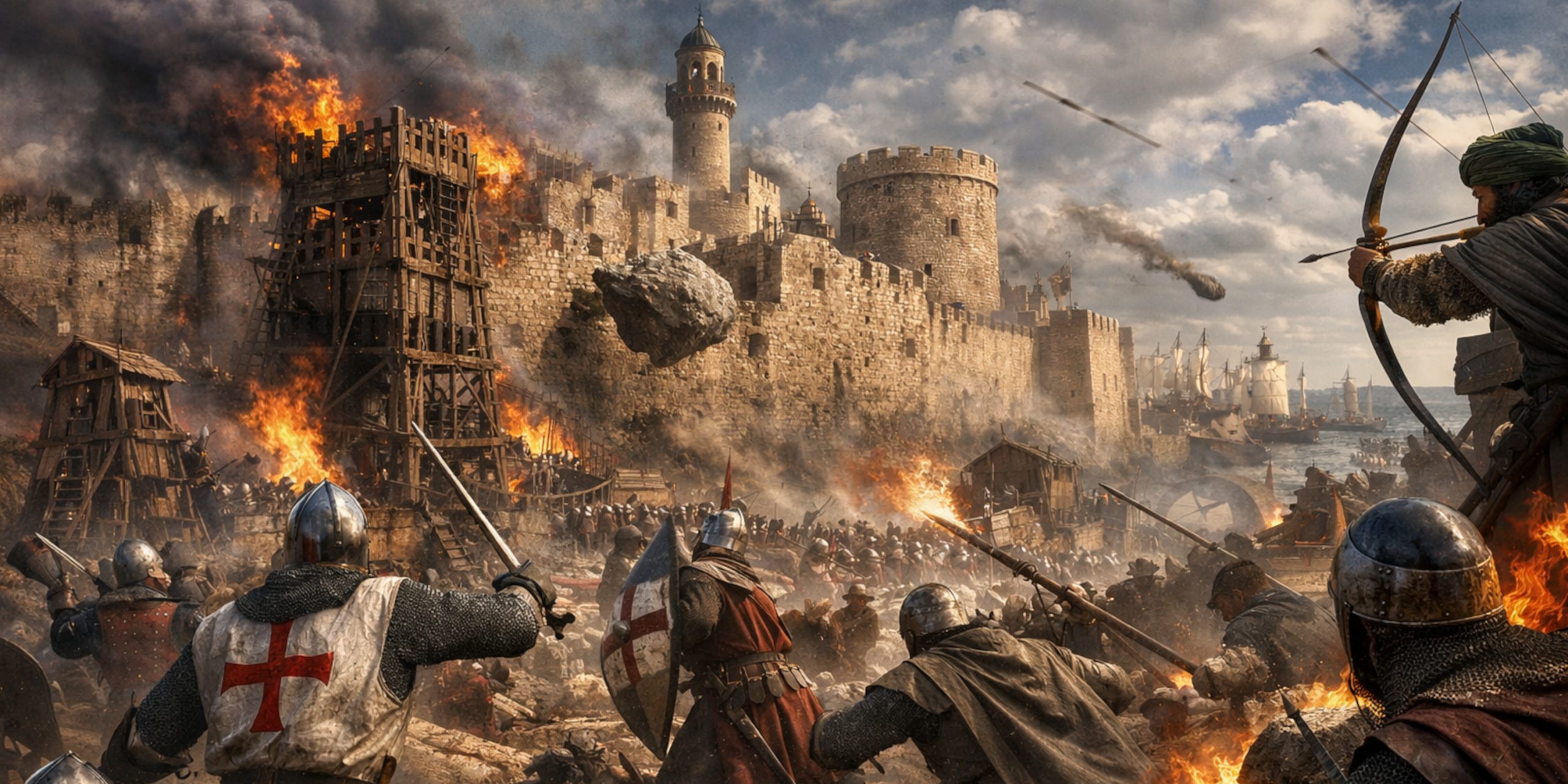
The siege began in August 1189 when King Guy of Lusignan attempted a bold but reckless move, surrounding a city already held by Muslim forces while Saladin manoeuvred in the countryside behind him. The result was a rare and miserable phenomenon: a double siege, with crusaders besieging Acre and Saladin besieging the besiegers.
Forces Involved
Crusader Coalition
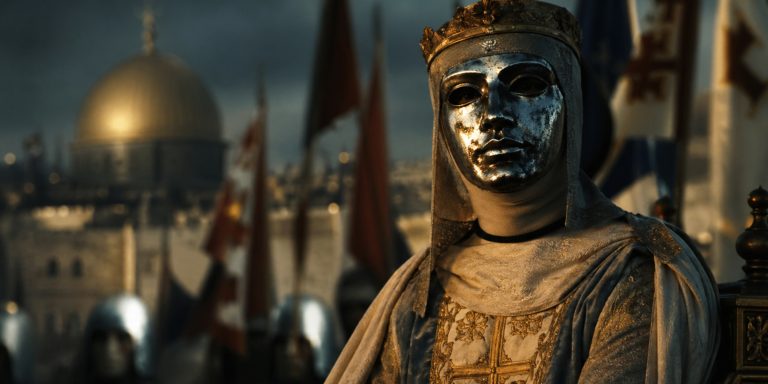
The crusader host evolved constantly as reinforcements arrived from Europe. By 1191, it included some of the most powerful rulers in Christendom.
Key leaders
- Richard I of England
- Philip II of France
- Guy of Lusignan, King of Jerusalem
- Leopold V, Duke of Austria
Estimated strength
- Infantry: 25,000–30,000 at peak strength
- Knights and mounted men-at-arms: 2,000–3,000
- Naval forces from England, France, Genoa, Pisa, and the Holy Roman Empire
Ayyubid Forces
Acre was defended by a professional garrison, repeatedly reinforced by Saladin’s field army.
Key leaders
- Saladin
- Baha ad-Din Qaraqush
- Al-Adil, Saladin’s brother
Estimated strength
- Garrison inside Acre: 5,000–7,000
- Field army surrounding the crusaders: 20,000–30,000
Numbers shifted constantly due to disease, desertion, reinforcements, and the grim arithmetic of siege warfare.
Arms and Armour
Siege warfare at Acre was brutal and methodical. This was not heroic cavalry combat. It was mud, heat, and attrition.
Crusader Equipment
- Swords
- Arming swords, predominantly Oakeshott Types X–XII
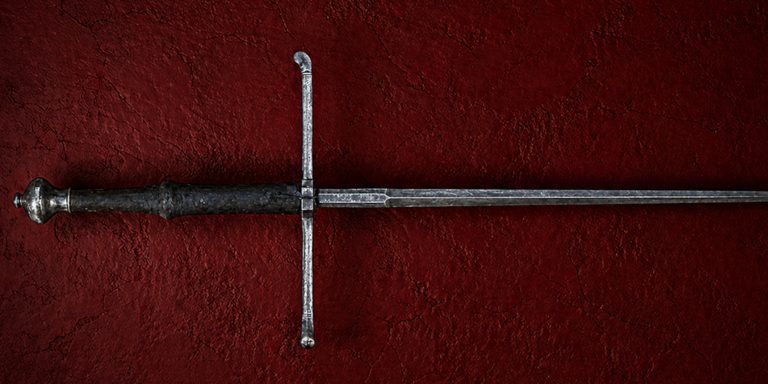
- Early knightly longswords among elite retinues
- Other weapons
- Lances and spears for defensive lines
- Crossbows, increasingly important and feared
- Maces and war hammers for close fighting at breaches
- Armour
- Mail hauberks with coifs
- Kite and early heater shields
- Nasal and early great helms by 1191
Ayyubid Equipment
- Swords
- Straight double-edged swords of Islamic type
- Curved blades, including early forms of the saif
- Other weapons
- Composite bows, tactically decisive in skirmishing
- Spears and light javelins
- Armour
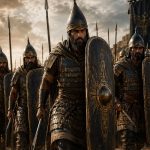
- Mail shirts and lamellar elements
- Small round shields, often leather-covered
- Turbans and padded caps beneath helmets
The contrast in fighting styles was stark. Crusaders relied on heavy protection and shock action. Ayyubid forces emphasised mobility, missile fire, and harassment. Acre forced both sides into an uncomfortable, static compromise.
The Siege Itself
Battle Timeline
- August 1189
Guy of Lusignan arrives and begins the siege of Acre. Saladin encircles the crusader camp, creating a deadly stalemate. - Winter 1189–1190
Starvation and disease ravage both sides. Corpses accumulate faster than morale. - Spring 1190
Muslim relief attempts repeatedly clash with crusader positions. Naval resupply becomes critical. - Summer 1190
Queen Sibylla of Jerusalem dies in the crusader camp, undermining Guy’s claim to authority. - June 1191
Philip II arrives, followed shortly by Richard I. Siege operations intensify dramatically. - July 1191
Massive bombardment breaches Acre’s walls. The garrison surrenders on 12 July. - August 1191
Richard orders the execution of over 2,700 Muslim prisoners after negotiations collapse.
The fall of Acre was decisive, but hardly clean. It left deep bitterness on both sides and set the tone for the remainder of the Third Crusade.
Contemporary Voices
Baha ad-Din, Saladin’s biographer, captured the horror plainly:
“The dead lay unburied, the stench rose, and hearts grew weary from the length of the struggle.”
From the Christian side, Ambroise, a Norman poet who witnessed the siege, was equally bleak:
“No tongue can tell the misery, the hunger, and the sickness that consumed both camps.”
These are not the voices of triumphant holy war. They are the voices of people enduring something they cannot easily escape.
Archaeology and Material Evidence
Modern archaeology in Acre has confirmed much of the written record.
- Crusader-period walls and towers show heavy siege damage
- Stone projectiles from trebuchets have been recovered
- Excavations reveal mass burial pits consistent with epidemic disease
- Weapon fragments, including arrowheads and crossbow bolts, appear across siege layers
The archaeology supports what the texts suggest: Acre was not taken by a single breach or clever tactic, but by relentless pressure and exhaustion.
Aftermath and Legacy
The capture of Acre re-established a coastal Crusader state and allowed Richard I to continue south toward Jaffa. Yet it also exposed deep fractures within the crusader leadership. Philip soon returned to France. Leopold left insulted. Guy was sidelined. Unity, such as it existed, did not survive victory.
From a military perspective, Acre demonstrated the absolute necessity of naval power, logistics, and patience in crusader warfare. From a human perspective, it stands as a warning. Even when the banners fall and the city gates open, nobody truly wins a siege like this.
As a historian, I always pause here. If the Third Crusade has a soul, it is buried somewhere outside Acre’s walls.