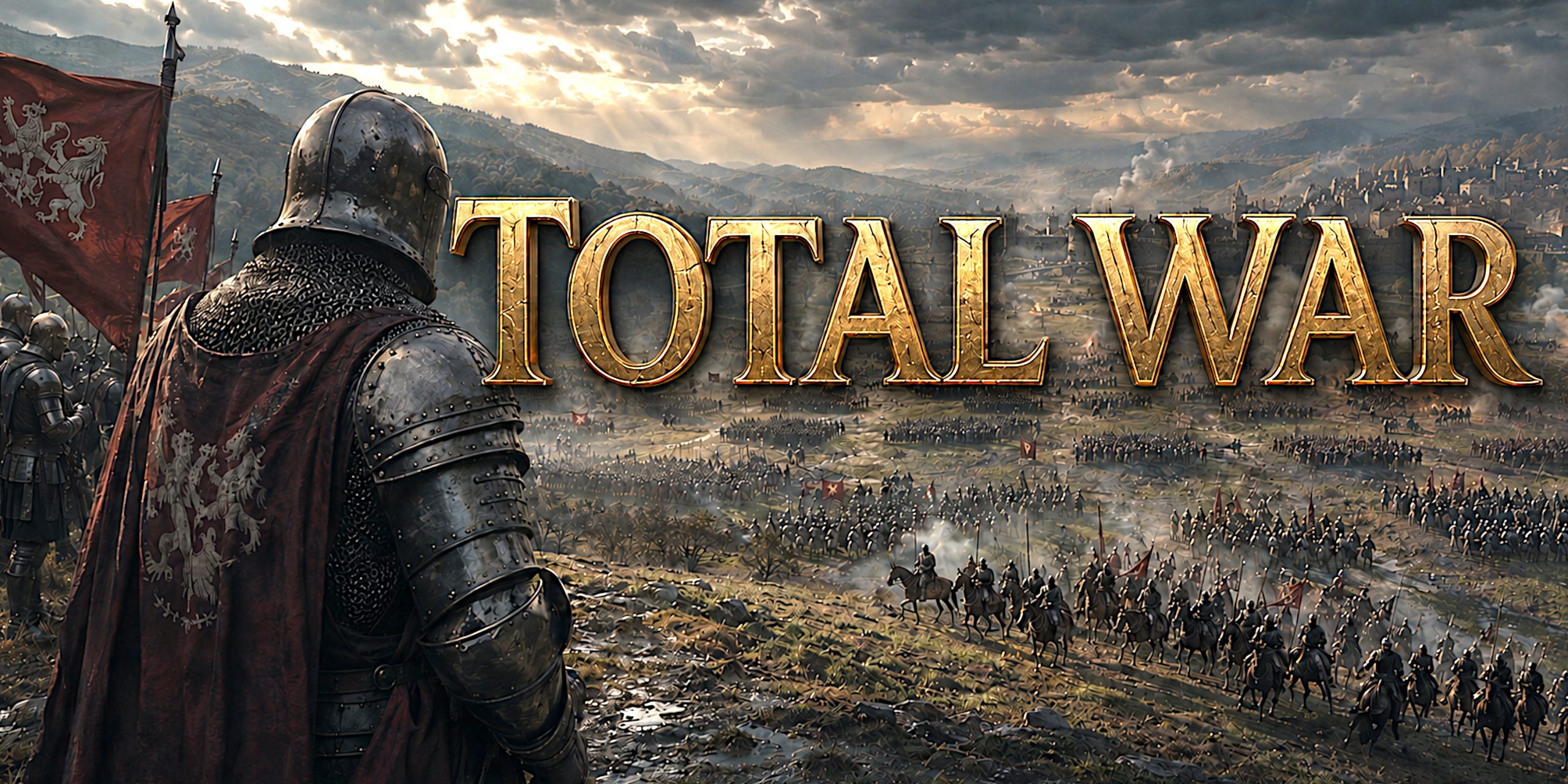
For more than 25 years, the Total War series has allowed players to treat history as both a serious strategic problem and an enormous toy box. One minute you are negotiating grain supplies, royal marriages and tax rates. The next, you are watching several hundred cavalrymen thunder into the side of an infantry formation because diplomacy has once again proved less satisfying than horses.
Developed by Creative Assembly, the series combines a turn-based campaign with large real-time battles. That description sounds simple now because Total War made it familiar. In 2000, when Shogun: Total War first joined those two forms into one coherent game, it felt startlingly ambitious.
The series has since travelled from ancient Rome to revolutionary France, feudal Japan, Bronze Age Egypt and the extravagant violence of Warhammer Fantasy. Not every campaign has been a triumph. Total War has accumulated awkward launches, uneven artificial intelligence, expensive downloadable content and enough siege pathfinding mishaps to make a veteran player stare silently at a wall. Yet few strategy franchises can match its scale, atmosphere or ability to turn historical curiosity into play.
This is how Total War evolved, where it succeeded, where it lost its footing and why its particular vision of strategy still matters.
What Is Total War?
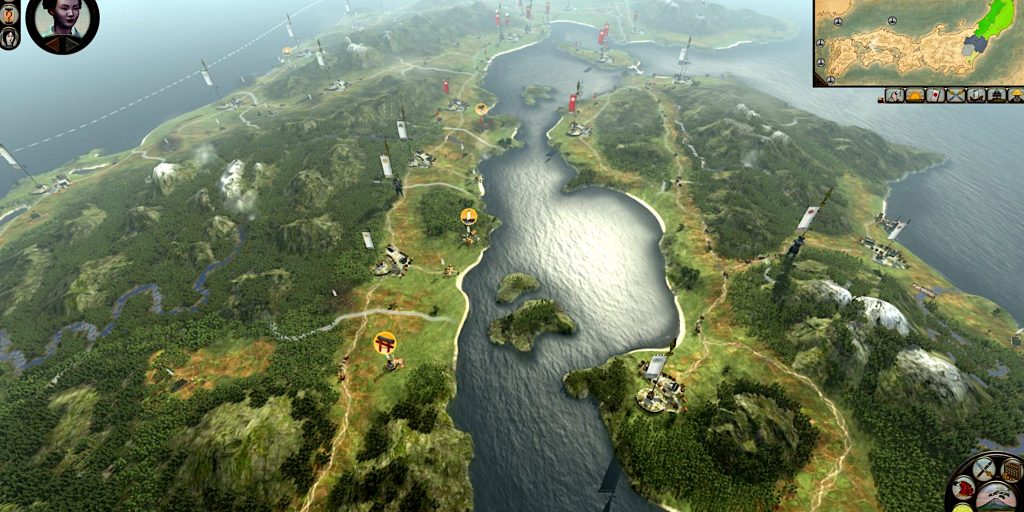
Every main Total War game is built around two connected layers.
On the campaign map, the player governs a faction across a period of years or turns. Cities are developed, armies recruited, technologies researched and treaties negotiated. Territory provides income and resources, but expansion also creates longer borders, angrier neighbours and more opportunities for an ambitious general to become inconvenient.
When armies meet, the game moves into a real-time battlefield. The player positions units, exploits terrain, manages morale and tries to break the enemy formation. Individual soldiers are represented on the field, but control remains at unit level. Total War is about directing bodies of troops rather than clicking frantically on one heroic spearman.
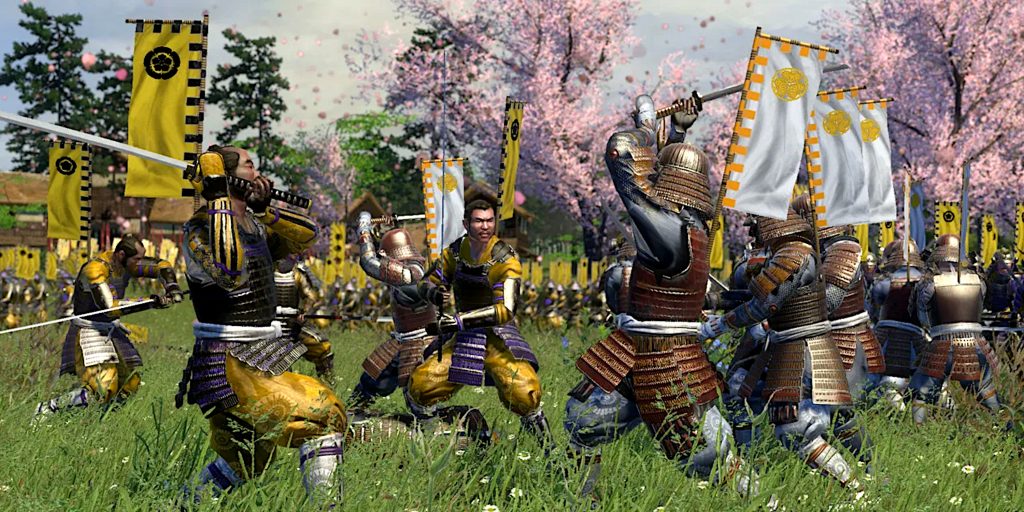
Its central rhythm can be summarised simply:
- Build an economy capable of supporting armies
- Use diplomacy to delay wars you cannot yet afford
- Move armies and agents across the campaign map
- Fight battles through formation, terrain, morale and timing
- Occupy, sack, liberate or destroy captured settlements
- Discover that your trusted ally has developed a sudden interest in one of your border provinces
The campaign gives battles meaning, while battles give campaign decisions a human scale. Losing an experienced army hurts because it may have taken dozens of turns to build. Defending a minor town can become memorable because that town is the only thing between an invading army and your capital.
Total War Games in Release Order
The table covers the principal PC releases rather than every expansion, remaster and mobile adaptation.
| Game | Release | Setting | Main contribution |
|---|---|---|---|
| Shogun: Total War | 2000 | Sengoku-period Japan | Established the campaign and real-time battle formula |
| Medieval: Total War | 2002 | Medieval Europe, North Africa and the Middle East | Expanded diplomacy, religion and dynastic politics |
| Rome: Total War | 2004 | Classical Mediterranean world | Introduced a fully three-dimensional campaign map and more cinematic battles |
| Medieval II: Total War | 2006 | Medieval world | Refined the classic formula and became a major platform for mods |
| Empire: Total War | 2009 | Eighteenth-century global conflict | Added naval battles, firearms and a campaign spanning several theatres |
| Napoleon: Total War | 2010 | French Revolutionary and Napoleonic Wars | Delivered a tighter, more polished gunpowder campaign |
| Total War: Shogun 2 | 2011 | Sengoku-period Japan | Rebuilt the series around clarity, cohesion and strong art direction |
| Total War: Rome II | 2013 | Classical Mediterranean world | Greatly expanded campaign scale but suffered a notorious launch |
| Total War: Attila | 2015 | Late antiquity and the Migration Period | Emphasised survival, climate pressure and collapsing empires |
| Total War: Warhammer | 2016 | Warhammer Fantasy | Introduced magic, monsters, flying units and radically asymmetric factions |
| Total War: Warhammer II | 2017 | Warhammer Fantasy | Improved faction design and created the combined Mortal Empires campaign |
| A Total War Saga: Thrones of Britannia | 2018 | Britain and Ireland in the late ninth century | Tested a smaller, more concentrated historical format |
| Total War: Three Kingdoms | 2019 | Late Han dynasty China | Overhauled diplomacy and made characters central to campaign play |
| A Total War Saga: Troy | 2020 | Mythic Bronze Age Aegean | Blended historical material with heroic and mythological interpretations |
| Total War: Warhammer III | 2022 | Warhammer Fantasy | Completed the trilogy and introduced the vast Immortal Empires campaign |
| Total War: Pharaoh | 2023 | Late Bronze Age Egypt and eastern Mediterranean | Focused on court politics, collapsing civilisations and dynamic weather |
Total War: Pharaoh Dynasties, released as a free addition in 2024, expanded Pharaoh with a larger campaign, family trees, new cultures and a broader map. It substantially changed the value and scope of the original release, which had initially felt too restricted for its price.
Shogun and Medieval: Building the Formula
Shogun: Total War was comparatively modest, but nearly everything important was already present. Players competed to unite sixteenth-century Japan, balancing province management with battles shaped by hills, forests, weather and morale. Its soldiers were two-dimensional sprites moving across three-dimensional terrain, yet the battles conveyed mass and disorder remarkably well.
Morale was especially important. Units did not merely fight until their final soldier disappeared. They could panic, flee and spread fear through nearby formations. A well-timed flank attack might achieve more than a prolonged frontal fight. This made the battlefield feel less like an arithmetic contest and more like an unstable psychological event.
Medieval: Total War widened the map and introduced a messier political world of religion, succession and diplomatic relationships. It also showed that the basic design could survive outside Japan. The series now had a reusable structure rather than one excellent historical experiment.
These early games look severe beside their descendants. Their interfaces are dense, their campaign maps abstract and their generals appear to have attended the same school of treachery. They nevertheless understood something later entries occasionally forgot: strategic systems are most effective when the player can clearly read cause and consequence.
Rome and Medieval II: The Classic Golden Age
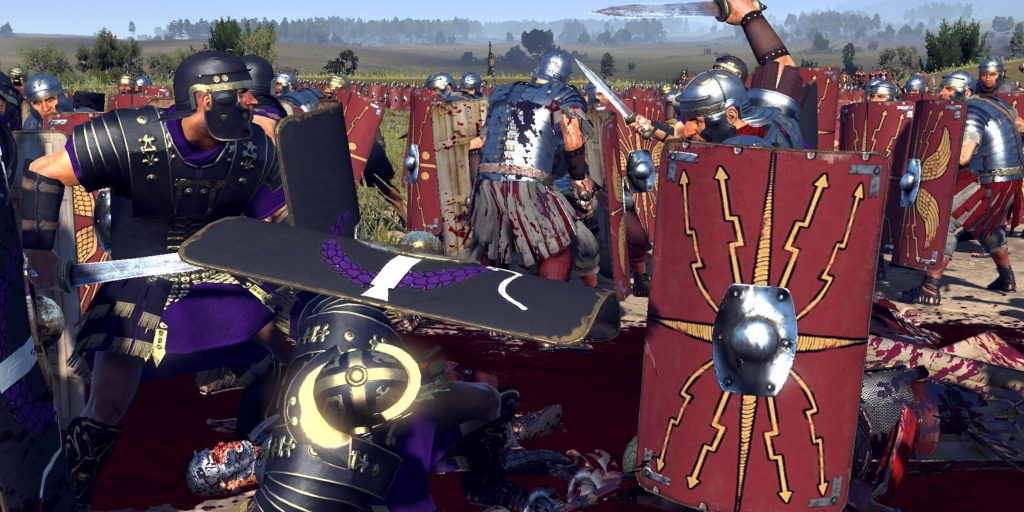
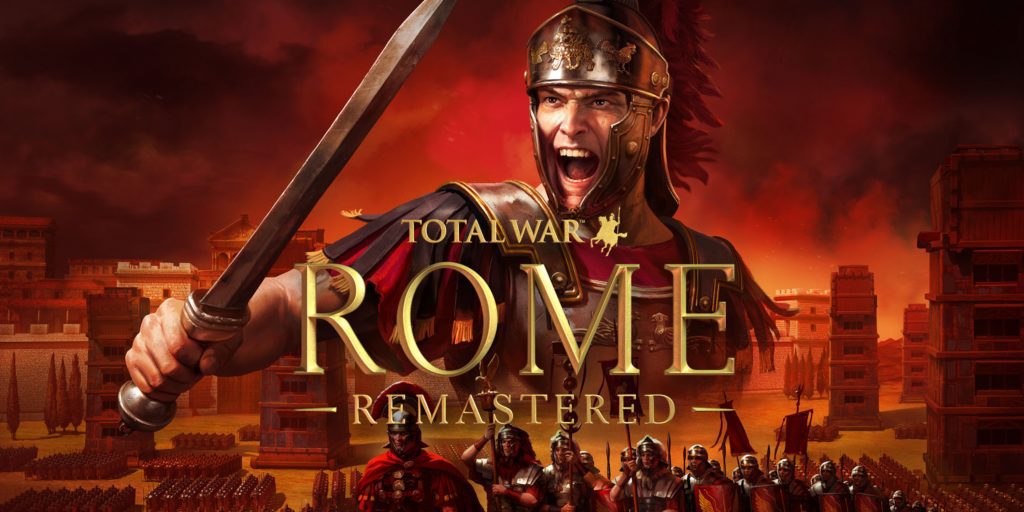
For many players, Rome: Total War was the moment the series became a phenomenon. Its campaign map was no longer a board of fixed pieces. Armies, agents and fleets moved through a three-dimensional world, while cities physically grew on the battle map as they developed.
The historical presentation was broad rather than exact. Egypt looked much more like a Bronze Age kingdom than the Hellenistic Ptolemaic state it actually was, and several factions leaned happily into spectacle. Even so, the game gave players a vivid sense of geography, logistics and imperial overreach. Marching Roman legions eastward felt thrilling until the distances became clear and half the family tree developed dreadful personality traits.
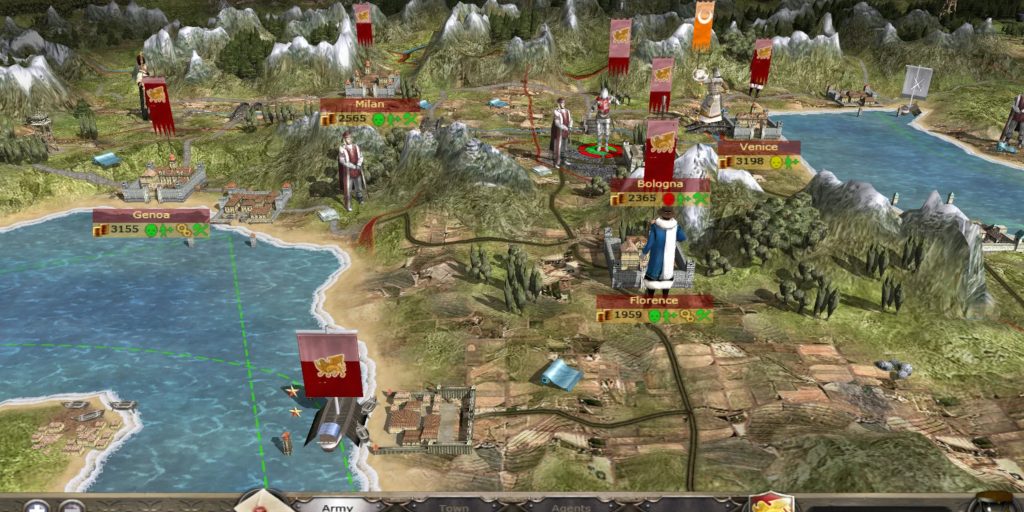
Medieval II: Total War refined that model rather than overturning it. Armour upgrades appeared on units, gunpowder changed late-game warfare, crusades redirected political priorities and the discovery of the Americas extended the campaign beyond its original frame.
Its lasting strength came partly from modding. The game became a foundation for historical overhauls and total conversions, including Stainless Steel, Europa Barbarorum II and Third Age: Total War. Official support ended long ago, but the community kept finding new worlds to bolt onto the engine. There is something very Total War about a 2006 game surviving because players refused to stop tampering with it.
Empire and Napoleon: Gunpowder, Ships and Excessive Ambition
Empire: Total War attempted an eighteenth-century campaign across Europe, India and North America, complete with trade routes, colonial politics, technological change and real-time naval combat. It was an extraordinary design brief and, at launch, a fairly persuasive argument for smaller design briefs.
Firearms changed the tactical language. Formation depth, lines of sight and sustained volleys mattered more than the violent collision of melee blocks. Artillery could dominate open ground, while cavalry became a mobile tool for disruption and pursuit rather than a universal answer to every problem.
The naval battles were visually splendid and mechanically demanding. Wind direction, firing arcs and ship damage all mattered. They also required enough attention that a player could spend twenty minutes steering ships and still feel defeated by geometry.
Napoleon: Total War narrowed the scale and improved the execution. Its campaigns followed Napoleon’s rise across Italy, Egypt and Europe, with better battle artificial intelligence, stronger presentation and a more coherent focus. It lacked Empire’s globe-spanning ambition, but it was the more complete game. This became a recurring lesson for the franchise: a smaller map with distinct factions and functioning systems can feel larger than a vast one filled with repetition.
Shogun 2: Restraint as a Strength
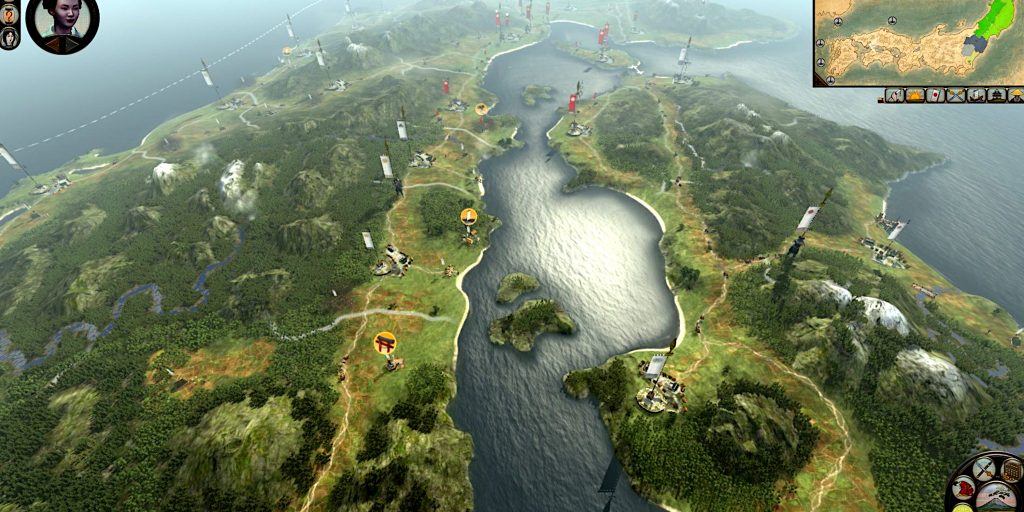
Total War: Shogun 2 returned to Japan and produced one of the series’ most disciplined designs. Its clans shared a cultural and military foundation, but each had a meaningful speciality. The unit roster was relatively compact, which made battlefield roles easy to understand. Battles rewarded positioning and combined arms rather than knowledge of hundreds of statistical variations.
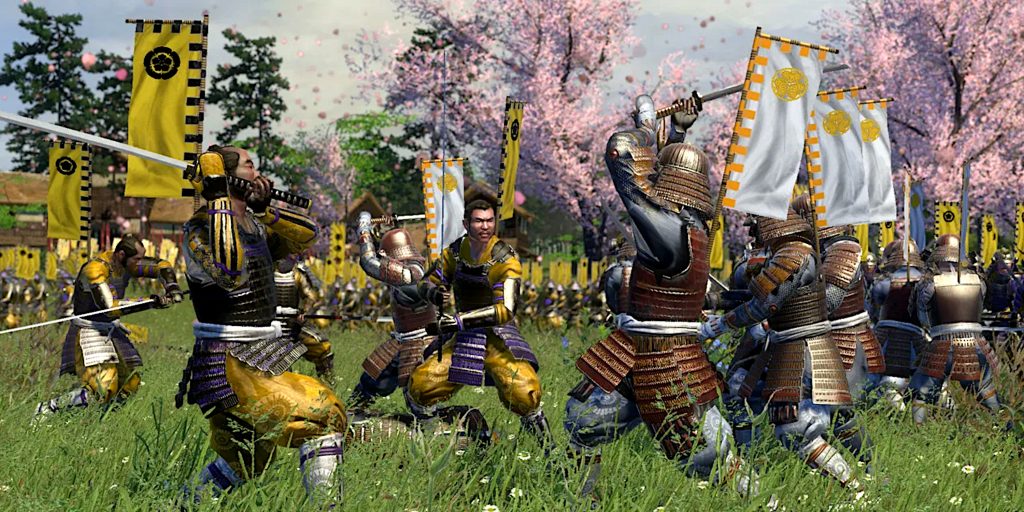
The game also had a striking visual identity. Seasonal landscapes, ink-brush artwork and concise interface design gave it a coherence that some larger Total War games lack. Its standalone expansion, Fall of the Samurai, brought nineteenth-century rifles, artillery and naval bombardment into conflict with traditional forces. Few moments in the series are quite as satisfying, or morally uncomplicated, as watching a carefully deployed Armstrong gun remove an enemy plan from existence.
The Realm Divide mechanic remains divisive. Once a clan became powerful enough, most of Japan turned against it, forcing the campaign towards a final confrontation. It created tension but could make years of diplomacy feel pointless. Even one of the series’ finest games could not resist setting fire to the player’s carefully arranged alliances.
Rome II and Attila: Disaster, Recovery and Collapse
The 2013 launch of Total War: Rome II damaged confidence in the series. Technical problems, weak artificial intelligence, poor performance and misleading pre-release expectations overwhelmed its considerable ambition. Battles could descend into incoherence, while campaign systems often felt less substantial than their scale suggested.
Creative Assembly continued updating the game for years. Its later form is much stronger, with improved politics, additional factions and extensive mod support. The Divide et Impera overhaul in particular became a favourite among players seeking deeper population, supply and battle systems. Still, post-launch recovery does not erase the original failure. Players bought the game on release day, not several years later.
Total War: Attila used Rome II’s foundations to create something harsher and more distinctive. Fertility declined, disease spread, settlements burned and migrating factions searched for safer territory. Playing the Western Roman Empire was less a conventional campaign than an administrative emergency conducted while everything caught fire.
Its oppressive mood suited late antiquity beautifully. Performance issues and relentless pressure made it less welcoming, but Attila remains one of Total War’s boldest historical games. It asked whether survival could be more interesting than conquest and, for the most part, answered yes.
Warhammer: When Total War Embraced Fantasy
The partnership between Creative Assembly and Games Workshop transformed the series. Historical games had always created faction differences through geography, units and political systems. Total War: Warhammer could make those differences fundamental.
Dwarfs had no cavalry and relied on armour, artillery and disciplined infantry. Vampire Counts lacked conventional ranged units but fielded expendable undead hordes and powerful monsters. Greenskins gained momentum through aggression. Flying creatures ignored terrain, magic could tear holes through formations and enormous monsters turned a tidy battle line into an optimistic suggestion.
Warhammer II developed this asymmetry further and eventually connected its campaign with the first game through Mortal Empires. Warhammer III completed the trilogy, and its Immortal Empires mode combined the three games’ settings into one immense campaign.
The fantasy trilogy expanded what a Total War battle could contain. It also changed the series’ priorities. Legendary characters, faction mechanics and downloadable lords became central, while some historical fans felt their side of the franchise had become secondary. That frustration is understandable. Warhammer brought extraordinary variety, but it also encouraged a style in which heroic characters and powerful abilities could matter more than formation tactics.
The trilogy’s post-launch history has been uneven. Pricing disputes, technical problems and poorly received content damaged goodwill, particularly around Warhammer III. Creative Assembly later increased the content offered in some packs and continued revising factions and systems. The game remains remarkably broad, but its size has made maintenance difficult. Even the developer has acknowledged the challenge of keeping such a complicated, long-running platform healthy.
Three Kingdoms: Total War Learns Diplomacy
Total War: Three Kingdoms brought the series to China during the collapse of the Han dynasty. It offered two principal styles. Romance mode presented generals as powerful heroes inspired by the famous literary tradition, while Records mode moved closer to conventional historical warfare.
Its greatest achievement was the campaign layer. Diplomacy became more legible and useful, with coalitions, food deals, territorial exchanges and clearer indications of why another ruler accepted or rejected an offer. Characters formed friendships, rivalries and ambitions. Faction leadership felt personal rather than merely administrative.
The character system could also make campaigns strangely dramatic. A talented general was not just a bundle of bonuses. They had relationships, loyalties and opinions, and losing them could disturb the internal balance of a court.
Creative Assembly ended further content development before resolving some long-standing issues or reaching the actual Three Kingdoms period. That decision remains one of the series’ more baffling episodes. The game had delivered the franchise’s fastest-selling launch at the time and contained some of its best strategic systems, yet its support concluded with obvious potential still sitting on the table.
The Saga Experiments and Total War: Pharaoh
The Saga label was intended for focused games built around particular conflicts or regions. Thrones of Britannia explored the struggle for power in Britain and Ireland after the Viking invasion. Its recruitment system, estates and settlement design contained interesting ideas, but limited faction variety and a familiar map made it feel slight to many players.
Troy took a more imaginative route. Its original approach tried to find plausible explanations for mythical units, presenting legendary creatures as unusual warriors. Later additions allowed players to choose a more fully mythological interpretation. The result was colourful and experimental, although it sometimes occupied an awkward space between historical simulation and heroic fantasy.
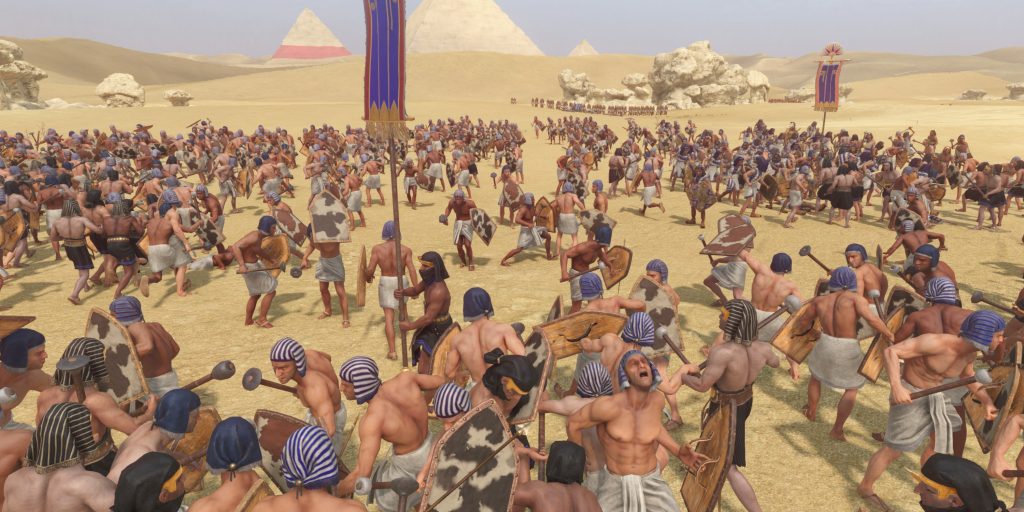
Total War: Pharaoh launched without the Saga label, but its initial size and scope produced similar criticism. Set during the Late Bronze Age collapse, it offered court politics, dynamic weather and detailed regional cultures. Its battlefields used terrain and changing conditions well, yet the original campaign felt too geographically narrow and too expensive.
The free Dynasties expansion changed that assessment. It extended the map into Mesopotamia and the Aegean, added cultures including Babylon, Assyria, Mycenae and Troy, and introduced family trees and succession. Pharaoh is now a far more convincing Bronze Age Total War. Its recovery also revealed an uncomfortable truth: the stronger version was hiding inside the original concept, but players had to wait for it.
How Historically Accurate Is Total War?

Total War uses history as a framework for strategy rather than attempting to reproduce it exactly. Its maps, unit rosters and faction descriptions can introduce players to unfamiliar periods, but every game compresses geography, chronology, politics and military organisation.
The distortions vary by title:
- Battles happen far more frequently and decisively than they did historically
- Armies replenish and retrain with an efficiency most historical rulers would have considered witchcraft
- Factions require distinct rosters for gameplay, even when neighbouring armies used similar equipment
- Political authority is simplified so that one player can direct an entire state
- Technology develops along clear, selectable paths rather than through uneven social change
- Famous warriors and elite formations are often more common than the evidence supports
Yet the series can communicate genuine historical ideas. Terrain affects movement. Morale can decide a battle before casualties become catastrophic. Campaigns depend on food, money, public order and travel. Empires become difficult to control as they expand. Different games also prompt further reading, which may be their most valuable educational contribution.
I would never use Total War as a source by itself. I would absolutely credit it with making thousands of players curious about the Seleucids, the Boshin War or the political collapse of the Han dynasty. A strategy game does not need to be a textbook to open the door to history. It should simply avoid pretending that the door is the whole building.
Why Total War Battles Still Work
The best battles create clear tactical problems without prescribing one solution. High ground improves missile fire and the force of a downhill charge. Forests conceal troops and obstruct cavalry. Narrow streets protect flanks but create lethal bottlenecks. Rain weakens some missiles, while exhaustion can ruin an army that arrives after a long uphill march.
Morale holds these systems together. A unit can be defeated through casualties, fear, isolation, attacks from the rear or the collapse of nearby allies. This means battles are rarely about killing every opponent. They are about creating a sequence of shocks until the enemy army loses confidence.
The spectacle matters too. Zooming from a strategic view into the front rank remains one of the franchise’s great pleasures. You can watch a cavalry charge land, see artillery tear through a formation or discover that one group of swordsmen has been waiting patiently behind a tree because you forgot issuing their order. Command is a heavy burden.
Artificial intelligence remains the persistent weakness. Enemy armies mishandle sieges, change direction under fire and sometimes respond poorly to unusual tactics. The larger and more complex the game becomes, the harder it is for the computer to use every system convincingly. Multiplayer offers a more intelligent opponent, although human beings bring their own historical tradition of finding whichever strategy is least enjoyable to fight.
Campaign Design: The Series’ Greatest Opportunity
Battles sell Total War, but campaign design determines whether a player finishes a hundred-turn conquest. The strongest campaigns create pressures beyond constant expansion.
Three Kingdoms uses relationships and diplomacy. Attila makes survival an achievement. Shogun 2 directs every rising power towards a national crisis. The Warhammer games give factions unique mechanics and objectives. These designs create stories because the player must react to changing conditions.
Weaker campaigns fall into a predictable routine. Expand, build income structures, recruit the most efficient army and repeat until the map changes colour. Late campaigns become particularly exhausting because the player controls too much territory for each decision to remain interesting.
Future Total War games need better internal politics, meaningful peace, regional identity and opponents capable of forming credible strategies. Conquest should create difficult choices rather than merely additional income. Running an empire ought to feel different from founding one.
The Best Total War Games to Start With
There is no universal best entry. The right choice depends on what you want from the series.
| Player interest | Best starting point | Why |
| Clear historical strategy | Total War: Shogun 2 | Focused roster, readable battles and excellent presentation |
| Medieval warfare and mods | Medieval II: Total War | Enormous community support and a classic campaign, despite its age |
| Ancient warfare | Total War: Rome II | Broad faction selection and extensive later updates |
| A difficult survival campaign | Total War: Attila | Distinctive pressure, migration and imperial decline |
| Gunpowder warfare | Napoleon: Total War | Tighter and more polished than Empire |
| Diplomacy and characters | Total War: Three Kingdoms | The most sophisticated political campaign in the series |
| Fantasy and faction variety | Total War: Warhammer III | Immortal Empires offers unmatched scale if you own the required content |
| Bronze Age warfare | Total War: Pharaoh Dynasties | Broad cultures, dynasties and an unusual historical setting |
My easiest recommendation is Shogun 2. It teaches the essentials without smothering them beneath layers of faction-specific rules. For someone primarily interested in fantasy, Warhammer III is the obvious route, although understanding its mountain of downloadable content may require the administrative instincts of a minor government department.
Mods and the Long Life of Total War
Modding has extended the life of almost every major Total War release. Some projects correct unit details or rebalance combat. Others rebuild campaigns around new periods and fictional worlds.
Among the most notable are:
- Third Age: Total War and its successors, which transform Medieval II into Middle-earth
- Stainless Steel, a large historical expansion of Medieval II
- Europa Barbarorum, which places greater emphasis on historical research in Rome and Medieval II
- Divide et Impera, a deep campaign and battle overhaul for Rome II
- The Old Realms, which recreates parts of Warhammer Fantasy inside Mount & Blade II: Bannerlord, showing how far the wider appetite for this sort of warfare extends
The older engine allowed particularly ambitious total conversions. More recent games support a huge number of Steam Workshop mods, but their tools and legal restrictions make some types of conversion more difficult. Even so, community fixes, campaign extensions and visual projects remain an essential part of the series.
Mods also reveal what players feel is missing. Their popularity points repeatedly towards deeper logistics, slower battles, stronger historical detail and more varied campaign systems. Developers do not need to copy every overhaul, but the community has been conducting a very long and very public design survey.
Where Total War Has Struggled
The franchise’s importance should not protect it from criticism. Several problems have appeared repeatedly.
Unreliable launches: Rome II is the obvious example, but performance problems, bugs and unfinished systems have affected other releases. Long-term repair is welcome, although it should not be treated as an exciting bonus.
Weak siege behaviour: Siege battles are difficult to design and even harder for artificial intelligence to navigate. Units still become confused by gates, walls and streets with depressing regularity.
Downloadable content fatigue: Additional factions and campaigns can sustain a game for years, but complicated ownership requirements and aggressive pricing make parts of the series difficult to approach.
Uneven historical support: The success of Warhammer gave Creative Assembly a powerful fantasy platform, while players waiting for a major new historical title endured a much less certain schedule.
Endgame repetition: Many campaigns peak before victory conditions are complete. Once the player has the strongest economy and several elite armies, victory becomes probable but laborious.
These are not minor complaints from people who secretly dislike the games. They are often the complaints of players who have spent hundreds or thousands of hours with them. Nobody becomes angry about siege ladders with that level of specificity by accident.
What Comes Next for Total War?
Creative Assembly used Total War’s 25th anniversary to set out the franchise’s next era. Total War: Medieval III is in development, returning to the setting that produced one of the series’ most enduring games. The studio has discussed a campaign spanning several centuries, with military forces evolving from earlier medieval armies through the rise of plate armour, gunpowder and larger infantry forces.
The company has also announced Total War: Warhammer 40,000, moving the formula into Games Workshop’s science-fiction universe. That setting presents an intriguing technical problem. Cover, ranged combat, vehicles, aircraft and battlefield scale will require more than fantasy units with futuristic textures.
Both projects are being associated with a new generation of Creative Assembly’s proprietary technology, known as Warcore. The promise is richer visuals, more dynamic systems and better performance. Promises about strategy-game technology are always pleasant. Watching several thousand simulated soldiers encounter a gate will be the more meaningful test.
Meanwhile, Warhammer III continues to receive updates and additional content. Its expanding campaign remains a remarkable achievement, but also a reminder of why the studio needs technology that is easier to maintain.
The next few releases may decide whether Total War can unite its divided audience. Historical players want deeper statecraft and convincing warfare. Fantasy players expect asymmetric factions and spectacular battles. Both groups want stronger artificial intelligence, stable performance and games that feel complete when sold.
Why Total War Remains a Landmark Strategy Series
Total War did not invent turn-based empire management or real-time tactics. Its achievement was making them depend on each other at a scale no rival has consistently matched. A battle is influenced by recruitment, economics and geography. A campaign is redirected by one disastrous charge or an unexpectedly heroic defence.
The series is at its best when it creates stories the designers did not script: an outnumbered garrison holding a gate, a loyal general becoming a dangerous political rival, or a minor border war growing into a continental disaster. These incidents remain in the memory because the player caused them, often through a sequence of decisions that seemed completely sensible at the time.
After more than a quarter of a century, Total War remains inconsistent, ambitious and unusually difficult to replace. Its weakest games expose the limits of its formula. Its best games make those limits easy to forget. I can criticise the artificial intelligence, complain about the downloadable content and swear that this campaign will be my last. Then the battle map loads, the cavalry begins moving through the mist, and apparently I have another evening free after all.