If I had to choose a single medieval century I would politely refuse to inhabit, the fourteenth would win by a distance. War arrived with depressing regularity, food failed with alarming enthusiasm, and disease did not so much knock as kick the door in. It was a century that made even hardened medieval chroniclers pause, sharpen their quills, and write with a tone that suggests they were quietly horrified.
What follows is a historian’s walk through a century that seemed actively hostile to human survival, from empty granaries to crowded battlefields and finally to the plague pits.
A Climate That Turned Against Everyone
The opening years of the century coincided with what modern historians call the Little Ice Age. Colder, wetter summers wrecked harvests across northern Europe. Fields flooded, seed rotted, and yields collapsed. Farming communities had no buffer and no mercy period.
The Great Famine of 1315 to 1317 killed millions. Contemporary writers stopped counting after a while, which tells you everything.
Jean le Bel, writing in the Low Countries, recorded, “People ate dogs, cats, and the carcasses of horses, and some even ate human flesh.” Medieval chroniclers rarely exaggerate hunger. When they mention cannibalism, things are already very bad.
The Great Famine (1315 to 1317)
The famine did not strike as a single catastrophe but as a grinding sequence of bad years. Grain prices doubled, then tripled. Malnutrition weakened entire populations just in time for what followed later in the century.
The English chronicler Henry Knighton noted, “A quarter of wheat sold for five shillings, which before had been worth only one.” That sentence alone explains why people starved.
Famine also fed unrest. Peasants were trapped between failed harvests and unrelenting rents. Lords were just as trapped, clinging to income that no longer existed in the fields.
War Without Pause
The fourteenth century did not invent large scale war, but it perfected the art of never stopping.
The Hundred Years War Begins
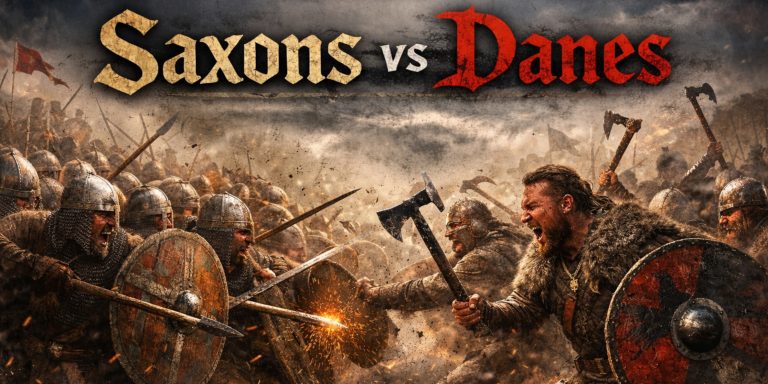
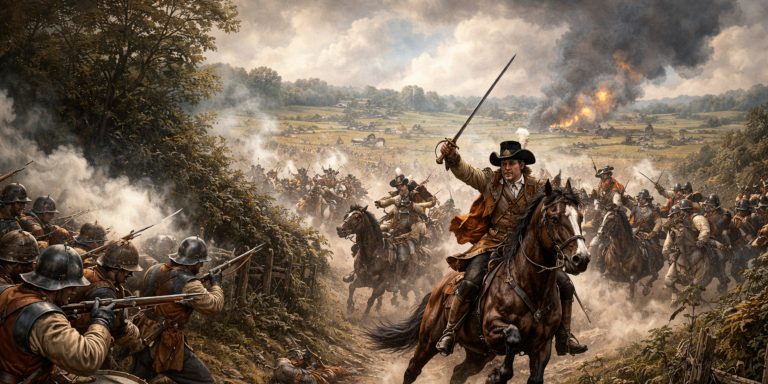
The conflict between England and France erupted in 1337 and dragged on like an unresolved argument for generations. It ruined farmland, hollowed out villages, and normalised violence as background noise.
Jean Froissart wrote, “In those days there were many deeds of arms and many towns burned and destroyed.” Froissart loved chivalry, which makes his bluntness here telling.
The Battle of Crécy (1346)
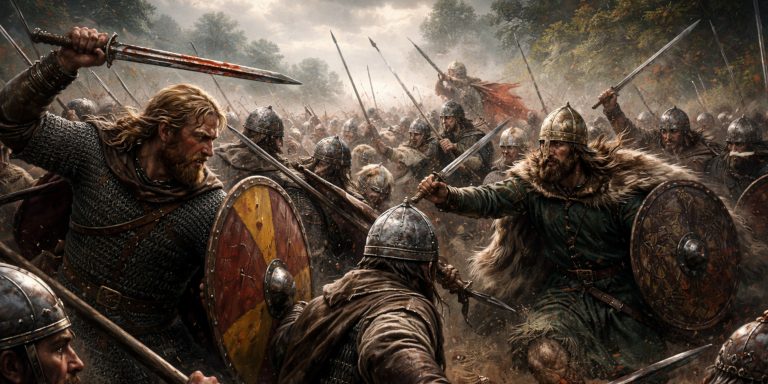
Crécy shattered the idea that noble cavalry ruled the battlefield. English longbowmen cut down the flower of French knighthood.
Froissart again, watching ideals collapse in real time, wrote, “The knights and squires were so entangled together that they could scarcely help themselves.”
As a historian, Crécy marks the moment when medieval warfare stopped pretending it was a sporting contest.
The Siege of Calais (1346 to 1347)
After Crécy, Edward III starved Calais into submission. The famous episode of the Burghers of Calais was not romantic at the time.
According to Froissart, the starving citizens declared, “We are come to obey your command, as you shall wish.”
Sieges were famine with an audience.
The Black Death (1347 to 1351)
Then came the plague. It did not respect rank, piety, or preparation.
Boccaccio, writing in Florence, observed, “So many corpses were brought to the churches every day and every night that it seemed a thing incredible.”
He also notes priests abandoning the dying and families sealing their own doors. It is not a moral judgement. It is a record of fear overwhelming obligation.
Between a third and a half of Europe died. The numbers are vague because no one survived long enough to finish the tally.
War Continues Anyway
The plague did not stop armies. It merely thinned them.
The Battle of Poitiers (1356)
Another English victory, another French king captured.
The chronicler Jean de Venette wrote bitterly, “France was brought low and humbled.” There is no poetry here. Only exhaustion.
The Jacquerie (1358)
Peasant uprisings exploded across France as survivors demanded change.
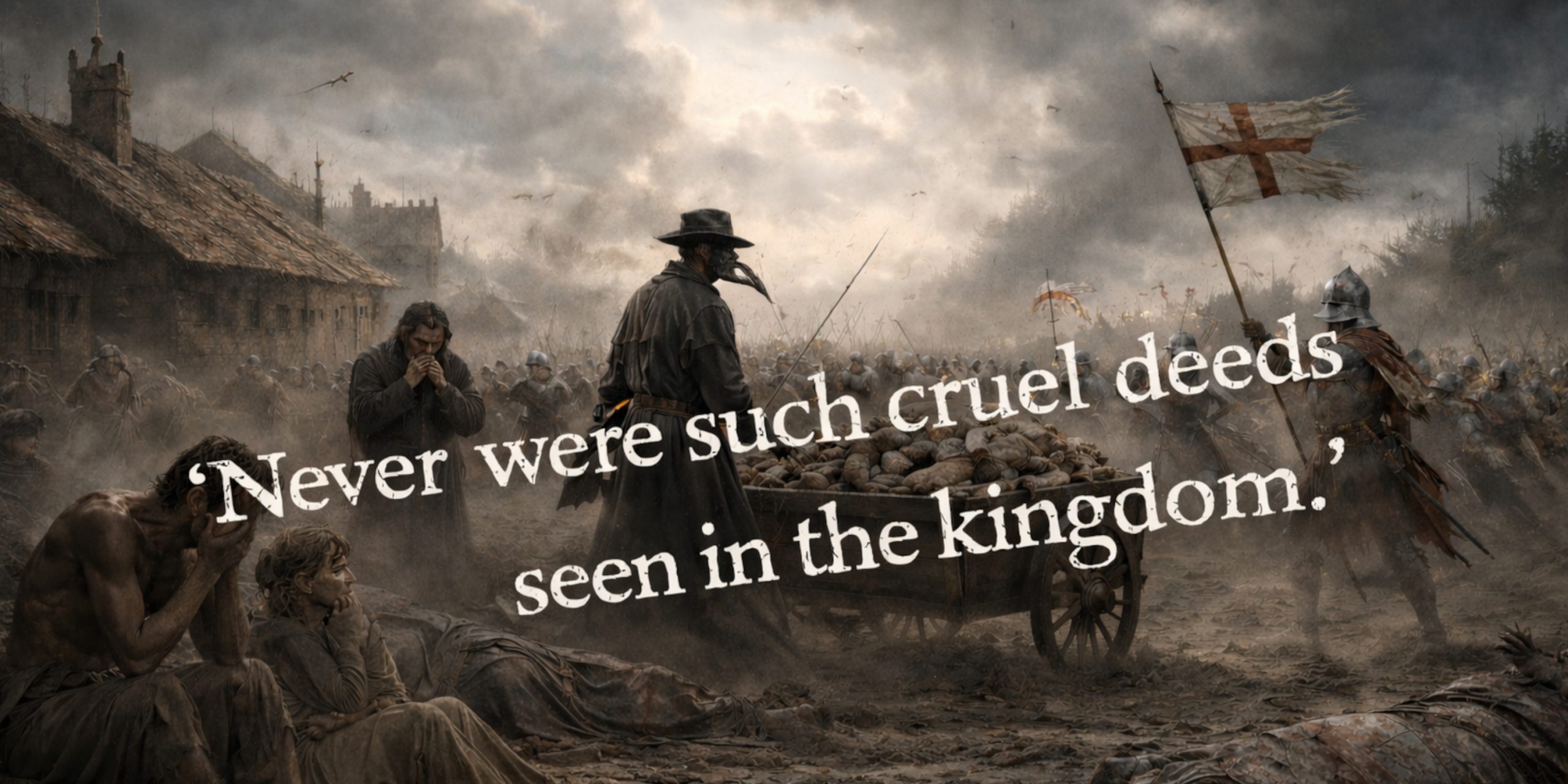
A Parisian chronicler recorded, “Never were such cruel deeds seen in the kingdom.” That line cuts both ways. Violence came from above and below.
The Battle of Agincourt (1415, the long shadow)
While technically early fifteenth century, Agincourt belongs to the same world. It was the aftershock of fourteenth century collapse.
An English chaplain wrote, “Few of our men fell, but the French were slain in heaps.”
The grim efficiency is the point.
Revolt at Home
The Peasants’ Revolt in England (1381)
Survivors of plague and famine expected lower rents and lighter burdens. Instead, they received poll taxes.
Thomas Walsingham noted with horror, “The commons rose against their lords and burned houses, records, and manors.”
From a modern perspective, it reads less like chaos and more like inevitability.
Why This Century Was Worse Than the Rest
Every medieval century had war. Many had disease. Few had all of it at once, layered so neatly that recovery became impossible.
Famine weakened bodies. War destroyed infrastructure. Plague finished the job. When people recovered, governments and armies pulled them straight back into crisis.
As a historian, I admire medieval resilience. As a human being, I am grateful I do not need it.
If someone offers you time travel, ask which century first. If they say the fourteenth, decline politely and keep walking.