Some people will hear the title of this article and immediately clutch their old Stark banner like Ned himself has just walked into the room. Fair enough. Game of Thrones changed television. It made fantasy feel expensive, dangerous and somehow socially acceptable to discuss at work without sounding like you collected dragon figurines in a basement.
But here is the uncomfortable truth. House of the Dragon is better.
Not bigger. Not more shocking. Not as culturally dominant. You still cannot walk into a pub and casually ask someone if they support Team Black without getting a confused stare and perhaps a polite request to leave. But as a piece of television, House of the Dragon is sharper, more focused and far more confident in what it wants to be.
House of the Dragon Has a Much Tighter Story
Game of Thrones was at its best when it felt like a giant chessboard. Every move mattered. Every alliance carried weight. Every character seemed to have one eye on the throne and the other on who might stab them in the back.
The problem was that the board kept getting bigger.
By the middle seasons, Game of Thrones had so many locations, families and side plots that half the cast seemed to spend entire episodes travelling somewhere while looking mildly irritated. There were times when the show felt less like an epic drama and more like someone trying to organise a family group holiday with twenty-seven cousins who all hate each other.
House of the Dragon avoids that trap. The story stays centred on one family, one succession crisis and one slow-motion disaster waiting to happen. Every scene feeds back into the same conflict. The tension builds naturally because everyone involved is tied together by blood, resentment or both.
It feels cleaner, leaner and more purposeful.
The Characters Feel More Complex
Game of Thrones had brilliant characters. Tyrion, Cersei, Jaime and Arya are still among the best characters television has produced.
The difference is that House of the Dragon gives its main cast more room to breathe.
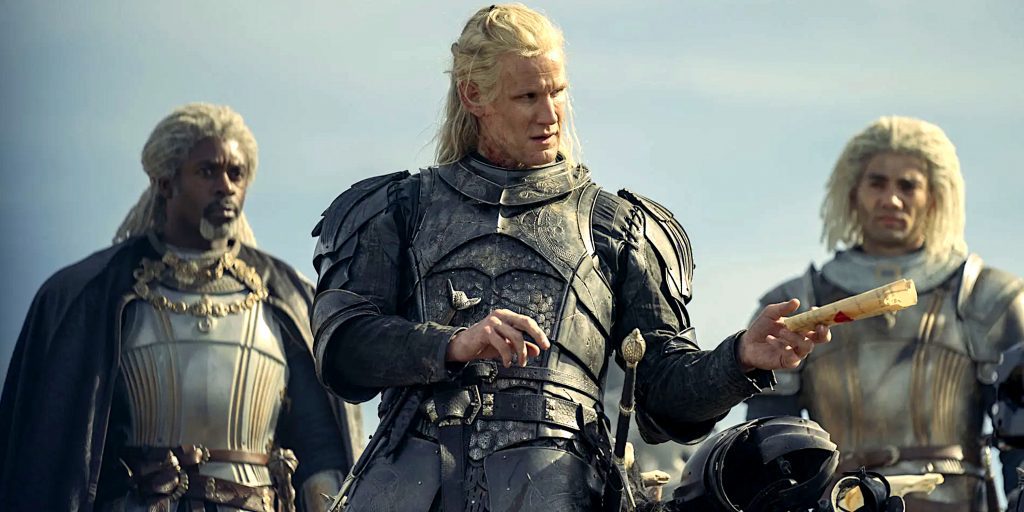
Rhaenyra is not simply the noble heir trying to do the right thing. She is proud, stubborn and occasionally spectacularly bad at making sensible decisions. Alicent is not a straightforward villain. Half the time you feel sorry for her, and the other half you want to sit her down with a cup of tea and ask why she keeps making everything worse.
Daemon somehow manages to be terrifying, charismatic and the sort of man who would absolutely ruin your life while still making half the audience say, “I can fix him.” No, you cannot.
The real strength of House of the Dragon is that almost nobody is entirely right or entirely wrong. Everyone is shaped by family pressure, old grudges and years of bottled-up resentment. It feels messier, more human and much closer to the kind of arguments that actually destroy families.
Which is fitting, because at its heart House of the Dragon is basically a very expensive family dispute where everyone happens to own dragons.
It Knows What Made Early Game of Thrones Great

The first four seasons of Game of Thrones were brilliant because they relied on conversation, tension and political manoeuvring.
People sat in rooms and talked, and somehow it was more gripping than most action scenes. Tywin skinning a deer while casually dismantling his enemies somehow felt more threatening than an army charging across a battlefield.
House of the Dragon understands this perfectly. It is full of scenes where characters talk around what they really mean, smile while quietly plotting murder and say things that sound polite but are actually verbal warfare.
The show remembers that the best moments in this world are not always dragon battles. Sometimes they are two people sitting across a table, exchanging the sort of look that says, “I absolutely despise you, but unfortunately politics requires me to smile.”
The Pacing Is Much Better
Game of Thrones had two completely different pacing problems.
In the early seasons, some stories moved painfully slowly. In the later seasons, everything happened at the speed of a caffeinated horse.
Characters who once needed an entire season to travel across Westeros suddenly seemed able to teleport from Dragonstone to Winterfell before lunch.
House of the Dragon feels far more controlled. It takes its time when it needs to, especially with the growing divide between Rhaenyra and Alicent. At the same time, it is not afraid to move the story forward with major time jumps.
Those jumps could have been a disaster. Instead, they make the series feel grander. You get the sense that grudges are festering over years, not just over the course of a particularly dramatic weekend.
There is something genuinely fascinating about watching characters change over time. Friendships curdle into bitterness. Children grow into rivals. Hairstyles become increasingly elaborate, which in Westeros is usually a warning sign that someone is about to start a civil war.
The Dragons Actually Matter

This might sound odd in a franchise famous for dragons, but in Game of Thrones the dragons often felt like a late-game cheat code.
Daenerys had them, they looked impressive and eventually they became the fantasy equivalent of bringing a tank to a knife fight.
In House of the Dragon, dragons feel far more important because they are tied directly to the characters. Each dragon reflects its rider in some way. Caraxes is unpredictable and dangerous, much like Daemon. Syrax reflects Rhaenyra’s status and ambition. Vhagar feels ancient, terrifying and slightly offended that anyone still expects her to participate in this nonsense.
The dragons are not just weapons. They are part of the family history and part of the tragedy. When something happens to one of them, it carries real emotional weight.
Also, and this matters, House of the Dragon gives us far more dragons. If you are watching a series called House of the Dragon, that seems only fair.
The Visuals Are More Consistent
Game of Thrones often looked incredible, but it could be uneven. Some episodes were stunning. Others looked like the lighting department had declared war on the audience.
The infamous Battle of Winterfell remains one of the strangest viewing experiences in television history. Entire sections of the battle seemed to take place inside a black sock.
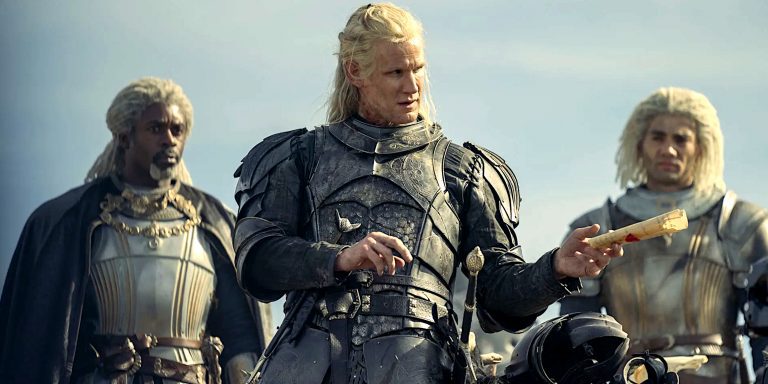
House of the Dragon looks far more consistent. The costumes are richer, the castles feel more lived in and the colour palette helps different factions stand apart.
The visual storytelling is stronger too. You can often tell who holds power in a scene simply by where they are standing, what they are wearing or who is forced to awkwardly linger in the background pretending not to listen.
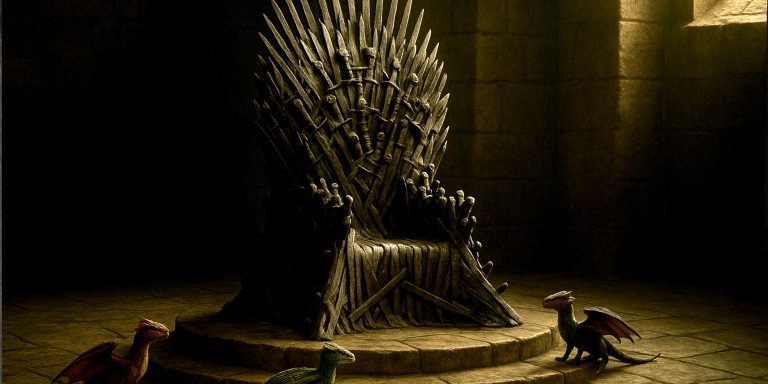
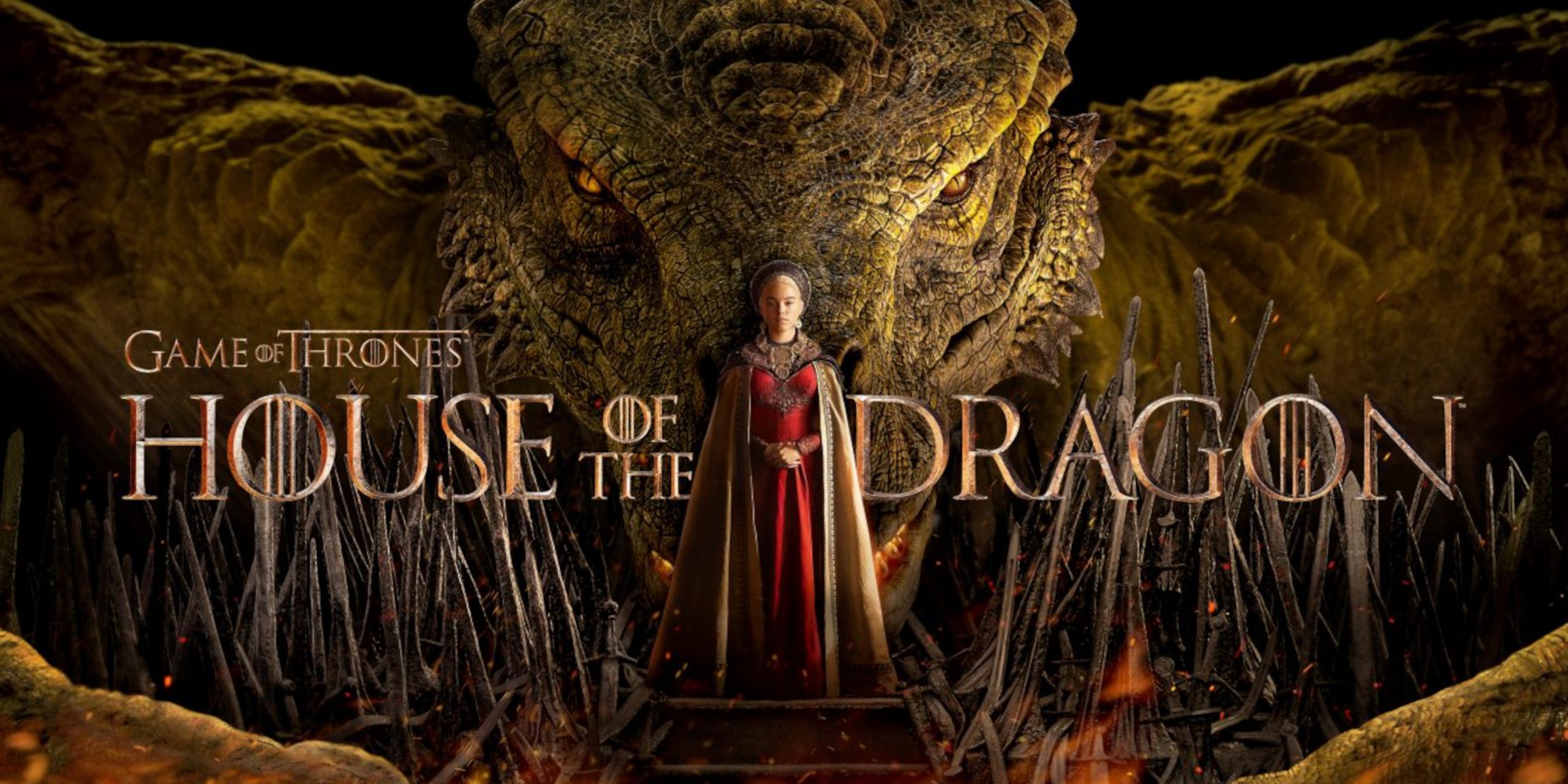
The Iron Throne itself is a perfect example. In House of the Dragon it finally looks like the terrifying, absurdly impractical monster described in the books. It is huge, jagged and looks like the sort of chair that absolutely requires a tetanus injection.
It Has Not Ruined Its Own Ending
This is probably the biggest reason of all.
Game of Thrones ended badly. Not in a fun, messy, “well that was weird” kind of way. It ended in a way that made people stop talking about a show they had once been obsessed with.
The final seasons rushed major character arcs, skipped emotional pay-offs and made decisions that still inspire heated arguments years later.
House of the Dragon has not reached its ending yet, which gives it a huge advantage. But more importantly, it has learned from those mistakes.
The writers seem far more interested in building consequences properly. Characters are allowed to sit with grief, guilt and anger. Important moments are given time to breathe.
It feels like a show made by people who know exactly what happened last time and are determined not to repeat it.
At least, hopefully. There is always the possibility that a future season somehow ends with a dragon opening a coffee shop in King’s Landing and becoming Master of Coin. Stranger things have happened.
Game of Thrones Still Did Some Things Better
To be fair, Game of Thrones still wins in a few areas.
Its world felt larger. It had more variety, more locations and a greater sense that Westeros was only one part of a much bigger world.
It also had higher highs in its early years. Episodes like “Blackwater”, “The Rains of Castamere” and “Hardhome” remain almost impossible to top.
There is also something special about the way Game of Thrones became a global event. Everyone watched it. Everyone talked about it. Entire friendships were briefly tested by arguments over whether Jon Snow knew anything.
House of the Dragon has not quite captured that same lightning-in-a-bottle feeling.
But when you compare the two purely as television shows, one is more disciplined, more focused and more emotionally intelligent.