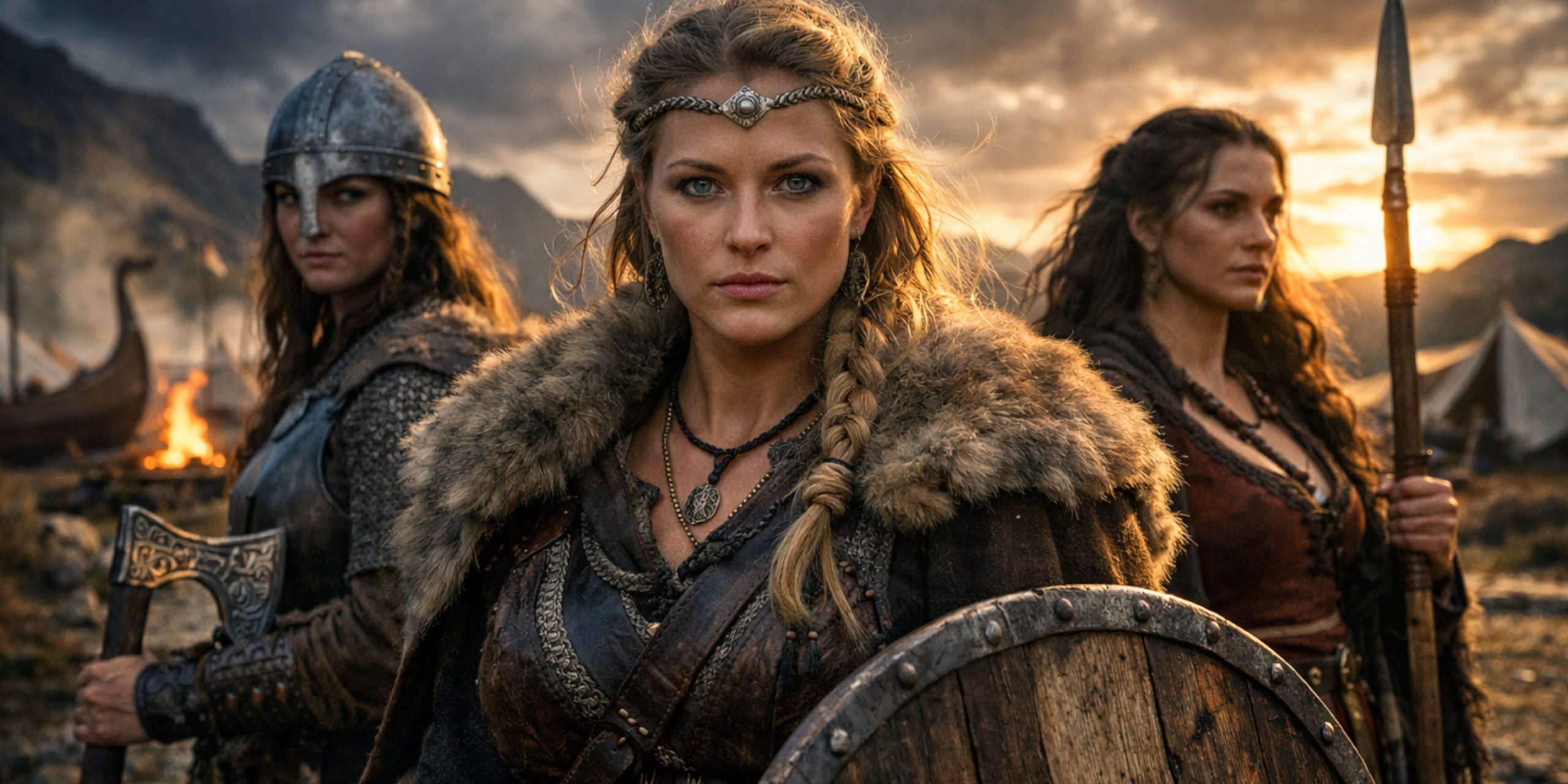
Viking women are often trapped between two extremes. On one side sits the fierce shieldmaiden with an axe, charging into battle with absolutely no concern for her own survival or anyone else’s. On the other sits the quiet wife spinning wool in a smoky longhouse while the men do all the interesting things. The truth, rather inconveniently for both extremes, is much more complicated.
Women in the Viking Age could own land, divorce their husbands, inherit wealth, manage farms, arrange trade, wield considerable influence within their households, and in some cases exercise genuine political power. They also lived in a society that remained firmly patriarchal. Men dominated warfare, formal politics, and kingship. A Viking woman could be powerful, but she often had to exercise that power through family, property, religion, or sheer force of personality.
As a female historian, I have always found Viking women fascinating precisely because they refuse to fit neatly into modern ideas. They were neither helpless nor wholly liberated. They existed in that awkward, intriguing middle ground where real history usually lives.
The Place of Women in Viking Society
The Viking Age lasted roughly from the late eighth century to the mid eleventh century, stretching across Scandinavia and far beyond into Britain, Ireland, France, Russia, and even North America. Society was deeply hierarchical. At the top were kings, jarls, and wealthy landowners. Below them came free farmers and craftspeople. At the bottom were enslaved people.
A woman’s experience depended heavily on where she sat in this social order.
A wealthy woman in Norway or Denmark might control a large estate, oversee servants, organise marriages, and wield influence that stretched well beyond her household. A poorer woman had far fewer choices and spent much of her life engaged in hard labour, childcare, food preparation, textile work, and keeping the farm running while the men travelled, traded, or fought.
Women were usually defined through their family relationships: daughter, wife, widow, mother. Yet those roles could bring genuine authority.
The mistress of a household, often called the húsfreyja, held a position of considerable respect. She controlled the keys to the house and storage chests, which symbolised her authority. Archaeologists have found keys in many female graves, often worn at the waist as visible markers of status.
I confess I have always been rather fond of the keys. They are such an understated symbol. Viking men buried themselves with swords and axes. Viking women were buried with the means to control the household, the wealth, and quite possibly everyone in it.
Marriage and Family
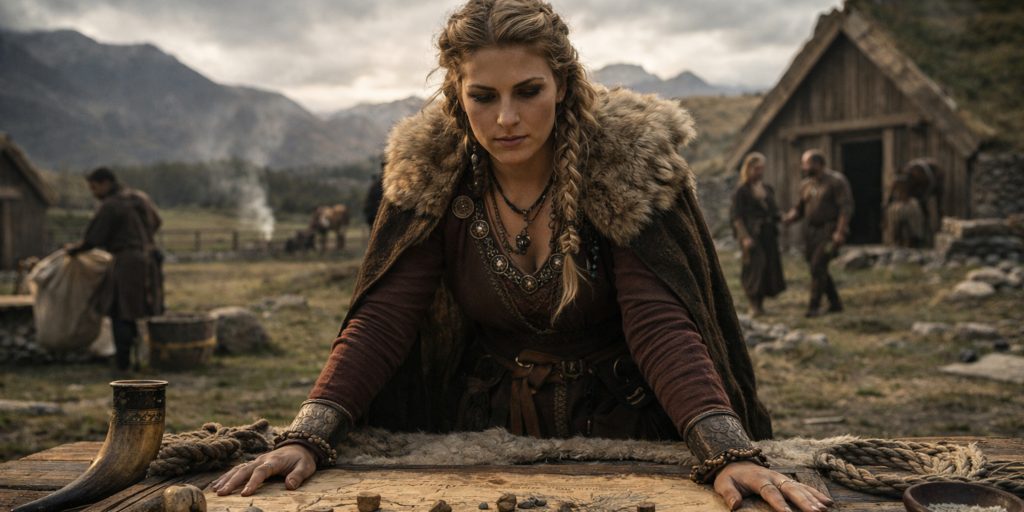
Marriage in the Viking world was both a personal arrangement and a political or economic alliance. Romantic love occasionally appeared in the sagas, but practical concerns usually came first.
Families arranged marriages, often to strengthen alliances, secure land, or increase status. A bride brought a dowry, while the groom’s family paid a bride-price. Marriage was effectively a contract between families.
That does not mean women had no voice at all. Some sources suggest that women could refuse a proposed marriage, particularly among the higher ranks of society. The Icelandic sagas contain several formidable women who make their opinions on unsuitable husbands abundantly clear, usually at great volume.
Women also retained certain legal rights after marriage.
- A married woman could own property.
- She could inherit from her parents.
- She could manage family wealth in her husband’s absence.
- Widows often gained substantial independence.
Widowhood could actually be one of the most powerful positions available to a Viking woman. A widow might inherit land, control a household, arrange the marriages of her children, and operate with far greater freedom than a younger married woman.
Some of the strongest female figures in Norse literature are widows. That may sound grim, but it reflects the reality that the death of a husband could shift authority into a woman’s hands.
Divorce and Legal Rights
One of the most striking features of Viking society is that women could divorce.
This was not easy, nor was it necessarily common, but it was possible. In Icelandic and Scandinavian law codes, a woman could seek divorce for reasons such as:
- Abuse or violence
- Failure of the husband to provide
- Humiliation or repeated insults
- Desertion
- The husband wearing women’s clothing, which the Vikings considered deeply dishonourable
The last point tends to surprise modern readers. Viking law could be oddly specific. A husband dressed inappropriately might be grounds for divorce, which suggests either very strong feelings about gender roles or one unfortunate incident that nobody ever stopped talking about.
A divorced woman could reclaim her dowry and return to her family. This gave her a level of legal protection rare in many parts of medieval Europe.
Women could also appear in court, bring legal claims, and in some cases act on behalf of their families. They were not entirely excluded from the legal world, although men still dominated formal assemblies such as the thing.
Work, Wealth, and Daily Life
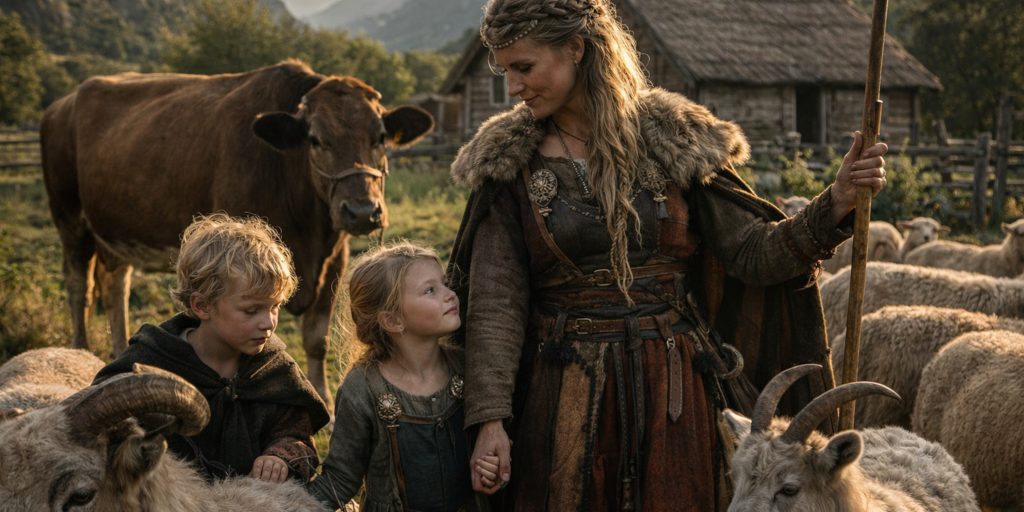
The image of Viking women as passive figures simply does not survive contact with reality.
Women worked constantly. They prepared food, brewed ale, cared for children, tended animals, produced clothing, and oversaw the running of the household. Textile production alone was a massive undertaking. Spinning and weaving consumed extraordinary amounts of time.
Cloth was valuable in the Viking world, sometimes almost functioning as currency. A skilled woman who managed textile production controlled a key source of wealth.
Women also participated in trade. Archaeological evidence suggests that some women travelled and conducted business. Graves containing scales, weights, imported goods, and jewellery hint that women could be merchants or involved in commercial networks.
In towns such as Birka and Hedeby, women likely worked as traders, craftswomen, brewers, and sellers of goods. Viking towns were far more bustling and interconnected than many people imagine.
The daily life of an ordinary woman was physically demanding. Water had to be carried, fires maintained, animals fed, wool spun, meals cooked, and children supervised. Viking longhouses were not cosy rustic cottages from a television drama. They were smoky, crowded, noisy places where everyone smelled faintly of livestock and damp wool.
One develops a certain admiration for anyone who managed to emerge from that environment with enough energy left to run a household and occasionally terrify her relatives.
Women and Religion
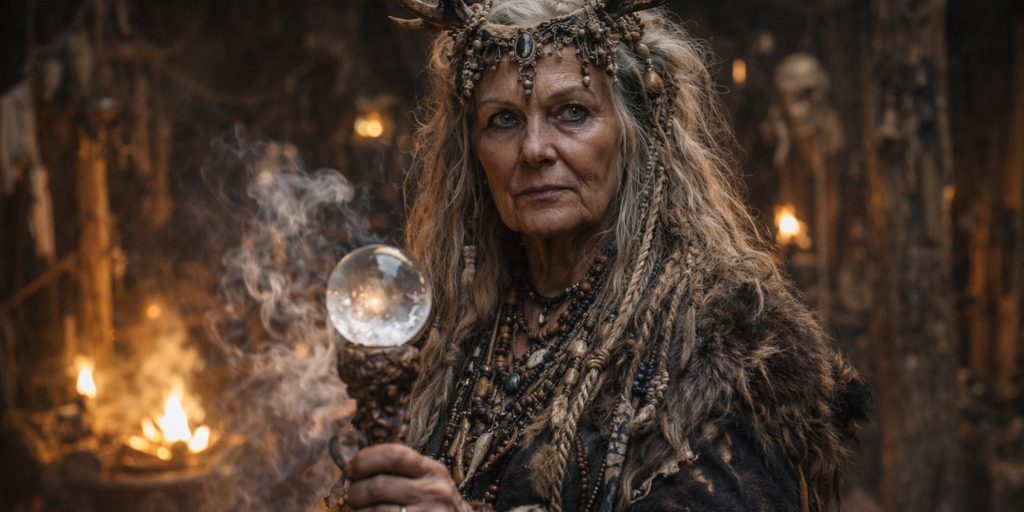
Women appear to have held important roles in Norse religion.
The most mysterious and powerful were the völur, female seeresses or practitioners of magic. They performed rituals, gave prophecies, and were associated with seiðr, a form of Norse magic linked to fate, visions, and the supernatural.
The völva appears in several literary sources, including the Poetic Edda. She is often treated with a mixture of awe and fear. Kings and warriors sought her advice. Even the god Odin was said to practise seiðr, although other gods found this slightly embarrassing and perhaps not entirely respectable.
Archaeology supports the idea that some women held ritual authority. Certain graves contain staffs, unusual costumes, herbs, and objects linked with ceremonial practice. One of the most famous is the richly furnished grave at Oseberg in Norway, where two women were buried with extraordinary wealth. Some historians believe one of them may have been a powerful religious figure.
Women were also important in domestic religion. They oversaw household rituals, honoured ancestors, and likely played a major role in maintaining local traditions.
Queens and Powerful Women
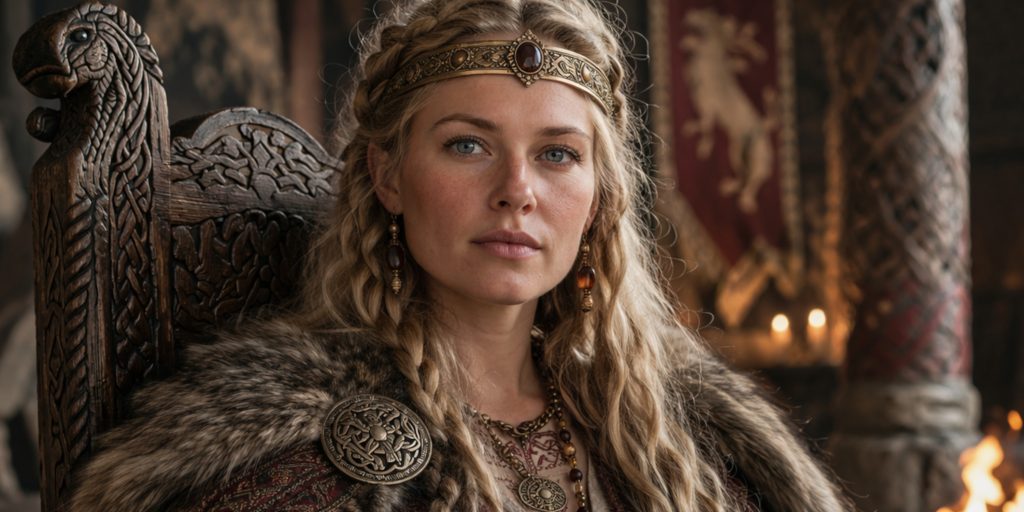
A few women rose far above the ordinary structures of Viking society.
Queens, noblewomen, and female rulers could wield remarkable influence. Some acted as regents, diplomats, or political strategists.
Among the most famous are:
- Queen Thyra of Denmark, remembered as a politically important royal figure.
- Aud the Deep-Minded, a powerful widow and settler who helped establish Norse communities in Iceland.
- Queen Gunnhild, often portrayed in the sagas as clever, ruthless, and perhaps slightly terrifying.
- Sigrid the Haughty, who allegedly rejected suitors, insulted kings, and shaped Scandinavian politics with alarming confidence.
The sagas do not always distinguish clearly between history and dramatic storytelling. Viking writers adored larger-than-life personalities, particularly women who could stride into a room and make everyone else nervous.
Still, beneath the exaggeration lies an important truth. Elite women could have real political influence. They arranged marriages, forged alliances, managed estates, and advised rulers.
Were There Really Shieldmaidens?

No discussion of Viking women escapes the question of shieldmaidens.
The sagas and legends contain many women who fight. Figures such as Lagertha, Hervor, and Brynhild are famous examples. They ride into battle, command warriors, and generally behave in a way that would have made many medieval chroniclers faint quietly into a manuscript.
For a long time, historians dismissed these stories as pure myth.
Then came the Birka grave in Sweden.
This grave, excavated in the nineteenth century, contained weapons, horses, and the equipment of a high-ranking warrior. For decades it was assumed to belong to a man. In 2017, DNA testing revealed that the buried individual was female.
This discovery caused considerable excitement, and rather a lot of arguments.
The Birka woman may have been a warrior, a military leader, or a symbolic figure buried with weapons for another reason. Archaeology rarely hands us tidy answers. Still, the grave makes it impossible to say that women never occupied martial roles.
The most likely conclusion is that female warriors existed, but they were probably rare. Most Viking women did not fight in battle. A small number may have done so, particularly in extraordinary circumstances.
The shieldmaiden, then, is not entirely myth. Nor is she the everyday reality imagined by modern films and television.
Myth, Saga, and Reality
The challenge with Viking women is that so much of the evidence comes from sagas written centuries later.
These stories are valuable, but they are not straightforward historical records. Saga authors loved dramatic scenes, sharp-tongued women, impossible feuds, magical prophecies, and lengthy family arguments that somehow escalated into murder.
A saga woman might:
- Demand revenge for a slain relative.
- Shame her husband into fighting.
- Predict the future.
- Rule a kingdom.
- Burn down a hall full of enemies.
Sometimes all in the same chapter.
Real Viking women were probably less theatrical, though perhaps not by much.
Modern culture has added further confusion. Films, television, and video games often portray Viking women either as glamorous warriors or as oppressed victims waiting to be rescued. Neither version is especially convincing.
The truth is messier and more interesting. Viking women lived in a harsh society that gave them more legal and economic power than many women elsewhere in medieval Europe, but still placed clear limits on what they could do.
What Archaeology Tells Us
Archaeology has transformed our understanding of Viking women.
Female graves often contain jewellery, keys, weaving tools, household goods, imported items, and sometimes great wealth. These burials reveal status, occupation, and social role.
Important discoveries include:
- The Oseberg ship burial in Norway, containing two elite women and an extraordinary collection of goods.
- The Birka warrior grave in Sweden.
- Rich female burials in Denmark and Iceland showing women with property and prestige.
- Textile workshops and tools that reveal the economic importance of women’s labour.
Archaeologists increasingly argue that women played a larger role in Viking society than earlier historians assumed. For many years, research focused almost entirely on male warriors and kings. Women appeared only at the edges.
Now the picture is broader. Women emerge as landowners, traders, ritual specialists, family leaders, and occasionally political or military figures.
It is a welcome correction. History has a habit of overlooking women until someone literally digs them out of the ground.
The Legacy of Viking Women
Viking women continue to fascinate because they feel both familiar and distant.
They lived in a world shaped by violence, hierarchy, family loyalty, and survival. Yet within that world, many women carved out spaces of authority and independence.
Their legacy survives in literature, archaeology, and modern imagination. Some became queens, some became settlers, some managed great households, and a few perhaps carried swords.
Most, however, were ordinary women doing extraordinary amounts of work.
That may be the most important point of all. History often remembers the loudest figures: the kings, the raiders, the warriors, the people standing dramatically on a ship with their hair blowing in the wind. Viking women were often the people who kept the world functioning while everyone else was off attempting to become a legend.
Frankly, that sounds like rather a lot of power to me.