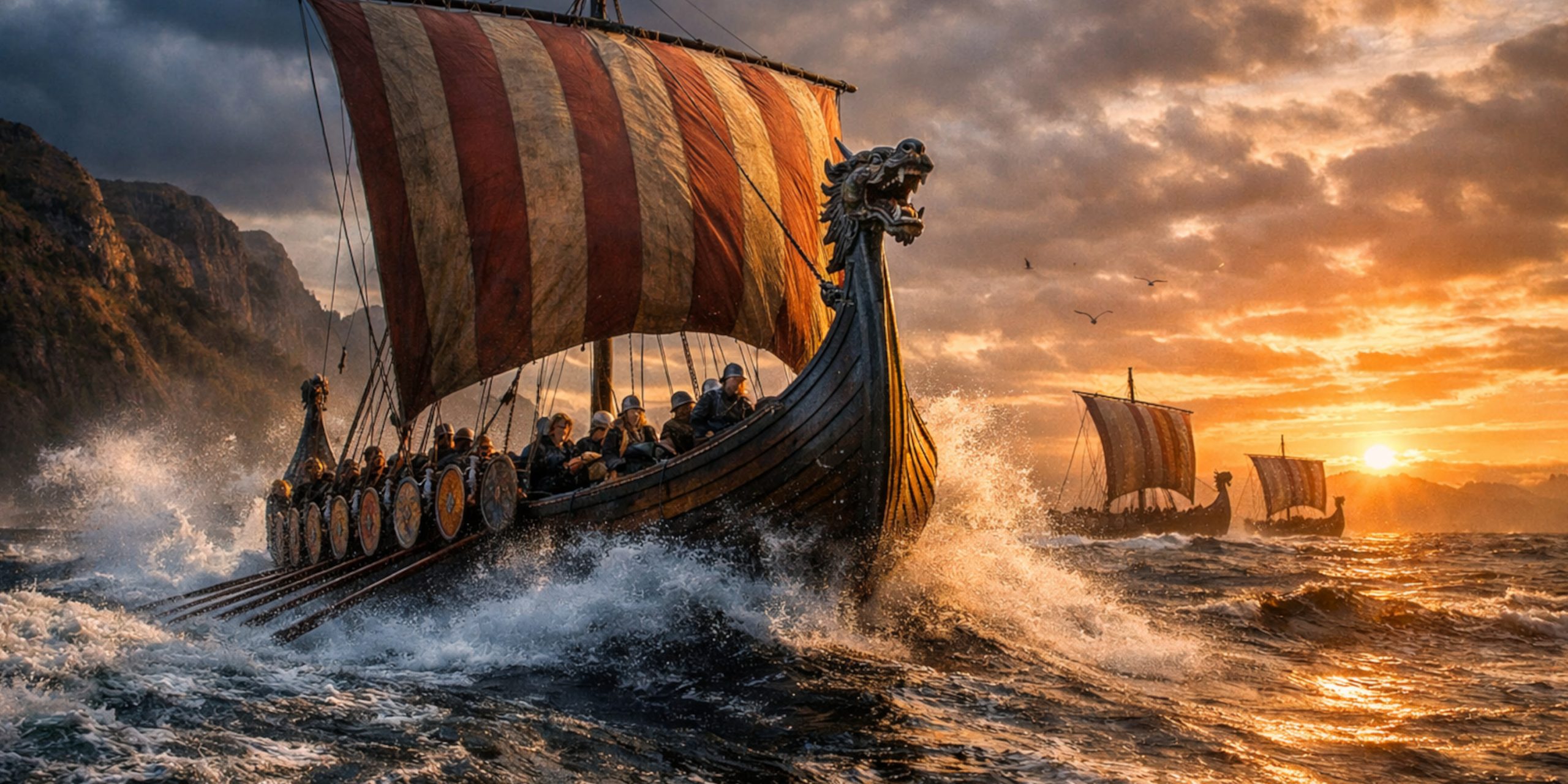
Viking longships have a habit of making every other early medieval vessel look rather unfortunate. Put a longship beside the heavier, slower ships of much of Europe in the ninth century and it feels almost unfair, rather like turning up to a village football match with a Formula One car and insisting it counts.
For centuries, these ships carried Viking raiders, traders, settlers and kings across rivers, coastlines and open seas. They reached Britain, Ireland, France, Spain, the Mediterranean, Iceland, Greenland and even North America. More remarkably, they did all this with technology that, on paper, ought to have had no business working so well.
The genius of the Viking longship was not one single invention. It was the way several clever ideas were combined into one elegant, slightly terrifying machine.
The Longship Was Built for Speed
Most ships of the early medieval world were broad, deep and fairly cumbersome. They could carry cargo, but they were not especially quick and certainly not subtle.
The Viking longship was different. It was long, narrow and light, with a streamlined hull that cut through the water far more efficiently than most rival vessels.
Some of the largest warships could reach speeds of around 15 knots in good conditions. That may not sound astonishing today, but for the ninth and tenth centuries it was extraordinary. A Viking fleet could appear on a coastline with unnerving speed, strike, and vanish before local rulers had quite finished arguing about whose responsibility it was.
The shape of the hull mattered enormously:
- Narrow beam for less resistance in the water
- Long hull for greater speed and smoother movement
- Lightweight construction that reduced drag
- Symmetrical bow and stern, allowing the ship to reverse direction without turning around
That last point is one of my favourite details. A Viking captain could simply change rowing direction and leave immediately. No awkward turning circle. No embarrassing collision with a sandbank while everyone on shore watches.
Clinker-Built Construction Was Centuries Ahead
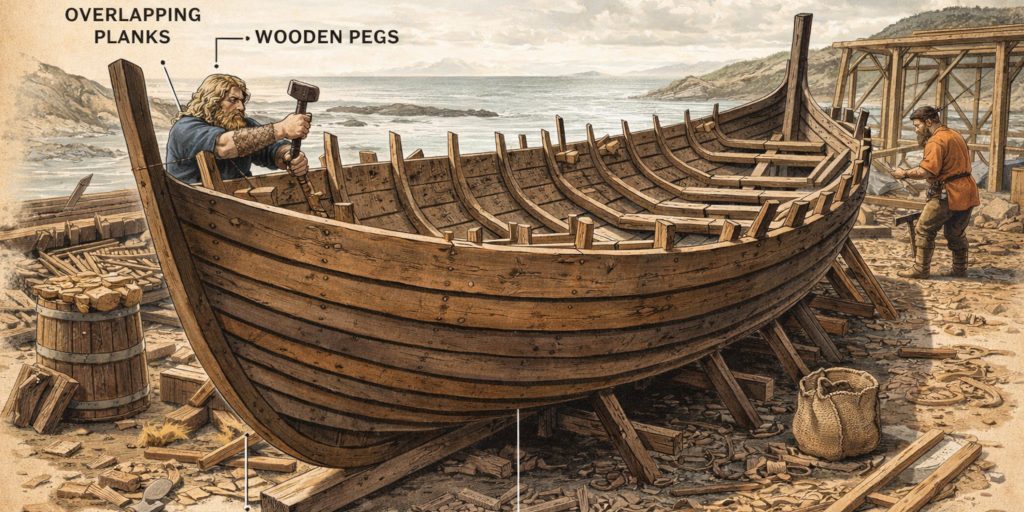
The real secret of the longship lay in the way it was built.
Viking shipwrights used what is known as clinker construction. Each plank overlapped the one below it, rather like roof tiles. The planks were fastened together with iron rivets and sealed with tar, wool or animal hair.
This produced a hull that was both strong and flexible.
Most medieval ships built elsewhere relied on heavier methods. They were sturdy enough, but they could become rigid and slow. Viking longships behaved differently. Their overlapping planks allowed the hull to bend slightly with the waves rather than fight against them.
In rough seas this made an enormous difference. The ship could ride over North Atlantic swell with surprising grace. Well, as much grace as one can expect when being sprayed in the face with freezing seawater for several days.
The advantages of clinker building included:
- Lighter hulls than many contemporary ships
- Greater flexibility in rough seas
- Better durability under strain
- Faster construction and easier repair
- Less timber required
It was such an effective technique that versions of it remained in use in northern Europe for centuries afterwards.
They Could Sail Almost Anywhere
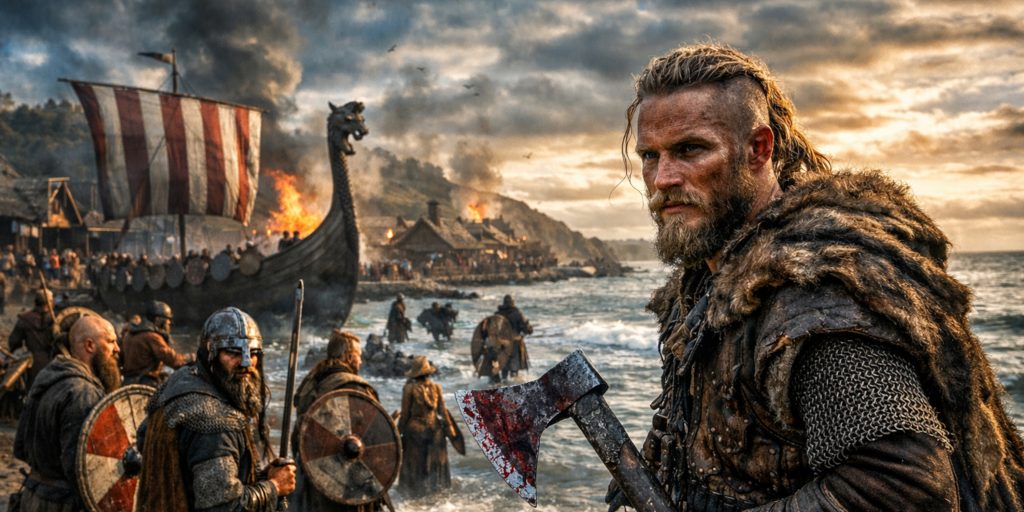
Perhaps the greatest strength of the longship was its astonishing versatility.
Most ships had to choose what sort of water they could handle. Deep sea ships managed poorly in rivers. River craft struggled on open water.
Viking longships did both.
Their shallow draft meant that even a large longship often sat less than a metre deep in the water. That allowed Viking crews to sail far inland along rivers and estuaries.
They could move up the Seine toward Paris, travel deep into Russia along the Dnieper and Volga, or slip into shallow creeks and beaches where heavier ships could never follow.
This gave the Vikings a strategic advantage that their enemies repeatedly failed to grasp until it was too late.
A monastery on the coast might think itself reasonably safe. Then a fleet appeared from a nearby river. A town several miles inland might feel comfortably protected. Then longships arrived anyway, because the Vikings had simply rowed up the local waterway while everyone else was still relying on roads and optimism.
The Combination of Sail and Oars Was Revolutionary
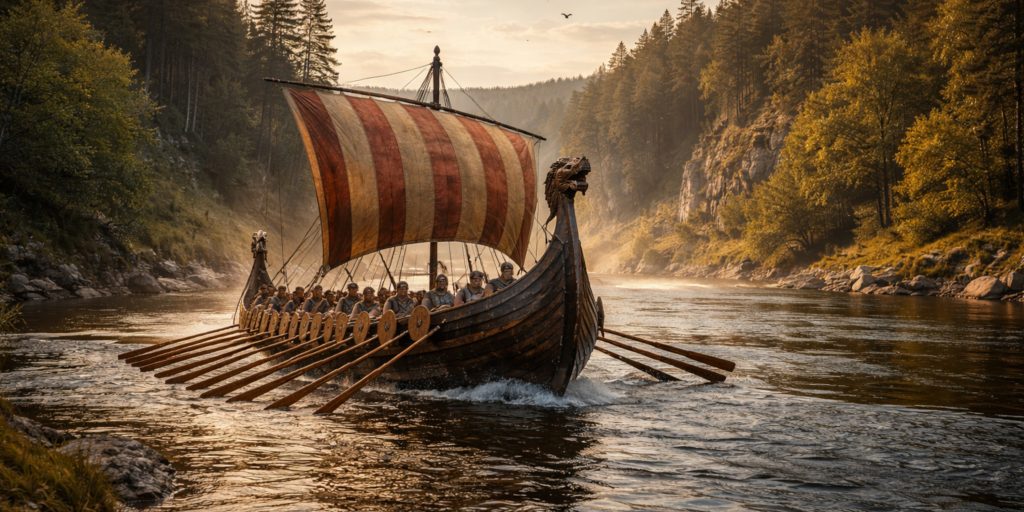
The longship used both sail and oars, and this was one of the cleverest features of all.
When the wind was favourable, the square wool sail could carry the ship quickly across long distances. This saved the crew’s energy and made lengthy voyages possible.
When the wind failed, or when precise control was needed, the crew could row.
This meant the ship was never entirely dependent on weather. It could still move through narrow rivers, crowded harbours or difficult coastlines.
The Vikings also designed their mast to be removable. Crews could lower it when rowing, during bad weather, or when passing beneath obstacles.
Compared with many contemporary vessels, which often relied on either sail or oars but not both, the Viking longship had far greater flexibility.
A longship could:
- Cross the open sea under sail
- Chase another vessel using oars
- Land directly on a beach
- Navigate rivers and estuaries
- Retreat quickly even if the wind changed
That last point mattered more than one might think. Viking raids have a certain reputation for boldness, but they were not suicidal. If things looked difficult, they preferred to leave at once, preferably with everyone else’s valuables still in the hold.
Beach Landings Changed Warfare
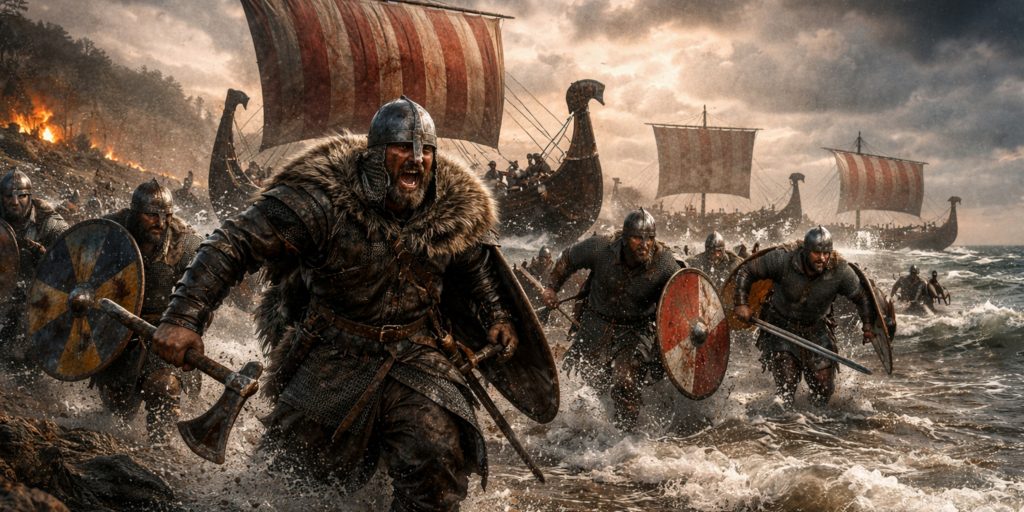
One of the most advanced aspects of the longship was its ability to land almost anywhere.
Because of its shallow draft and light weight, a longship could be run straight onto a beach. There was no need for a harbour, dock or port.
The crew could jump out, drag the ship ashore if necessary, and launch a raid within minutes.
This transformed warfare.
Medieval kingdoms often concentrated their defences around major ports and river crossings. The Vikings ignored these completely. They could land on isolated beaches, hidden coves or muddy riverbanks and strike from unexpected directions.
Suddenly, coastlines became almost impossible to defend.
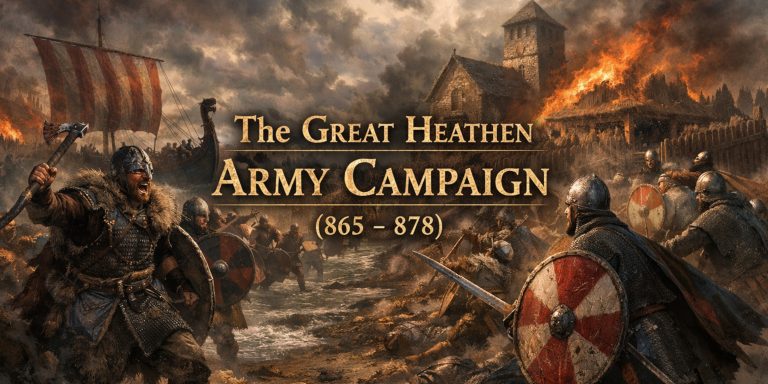
The longship turned geography itself into a weapon as accounts show with The Great Heathen Army.
They Were Technological Masterpieces of Woodworking
It is easy to underestimate just how skilled Viking shipbuilders were.
These ships were made without modern tools, industrial saws or written blueprints. Shipwrights built largely from memory and experience.
The timber was carefully selected, usually oak for the strongest parts of the hull. Rather than sawing planks across the grain, builders split them along the natural grain of the wood. This created stronger, more flexible planks.
The result was astonishingly precise craftsmanship.
Archaeological finds such as the Oseberg ship, the Gokstad ship and the Skuldelev ships show just how advanced Viking shipbuilding had become. The curves of the hull, the balance of the keel and the placement of the planks reveal a level of practical engineering that was frankly remarkable.
As a historian, I find there is something quietly humbling about it. We often imagine the early medieval world as crude and unsophisticated. Then one looks at a Viking longship and realises these people were solving engineering problems with axes, intuition and an alarming amount of confidence.
Longships Made Viking Expansion Possible

Without the longship, there would probably have been no Viking Age as we know it.
The ship made everything else possible.
It allowed Viking raiders to strike across Europe. It allowed traders to connect Scandinavia with Byzantium and the Islamic world. It carried settlers to Iceland, Greenland and North America.
The Vikings were not uniquely fierce compared with many other medieval peoples. Plenty of societies were perfectly capable of violence when sufficiently motivated. What made the Vikings different was that they possessed the means to travel farther and faster than almost anyone else.
The longship gave them mobility, surprise and reach.
For several centuries, that was enough to change European history.
How Viking Longships Compared with Other Medieval Ships
| Feature | Viking Longship | Typical Early Medieval Ship |
|---|---|---|
| Hull design | Long, narrow, clinker-built | Broader and heavier |
| Draft | Very shallow | Deeper |
| Propulsion | Sail and oars | Usually one or the other |
| Speed | Fast, up to around 15 knots | Slower |
| River travel | Excellent | Often limited |
| Beach landing | Easy | Difficult |
| Manoeuvrability | Extremely high | More restricted |
| Construction | Flexible and lightweight | Heavier and more rigid |
Looking at this comparison, one begins to understand why so many rulers dreaded the appearance of dragon-prowed ships on the horizon.
The Longship’s Legacy
The Viking longship did not vanish when the Viking Age ended. Its influence continued long afterwards.
The clinker-building technique shaped later shipbuilding in northern Europe. Ideas about combining speed, flexibility and shallow draft continued to influence naval design for centuries.
Even today, the longship still captures the imagination in a way few other historical vessels manage. Partly because it looked magnificent, of course. A dragon-headed ship with striped sails has a certain theatrical flair. Medieval Scandinavia was apparently not afraid of making an entrance.
Yet there is more to it than appearance.
The longship represents one of those rare moments in history when technology changed what people believed was possible. It allowed small communities from Scandinavia to project power across half the known world.
That is why Viking longships were so far ahead of their time. They were faster, lighter, more versatile and more intelligently designed than almost anything else afloat.
Frankly, if I were an Anglo-Saxon monk in 865 and saw one approaching through the mist, I should like to think I would remain calm and dignified.
In reality, I suspect I would do exactly what everyone else did and start running.