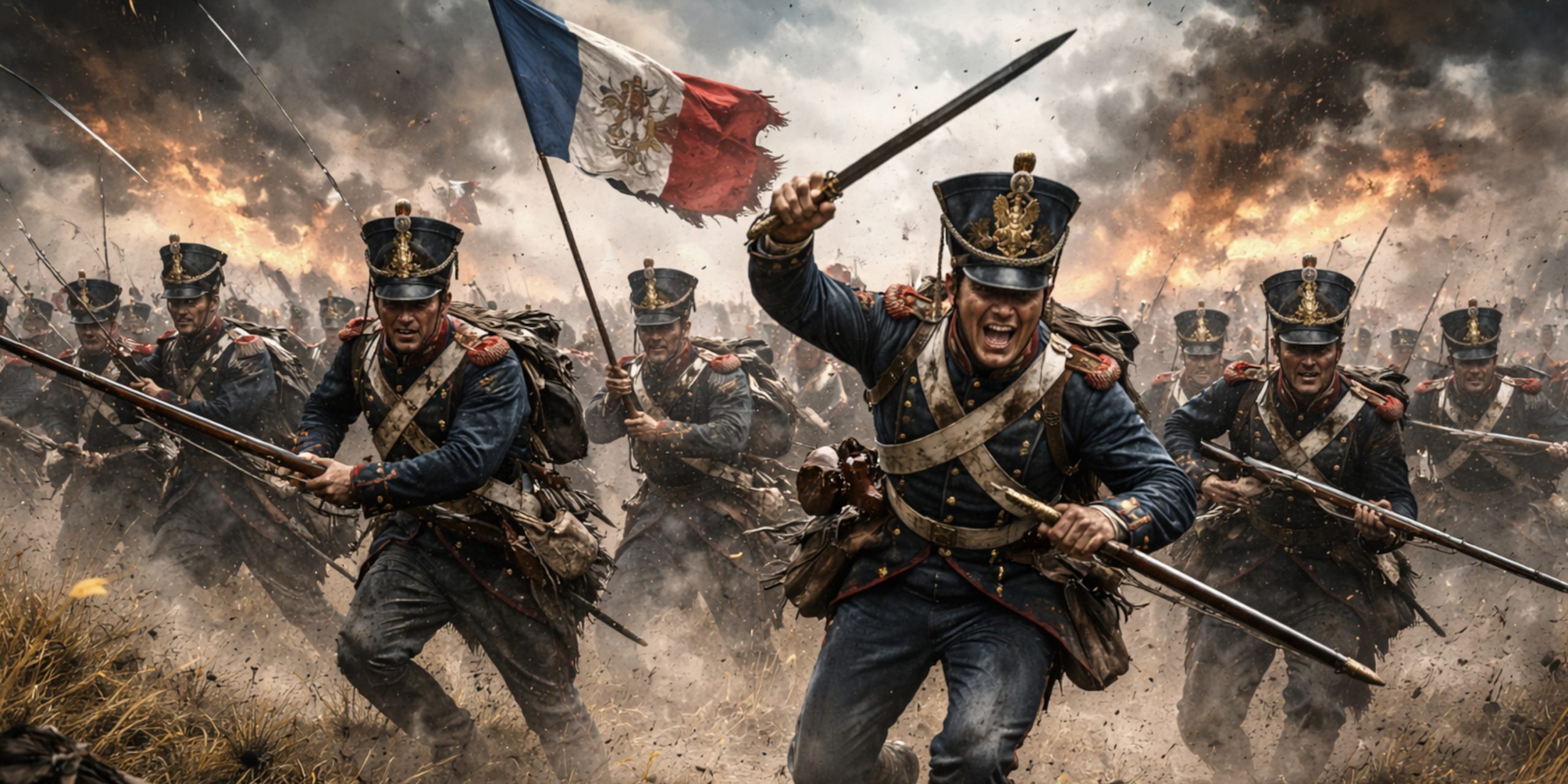
There are few stories in the Napoleonic Wars more poignant than that of the Polish Vistula Legion. These were soldiers without a state, fighting under a foreign emperor in the hope that he might restore their own. They marched beneath French eagles, spoke Polish in the ranks, and carried their homeland with them into Spain, Austria and Russia.
As a historian, I have always found them both admirable and tragic. They fought magnificently. They suffered greatly. And in the end, Poland was not restored in the way they had imagined.
Origins: Poland Lost and Hope in Napoleon
The Vistula Legion emerged from the political wreckage of the late eighteenth century. After the Partitions of Poland by Russia, Prussia and Austria, the Polish state ceased to exist. Thousands of officers and soldiers went into exile, particularly to France, believing that revolutionary France, and later Napoleon Bonaparte, would become the instrument of Polish revival.
Earlier Polish formations, such as the Polish Legions in Italy, had already fought for France. In 1808, these forces were reorganised into what became known as the Vistula Legion. It comprised several infantry regiments and a lancer regiment, formally incorporated into the French Army yet retaining a distinct Polish character.
Napoleon valued them. He trusted their discipline and their ferocity. In private correspondence, he referred to the Poles as among his most devoted troops.
Structure and Composition
At its height, the Vistula Legion consisted of:
- Three infantry regiments
- One regiment of lancers
- Supporting artillery detachments at various stages
The infantry regiments followed French organisational patterns, divided into battalions and companies, but their officers were largely Polish. Many had previously served in the old Commonwealth army.
The lancer regiment, later famed across Europe, became particularly influential. The Polish lancer, armed with a long lance and sabre, proved devastating in close action. French cavalry units soon copied their style, leading to the widespread adoption of lancer regiments in the Napoleonic era.
Campaigns in Spain
The Legion’s baptism of fire came during the Peninsular War in Spain. It was there, in brutal counter insurgency and pitched battles, that their reputation hardened.
At the Battle of Albuera in 1811, Polish troops of the Vistula Legion fought with extraordinary tenacity. British observers noted their discipline under fire. One British officer wrote of their advance, describing them as steady and relentless despite heavy casualties.
The Legion suffered terribly in Spain. Disease, guerrilla warfare and relentless campaigning reduced their numbers. Yet they maintained cohesion. Their loyalty to Napoleon was not blind, but it was pragmatic. He represented the only realistic path toward a resurrected Poland.
Arms and Armour
The Vistula Legion was equipped according to French standards, though certain elements retained Polish tradition.
Infantry
The infantry wore French style uniforms, typically dark blue coats with distinctive Polish facings. Equipment included:
- French Charleville pattern muskets
- Bayonets of standard French issue
- Infantry sabres for officers
Officers often carried sabres of the light cavalry type or French briquet style sidearms. Some retained Polish styled sabres reminiscent of earlier Commonwealth patterns, though these were increasingly rare as French supply systems standardised equipment.
Lancers
The lancer regiment was more distinctive.
Weapons included:
- The lance, approximately 2.75 metres in length
- Curved light cavalry sabres, often of the French An XI pattern
- Pistols for close combat
The sabres were typically curved, optimised for cutting from horseback. The influence of earlier Polish cavalry traditions, especially those of the uhlans, is unmistakable. These were not decorative weapons. They were working tools of war, built for shock and speed.
In appearance, the lancers wore the square topped czapka cap, a clear nod to Polish military heritage. It became one of the most recognisable cavalry headdresses in Europe. Fashion in warfare is rarely accidental. When your cavalry looks formidable, it often is.
Campaigns in Central Europe and Russia
After Spain, elements of the Legion served in the campaigns of 1809 and later in the invasion of Russia in 1812. By then, the creation of the Duchy of Warsaw had rekindled Polish hopes. Many believed that full independence might follow a decisive French victory.
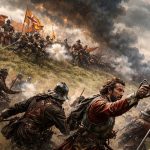
The Russian campaign was catastrophic. Polish troops fought with determination at battles such as Borodino. Contemporary French accounts praised their steadiness in assault. One French officer observed that the Poles advanced through fire with a grim expression that suggested they were fighting for more than France.
Retreat from Moscow decimated the Legion. Frost and starvation achieved what Russian artillery could not.
Contemporary Voices
Napoleon himself remarked on the loyalty of the Poles, stating that they were among the most faithful allies he possessed. Polish memoirists later wrote of their service as both honourable and heartbreaking.
A Polish officer reflected that they fought not for conquest, but for the memory of a country erased from maps. That sense of exile runs through their correspondence. It is hard to read without a degree of sympathy.
British accounts were grudging but respectful. The steadiness of the Polish infantry and the ferocity of their cavalry charges were repeatedly noted.
Archaeology and Material Evidence
Material evidence of the Vistula Legion survives in several forms.
Battlefield archaeology in Spain and Eastern Europe has uncovered musket balls, uniform buttons bearing French imperial insignia, and fragments of equipment associated with Polish units. The distinctive czapka plates and regimental insignia occasionally appear in collections.
Museums in Poland, France and Spain preserve uniforms, sabres and personal effects. These artefacts reveal the hybrid identity of the Legion. French cut coats paired with Polish symbols. Imperial eagles carried by men dreaming of Warsaw.
Archaeological study of Napoleonic battlefields has confirmed the intensity of fighting at sites where Polish units were heavily engaged. Concentrations of musket shot and artillery fragments correspond to recorded positions of the Legion in several engagements.
Legacy
The Vistula Legion did not achieve the restoration of a fully independent Poland. Yet it contributed directly to the creation and defence of the Duchy of Warsaw, a political entity that kept the idea of Polish statehood alive.
Its lancer traditions influenced European cavalry for decades. The very image of the Napoleonic lancer owes much to Polish precedent.
More importantly, the Legion occupies a central place in Polish national memory. It symbolises persistence. It also symbolises the risks of tying national aspirations to a single great power. Historians tend to admire courage while remaining wary of grand strategy.
Seven Swords Takeaway
The Polish Vistula Legion stands as one of the most compelling formations of the Napoleonic Wars. Stateless soldiers, disciplined professionals, fierce cavalrymen, they fought across Europe in the hope of restoring their homeland.
Their story is not triumphant in the conventional sense. It is, however, deeply human. Ambition, loyalty, sacrifice and political calculation all converge in their ranks.
If nothing else, they remind us that armies are not abstract entities. They are collections of individuals who carry private dreams into public wars. In the case of the Vistula Legion, those dreams were named Poland.
And for a time, beneath French eagles, they believed they might yet see it reborn.