The Last Kingdom is one of those rare historical series that sneaks up on you. You arrive expecting standard Viking chaos and stay because you are suddenly arguing with yourself about 9th-century succession law and whether Uhtred needs therapy. Based on The Saxon Stories by Bernard Cornwell, the show blends real history with pulpy momentum in a way that feels lived-in rather than museum-polished.
It is messy, violent, occasionally funny, and far more thoughtful than it first appears. This is not just a Vikings versus Saxons punch-up. It is about identity, power, compromise, and the slow, frustrating birth of England.
From Page to Screen – How the Story Took Shape
The series debuted in 2015, originally produced by the BBC before Netflix took full control from season three onwards. That shift mattered. Budgets grew, battles widened, and the pacing sharpened without losing the grit that defined the early years.
Cornwell’s novels already had a clear narrative spine, following the life of Uhtred across decades of warfare and political manoeuvring. The adaptation trims timelines and merges characters, but the emotional core remains intact. Loyalty always comes at a cost. Oaths are rarely convenient. And history does not reward idealism.
Uhtred of Bebbanburg – The Most Reluctant Hero on Television

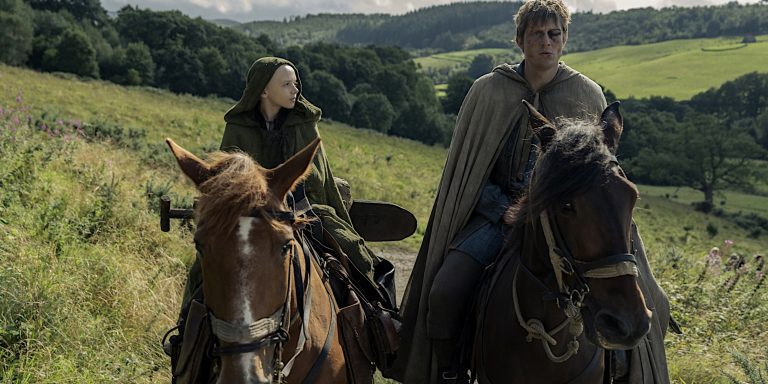
Uhtred of Bebbanburg is a character powered entirely by spite, loyalty, and bad timing. Born Saxon, raised Danish, and permanently annoyed by both sides, he spends the entire series trying to reclaim his ancestral home while being dragged into everyone else’s political emergencies.
Alexander Dreymon plays him with just enough charm to stop Uhtred becoming unbearable. He is reckless, emotionally illiterate, and frequently wrong. That is why he works. You do not root for him because he is noble. You root for him because he refuses to stop, even when stopping would clearly be the healthier option.
Alfred the Great – Power, Piety, and Pure Stress

Alfred the Great might be the show’s most impressive achievement. Played by David Dawson, Alfred is not the shining hero of school textbooks. He is sickly, stubborn, manipulative, and absolutely convinced that England must exist, even if nobody else wants it yet.
Their relationship is the backbone of the early seasons. Alfred needs Uhtred’s sword arm but despises his worldview. Uhtred needs Alfred’s legitimacy but hates his rules. It is political realism at its most human. No speeches about destiny, just two men exhausting each other for the sake of a future neither will fully enjoy.
Vikings, Saxons, and the Reality Behind the Drama
The series gets more right than it gets wrong, which is rare for television. The Viking leaders draw inspiration from historical figures like Ubba and Guthrum, while the Saxon kingdoms reflect the fractured reality of early medieval Britain.
Armour and weapons lean toward authenticity rather than fantasy excess. Shields dominate combat. Swords are practical tools, not glowing symbols of destiny. Battles are chaotic, claustrophobic, and often decided by morale rather than flashy heroics.
The biggest liberties are chronological. Characters live longer than history allows, and events are reshuffled for narrative clarity. These choices rarely break immersion. If anything, they make the political landscape easier to follow without turning it into a lecture.
Combat, Tactics, and That Shield Wall Obsession

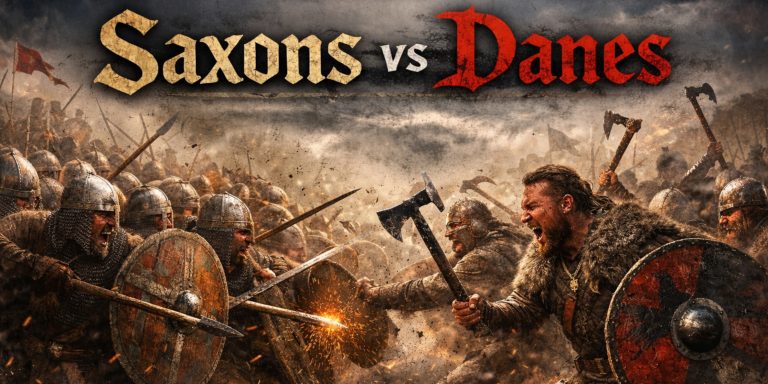
The shield wall is practically a character in its own right. The show repeatedly emphasises formation fighting, fatigue, and the sheer terror of being pressed shoulder-to-shoulder with nowhere to run.
Duels are brutal and fast. Armour matters. Wounds linger. Victory often feels accidental rather than triumphant, which suits the period. War here is not glorious. It is exhausting and personal, and everyone looks vaguely traumatised by season two.
Supporting Cast That Carries Real Weight
Characters like Brida, Finan, Sihtric, and Hild prevent the series from collapsing into a one-man story. Each represents a different response to violence and belief. Brida embraces chaos. Finan masks survival instincts with humour. Hild becomes a moral anchor without turning sanctimonious.
These relationships give the show its warmth. Amid betrayals and burned villages, there are moments of loyalty that feel earned rather than sentimental.
Seven Kings Must Die – A Proper Ending, Mostly
The Last Kingdom: Seven Kings Must Die serves as the series finale, compressing several late-novel arcs into one last campaign. It moves fast, sometimes too fast, but it understands what matters.
Uhtred’s story ends not with conquest but with legacy. England finally emerges, imperfect and blood-soaked, while the men who built it fade into history. It is a fitting conclusion, even if fans would happily watch another three seasons of arguments in muddy camps.

Why The Last Kingdom was a hit
This series respects its audience. It assumes you can follow politics, remember names, and tolerate moral ambiguity. It also understands that history is not tidy. Nations are born through compromise, violence, and uncomfortable alliances.
It is a show that makes you Google Anglo-Saxon kings at midnight and then question why you care so much about a wooden fort in Mercia. That is its real achievement.
Watch the Trailer:
Episode Guide: Seasons and Key Battles
Below is a curated guide to pivotal episodes, highlighting Uhtred’s journey and the swords that defined his path:
| Season | Episodes | Key Events | Featured Swords |
|---|---|---|---|
| 1 | 1–8 | Uhtred’s capture by Danes; Alfred’s rise; Battle of Cynuit. | Serpent-Breath (Uhtred’s sword) introduced. |
| 2 | 9–16 | Siege of Dunholm; Aethelflaed’s kidnapping; Battle of Beamfleot. | Wasp-Sting (Uhtred’s seax) becomes pivotal. |
| 3 | 17–24 | Alfred’s decline; Battle of Tettenhall; Uhtred’s enslavement. | Saxon broadswords vs. Danish axes. |
| 4 | 25–32 | Edward’s reign; Sigtryggr’s invasion; Brida’s vengeance. | Uhtred reclaims Serpent-Breath in Episode 28. |
| 5 | 33–40 | Uhtred’s final push for Bebbanburg; Battle of Brunanburh. | Bebbanburg’s ancestral swords take centre stage. |
Film Sequel: Seven Kings Must Die (2023) concludes Uhtred’s saga, featuring the legendary sword Ice-Spite.
Swords of The Last Kingdom: Blades with a Story
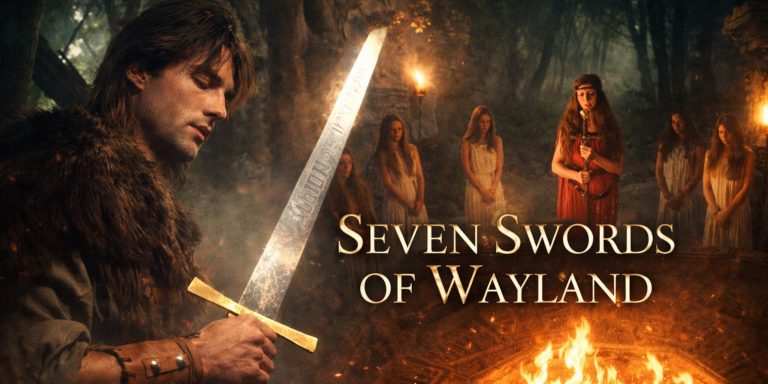
The series’ weaponry is as central to its identity as its characters. Below are the standout swords:
| Sword | Wielder | Description | Historical Inspiration |
|---|---|---|---|
| Serpent-Breath | Uhtred | A pattern-welded Viking sword, symbolising Uhtred’s duality. Forged with a curved hilt for slashing strikes. | Based on 9th-century Ulfberht swords. |
| Wasp-Sting | Uhtred | A Saxon seax (dagger) used for close combat. Often hidden, reflecting Uhtred’s cunning. | Anglo-Saxon seaxes, common in early medieval England. |
| Alfred’s Sword | King Alfred | A ornate, cross-hilted broadsword, representing Saxon piety and order. | Resembles swords from the Sutton Hoo hoard. |
| Ice-Spite | Sigtryggr (Season 5) | A Danish longsword with a wolf-pommel, wielded by Uhtred’s nemesis-turned-ally. | Inspired by Norse spatha blades. |
Seven Swords Takeaway
The Last Kingdom does not pretend history was clean or heroic. It shows the grind behind nation-building and lets its characters argue, fail, and age in the process. It balances spectacle with substance better than most prestige dramas and never forgets that swords are heavy and power is heavier.
If you want historical drama that trusts you to keep up and rewards you for paying attention, this one earns its reputation.