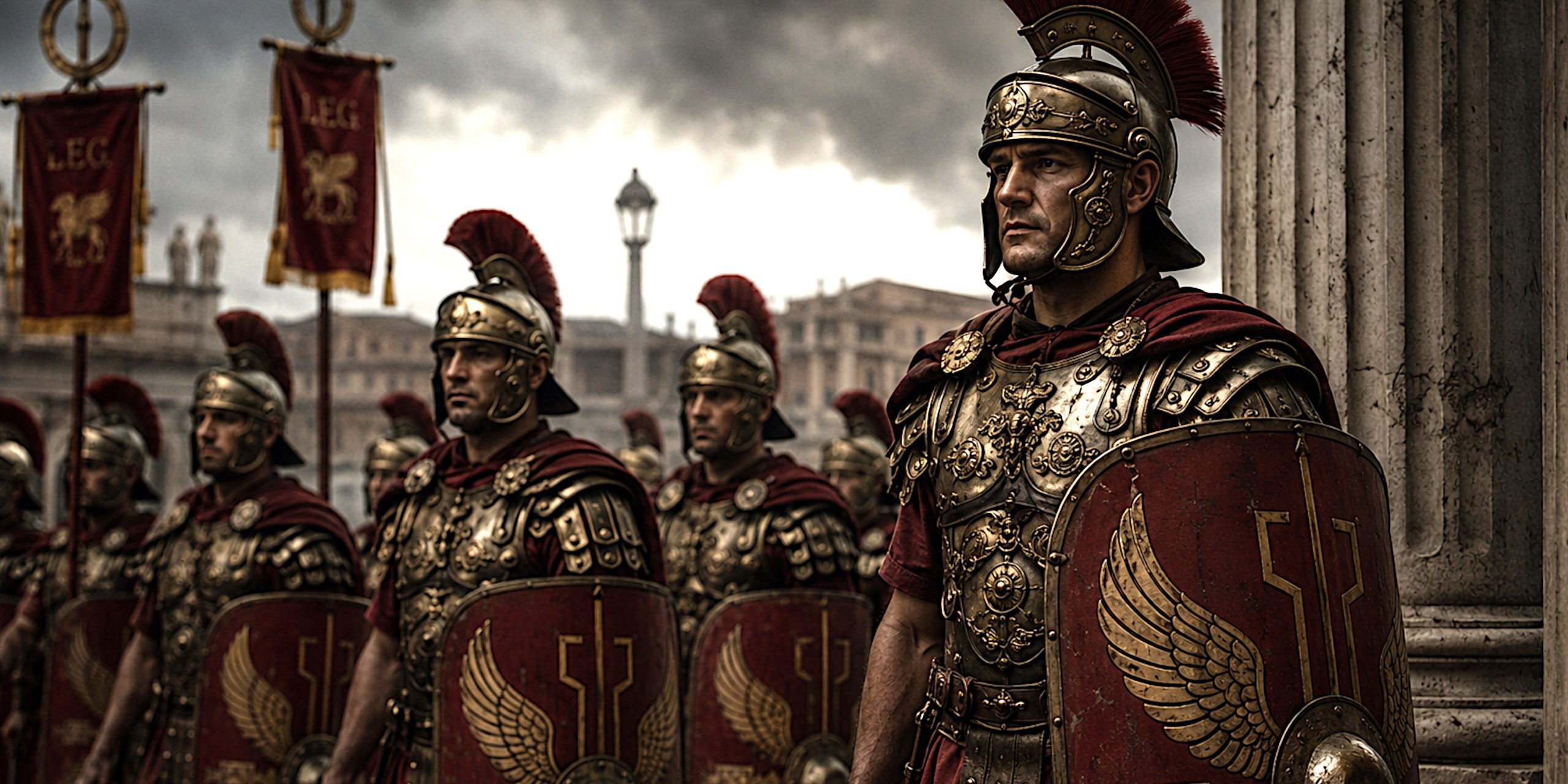
Few military units have acquired such an extraordinary reputation as the Praetorian Guard. They began as an elite protective force, sworn to defend Rome’s greatest leaders. Within a few centuries they had become kingmakers, conspirators, auctioneers of the imperial throne and, on more than one occasion, executioners of the very men they had promised to protect.
For historians, the Praetorian Guard represents one of Rome’s great contradictions. Their military ability was undeniable. Their loyalty, unfortunately, often came with terms and conditions.
They occupied the finest barracks in the empire, enjoyed better pay than ordinary legionaries and stood closer to absolute power than anyone else in Roman society. Sometimes they preserved stability. Just as often they destroyed it.
Who Were the Praetorian Guard?
The Praetorian Guard (Cohortes Praetoriae) served as the personal military bodyguard of Roman emperors between the late Republic and the early fourth century AD.
Originally, generals maintained personal bodyguards known as cohors praetoria, named after the praetorium, the commander’s headquarters inside a military camp. Julius Caesar, Mark Antony and Octavian all employed such formations.
It was Augustus who transformed this temporary arrangement into a permanent institution around 27 BC.
The Guard became responsible for:
- Protecting the emperor
- Guarding members of the imperial family
- Securing the imperial palace
- Escorting the emperor during campaigns
- Providing elite troops during emergencies
- Performing policing duties within Rome
- Guarding important state prisoners
Unlike ordinary legionaries, they were stationed in Italy, at the heart of Roman political life.
That proved to be both their greatest privilege and Rome’s greatest mistake.
Origins of the Praetorian Guard
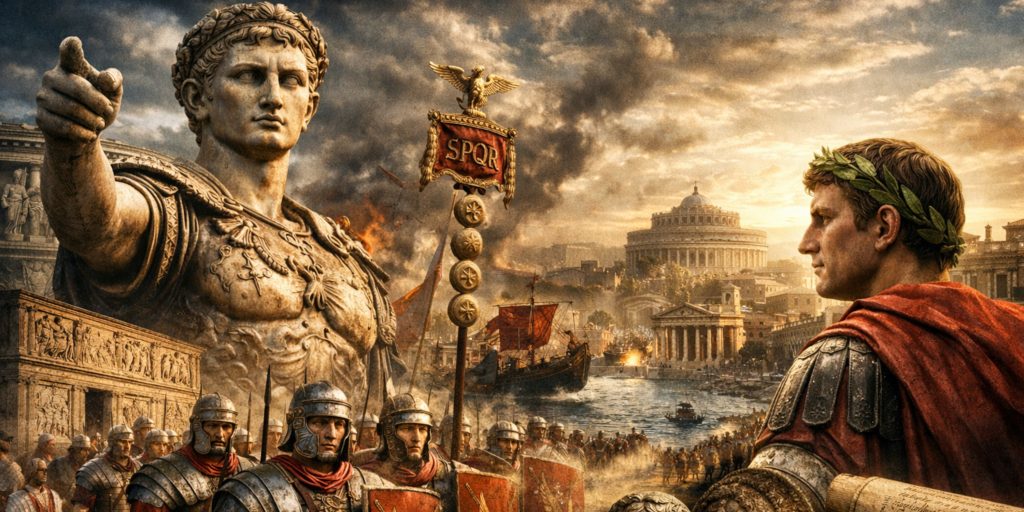
Augustus understood that military power sustained political authority. He also recognised that openly stationing an army inside Rome would alarm senators who still cherished memories of the Republic.
His solution was elegant.
He initially dispersed nine Praetorian cohorts across towns surrounding Rome, allowing only a limited number inside the city at any one time. Their presence remained discreet while ensuring that imperial protection was always available.
Everything changed under Emperor Tiberius.
His ambitious Praetorian Prefect, Sejanus, persuaded him to concentrate the Guard inside a single enormous fortress on the outskirts of Rome.
The Castra Praetoria became one of the empire’s most formidable military installations.
From that moment onwards, the Guard could intervene in politics with remarkable speed.
History would demonstrate that they frequently did.
Organisation and Structure
Although numbers changed throughout their existence, the Guard generally consisted of:
| Unit | Approximate Strength |
|---|---|
| Praetorian Cohort | 500 to 1,000 men |
| Number of Cohorts | 9 to 16 depending on emperor |
| Total Strength | Around 5,000 to 15,000 troops |
Supporting formations included:
- Imperial Horse Guards
- Speculatores (military intelligence and scouts)
- Germanic bodyguards under certain emperors
- Urban Cohorts
- Vigiles for firefighting and policing
Each cohort was commanded by senior officers, while overall authority rested with the Praetorian Prefect.
Remarkably, this office evolved into one of the most influential positions in the Roman Empire.
Several prefects effectively governed Rome while weak emperors occupied the throne.
Recruitment
Serving in the Guard represented one of the finest careers available to a Roman soldier.
Recruits were generally selected from:
- Italy
- Latium
- Etruria
- Umbria
- Veteran military families
- Later, distinguished provincial soldiers
Candidates were expected to demonstrate:
- Excellent physical condition
- Proven loyalty
- Military competence
- Good character, at least officially
Political reliability mattered almost as much as military skill.
Emperors preferred guards who could resist bribery.
History suggests this ambition enjoyed mixed success.
Training
Praetorians trained to a higher standard than most Roman soldiers.
Instruction included:
- Swordsmanship
- Shield drill
- Spear combat
- Archery
- Formation fighting
- Horsemanship
- Urban combat
- Palace security
- Close protection
Unlike frontier legions, which spent much of their careers constructing roads and forts, Praetorians devoted considerably more time to combat readiness.
The emperor expected perfection.
Failure could become rather personal.
Arms and Armour
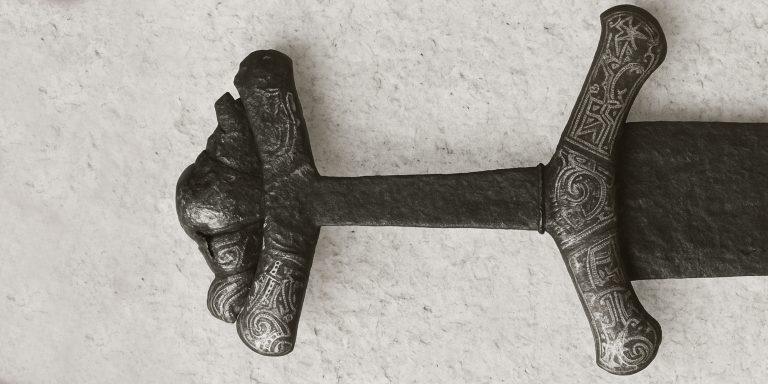
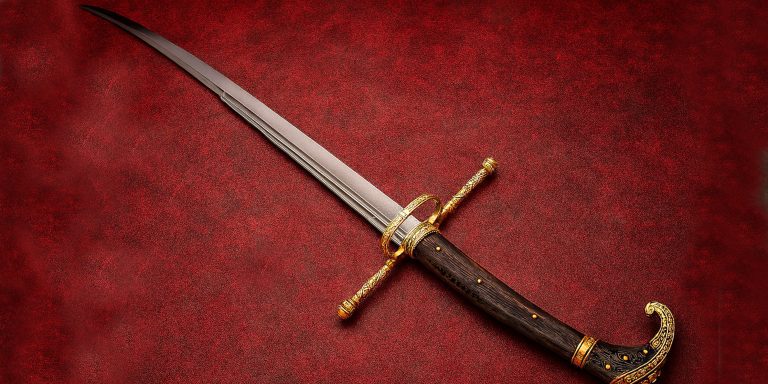
The Praetorian Sword
The iconic weapon of the Praetorian Guard was the gladius, although several variants appeared over time.
Common types included:
| Sword Type | Period | Features |
|---|---|---|
| Mainz Gladius | Early Empire | Long triangular point ideal for thrusting |
| Fulham Gladius | Early Imperial | Transitional design with narrower blade |
| Pompeii Gladius | First to Third Century AD | Straight edges and shorter point, highly efficient for close combat |
The gladius measured roughly 60 to 70 centimetres in blade length.
Its effectiveness relied upon disciplined thrusting rather than dramatic slashing. Roman military manuals repeatedly emphasised stabbing attacks aimed at the abdomen or groin.
It lacked cinematic flourish but possessed alarming efficiency.
Spears and Polearms
Praetorians also carried:
- Pilum heavy javelins
- Hasta spears
- Ceremonial lances during state occasions
The pilum remained devastating before close combat began, often bending upon impact and rendering enemy shields almost useless.
Shields
Praetorians typically carried the famous curved scutum.
Characteristics included:
- Large rectangular construction
- Curved profile
- Wooden core
- Leather covering
- Bronze or iron boss
- Painted imperial designs
During ceremonial duties, highly decorated shields displayed imperial insignia and gilding.
Armour
Equipment varied across the centuries.
Common armour included:
- Lorica segmentata
- Lorica hamata (mail)
- Lorica squamata (scale armour)
Elite officers often possessed richly decorated cuirasses featuring silver fittings and embossed ornamentation.
Helmets
Praetorian helmets closely resembled legionary patterns but often displayed superior craftsmanship.
Common features included:
- Brass decoration
- Silvered fittings
- Reinforced cheek pieces
- Decorative crests for ceremonial use
- Horsehair plumes during parades
Many surviving examples reveal exceptional workmanship.
These were not anonymous infantrymen stationed on distant frontiers.
They represented imperial prestige itself.
Side Equipment
Praetorians also carried:
- Pugio dagger
- Military belt (cingulum)
- Sandals (caligae)
- Cloaks
- Ceremonial cloaks for palace duties
Uniform Appearance
Ancient artwork suggests Praetorians often appeared more richly equipped than ordinary legionaries.
White tunics became associated with ceremonial service, while purple details reflected proximity to imperial authority.
Whether every soldier looked as immaculate as later artistic reconstructions remains doubtful.
Barracks life rarely cooperates with polished marble statues.
Duties Beyond Bodyguard Service
Their responsibilities extended well beyond standing beside emperors.
Daily duties included:
- Palace security
- Escorting officials
- Guarding the Senate during sensitive sessions
- Protecting imperial treasuries
- Suppressing riots
- Intelligence gathering
- Arresting political enemies
- Executing imperial orders
They effectively combined the roles of royal bodyguard, special forces, secret police and presidential security.
Such concentration of authority inevitably attracted political influence.
The Castra Praetoria
Around AD 23, Sejanus completed the Castra Praetoria.
The enormous fortress stood northeast of Rome.
Features included:
- Massive defensive walls
- Barracks
- Armouries
- Parade grounds
- Headquarters
- Stables
- Workshops
- Granaries
Housing thousands of elite troops within marching distance of the imperial palace fundamentally altered Roman politics.
Every emperor now governed beneath the shadow of nearby soldiers.
Political Power and Intrigue
No discussion of the Praetorian Guard can avoid politics.
They became deeply involved in imperial succession.
Among their most famous interventions:
- Assisted Claudius in becoming emperor after Caligula’s assassination
- Murdered Emperor Caligula
- Helped overthrow Nero
- Supported Galba
- Abandoned Galba for Otho
- Murdered Pertinax
- Auctioned the empire to Didius Julianus
- Supported Septimius Severus after his advance on Rome
Few military units have exercised such extraordinary political leverage.
Roman historians often portray them as corrupt opportunists.
That judgement is not entirely unfair.
The Auction of the Roman Empire
One event permanently damaged their reputation.
After murdering Emperor Pertinax in AD 193, the Praetorian Guard effectively auctioned the imperial throne.
The wealthy senator Didius Julianus promised the largest cash payment to each guardsman.
The empire was his.
At least until Septimius Severus marched towards Rome with real legions.
Money could buy an emperor.
It could not stop one.
Septimius Severus Reforms
Severus understood the danger.
Upon entering Rome he:
- Disbanded the existing Guard
- Removed disloyal soldiers
- Replaced them with loyal Danubian veterans
- Reorganised recruitment
The Guard continued, but its political independence diminished.
At least temporarily.
Famous Praetorian Prefects
Several prefects became almost as influential as emperors.
Sejanus
Perhaps the most notorious.
He dominated Emperor Tiberius’ government before eventually falling from favour and being executed.
Burrus
Served Nero during the early, relatively stable years of his reign.
Ancient writers regarded him as honest and capable.
Macrinus
One of the few prefects who actually became emperor.
His reign proved brief.
Power acquired through military politics rarely came with job security.
Archaeology
Modern archaeology has revealed a remarkable amount about the Praetorian Guard.
Castra Praetoria
Large sections of the fortress survive within Rome.
Archaeologists have uncovered:
- Defensive walls
- Gate structures
- Barrack foundations
- Drainage systems
- Roadways
Several walls were later incorporated into the Aurelian Walls.
Inscriptions
Hundreds of inscriptions commemorate Praetorians.
These reveal:
- Individual careers
- Promotions
- Origins
- Length of service
- Religious dedications
- Family relationships
Such evidence has transformed understanding of recruitment and daily life.
Military Equipment
Excavations throughout Italy have uncovered:
- Gladii
- Pugiones
- Helmet fragments
- Armour fittings
- Belt plates
- Shield bosses
- Horse equipment
Many ceremonial pieces display exceptional craftsmanship consistent with elite service.
Tombstones
Funerary monuments remain among the richest archaeological sources.
They often depict soldiers wearing:
- Armour
- Military cloaks
- Swords
- Decorations
- Unit insignia
Several inscriptions proudly identify the deceased as members of the Praetorian cohorts.
Contemporary Accounts
Ancient historians frequently discussed the Guard, though rarely with affection.
The Roman historian Tacitus observed:
“The secret of empire had been discovered, that emperors could be made elsewhere than at Rome.”
His remark reflected the growing military influence over imperial succession.
The satirist Juvenal mocked the political corruption surrounding imperial authority.
“Who will guard the guards themselves?”
Although written in a broader moral context, the phrase has become permanently associated with the Praetorian Guard.
The historian Cassius Dio described the sale of the empire after Pertinax’s murder:
“They offered the empire for sale as if it were in a market.”
His outrage remains palpable nearly two thousand years later.
Decline
During the third century the empire entered prolonged crisis.
Civil wars, invasions and economic collapse weakened traditional institutions.
The Praetorian Guard gradually lost its military prestige compared with frontier armies.
Provincial legions increasingly determined who became emperor.
Rome itself no longer represented the strategic centre of imperial defence.
The End of the Praetorian Guard
Following his victory over Maxentius at the Battle of the Milvian Bridge in AD 312, Constantine recognised the Guard as a continuing political threat.
He acted decisively.
The Castra Praetoria was dismantled.
The Praetorian Guard was formally dissolved.
Its remaining soldiers were dispersed to frontier garrisons.
After almost three centuries, Rome’s most famous bodyguard had vanished.
Remarkably, few later rulers attempted to recreate such an institution on the same scale.
Perhaps they had learned the lesson.
Giving thousands of ambitious soldiers a permanent address next door to the throne was not always conducive to peaceful government.
Legacy
The Praetorian Guard has become synonymous with elite military protection, political intrigue and dangerous proximity to power.
Their influence appears in:
- Historical novels
- Films
- Television dramas
- Video games
- Modern military terminology
- Political commentary
The phrase “Praetorian Guard” is still used to describe fiercely loyal political supporters or elite security forces.
That enduring legacy says much about their place in history.
They were undoubtedly exceptional soldiers. They were also a vivid reminder that protecting power often places one in an excellent position to seize it.
Rome built the finest bodyguard in the ancient world.
It simply forgot that bodyguards carry swords too.
Frequently Asked Questions
Were the Praetorian Guard better than Roman legionaries?
Generally yes in terms of training, equipment and pay, although frontier legionaries often possessed greater battlefield experience after years of campaigning.
How long did a Praetorian serve?
Service initially lasted around 16 years, considerably shorter than the 20 to 25 years expected of legionaries.
What sword did the Praetorian Guard use?
They primarily carried the Mainz, Fulham and later Pompeii variants of the gladius, alongside the pugio dagger.
Did they really kill emperors?
Yes. Ancient sources link the Praetorian Guard to the deaths of several emperors, including Caligula and Pertinax, while they played decisive roles in numerous coups.
Why did Constantine abolish them?
After defeating Maxentius in AD 312, Constantine viewed the Guard as a politically dangerous institution and permanently dissolved it, ending nearly 300 years of service.