By the middle of the first century BC, Rome was tired of being embarrassed in the East. Pirates held the Mediterranean to ransom, Mithridates still refused to stay defeated, and various kingdoms were in the habit of playing Rome and its rivals like a pair of badly tuned lyres. In the Senate somebody finally said the words every general dreams of hearing.
“Give it to Pompey, he fixes everything.”
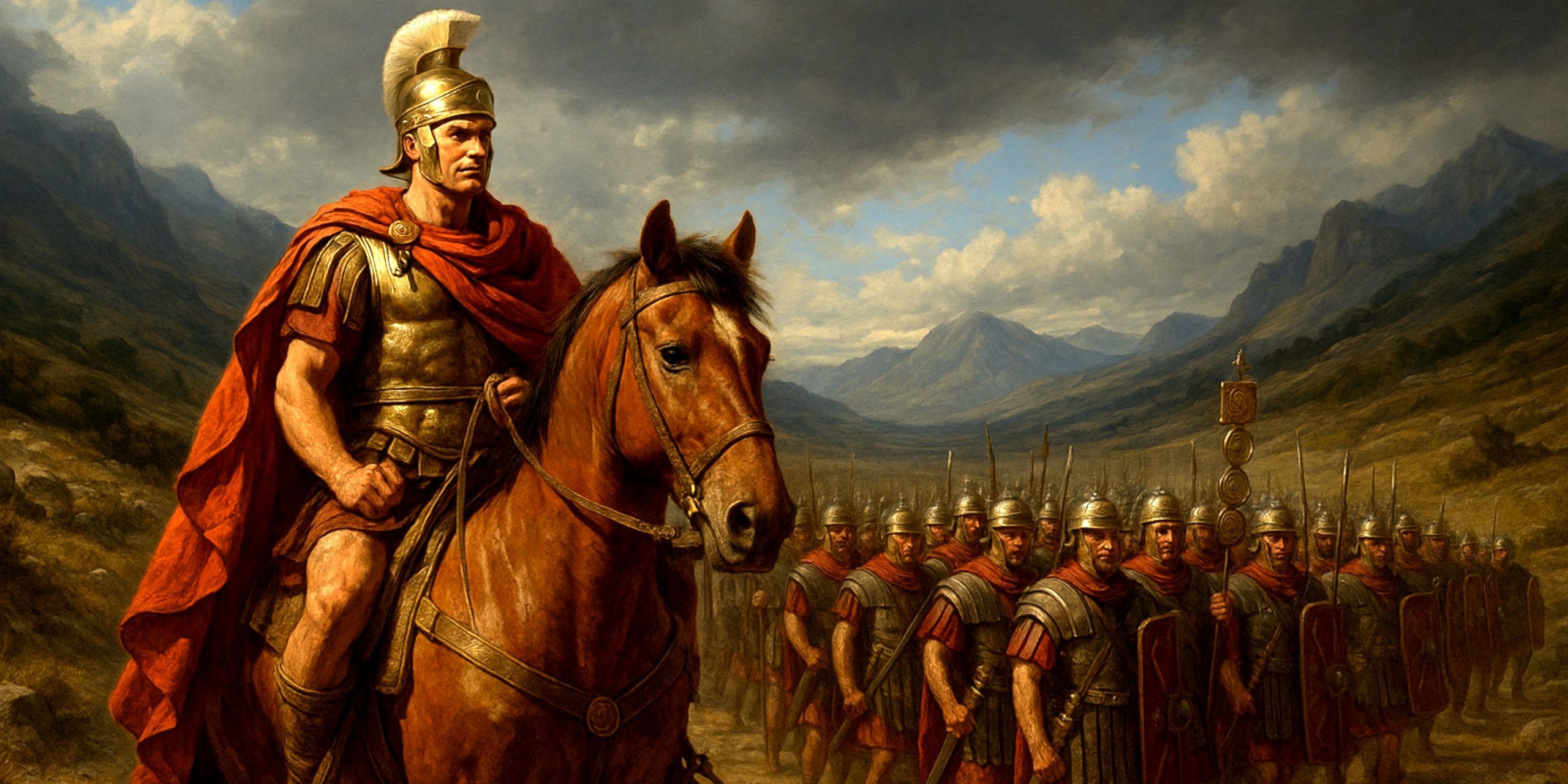
What followed from 66 to 63 BC was a sweep of conquests and reorganisations that reshaped the map. Pompey had already acquired a reputation for ending wars suspiciously quickly. This period confirmed it, with a mixture of ruthless discipline, calculated diplomacy and an ability to arrive exactly where the enemy least wanted to see him.
Forces
Pompey operated with a flexible coalition of Roman legions, allied client troops, and naval forces inherited from his anti piracy command.
Roman forces under Pompey
- Approximate legion count – 9 to 11 legions across the full span of operations
- Naval assets inherited from the pirate war command
- Large numbers of auxiliaries supplied by local kings eager to stay on his good side
Opposing forces
- Mithridates VI of Pontus
- Tigranes the Great of Armenia
- Autonomous cities in Asia Minor
- Jewish forces during the intervention in Judea
Leaders and Command Structure (Table)
| Commander | Allegiance | Notes |
|---|---|---|
| Gnaeus Pompeius Magnus | Rome | Supreme command of the Eastern war, operated with near absolute authority |
| Mithridates VI | Pontus | Long time thorn in Rome’s side, resourceful and stubborn |
| Tigranes the Great | Armenia | Controlled a vast realm that Pompey steadily dismantled |
| Aristobulus II | Judea | Opposed Pompey’s intervention, defended Jerusalem |
| Hyrcanus II | Judea | Backed by Pompey, rival claimant in Judea |
| Lucius Afranius | Rome | Served as one of Pompey’s key legates |
Arms and Armour
Roman kit during Pompey’s campaigns reflected mid first century BC practice, positioned between traditional Republican equipment and early Imperial standardisation.
Roman equipment
- Helmets – Montefortino and early Coolus types
- Body armour – mail lorica hamata
- Shields – oval scutum with iron boss
- Primary sword – gladius Hispaniensis
- Secondary blade – pugio
- Spears – pilum for shock use
- Cavalry weapons – spatha style long swords already in circulation among allied horsemen
Pontic and Armenian equipment
- Scale or lamellar armour for elite cavalry
- Composite bows
- Scimitars and akinakai short swords
- Cataphract style lances
Jewish forces
- Mixed equipment drawn from local manufacture and imports
- Short swords akin to machairai
- Shields of wood and hide
- Siege weapons within Jerusalem during Pompey’s assault
Troop Composition (Table)
| Force | Estimated Strength | Composition |
|---|---|---|
| Pompey’s Eastern field army | 40,000 to 50,000 | Roman legions, auxiliaries, allied cavalry, light infantry and engineers |
| Mithridatic forces | 30,000 to 40,000 | Heavy infantry, cavalry, archers, scythed chariots in earlier phases |
| Armenian forces | Up to 70,000 in theory | Cataphracts, infantry levies, missile troops |
| Jerusalem defenders 63 BC | Possibly 10,000 | Urban militia, temple guards, supporters of Aristobulus |
The Campaigns 66 to 63 BC
Pompey began with the tail end of the pirate war. He reorganised the Mediterranean into zones, cleared each in quick succession, and managed to complete the job in a matter of months. Some pirates surrendered so fast that Rome suspected divine intervention. Pompey simply smiled and let them resettle inland, which cost him nothing and earned him goodwill.
The war against Mithridates came next. Pompey moved with surprising speed across Asia Minor. Mithridates tried to slip away to Armenia, which was brave or foolish depending on one’s taste for geography. Tigranes, who had previously annoyed Rome by expanding his empire a little too enthusiastically, was forced into a humiliating submission. Pompey then pursued Mithridates north towards the Caucasus in a relentless series of marches. The Pontic king fled yet again, this time to the Crimea, where he eventually met his end through a rebellion rather than a Roman blade.
Once the greater kingdoms were subdued, Pompey set about rearranging the East into obedient client states. His administrative sweep was almost bureaucratic theatre. Borders were redrawn, kings were confirmed or removed, cities were reorganised and taxes recalculated in a way that made Rome very happy and everyone else only mildly miserable.
In 63 BC he intervened in the Judean civil conflict between Aristobulus II and Hyrcanus II. Aristobulus resisted and locked himself inside Jerusalem. Pompey had little patience left by this point. The siege broke the defenders after hard fighting, and Roman troops forced their way into the Temple complex. Pompey famously entered the Holy of Holies, looked around with scholarly curiosity, and left everything undisturbed. Even his critics said it was impressively restrained for a man who had spent three years conquering half the Near East.
Battle Timeline (Key Moments)
66 BC
Pompey completes the anti piracy operations and reorganises the Mediterranean.
66 to 65 BC
Operations begin against Mithridates. Pompey advances through Pontus, defeating local forces and reclaiming lost Roman territories.
65 BC
Tigranes submits. Pompey marches into Armenia and strips it of satellite regions.
64 BC
Pompey pushes into Syria and reorganises it as a new Roman province. Local dynasts submit with varying levels of enthusiasm.
63 BC
Siege of Jerusalem. Aristobulus captured. Judea placed under Hyrcanus II with Roman oversight. Mithridates dies during a revolt in the Crimea, ending decades of conflict.
Archaeology
Archaeological material from Pompey’s campaigns survives in scattered forms.
Roman camps in northern Turkey show the typical rectangular layout with ditch and rampart construction. Pottery deposits help map the marching routes, and stray Roman gladii found in the region hint at skirmish sites that never made it into the literary histories.
In Jerusalem the remains of the First Wall, along with damage patterns in stones reused in later periods, align with accounts of Pompey’s breach points. Coins issued in the aftermath provide a small archive of Pompey’s administrative reordering of the region. Pontic strongholds show layers of burning and abandonment from this era, supporting ancient claims of rapid Roman offensives.
Contemporary Quotes
Plutarch on Pompey’s efficiency:
“He finished the pirate war with a speed that left even the sea astonished.”
Cassius Dio on Mithridates’ final flight:
“Mithridates sought a kingdom so distant that even fortune could not find him, yet fortune was patient.”
Josephus on the siege of Jerusalem:
“The Romans pressed hard upon the walls, their engines unceasing, and the city was torn by its own quarrels more than by the enemy.”
Legacy
Pompey’s conquests laid the groundwork for Rome’s long term presence in the East. The administrative reforms lasted deep into the Imperial period. His victory also set the stage for political trouble back home, since returning heroes tended to overshadow the Senate, and overshadowing the Senate usually led to a career that ended badly.
Even so, the campaigns from 66 to 63 BC remain one of the most efficient demonstrations of Republican military power. Pompey stitched together new provinces, removed old enemies, and left a patchwork of client kings so neatly arranged that later emperors sometimes forgot he had done it all in just a few years.
Watch the documentary: