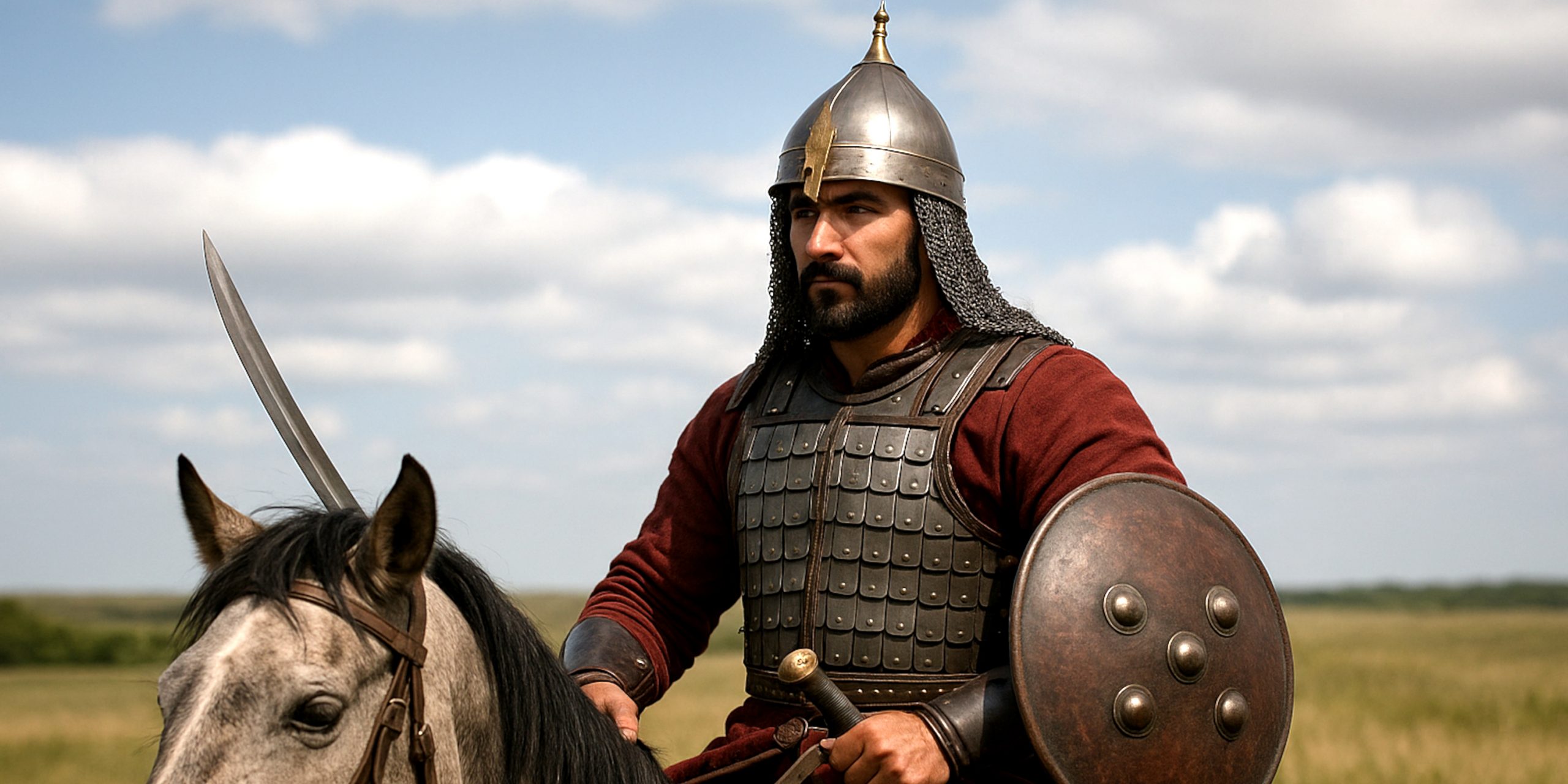
The Sipahi are often introduced as the backbone of the Ottoman cavalry, yet that phrase hardly captures the lived reality of a class that mixed military duty with landholding, ceremony and the occasional grumble about tax farmers. Writing about them feels a bit like trying to catch a horse at full gallop. Just when you think you have defined them, they slip out of your grasp and remind you that they served an empire that changed shape more than most.
Still, they left enough traces in chronicles, armouries and the earth itself for us to sketch a clear portrait of how they fought, dressed, and understood their place in the world.
Origins and Place within the Ottoman State
The Sipahi emerged within the timar system, a structure that gave cavalrymen the rights to collect revenue from designated lands in return for military service. This arrangement kept the sultan’s cavalry loyal without the need to burden the treasury too heavily, a neat trick that many rulers envied.
By the fifteenth century the Sipahi of the Porte had developed into two major groups. The provincial Sipahi formed the majority and were tied directly to their timar obligations. The Kapikulu Sipahi served as elite household cavalry. These men operated close to the sultan, polishing both their armour and their courtly manners with equal care. Contemporary chroniclers admired their discipline, although one sixteenth century observer quietly noted that they could also be “as proud as a stallion in spring.”
Training and Battlefield Role
Their world revolved around the horse. To be Sipahi was to ride from childhood and to treat the saddle almost as a second home. They trained for speed, manoeuvrability and the curved strike delivered at full tilt. On the battlefield they supported the Janissary infantry, raking enemy flanks and harassing formations that were careless enough to advance without proper screens.
The cavalry charge was never a blunt tool. It was a calculated gesture, launched only after the Sipahi were satisfied that the ground, the wind and the enemy’s posture all favoured them. Ottoman historians often revealed their pride in this methodical approach. Katip Çelebi observed that “the horseman who knows when not to charge is worth twice the man who rushes without thought,” a line that modern commanders might wish to place above certain regimental doors.
Arms and Armour
The Sipahi armoury was broad and practical, drawing on a mix of steppe traditions, Islamic craftsmanship and local innovations. They prized agility much more than heavy encumbrance. A typical ensemble from the sixteenth century might include:
Swords
• Kilij, the iconic Ottoman sabre with a clipped yelman that delivered a deep cutting blow.
• Pala, a heavier chopping blade better suited to close fighting.
• Shamshir, a slimmer Persian influenced blade used by some officers who preferred its swift arc.
Lances and Spears
• A light cavalry lance, often used for the first impact.
• Throwing javelins for harassing movements during skirmishing.
Bows
• Recurved composite bows, exceptionally powerful at short to mid range. The Sipahi never forgot their steppe roots and made fine use of mounted archery even after firearms became common.
Armour
• Lamellar or scale cuirasses, sometimes mixed with mail.
• Conical helmets with nasal guards and decorative plumes.
• A round or kite shaped shield of wood and hide, more common among provincial Sipahi.
One seventeenth century traveller described a Sipahi troop as “glinting like a river of knives under the sun.” It is the sort of line that sounds embellished until you stand before a well preserved kilij in a museum case and realise that the poet was doing his best with limited ink.
Archaeology
Archaeology gives us hints rather than full chapters, but those hints are rich. Excavations in former Ottoman fortresses have produced fragments of lamellar plates, broken sabre hilts and the occasional brass harness fitting. When analysed together, these finds show the gradual reduction of armour weight across the sixteenth and seventeenth centuries, a quiet admission that firearms were tightening their hold on the battlefield.
Eighteenth century cavalry graves in the Balkans have yielded kilij blades stamped with provincial armourers’ marks. These marks help trace the flow of weapons across the empire, revealing clusters of production that rarely appear in written records. There is something delightfully stubborn about a blade speaking where a scribe remained silent.
Contemporary Voices
Ottoman writers left many comments about Sipahi character, usually respectful yet tinged with recognition of their faults.
• Mustafa Âli remarked, “A Sipahi must guard his honour, for a man who cannot control himself cannot control a horse.”
• Evliya Çelebi, ever the lively commentator, noted that some provincial Sipahi “spent more time arguing about pasture rights than sharpening their swords,” a reminder that military service and rural life often collided in amusing fashion.
• A Venetian envoy, frustrated after a failed negotiation, described them as “courteous, mounted, and entirely unwilling to compromise.” One imagines he did not enjoy the return journey.
Decline and Transformation
The world moved steadily toward gunpowder infantry and centralised armies. As firearms reshaped the battlefield and the timar system frayed under administrative strain, the Sipahi found themselves with fewer tactical roles to play. Reformist sultans made several attempts to modernise the cavalry, but the tide had turned. By the nineteenth century the classic Sipahi structure had faded into memory, leaving behind a long tradition of equestrian skill and military service that shaped centuries of Ottoman warfare.
Legacy
The Sipahi live on through both language and culture. In modern Turkish, sipahi simply means cavalryman, but the word carries the same quiet sense of pride it once held in the imperial ranks. Their sabres, especially the kilij, remain favourites among collectors and military historians. Gentle curves in steel can be surprisingly eloquent when they want to be.
Their legacy also endures in the way historians view Ottoman warfare, for it is impossible to discuss the empire’s rise without acknowledging the cavalry that supported it from the Balkans to the Black Sea.
Watch the documentary: