If you rewatch Merlin knowing how it ends, it is hard not to see the warning signs glowing like a magical neon sign over Morgana’s head. The prophetic dreams. The quiet resentment. The way the camera lingers just a little too long when she looks at Uther.
But here is the real question. Was Morgana always destined to become the villain, or did the show push her there as it went along?
As someone who both loved her early seasons and side-eyed some later writing choices, I think the answer is more layered than it first appears.
The Morgana We First Meet
When Morgana, played by Katie McGrath, enters Camelot, she is not a villain. She is the moral conscience of the court. She challenges Uther’s cruelty. She defends servants. She is outspoken, intelligent, and compassionate.
In the early seasons, she feels like the emotional counterweight to Uther Pendragon. Where he is rigid and fearful, she is empathetic and questioning. If anything, she reads as a reformer, not a future tyrant.
From a writing perspective, this makes her later fall far more tragic. You cannot break something that was never whole to begin with.
Arthurian Roots: Was the Villainy Inevitable?
In traditional Arthurian legend, Morgana, or Morgan le Fay, is rarely just a sweet courtier who went wrong. She is often portrayed as a sorceress, sometimes Arthur’s half-sister, frequently antagonistic, and occasionally outright dangerous.
So from a mythological standpoint, the answer seems obvious. Of course she was meant to turn. The show was drawing from a tradition that already coded her as a threat.
Yet Morgana Pendragon in Merlin is introduced as someone shaped by injustice rather than born to malice. That difference matters. The series deliberately builds sympathy before it builds menace.
This suggests intent. The writers likely planned a transformation arc rather than a sudden heel turn.
Seeds of Darkness in the Early Seasons
Even in Series One, there are hints.
Morgana’s prophetic dreams isolate her. She hides her magic out of fear, especially under Uther’s anti-magic regime. Her growing paranoia after discovering her powers is not random. It is rooted in a kingdom that executes people like her.
And then there is her relationship with Merlin. He knows the truth about her magic and does not tell her. That choice, driven by fear and destiny, becomes one of the most painful fractures in the series.
Was she meant to be evil? Perhaps not at first. But she was always meant to be cornered.
The Turning Point: Betrayal and Identity
The revelation of her parentage shifts everything. Learning that she is Uther’s daughter reframes her entire life. The sense of betrayal is not theatrical. It is personal.
From here, her anger crystallises into ambition. She aligns with darker forces. She stops seeking reform and starts seeking control.
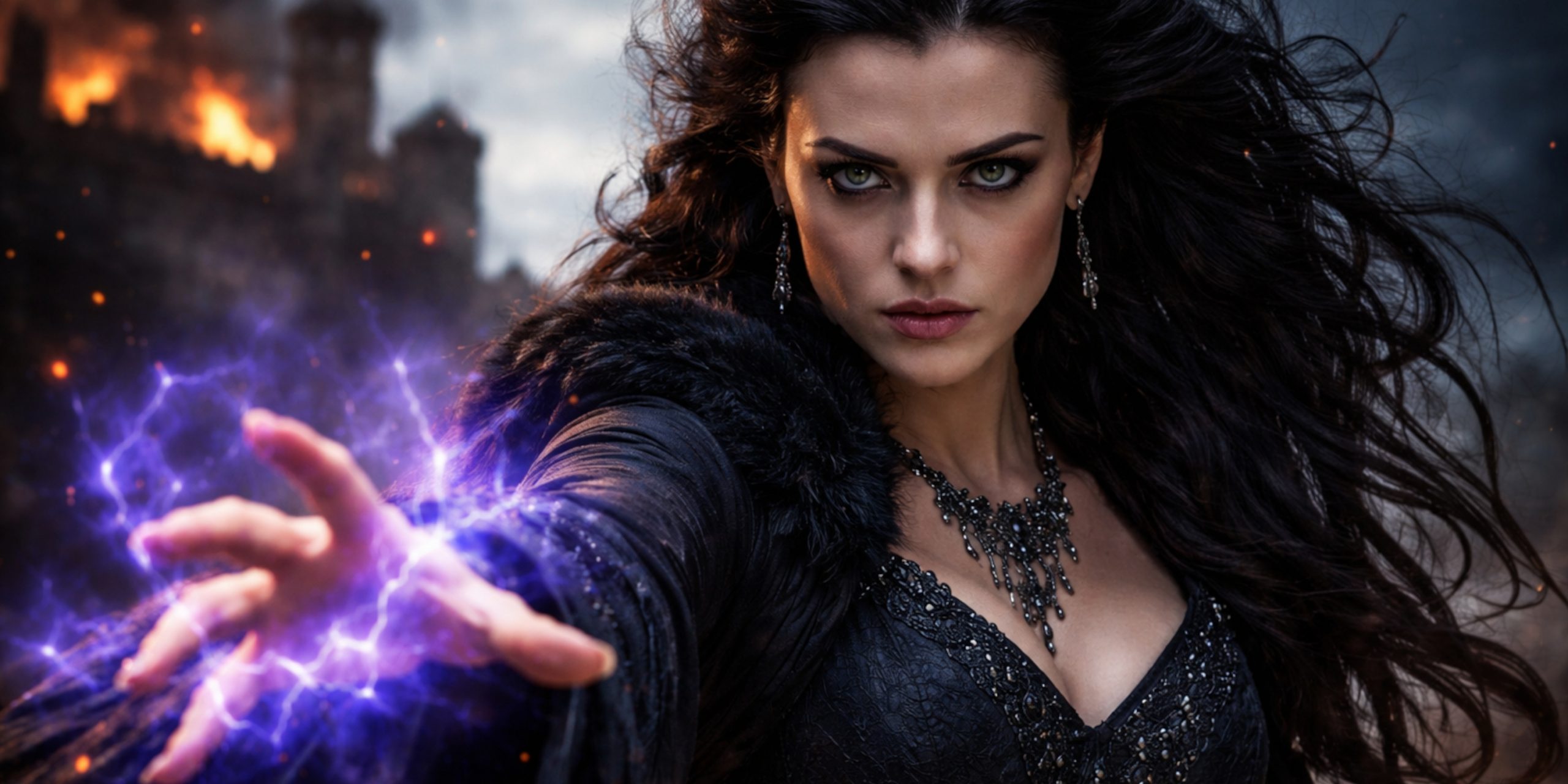
Some fans argue that the shift happens too quickly in later seasons. There is a case for that. The nuance of early Morgana gives way to a more archetypal villain. Cloaks get darker. Lighting gets moodier. The laughs get colder.
It feels less like a slow burn and more like a commitment to fulfilling the legend.
Writing Choices: Planned Arc or Course Correction?
Television writing is rarely static. Long-running shows evolve. Characters respond to audience reaction, actor chemistry, and shifting narrative priorities.
There is strong evidence that Morgana’s fall was broadly planned. The Arthurian framework practically demands it. Yet the execution suggests that her complexity may not have been fully protected as the series progressed.
Early Morgana is conflicted and morally engaged. Later Morgana sometimes feels more symbolic than human.
As a viewer, I cannot help wishing the show had trusted the grey areas a bit longer.
Tragedy Rather Than Villainy
Perhaps the better question is not whether Morgana was meant to be the villain, but whether she was meant to be the tragedy.
Her journey is shaped by fear, secrecy, and systemic cruelty. Uther’s policies create her. Merlin’s silence distances her. Camelot never truly offers her safety.
In that sense, she is less a traditional antagonist and more the consequence of a kingdom that refuses to change.
And that makes her far more interesting than a simple “evil sorceress” label ever could.
Takeaway
So was Morgana always meant to be the villain?
From a mythic standpoint, yes. From a character standpoint, it is more complicated. She begins as the heart of Camelot and ends as its shadow. That contrast feels deliberate.
What still lingers, years after Merlin finished, is not frustration at her villainy. It is the sense that she could have been something else in a kinder world.
And honestly, that is what makes her one of the most compelling figures in the series.
If you are rewatching, pay attention to those early episodes. The fall is written in her eyes long before it is written in the script.