The Macedonian phalangite is one of those soldiers who looks simple on paper and turns out to be anything but. A man with a very long spear standing in a tight formation sounds straightforward. Then you look closer and realise you are dealing with training systems, social reform, logistical genius, and a battlefield role that only works if everyone does their job and keeps their nerve. I have spent years circling back to these men, partly because they win battles, partly because they show how much discipline can matter more than individual heroics.
Origins and Reform
The phalanx did not spring fully formed from Macedon’s rocky soil. Greek hoplites had been fighting in dense spear formations for centuries. What changed was scale, equipment, and doctrine. The decisive shift came under Philip II of Macedon, who took a relatively poor kingdom and turned it into a military machine.
Philip shortened training cycles, standardised equipment, and drilled his infantry relentlessly. His phalangites were professionals in all but name. They trained year round, marched long distances, and learned to fight as a single organism. This was not glamorous soldiering. It was repetition, bruised shoulders, and learning to trust the man next to you more than your own instincts.
When Alexander the Great inherited the system, he did not replace it. He used it as an anvil. The phalangites fixed the enemy in place while cavalry and lighter troops delivered the decisive blow. The brilliance lies in that restraint. Alexander knew exactly what his infantry could do, and just as importantly, what they should not be asked to do.
Recruitment and Training
Phalangites were drawn mainly from Macedonian peasants. Land ownership and military service were tied together. Serve well and you keep your plot. Serve poorly and things become awkward back home.
Training focused on cohesion above all else. Individual sword skill mattered far less than spacing, timing, and the ability to keep formation under pressure. A phalangite learned to advance in step, lower his sarissa on command, and maintain alignment even when men fell. This was not the place for solo acts of bravery. Anyone trying to be a hero usually just created a gap.
Arms and Armour
The Sarissa
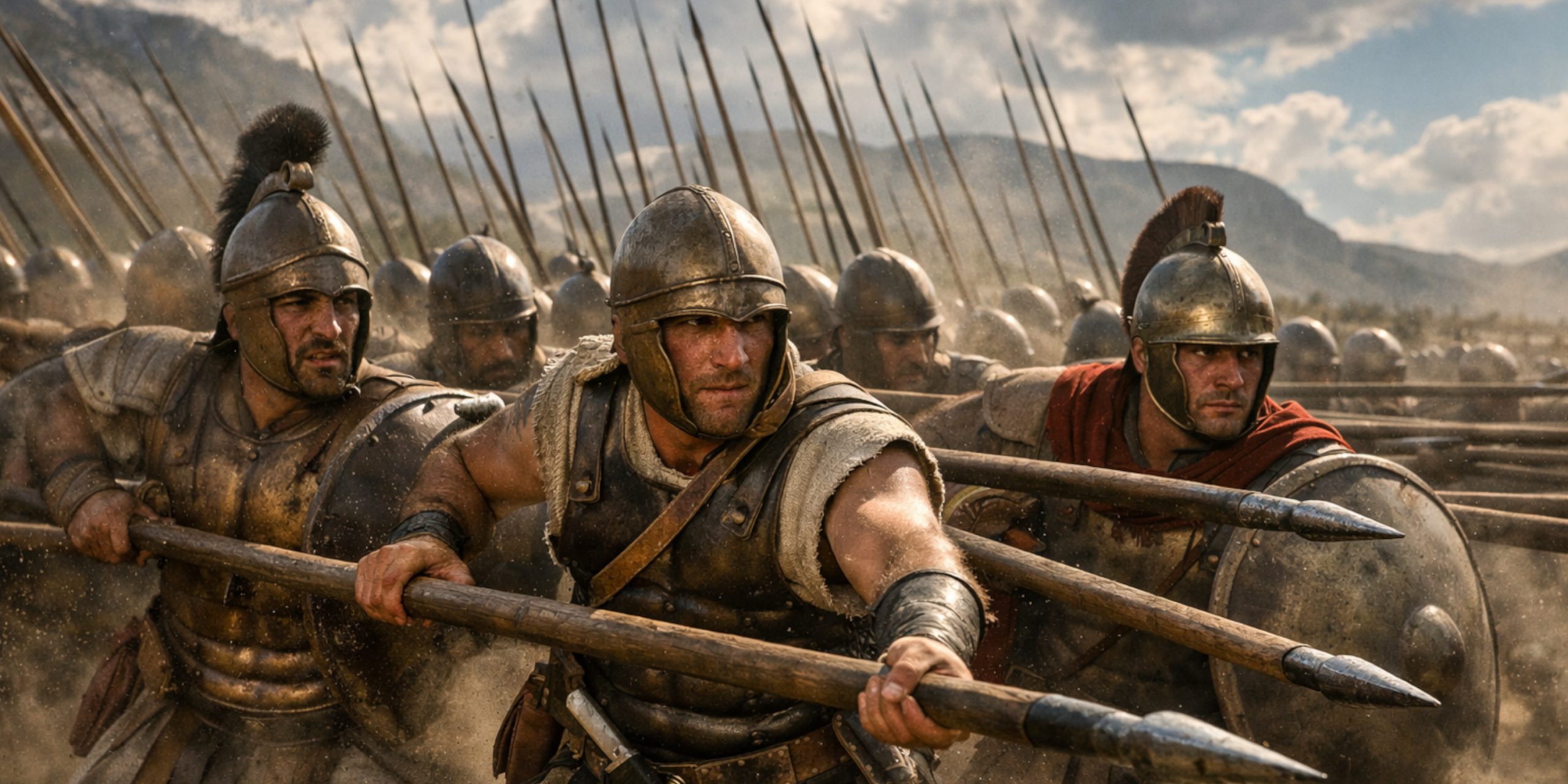
The defining weapon of the phalangite was the sarissa, a pike typically between five and six metres long. It was held with both hands, which immediately tells you something about how this soldier fought. Shields were smaller and slung from the shoulder, leaving the hands free to control the shaft.
The sarissa’s reach meant that the first five ranks could present spear points to the enemy. Facing a Macedonian phalanx was like running towards a moving hedge that wanted you dead.
Shields and Protection
Phalangites carried the pelte, a small round shield strapped to the forearm or shoulder. Armour varied by period and wealth, but typically included:
- A linen cuirass or bronze muscle cuirass
- A Phrygian or Boeotian helmet
- Greaves, often worn on one leg only to save weight
This was pragmatic kit. Heavy enough to survive a fight, light enough to march all day.
Sidearms
Despite the emphasis on the sarissa, phalangites did carry swords. The most common types were:
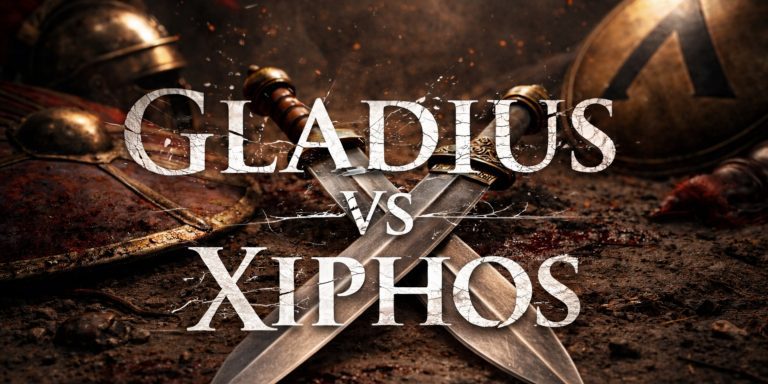
- The xiphos, a short double edged sword suited to tight quarters
- The kopis, a forward curved blade with strong cutting power
These weapons came into play if formation broke or when fighting devolved into close combat. No one wanted that to happen, but armies rarely get everything they want.
Battlefield Role
The Macedonian phalanx was not designed to be flexible. It was designed to be inevitable. On level ground, advancing head on, it was terrifyingly effective. The long pikes kept enemy infantry at a distance, while the dense ranks absorbed shock.
Its weaknesses were equally clear. Rough terrain, flanking attacks, and sudden changes of direction could spell disaster. This is why Macedonian armies paired phalangites with cavalry, skirmishers, and lighter infantry. The phalanx held the centre. Others did the running.
If this sounds like a system built on trust, it is. Every man relied on his neighbour. One misstep could ripple down the line. Ancient sources hint at the psychological strain. Standing in the middle ranks, unable to see the enemy, pushing forward because the men behind you demand it, takes a particular kind of nerve.
Archaeology and Material Evidence
Our understanding of phalangites comes partly from texts and partly from the ground. Burial sites in Macedon, especially around Vergina, have yielded armour fragments, helmets, and weapons consistent with phalangite equipment.
Iron spearheads matching sarissa dimensions are rare but not absent. The shafts themselves have long since decayed, which makes reconstruction a careful blend of archaeology and educated guesswork. Artistic depictions, though often stylised, support the idea of long pikes and tight formations.
What archaeology confirms is standardisation. These were not ad hoc militias. Equipment shows consistency in size and style, suggesting organised production and state oversight.
Contemporary Voices
Ancient writers noticed the phalanx, even if they did not always admire it.
Polybius, writing later but with access to earlier traditions, observed that the Macedonian phalanx was nearly unbeatable from the front but dangerously vulnerable if broken or outflanked. That assessment still holds.
Plutarch, in his Life of Alexander, notes how the phalanx advanced “like a single creature,” which is probably the most concise description we have. He admired its discipline, though he clearly found Alexander’s cavalry charges more exciting. Historians are human too.
Daily Life and Reality
Life as a phalangite was not constant battle. It was marching, digging camps, maintaining equipment, and waiting. Campaigns under Alexander could last years. Soldiers married late, if at all. Pay mattered, plunder mattered more, and survival was never guaranteed.
What strikes me most is how little room there was for individual expression. Modern readers often look for named heroes. The phalanx resists that. Its strength lies in anonymity. If that sounds dull, try holding a six metre pike steady while someone is trying to kill you. Romance has limits.
Legacy
The Macedonian phalanx reshaped warfare across the Hellenistic world. Successor kingdoms copied it, adapted it, and in some cases over relied on it. By the time Rome faced Macedonian style phalanxes, the system was showing its age.
That does not diminish its achievement. For roughly a century, the phalangite stood at the centre of the most successful military machine in the Mediterranean. Not bad for a man whose job description boiled down to “stand here, hold this, do not break.”