Lucius Cornelius Sulla occupies a curious place in Roman memory. He was ruthless enough to chill the spine of later senators yet competent enough that even his critics admitted he understood the machine of the Republic better than most. Writing about him often feels like standing on the edge of a crater left by a controlled explosion. You admire the precision even as you shake your head at the destruction.
Early Life and Rise
Sulla was born in 138 BCE to a patrician family that had fallen into genteel poverty. His youth circles around two themes that never left him. An instinct for survival and an appetite for opportunity. He attached himself to Marius at first, which worked until it did not. I suspect Sulla never forgot that Rome rewarded the bold far more than the loyal.
His first real prominence came during the Jugurthine War. He negotiated the capture of King Jugurtha, an achievement that annoyed Marius more than it delighted him. From that moment the rivalry simmered.
Arms and Armour
Although Sulla reached the highest offices of the Republic, he was still very much a soldier of his age. His personal arms would have aligned with late Roman Republican kit, though the man’s taste for display suggests he preferred equipment that signalled authority.
Typical arms associated with Sulla’s campaigns
- Gladius Hispaniensis carried by legionaries during his early career
- Gladius Pompeianus becoming common by his later campaigns
- Pila in the classic heavy javelin form used before the Marian reforms standardised production
- Pugio that became increasingly decorative among officers
- Scutum in its curved rectangular form
- Bronze or iron Montefortino and later Coolus style helmets
- Chainmail shirts that were almost a uniform of the period’s professionalised troops
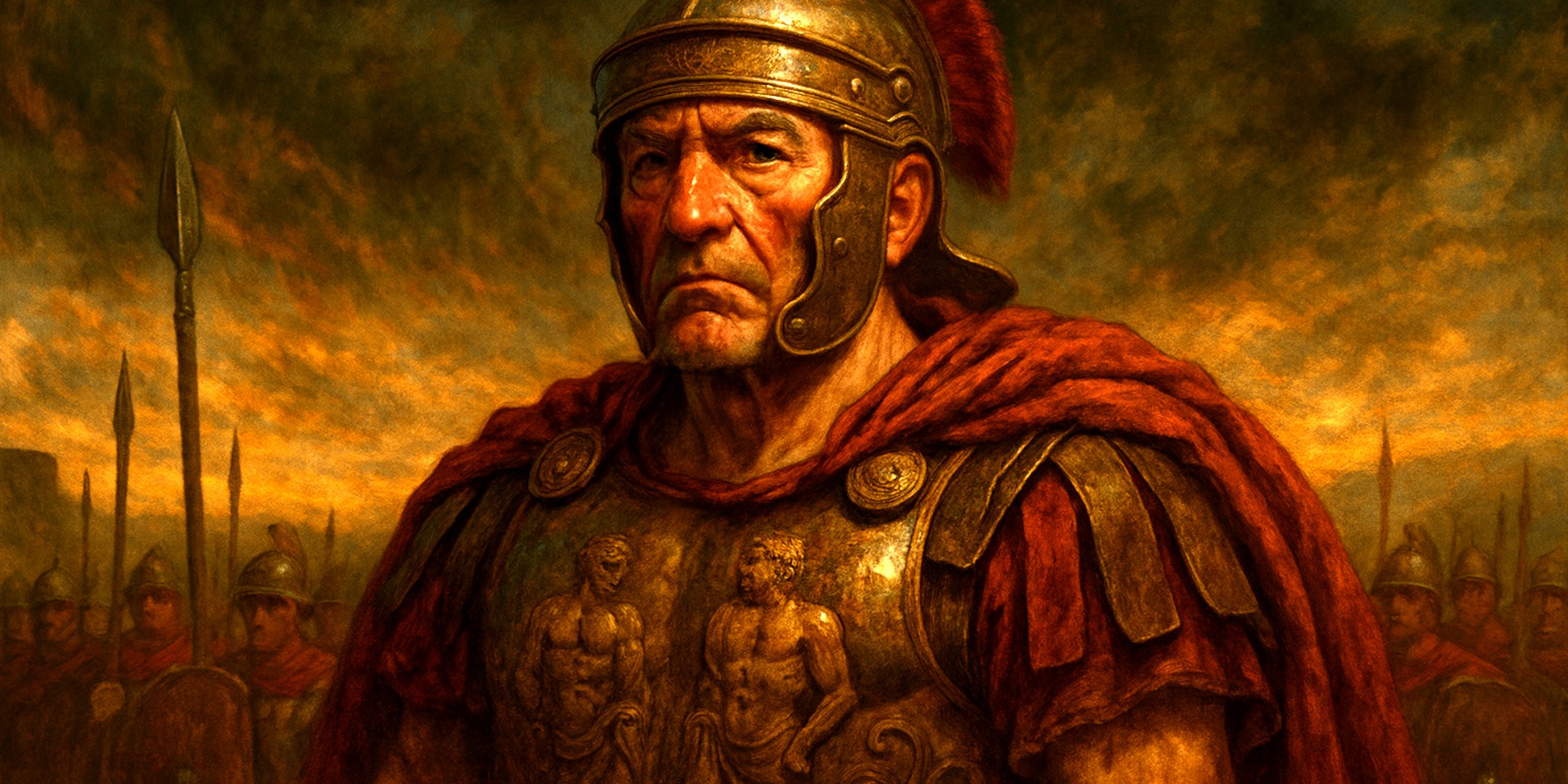
As a general and later a dictator, Sulla likely wore a muscled cuirass on campaign. These were not as widespread as modern films pretend, yet senior commanders did use them, partly as protective armour and partly to broadcast command presence. If there was ever a man who understood the value of being seen, it was Sulla.
Battles and Military Acumen
Sulla’s record in the field is stubbornly impressive. He understood timing better than most Roman commanders and had a knack for using Rome’s fear of chaos as a weapon.
First March on Rome, 88 BCE
A moment that should have been unthinkable. Sulla marched six legions on the city to secure his command against Marius. It was a shocking breach of tradition but reveals how confidently he read the political temperature. I would not call it admirable, but it was brutally effective.
Mithridatic War
Sulla moved into Greece against King Mithridates VI. His siege of Athens showed a patient cruelty. His attention to logistics and supply in hostile territory deserves more credit than it gets, and his victory at Chaeronea in 86 BCE revealed a general who could blend discipline with calculated aggression. His follow up victory at Orchomenus ended Mithridates’ dreams of pushing Rome out of the east.
Civil War and Second March on Rome
Returning from the east, Sulla defeated the Marian faction. His victory at the Colline Gate in 82 BCE was decisive. Rome was held by his enemies, yet he rallied his forces with a resolve that was almost theatrical. The triumphal tone of his later dictatorship began there.
Sulla as Dictator
When Sulla took the dictatorship, he rewired the Republic with reforms aimed at strengthening the Senate and curbing the tribunes. Some of these changes had merit, though they were implemented with a heavy enough hand to sour their legacy.
The proscriptions remain the darkest stain. They were lists of enemies permitted to be killed, their property seized. Even though Rome was accustomed to political brutality, Sulla raised the stakes to a level that future demagogues found far too instructive.
Archaeology and Material Evidence
Material remains tied directly to Sulla are sparse, which is both frustrating and oddly fitting. The man shaped institutions more than monuments.
Archaeological highlights
- The Sullan fortifications at Athens. Excavations around the Piraeus and the city walls show evidence of the damage and hurried repairs associated with his siege.
- Battle sites in Greece such as Chaeronea and Orchomenus continue to produce fragments of weaponry from the period. None can be pinned to Sulla personally, but the distribution of finds confirms the deployment patterns described in ancient sources.
- The so called Sullan villa at Cumae. Debate continues regarding its occupants. Some propose a connection to Sulla’s retirement, though the evidence remains circumstantial.
Archaeology mostly reinforces the written tradition that his campaigns were organised, supply conscious and hard fought.
Where to See Artefacts from His Era
To see objects that reflect Sulla’s world, one must look to collections of late Republican material rather than objects directly tied to him.
- Museo Nazionale Romano, Rome. Holds Republican helmets, gladii and armour consistent with equipment used by Sulla’s soldiers.
- The British Museum, London. Strong holdings of Republican weaponry and coins of Sulla’s dictatorship, including issues proclaiming his constitutional reforms.
- Athens National Archaeological Museum. Houses material from the siege layers, including sling bullets and arrowheads used during his assault.
Coins are the most personal surviving artefacts. Several bear inscriptions celebrating Sulla as Felix, a self appointed epithet meaning fortunate. I have always suspected he chose it with a crooked smile, aware that fortune is a generous way of describing calculated ruthlessness.
Legacy
Sulla set precedents that the Republic never escaped. By marching on Rome, he proved that legions could be more loyal to a commander than to the state. His reforms tried to strengthen the Senate yet his actions undermined the Republic’s very foundations. The contradiction is almost poetic, in a bleak Roman sort of way.
He retired voluntarily, which still puzzles historians. My own view is that he wanted to demonstrate mastery rather than cling to it. He died peacefully in 78 BCE, a luxury few of his political descendants would enjoy.
For all his brutality, Sulla remains a figure of undeniable competence. A commander who understood morale, timing and fear. A statesman who could read the Republic’s weaknesses with unsettling clarity. Studying him is like studying a surgeon who cures the patient by amputating half the limbs. You appreciate the technique, even if you question the prescription.
Watch the documentary: