Lucifer’s sword sits somewhere between scripture, art, theology, and pop culture. It is talked about with confidence, yet never clearly described. That alone tells you something. This is not a relic you can pin down with museum labels and measurements. It is a symbolic weapon, shaped by belief, fear, and imagination more than iron and steel.
When people picture Lucifer, they often imagine him armed. Not because the texts insist on it, but because rebellion without a blade feels unfinished. A fall from Heaven sounds louder when something sharp is involved.
Biblical Sources and What They Actually Say
If you go looking for a clear biblical description of Lucifer wielding a sword, you will come back empty handed. The key passages linked to Lucifer, mainly Isaiah 14 and Ezekiel 28, speak in metaphor. They describe pride, beauty, downfall, and expulsion, but no named weapon ever appears.
Swords do appear elsewhere in scripture, though usually in the hands of angels loyal to God. Cherubim guard Eden with a flaming sword. Michael is depicted as a warrior against Satan in later tradition. That contrast matters. Lucifer is not introduced as a swordsman in the Bible. He is introduced as a fallen light bearer.
That gap left space for later writers and artists to fill in the blanks.
Medieval Theology and the Birth of the Sword Image
Medieval thinkers loved structure. Angels had ranks, colours, duties, and roles. War in Heaven, once an abstract spiritual conflict, became something closer to a celestial battlefield.
In this setting, Lucifer often appears armed. The sword symbolised authority, command, and judgement. A fallen angel carrying a blade made visual sense. If Heaven had armies, someone had to be holding steel.
Importantly, the sword was rarely named or described. It was not Excalibur with a backstory. It was a signifier. This figure once held power and now uses it wrongly.
Artistic Depictions and Visual Tradition
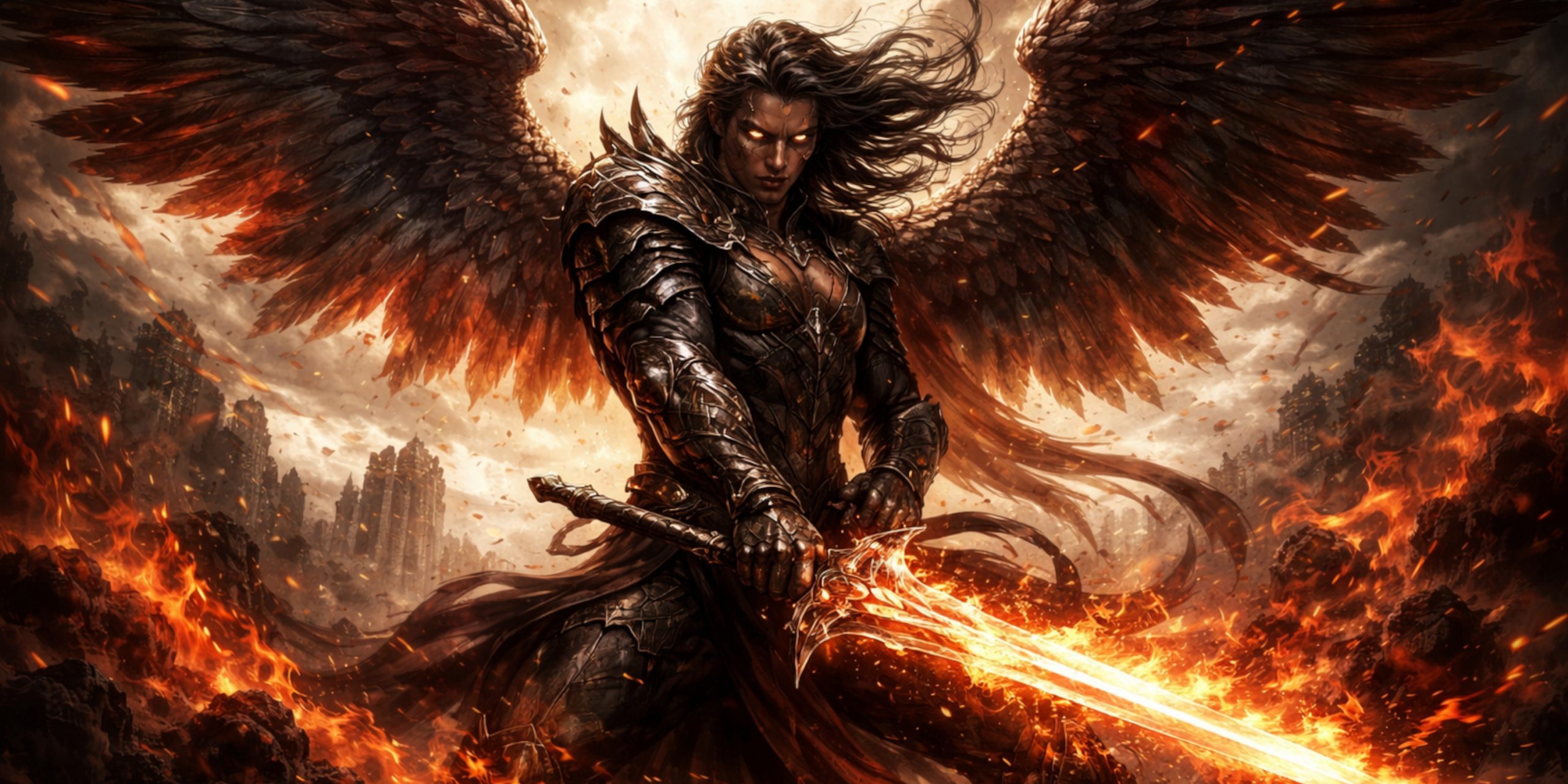
Paintings and illuminated manuscripts did most of the heavy lifting for Lucifer’s sword. Artists showed him as a radiant angel mid fall, sword still in hand, or as a darker figure clutching a blade that mirrored his corruption.
In these images, the sword changes with the story. Sometimes it is straight and knightly, echoing medieval arming swords. Sometimes it looks exaggerated, jagged, or oversized. The message is consistent even when the details are not. This is a weapon that once served Heaven and now does not.
The sword often becomes less prominent after the fall. Wings dominate. Flames creep in. The blade fades. That shift is deliberate. Lucifer’s power is no longer martial. It is persuasive.
Symbolism Over Steel
Lucifer’s sword is not about combat efficiency. It is about meaning.
The blade represents authority that was granted, not earned. It suggests judgement without legitimacy. It also reflects the idea that evil often borrows the shape of good. A sword is not evil by default. It becomes dangerous when wielded without restraint.
In some theological readings, Lucifer’s real weapon is not metal at all. It is pride, rhetoric, and temptation. The sword is there for the audience, not the doctrine.
Lucifer’s Sword in Modern Fiction
Modern writers and filmmakers leaned into the image hard. Fantasy novels, TV series, and games often give Lucifer a named sword with specific powers. Fire, corruption, soul cutting, reality tearing. Take your pick.
These versions tell us more about modern storytelling than ancient belief. Audiences expect a villain with a weapon. Visual media needs something to frame a fight. A fallen angel without a blade looks unfinished on screen.
The key thing is this. None of these swords come from scripture. They are creative descendants, not historical artefacts.
Is There a “True” Version of the Sword?
Short answer, no.
There is no canonical description, no agreed name, no physical attributes to catalogue. Lucifer’s sword exists because it feels right to the story, not because it was ever recorded.
That might sound disappointing, but it is actually what makes the subject interesting. The sword survives because it adapts. It means different things depending on who is telling the story and why.
Names Attributed to Lucifer’s Sword
One of the most interesting things about Lucifer’s sword is that it almost never settles on a single name. That is not an accident. A fixed name would suggest a fixed tradition, and none really exists. Instead, different cultures and genres keep reinventing it, each name revealing more about the storyteller than the blade itself.
In theological and symbolic writing, the sword is often left unnamed and described instead by function. Phrases like the sword of rebellion or the blade of the fallen light appear in sermons and later religious commentary. These are not proper names in the heroic sense. They frame the weapon as a moral object, something defined by misuse rather than craftsmanship.
Medieval and early modern literature leans toward Latinised or allegorical titles. Names such as Ferrum Superbiae, meaning the Iron of Pride, or Gladius Ruinae, the Sword of Ruin, appear in later moral texts and poetic works. These titles sound grand, but they are closer to labels than personal names. The sword exists to make a point, not to be remembered like a knight’s heirloom.
Modern fantasy and pop culture finally give the blade what earlier sources avoided. A proper name. Writers and game designers introduce titles like Lightbringer, usually twisted into irony, Morningfall, Ashbringer, or The First Blade. These names play on Lucifer’s identity as a bringer of light and knowledge, turning that origin into something sharper and more dangerous. None of them are canonical, but repetition has made them feel familiar.
What all these names share is intent. They are not about metallurgy or design. They are about status, loss, and defiance. Unlike legendary swords that grow famous through deeds, Lucifer’s sword gains names through interpretation. Every era calls it something new because every era wants a different warning from the same story.
In that sense, the lack of a true name might be the most fitting detail of all. A blade born from pride was never meant to be remembered for what it was called, only for what it represented.
The Takeaway
Lucifer’s sword is a myth built from silence. Scripture did not describe it, so culture invented it. Over centuries, that invention became familiar enough to feel ancient.
What we really know is this. The sword is never the point. It is a visual shortcut to a deeper idea about pride, loss, and the misuse of power. Whether forged in Heaven or imagined on Earth, it remains one of the most enduring weapons never actually written down.