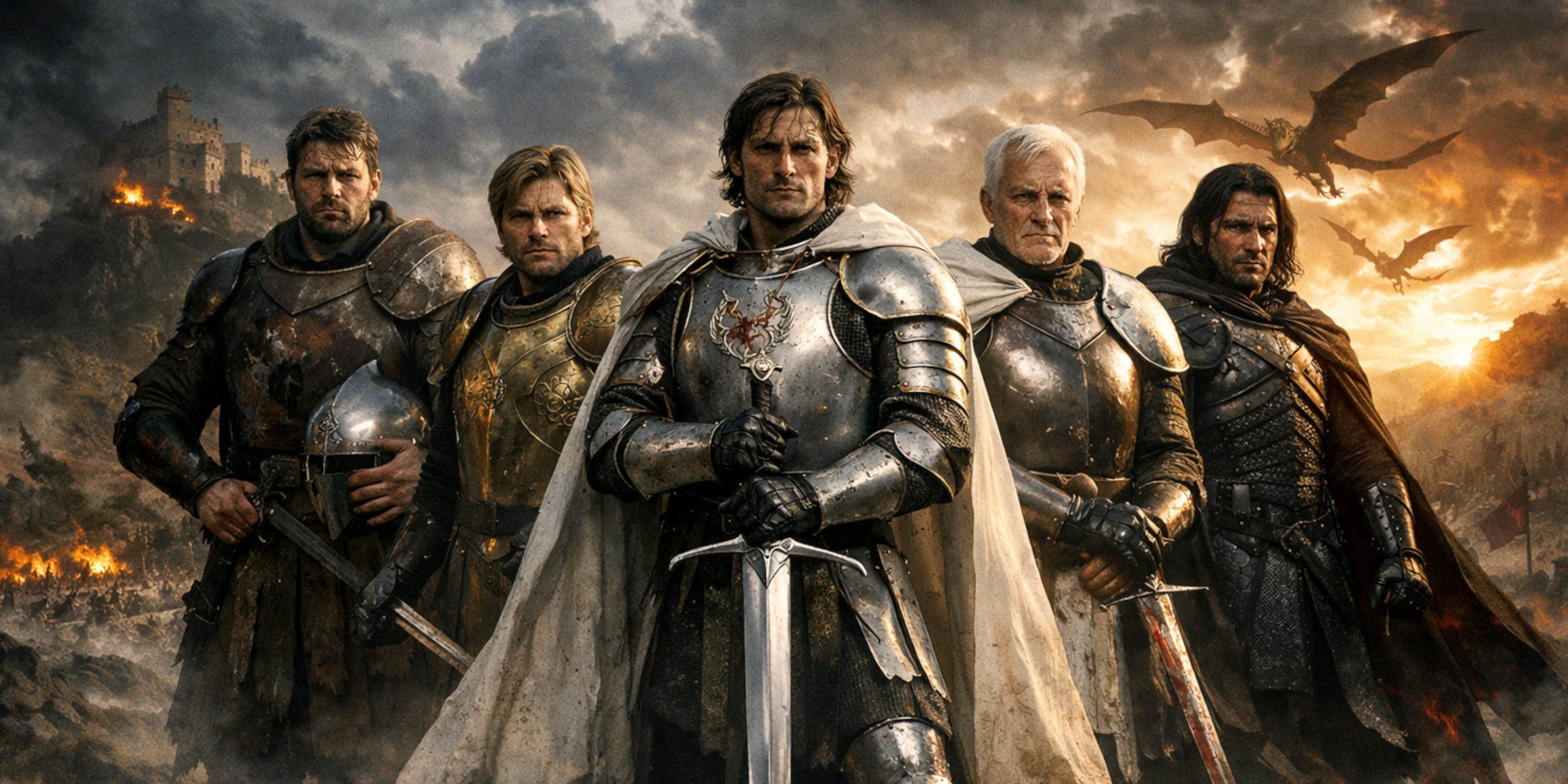
Westeros loves a knight almost as much as it loves a succession crisis, a suspicious hunting accident, or a feast that ends very badly. The ideal knight, at least on paper, is brave, loyal, just, pious, and handy with a sword. Naturally, Westeros then spends most of its history proving how difficult that standard is to meet.
That is what makes its greatest knights so interesting. Some mattered because they were almost absurdly good in battle. Some became symbols larger than life. Some shaped dynasties, saved kings, toppled reputations, or revealed the ugly gap between chivalric songs and political reality. A few managed all of that at once.
This guide looks at the most important knights in Westerosi history, not simply the deadliest or the most beloved, but the ones whose lives and legends genuinely mattered. These are the men who helped define what knighthood meant in the Seven Kingdoms, whether by embodying it, corrupting it, or dragging it through the mud and forcing everyone else to look.
What makes a knight important in Westeros?
Before getting into names, it helps to set the terms. Importance in Westeros is not just about winning jousts or collecting impressive nicknames, though Westeros is extremely fond of both.
A knight matters if he changed the political story of the realm, altered the reputation of knighthood itself, became a cultural legend, or left a legacy that later generations could not stop talking about. In practice, that means this list weighs several things together:
- Military influence
- Political importance
- Symbolic or legendary status
- Cultural legacy in songs, stories, and memory
- Lasting effect on the ideals of knighthood
So yes, some of these men were great warriors. But plenty of great warriors in Westeros ended up as footnotes with a nice suit of armour and no deeper significance.
Serwyn of the Mirror Shield
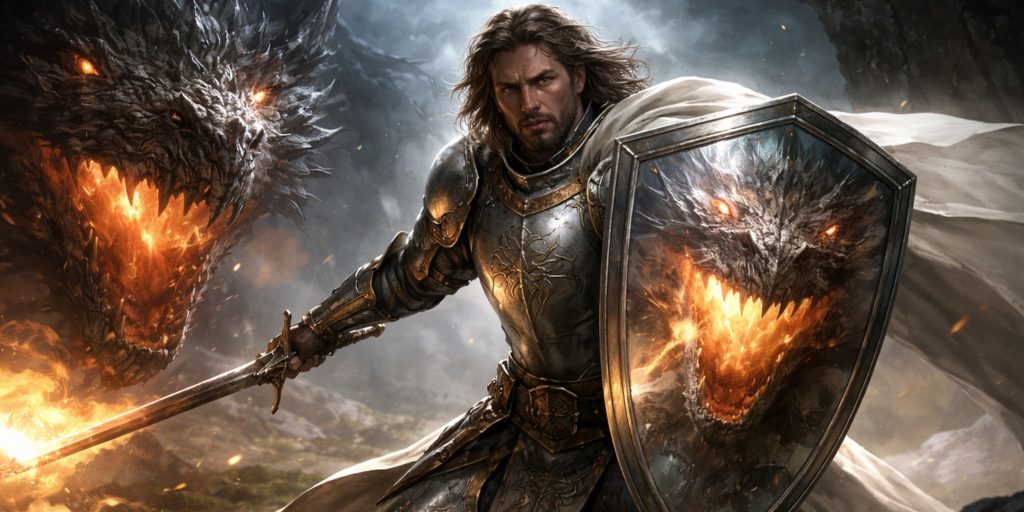
Serwyn belongs to that half-mythic, half-historical layer of Westerosi memory where fact and legend have clearly had a few drinks together. Even so, he matters because he represents one of the oldest and purest knightly ideals in the tradition of the Seven Kingdoms.
According to the tales, Serwyn slew a dragon by using his shield to view its reflection rather than meet its gaze directly. It is the sort of story that sounds impossible, heroic, and suspiciously well-suited to dramatic retelling beside a fire. Which, in Westeros, is usually a sign that it will survive forever.
Serwyn’s importance lies in symbolism. He stands for the ancient image of the knight as monster-slayer, champion, and moral hero. Long before the political rot of later courts, figures like Serwyn helped establish the romantic language of knighthood itself. He is less a man on a page and more a foundation stone in the cultural imagination of Westeros.
Ser Galladon of Morne
If Serwyn represents old heroic myth, Ser Galladon represents sacred chivalry. He is remembered as Galladon of Morne, the perfect knight, a figure so closely tied to virtue and divine favour that later knights are often judged against an impossible standard shaped by his legend.
The stories claim the Maiden herself gave Galladon a magic sword, the Just Maid, which could only be used once a day and never missed. Frankly, that sounds like the sort of thing every ambitious hedge knight would have claimed after one lucky duel. Still, the legend endured because Galladon came to embody the idea that true knighthood was not just martial skill but moral worth.
His importance is enormous in cultural terms. He helped create the spiritual template of the ideal anointed knight, bound not merely to service but to holiness, justice, and restraint. In a world where many knights are glorified thugs with polished helmets, Galladon remains the shining fantasy they pretend to admire.
Serwyn and Galladon, why legends still matter
It is worth pausing here because legendary knights matter in Westeros almost as much as historical ones. Songs shape conduct. Stories influence squires. Noble boys grow up hearing these names and then spend years trying, usually failing, to resemble them.
That means a knight does not need perfect documentation to be important. In fact, in Westeros, myth can be more powerful than paperwork. The realm remembers what fits the story it wants to tell about itself.
Ser Ryam Redwyne
Ser Ryam Redwyne is one of the clearest examples of a knight whose martial glory translated into prestige, fame, and historical weight. He became Lord Commander of the Kingsguard and was remembered for dazzling prowess and impeccable reputation.
On the surface, Ryam looks like the perfect answer to the question, “What if the songs were right for once?” He was celebrated, admired, and held up as a model of knightly excellence. Yet his legacy also hints at one of Westeros’s recurring problems. Being a brilliant knight does not necessarily make a man a brilliant political actor, administrator, or judge of character.
That tension matters. Ryam became part of the long Westerosi habit of confusing battlefield brilliance with complete fitness for high office. His reputation was so bright that it cast a shadow. Later generations kept pointing to him as the ideal knight, even as history repeatedly showed that a sharp sword arm does not fix court politics, succession disputes, or bad kings.
Still, his importance is secure. He became one of the benchmark names in the history of the Kingsguard and in the wider culture of knighthood.
Ser Criston Cole
Now we arrive at a knight who was not merely important, but explosively important. Ser Criston Cole played a central role in the events that led to the Dance of the Dragons, which means his actions helped ignite one of the most catastrophic civil wars in Targaryen history.
Cole rose from relatively modest origins to become a famed tourney champion, a member of the Kingsguard, and eventually Lord Commander. His story would almost be inspirational if it did not end up drenched in bitterness, factional politics, and kingdom-shattering consequences.
His importance comes from how thoroughly he fused knighthood with power. Criston was not just a fighter in service to the crown. He became a political force. By backing Aegon II against Rhaenyra, he helped shape the succession struggle that tore the realm apart. He is one of the clearest examples of a knight whose personal loyalties and resentments altered history at the highest level.
He also matters because he exposes the dark side of knightly prestige. The white cloak gave him legitimacy. His reputation gave him influence. Once those things were turned toward factional ends, the damage was immense. Westeros loves to imagine knights as neutral guardians of order. Criston Cole is one of the best reminders that they can be agents of chaos with excellent posture.
Ser Duncan the Tall
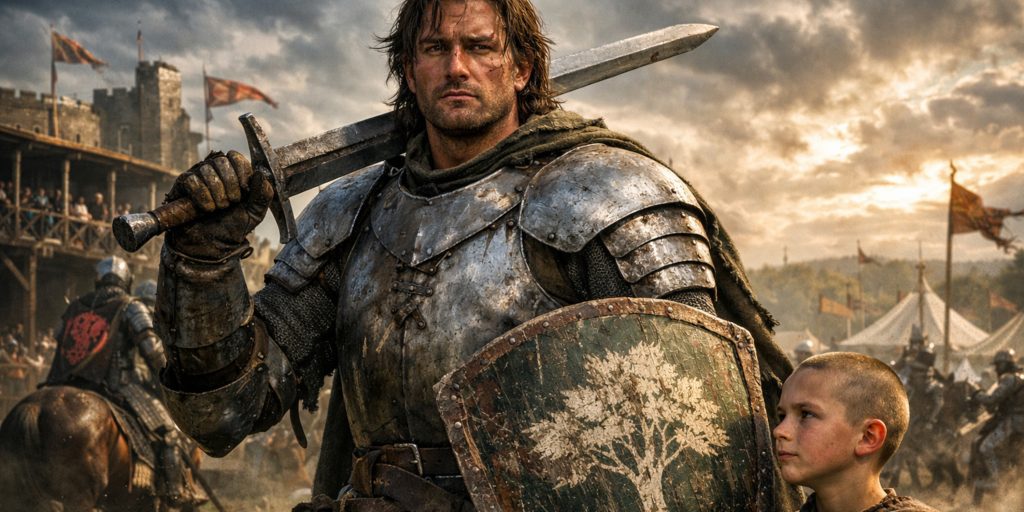
If one knight captures the heart of Westerosi chivalry more completely than anyone else, it is Ser Duncan the Tall. Dunk begins as a hedge knight of humble means and uncertain polish. He is not elegant, not especially learned, and not built for courtly performance. He is, however, decent, brave, stubborn, and unwilling to ignore cruelty when it is placed directly in front of him.
That turns out to matter rather a lot.
Dunk’s importance is enormous for several reasons. First, he represents knighthood from below. He is not born to great wealth or position, and that gives his story a moral force many noble knights lack. Second, his bond with Egg, the future Aegon V, links him directly to the politics and future of the realm. Third, his conduct repeatedly shows a version of knighthood based less on polished speeches and more on basic human decency, which in Westeros counts as a rare and almost mystical gift.
As Lord Commander of the Kingsguard, Duncan later became one of the most revered knights in living memory. His story matters because it bridges the gap between ideal and reality. He is not perfect. He is simply good, and in Westeros that is close enough to miraculous.
Ser Duncan and the meaning of true knighthood
Dunk’s legacy is deeper than fame. He reshapes the question of what a knight is for. Not for glory. Not for pageantry. Not for vanity wrapped in enamel and plate. For protection. For courage. For doing the hard thing when nobody important wants it done.
That is why he matters beyond his own lifetime. He becomes a moral standard.
Ser Arthur Dayne
Ser Arthur Dayne, the Sword of the Morning, stands near the summit of knightly legend in Westeros. Even among other elite warriors, his reputation is extraordinary. He is remembered as beautiful, deadly, noble, and almost impossibly accomplished, which is usually the point where one expects a correction. Westeros, for once, largely shrugs and says no, apparently he really was that good.
Arthur’s importance comes from both reputation and timing. As one of the most famous Kingsguard of the late Targaryen era, he became a symbol of martial perfection just before the collapse of the dynasty he served. That matters. Arthur is not simply remembered as a great knight, but as one of the last great knights of a fading order.
His association with Rhaegar Targaryen, the Tower of Joy, and the final years of Aerys II places him at the emotional and political centre of one of the most contested periods in Westerosi history. He became part of the mythology of lost honour, of loyal service rendered to a doomed cause, and of the tragic beauty Westeros likes to drape over its disasters after the bodies have cooled.
Arthur Dayne matters because he is what later knights dream of being, even when the world around him suggests that perfect knighthood may be useless against political collapse.
Ser Barristan Selmy
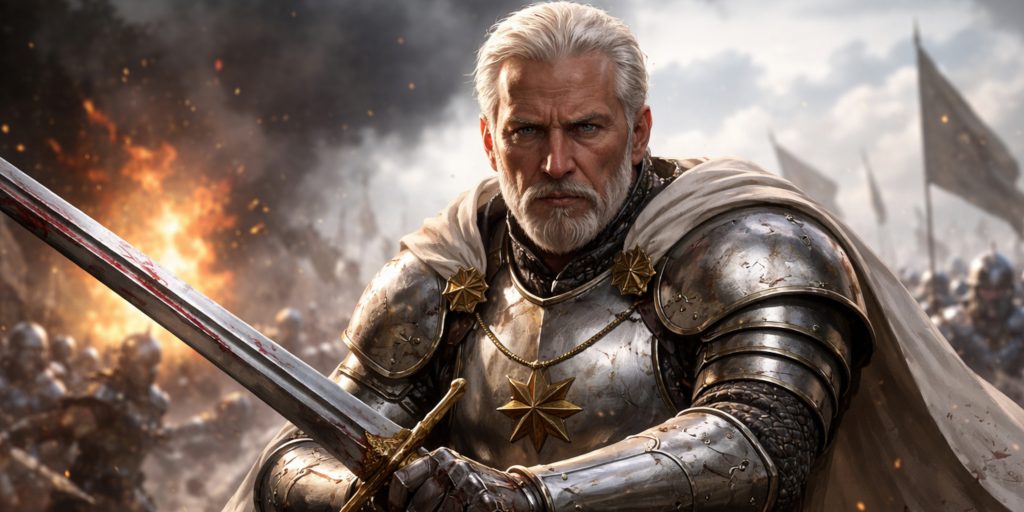
If Arthur Dayne is the beautiful legend, Barristan Selmy is the living institution. Few knights in Westerosi history carry as much weight across as many reigns. Barristan’s career stretches through tournaments, wars, dynastic upheaval, royal service, exile, and renewal. He is not merely present for history. He helps define its martial memory.
Barristan became famous young and stayed famous for all the right reasons, which in Westeros is almost suspicious. He fought valiantly, served in the Kingsguard, rescued Aerys II during the Defiance of Duskendale, and later served Robert Baratheon with a discipline that revealed the complicated demands of knightly loyalty. A knight serves the king, yes, but what happens when kings change and honour has to survive the transition?
That question sits at the centre of Barristan’s importance. He embodies continuity. He carries the knightly ideal across broken regimes and makes it feel, against the odds, still worth defending. He is also one of the clearest examples of the pain built into the role. Service, obedience, reputation, conscience, all of these can collide.
Barristan matters because he preserves the possibility that a knight can remain honourable without becoming naive. That is no small achievement in a continent where court politics can turn saints into accomplices by lunchtime.
Ser Jaime Lannister
Jaime Lannister has to be here, and not only because half of Westeros cannot stop arguing about him. His importance is vast because he shatters the public image of knighthood while also, irritatingly, revealing its hidden truths.
On paper, Jaime is everything the realm should admire. He is handsome, aristocratic, gifted in battle, and raised to one of the highest knightly honours in the Seven Kingdoms as a member of the Kingsguard. Then he kills the king he swore to protect and becomes the Kingslayer, perhaps the most famous insult in Westerosi political language.
That act defines him publicly, but it also exposes the contradiction at the core of knightly vows. What should a knight do when obedience becomes monstrous? Jaime saved a city from destruction, yet his reputation was ruined because he broke the visible oath in order to uphold the deeper moral duty. Westeros, being Westeros, preferred the scandal to the nuance.
His importance is therefore cultural as much as political. Jaime becomes the great challenge to simplistic chivalry. He forces the realm, and the reader, to admit that honour is not always clean, public, or rewarded. Sometimes it looks like disgrace. Sometimes the songs get it badly wrong.
That makes him one of the most significant knights in the entire history of the setting.
Ser Aemon the Dragonknight
Ser Aemon Targaryen, known as the Dragonknight, is one of the grand icons of Westerosi knighthood. He is remembered for beauty, skill, honour, and deep personal tragedy, which in Targaryen history is almost a family hobby.
Aemon served in the Kingsguard and became legendary for his courage and devotion. Over time he turned into one of the realm’s most admired knightly figures, partly because of his feats and partly because he fit the shape of heroic memory so perfectly. He was noble, restrained, loyal, and shadowed by rumour, especially regarding Queen Naerys.
His importance lies in the way legend and politics merged around him. Aemon became a standard against which later Kingsguard were measured. He also helped solidify the idea of the white cloak as a vessel for sacrifice, silence, and impossible personal restraint. Whether real life inside that armour was messier is almost beside the point. In memory, Aemon became one of the finest expressions of what a knight was supposed to be.
And Westeros runs on supposed to be nearly as much as it runs on grain.
Ser Gwayne Corbray
Not every important knight needs the fame of a Dragonknight or the scale of a Kingsguard legend. Some matter because they embody a crucial moment in the martial culture of the realm. Ser Gwayne Corbray, famed wielder of Lady Forlorn, is one of those men.
He is remembered above all for his duel with Daemon Blackfyre on the Redgrass Field. Even in defeat, that encounter became part of Westerosi martial legend. It symbolised the lethal grandeur of knightly combat in a civil war where questions of honour, legitimacy, and bloodline all crashed together.
Gwayne’s importance lies in this representative quality. He helps personify the chivalric nobility that attached itself to the Blackfyre era, where magnificent individual prowess existed right beside ruinous political division. He is part of the memory of how knights fought, how they were admired, and how little that admiration could do to prevent bloodshed.
Prince Aemon the Dragonknight, Barristan, and the Kingsguard ideal
Taken together, knights like Aemon, Barristan, Arthur Dayne, Ryam Redwyne, and Duncan the Tall tell the story of the Kingsguard as both aspiration and trap. The white cloak promises immortality in memory. It also demands silence, obedience, celibacy, and service to rulers who may be brave, mad, weak, cruel, or all four before supper.
That tension is central to Westerosi knighthood. The greatest knights are often remembered not because the institution was pure, but because they remained admirable inside institutions that were often deeply compromised.
Honour, legend, and the gap between songs and reality
One reason Westerosi knights remain so compelling is that the culture never fully agrees on what they are. Are they holy warriors, political enforcers, bodyguards, aristocratic celebrities, or expensive cavalry with better branding? The answer, inconveniently, is yes.
The most important knights in Westeros history matter because they sit inside that contradiction. Ser Galladon and Serwyn give the realm its oldest ideals. Ryam and Aemon refine them. Criston Cole weaponises them. Arthur Dayne immortalises them. Barristan preserves them. Jaime interrogates them. Duncan redeems them.
That is why these figures endure. They are not just fighters with heraldry. They are arguments about power, duty, class, justice, beauty, loyalty, and self-delusion, all wearing spurs.
The most important knights in Westeros history, a ranked list
Here is the short version for readers who want the names up front and the nuance after:
1. Ser Duncan the Tall
The clearest moral centre of Westerosi knighthood, with enormous personal and political legacy.
2. Ser Barristan Selmy
A living bridge across dynasties and one of the purest examples of enduring knightly honour.
3. Ser Jaime Lannister
Crucial because he exposes the contradictions at the heart of knighthood itself.
4. Ser Criston Cole
A knight whose political choices helped unleash one of the realm’s worst civil wars.
5. Ser Arthur Dayne
The supreme martial legend of the late Targaryen era and a symbol of lost chivalry.
6. Ser Aemon the Dragonknight
One of the defining icons of the Kingsguard and heroic knightly memory.
7. Ser Ryam Redwyne
A classic model of knightly glory whose reputation shaped later standards.
8. Ser Galladon of Morne
A foundational ideal of holy and just knighthood in Westerosi culture.
9. Serwyn of the Mirror Shield
An ancient legendary hero who helped define the mythic language of knighthood.
10. Ser Gwayne Corbray
A martial symbol of knightly honour in one of Westeros’s great civil conflicts.
Takeaway
The most important knights in Westeros history are not always the nicest, the strongest, or even the most successful. Some are revered because they came close to the ideal. Some are unforgettable because they failed it in world-changing ways. A few are remembered because they made everyone else rethink what the ideal was for in the first place.
That, really, is the heart of the matter. Knighthood in Westeros is never just about shining armour. It is about what happens when power puts on a moral costume and then has to live up to it.
Sometimes it does. Sometimes it absolutely does not. And sometimes, in the case of the very best knights, it manages something rarer, it earns the song.