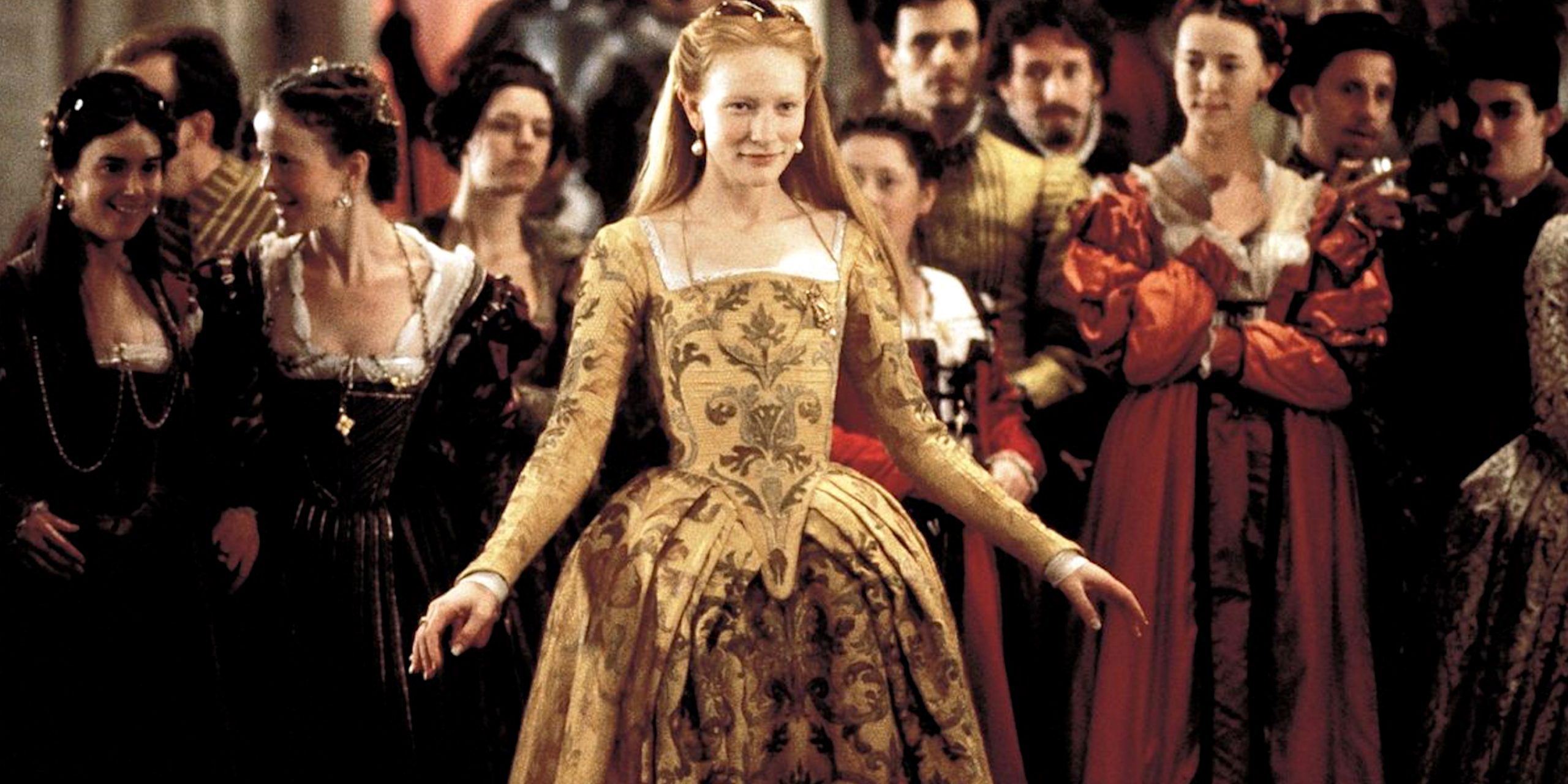
Elizabeth (1998), directed by Shekhar Kapur and led by a breakout performance from Cate Blanchett, the film takes a familiar story and reshapes it into something closer to myth. It is less about dates and documents, more about transformation. You watch a young woman become a symbol, and the process is not gentle.
Plot Explained
The film begins in the aftermath of Mary I of England, with England tense, divided and deeply suspicious of its new queen. Elizabeth is young, politically exposed, and surrounded by rivals who see her as temporary.
Her early reign is marked by hesitation. She leans on advisers like William Cecil while trying to navigate threats from Catholic powers abroad and conspirators at home. At the same time, her personal life complicates everything, especially her relationship with Robert Dudley.
The turning point arrives when Elizabeth realises she cannot survive as she is. The film frames this moment almost like a shedding of skin. By the final act, she abandons personal attachments, adopts a carefully constructed image, and emerges as something closer to an institution than a person.
That final transformation scene, all white and controlled stillness, is not subtle. It is not meant to be.
Themes and Interpretation
Power and Performance
The film treats power as theatre. Elizabeth is constantly watched, judged and interpreted, so she learns to perform. Her authority grows not just through decisions but through image, voice and presence.
It feels surprisingly modern. Leaders still do this. They just have better lighting now.
Identity and Sacrifice
At its core, this is a story about what gets lost in the process of becoming powerful. Elizabeth gives up intimacy, spontaneity and, quite bluntly, the chance at a normal life.
The idea of the “Virgin Queen” is presented less as a moral stance and more as a political strategy. A clever one, but also a lonely one.
Religion and Fear
Religion in the film is tense, paranoid and often brutal. Protestant and Catholic factions are not just debating theology. They are fighting for control, survival and legitimacy.
The atmosphere reflects the genuine instability of the period, even if the specifics are sometimes compressed or exaggerated.
Historical Accuracy
This is where things get interesting, and slightly messy.
What the Film Gets Right
- The early vulnerability of Elizabeth’s reign
- The religious tension across England and Europe
- The importance of advisers like William Cecil
- The constant threat of plots and uprisings
The tone of uncertainty is believable. You can sense how fragile her position really was.
Where It Takes Liberties
- The timeline is heavily compressed
- Certain conspiracies are simplified or invented
- The relationship with Robert Dudley is dramatised for emotional impact
- Key figures are removed or merged for narrative clarity
The most obvious example is the portrayal of Francis Walsingham. He is turned into a shadowy, almost assassin-like figure, which is effective on screen but not entirely accurate.
Overall Verdict on Accuracy
If you approach it as a visual essay on power rather than a strict historical record, it works extremely well. If you expect precision, you will spend a lot of time quietly correcting it in your head.
Performances and Direction
Cate Blanchett is the centre of everything, and rightly so. Her portrayal evolves scene by scene. Early Elizabeth feels impulsive and unsure, later Elizabeth feels calculated and distant. The shift is gradual enough that you almost do not notice it happening.
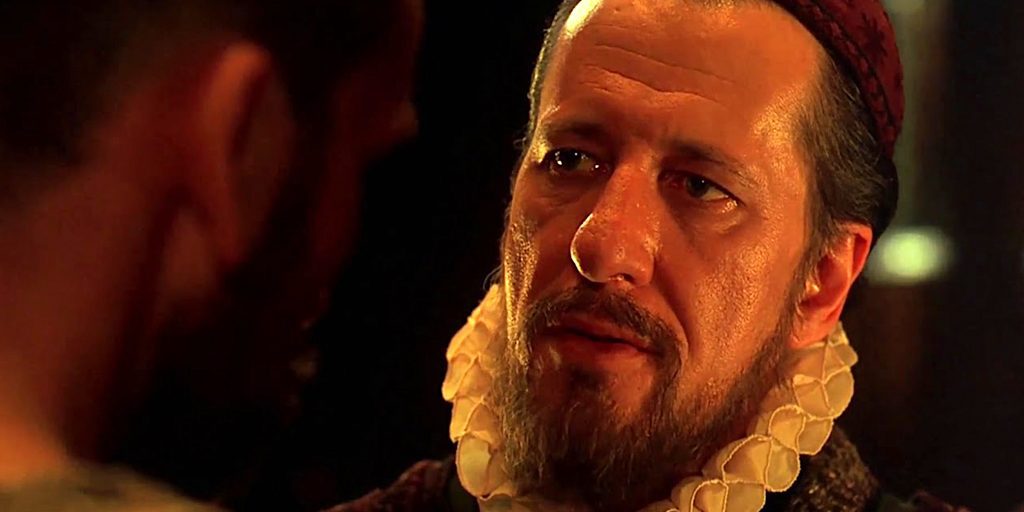
Geoffrey Rush as Walsingham brings a cold, watchful energy that anchors the political tension. Joseph Fiennes adds charm as Dudley, though the role leans more romantic than historical.
Director Shekhar Kapur leans into bold visuals. Lighting, costume and framing do a lot of storytelling. At times it borders on operatic, which suits the subject more than you might expect.
Legacy and Cultural Impact
Elizabeth (1998) did something quite important for historical films. It proved that audiences would accept stylised history if it felt emotionally convincing.
It also launched Cate Blanchett into a new level of recognition and set the stage for its sequel, Elizabeth: The Golden Age.
More broadly, it influenced how Tudor history is presented on screen. You can see its fingerprints in later productions that favour atmosphere and character over strict chronology.
Seven Swords Takeaway
There is a moment near the end where Elizabeth stands still, painted almost like a living icon, and you realise the film has quietly shifted genres. It started as a historical drama and ended as something closer to legend.
Is it accurate? Not entirely.
Is it effective? Very much so.
If anything, the film understands one truth better than most textbooks. Power is rarely tidy, and the people who hold it often have to become something unrecognisable to survive.
That is not comforting, but it is honest in its own way.