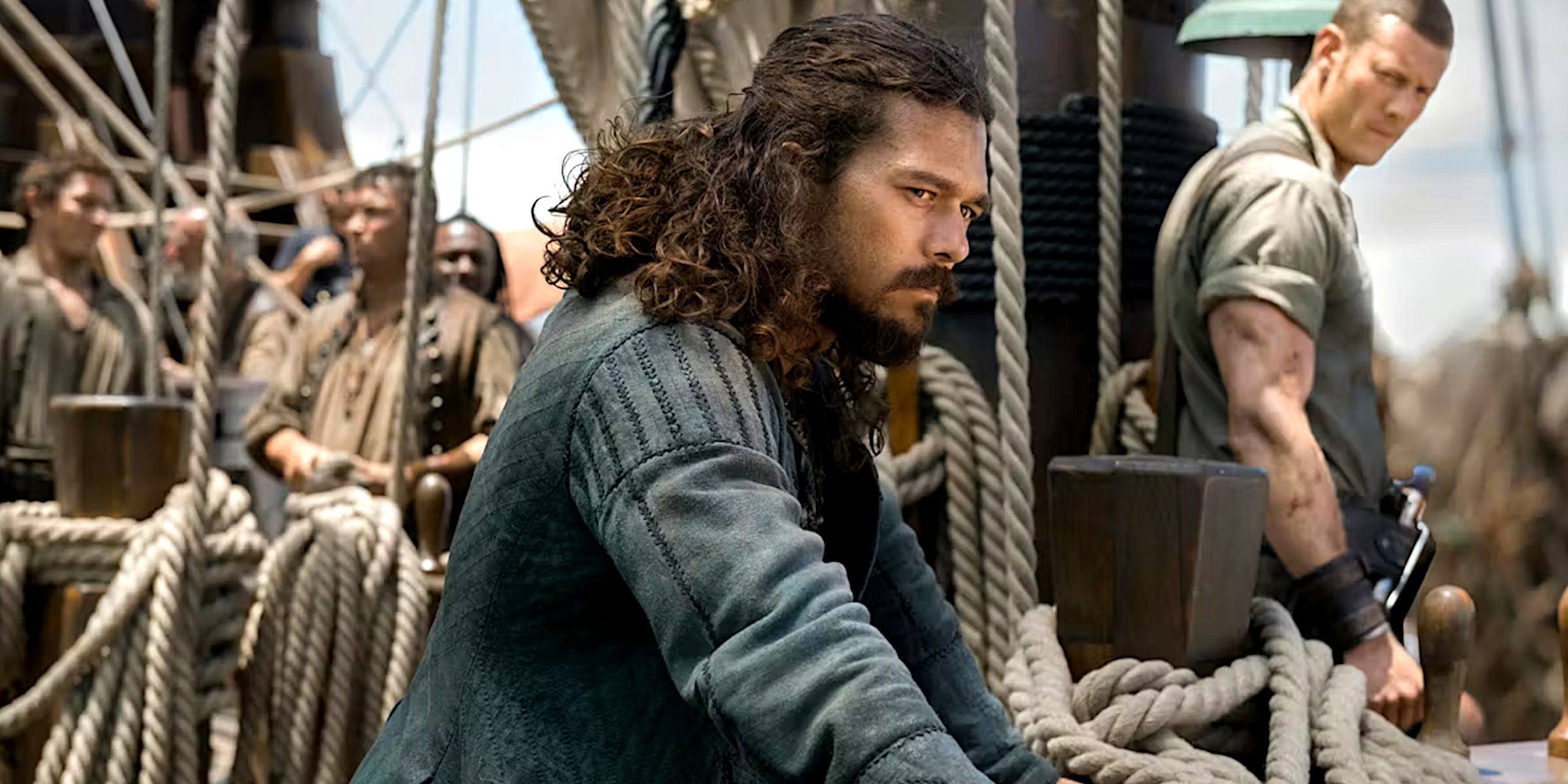
Some characters feel like they arrived fully formed. Long John Silver does not. In Black Sails, he grows like a creeping rum stain on the deck, slowly taking shape until you realise you are staring at a man who learned to control an island simply by listening more than he spoke. His story is one of survival, improvisation and a suspicious amount of charm for someone who lies as easily as he breathes.
The show turns him into something richer than the classic Treasure Island villain. It offers the long route, the flawed route, the slightly messy route. Which is exactly why it works.
Early Days on the Walrus
At the start, Silver is not a pirate. He is a man running from something he refuses to name. He stumbles into Captain Flint’s world by accident, then holds on because he is too quick witted to let go.
He begins in the galley. No one trusts him. Honestly, no one should. His main skills at this stage are avoiding responsibility and spotting opportunities before anyone else notices them. But he pays attention. That becomes his real advantage. While the crew argue, fight or brood dramatically on the deck, Silver watches.
Those quiet moments shape his path more than any sword fight.
The Shift Into Leadership
The turning point arrives when the crew start listening to him. It happens gradually, which feels more believable than any sudden chosen one arc. Silver realises that authority can be built in layers. A rumour here. A well timed comment there. A story repeated just loudly enough for someone else to claim it.
Flint recognises his growing influence, and the two develop a relationship built on caution, need and mutual fascination. Silver learns from Flint without ever fully becoming him. That tension creates some of the best character beats in the series.
There is also the small matter of losing a leg. Most shows would throw it in for shock value. Black Sails turns it into the moment that reshapes his entire identity. He leans into the pain, the vulnerability and the rage, then channels all of it into authority.
Suddenly the man who once dodged responsibility becomes the one everyone watches.
Becoming the King of Thieves
Silver’s rise at Nassau is messy, political and full of people underestimating him. He turns the shadows of the island into a power base. He listens to those who are ignored, then uses their trust to build his own myth.
This is the version of Silver that feels closest to the legend. Not the cackling villain. Not the campfire storyteller. Instead he becomes someone who understands that stories control more than swords. If people believe you matter, you do.
His partnership with Madi gives him both strength and conflict. She challenges him in ways no other character dares. Their dynamic adds moral weight to choices that could otherwise feel like simple pirate posturing.
Silver becomes more calculating, more protective and, at times, frighteningly calm. That transformation does not happen overnight. It happens because he trades pieces of himself until he becomes the man Nassau needs. Or fears. Often both.
Silver and Flint: A Myth Forged Out of Conflict
The relationship between Silver and Flint becomes the spine of the show. They move between allies, rivals, confidants and obstacles with an ease that suggests both admiration and exhaustion.
Flint sees Silver’s potential early, even if he will not say it out loud. Silver sees Flint’s loneliness, which is probably worse. Their bond is built on survival and ambition, yet it becomes something that shapes the entire arc of the island.
When their conflict reaches its peak, the show avoids a neat moral answer. Silver makes a choice that protects the future of Nassau, but the cost is high. It is the kind of choice that sits heavy on someone’s conscience. You can feel the weight every time he pauses a little too long before answering a question.
The great twist is that Silver becomes the myth that Flint never could. Not because he was stronger, but because he knew when to step away.
The Legend He Leaves Behind
By the end, Silver stops trying to outrun the idea of who he might become. He simply accepts it. The cook who once floated between crews becomes the legend children whisper about in Treasure Island.
He understands that the real legacy is not a chest of gold. It is the story people tell when you are not around to correct them.
For a man who began his journey lying to stay alive, he ends it by choosing silence. That might be the most pirate thing he ever does.
The Seven Swords Takeaway
Long John Silver’s arc in Black Sails feels like a character study disguised as an adventure show. His journey refuses to follow a clean heroic curve, and that makes it far more interesting. He begins as a man who wants nothing except to survive the week. He ends as someone who shapes the fate of an island and the legends that outlive it.
There is something strangely inspiring about a character who bluffs his way into history, then earns his place for real.
If only real life worked like that.