Talking about the best and worst times to be alive in medieval Europe always feels slightly cruel. Life was hard by default. Still, the Middle Ages were not one long, grey struggle. Conditions shifted sharply depending on century, region, and whether you were born into land, labour, or lordship. Some periods offered relative stability, rising living standards, and even opportunity. Others stacked war, disease, and hunger on top of one another until survival itself felt like an achievement.
As a historian, I try to resist nostalgia and apocalypse in equal measure. Medieval people did the same. They complained, adapted, and occasionally prospered. The difference between a tolerable life and a brutal one often came down to timing.
The Best Periods to Be Alive
The High Middle Ages, roughly 1000 to 1300
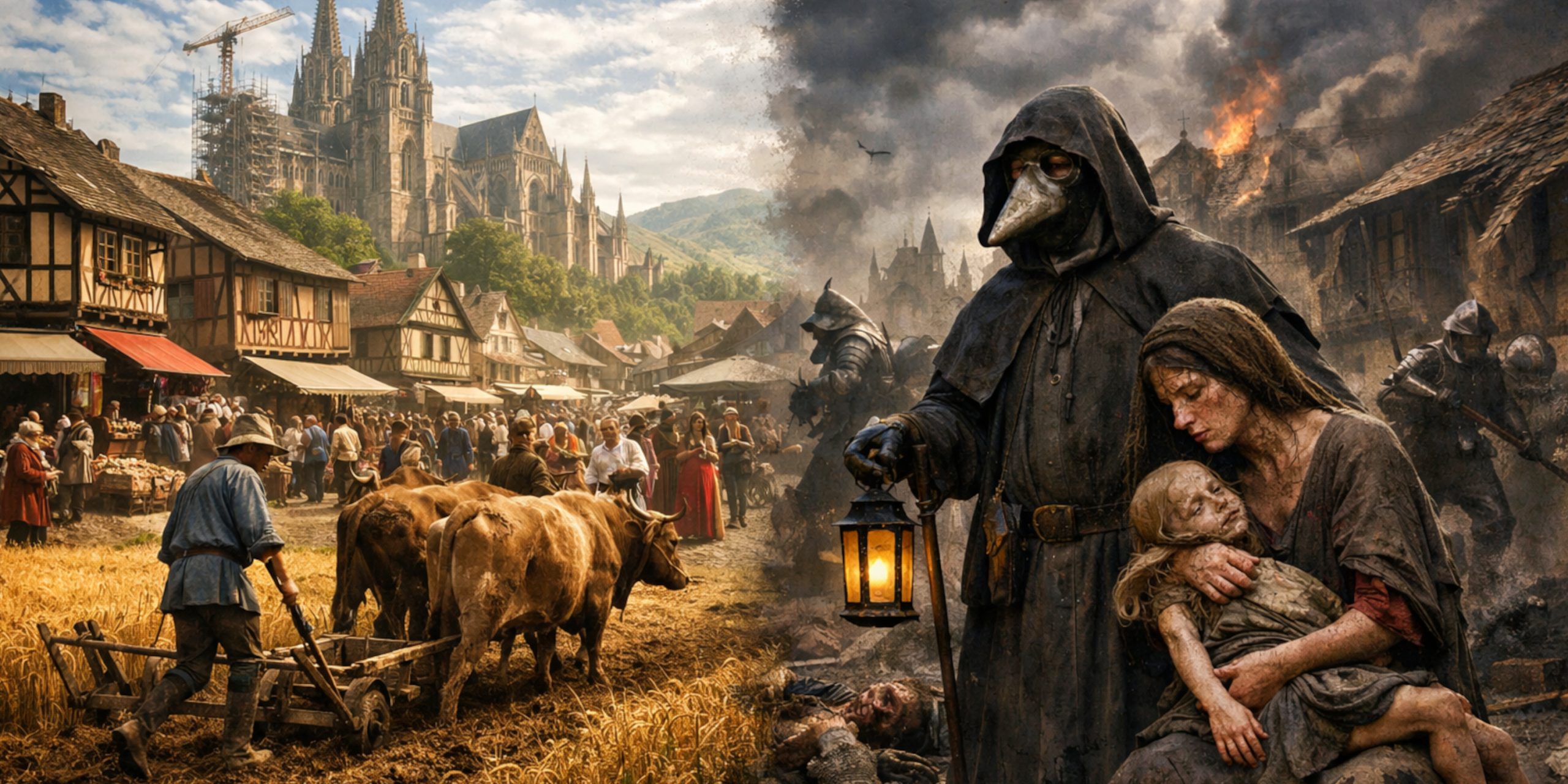
If you had to choose a medieval century to be born into, the long twelfth century would be a sensible bet. Across much of Western and Central Europe, population grew, agriculture improved, and political structures stabilised after the violence of the early medieval world.
Better tools, heavier ploughs, and the spread of the three field system meant more reliable harvests. This did not eliminate hunger, but it reduced the constant edge of starvation. Towns expanded, trade revived, and money once again mattered in daily life. For artisans and merchants, this was a rare medieval window where skill could translate into modest security.
War certainly existed, but it was often seasonal, local, and limited in scale. A peasant might lose a harvest to a raid, yet avoid the wholesale devastation that later centuries would bring. Disease remained ever present, but without the catastrophic pandemics still to come.
This period also saw cultural confidence. Cathedral building, legal reform, and early universities all point to societies investing in the future. Life expectancy was still short, but for those who survived childhood, there was at least the sense that tomorrow might look like today.
The Worst Periods to Be Alive
The Fourteenth Century Collapse
If the High Middle Ages were about expansion, the fourteenth century was about collapse. This is the era historians quietly dread when teaching survey courses, because everything goes wrong at once.
The Great Famine of the early 1300s shattered food security after years of population pressure and poor weather. People ate seed grain, slaughtered breeding animals, and still starved. Recovery barely began before epidemic disease arrived on a scale Europe had never experienced.
The plague did not simply kill. It traumatised. Entire households vanished. Labour systems broke down. Priests and doctors died in such numbers that even spiritual and medical comfort became scarce. Survivors often faced suspicion rather than sympathy, as fear fed social fracture.
At the same time, prolonged warfare intensified. The conflicts of this century were no longer brief feudal scuffles. Armies stayed in the field longer, lived off the land, and left regions stripped bare. For civilians, war now meant displacement, violence, and years of insecurity rather than a bad season or two.
From a human perspective, this was medieval life at its most punishing. Bad luck could destroy everything, and good luck often just meant surviving to face the next disaster.
War in Medieval Europe
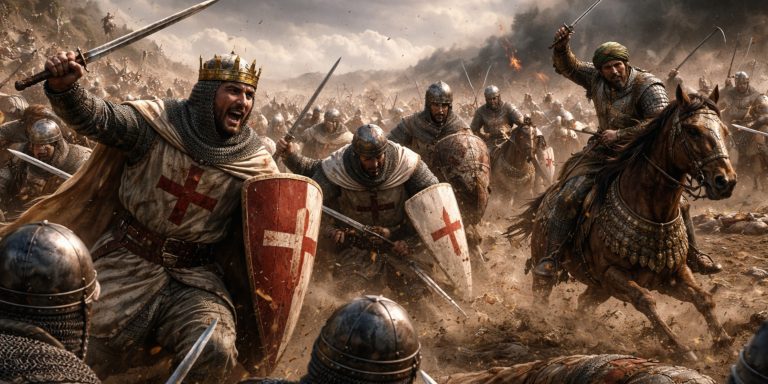
War never disappears from the medieval record, but its character changes dramatically over time. Early conflicts were often personal, limited, and constrained by logistics. By the later Middle Ages, war became more organised and more destructive.
Long campaigns meant sustained requisitioning of food and animals. Mercenary forces cared little for local survival. Siege warfare devastated towns not only when walls fell, but while defenders waited behind them, slowly starving.
For ordinary people, war was less about heroic battles and more about ruined fields, burned homes, and forced migration. Being alive during a relatively peaceful reign mattered more than any abstract political allegiance.
Disease and the Medieval Body
Medieval Europeans lived with disease constantly, but they did not expect annihilation. Childhood mortality was high, infections were routine, and medical knowledge was limited, yet communities adapted.
Pandemic disease changed that relationship overnight. The scale and speed of mortality undermined trust in institutions, medicine, and even faith. Chronic illnesses became secondary concerns when neighbours were dying within days.
Even outside major epidemics, malnutrition weakened immune systems. A bad harvest often translated directly into higher death rates, especially among the very young and the old. Health was inseparable from food and labour, and both were fragile.
Famine and Food Insecurity
Famine was the medieval fear that never quite went away. In better centuries, shortages were local and temporary. In worse ones, hunger spread across regions and lasted for years.
Medieval agriculture operated with little margin for error. A wet summer or late frost could unravel an entire year’s planning. Storage was limited, transport slow, and political intervention inconsistent.
What makes famine particularly cruel is its timing. It rarely arrived alone. Hunger weakened bodies just as disease spread and warfare disrupted recovery. When famine hit during already hard years, survival became a matter of chance rather than effort.
So, When Was Best or Worst?
The most honest answer is that medieval life rewarded good timing more than personal virtue. Being born in the twelfth century, in a stable region, during a stretch of decent weather could mean a life that, while hard, was recognisably human and hopeful.
Being born two centuries later, amid war, plague, and hunger, could mean a life defined by loss before adulthood. Medieval people understood this better than we sometimes give them credit for. They prayed not for comfort, but for continuity.
If there is a lesson here, it is that medieval Europe was not uniformly grim or golden. It was fragile. When systems held, life could improve. When they failed, everything collapsed at once. As a historian, that fragility feels uncomfortably familiar.