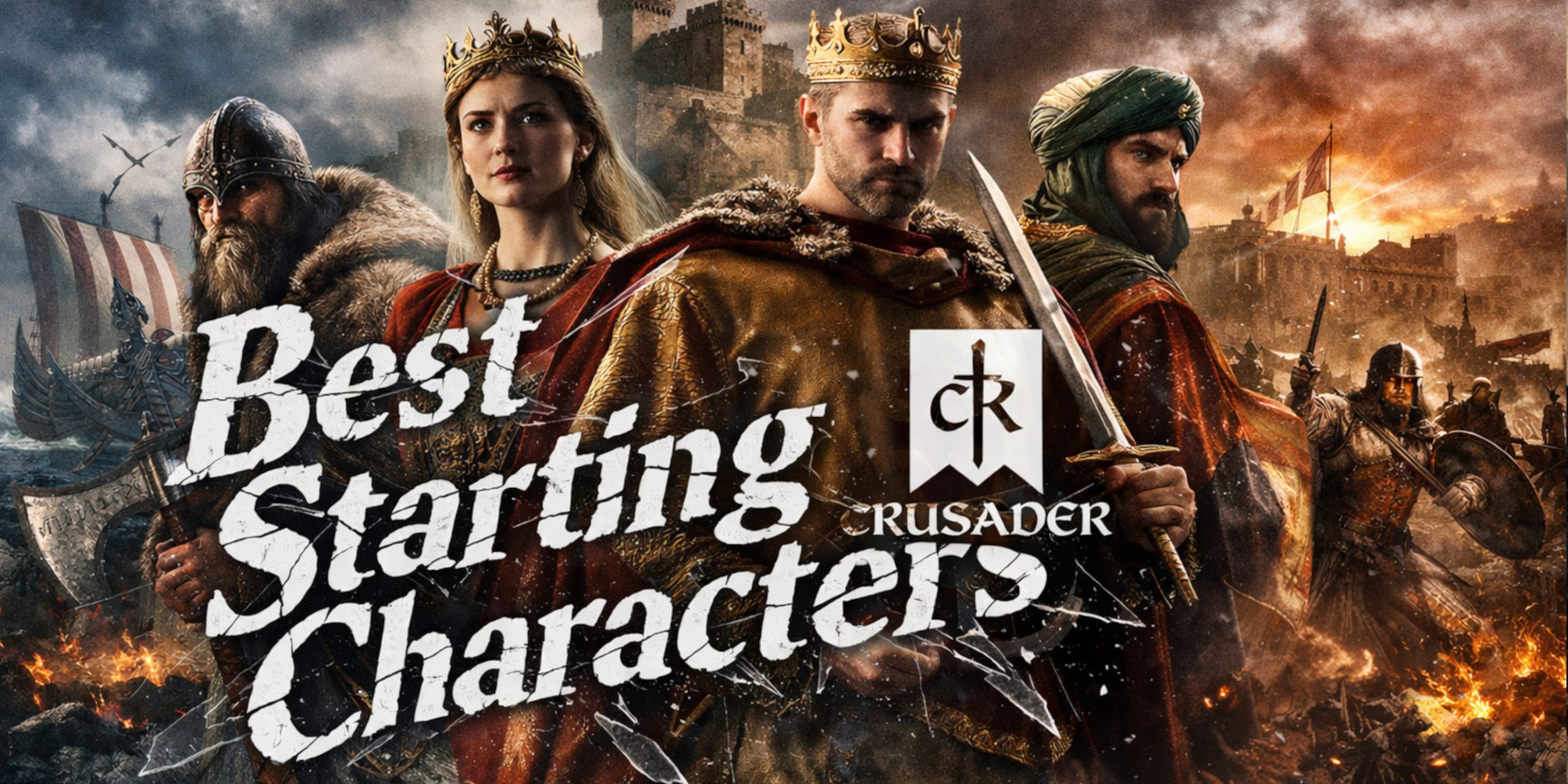
Starting a new Crusader Kings 3 campaign is one of those moments where possibility feels genuinely dangerous. Pick the wrong ruler and you are fighting peasants by year three. Pick the right one and you are rewriting medieval history before your first heir learns to read.
This guide focuses on starting characters who are strong, flexible, and interesting in 2026. Not just safe picks, but rulers who teach the game well, scale properly with DLC mechanics, and still offer room for disaster. Because that is half the fun.
Why Your Starting Character Matters More Than Ever
CK3 in 2026 is deeper, louder, and far more reactive than it was at launch. Royal courts, legitimacy, travel dangers, cultural traditions, and expanded struggle systems all mean your opening ruler shapes the entire tone of the campaign.
A good starting character should do three things. Give you political breathing room. Let you engage with at least one major system early. Still leave enough weaknesses to keep things interesting.
Matilda di Canossa, Duchess of Tuscany
If Crusader Kings 3 had a default protagonist, it would probably be Matilda.
She starts powerful, rich, and diplomatically relevant without being overwhelming. Tuscany sits at the crossroads of Italy, the Holy Roman Empire, and the Papacy, which means nearly every system in the game brushes up against you early.
Matilda shines in 2026 thanks to expanded regency mechanics, legitimacy pressure, and papal politics. You can play tall, meddle in imperial elections, or carve out an Italian empire while pretending that was always the plan.
She is also one of the best introductions to intrigue-lite politics. You do not need to scheme constantly, but knowing when to push and when to smile politely matters.
Haesteinn of Montaigu
Haesteinn remains the ultimate chaos pick, and that has not changed.
He starts old, pagan, and aggressively mobile, which means your early years are a race against time. But the tools he has access to are absurd. Varangian adventures, flexible faith options, and the ability to land almost anywhere on the map make him feel less like a ruler and more like a medieval exploit.
In 2026, travel risks and legitimacy systems actually improve Haesteinn’s gameplay. Every bold move carries consequences now. Marching across continents is no longer free, and settling somewhere hostile takes real planning.
If you want a campaign that feels like improvised storytelling rather than careful optimisation, this is still the gold standard.
King Alfonso VI of León and Castile
Alfonso’s appeal has only grown as Iberia has become one of the most mechanically dense regions in the game.
You begin with power, prestige, and immediate family drama. The Iberian Struggle forces you to think long-term rather than just conquer everything that moves. Diplomacy, culture, and timing matter far more here than raw military strength.
In 2026, expanded struggle resolutions and cultural divergence give Alfonso real strategic depth. You can unify Spain through compromise, domination, or a careful mix of both. None of them are easy, and all of them feel earned.
It is also one of the best starts for players who enjoy watching maps change slowly rather than explode.
Rurik Rurikid of Novgorod
Rurik remains one of the cleanest long-form starts in the game.
You begin small but influential, surrounded by cultures that can be absorbed, reformed, or replaced. This is a campaign about foundations. Faith reform, cultural hybridisation, and dynasty building all take centre stage.
The northern travel routes, court grandeur scaling, and reworked tribal to feudal transitions make Rurik far more engaging in 2026 than he was at launch. Every step towards statehood feels deliberate.
This is a slower start, but one that rewards patience and planning. If you enjoy watching systems stack over generations, Rurik is quietly brilliant.
King Harald Fairhair of Vestfold
Harald is ambition with a deadline.
You are expected to unify Norway, and the game does not hide that expectation. What makes Harald interesting is how many ways that unification can go wrong. Rival jarls, faith tension, and succession risks are always close.
With updated Norse mechanics, expanded raiding consequences, and harsher legitimacy checks, Harald’s campaign feels more grounded in 2026. You cannot just steamroll Scandinavia without managing internal politics.
It is a fantastic blend of warfare and governance, and a strong introduction to how conquest creates new problems rather than solving old ones.
Duke Vratislav of Bohemia
Bohemia is the thinking player’s start.
You sit inside the Holy Roman Empire with excellent development potential and just enough autonomy to be dangerous. This is a campaign about leverage rather than land grabs.
Royal court mechanics, contracts, and vassal obligations make Bohemia feel incredibly alive in 2026. You can outgrow the empire from the inside, or quietly dominate it through economics and marriages.
If you enjoy playing tall, manipulating systems, and winning without painting the map, this is one of the most satisfying starts in the game.
Emir Abd al-Rahman of Córdoba
Córdoba is no longer just powerful, it is demanding.
The Andalusian court is wealthy, cultured, and politically fragile. Managing religious tolerance, court expectations, and external threats all at once requires real attention.
In 2026, expanded court events and legitimacy systems make Abd al-Rahman’s rule feel precarious in a good way. You are always one bad decision away from internal collapse.
This is an excellent start for players who enjoy cultural play, diplomacy, and internal management more than conquest.
Best Starting Characters by Playstyle
If you prefer structured growth and long-term planning, Matilda, Rurik, and Bohemia are excellent choices.
If you want chaos, migration, and storytelling-first gameplay, Haesteinn still reigns.
If regional mechanics appeal to you, Iberia and Scandinavia remain the most mechanically rich areas in 2026.
Takeaway
The best starting character in Crusader Kings 3 is not about raw strength. It is about momentum.
Good starts give you space to learn, room to fail, and enough pressure to keep things interesting. In 2026, CK3 rewards rulers who adapt rather than optimise, and these characters all give you that chance.
Pick one, make a bad decision early, and see where the dynasty ends up. That is still the point.