Cedynia sits on a bend of the Oder where borders blur and tempers rise. In 972, that bend became a proving ground for Mieszko I of the Polans and a warning to the Saxon frontier. The clash was not a grand imperial campaign but a sharp, local war with lasting consequences. For early medieval warfare, this is often how history moves, one disputed crossing at a time.
Background and Causes
By the 960s, Mieszko I had consolidated power across much of what would become Poland. Expansion towards Pomerania brought him into friction with Saxon border lords, particularly Odo, Margrave of the Saxon March. Imperial authority under Otto I was real but distant, and ambitious margraves had a habit of acting first and explaining later.
Cedynia lay within this grey zone. Odo’s incursion was likely framed as frontier policing, though it looked suspiciously like a bid for prestige and plunder. Mieszko, newly baptised and keen to be seen as a legitimate Christian ruler, had no intention of appearing weak.
The Battlefield at Cedynia
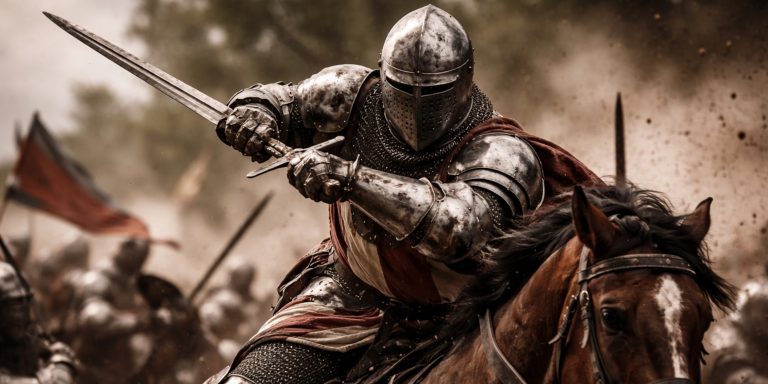
The terrain favoured the defender. Rolling hills, wooded slopes, and marshy ground near the Oder limited manoeuvre. It was not the sort of place where heavy cavalry could stretch its legs. Infantry, local knowledge, and timing mattered more than fine armour.
Mieszko chose his ground carefully. This was not luck. It was preparation.
Foces
Polish Forces
| Element | Details |
|---|---|
| Commander | Mieszko I |
| Senior noble | Czcibor, Mieszko’s brother |
| Estimated strength | Several thousand |
| Core troops | Armoured retinue infantry and light cavalry |
| Supporting troops | Slavic levy infantry |
Saxon Forces
| Element | Details |
|---|---|
| Commander | Odo, Margrave of the Saxon March |
| Allied nobles | Saxon and possibly Thuringian retainers |
| Estimated strength | Comparable to Polish force |
| Core troops | Heavily armed Saxon infantry |
| Supporting troops | Mounted retainers |
Numbers are uncertain. Medieval chroniclers loved moral lessons more than headcounts.
Leaders
Mieszko I
A ruler still building his reputation. Pragmatic, politically sharp, and already thinking beyond the battlefield. Cedynia showed his ability to blend diplomacy, religion, and force without confusing one for the other.
Czcibor
Often overlooked, which is unfair. His role in the flanking manoeuvre decided the battle. Family loyalty, when it works, is a dangerous weapon.
Odo of the Saxon March
An experienced frontier lord who underestimated both terrain and opponent. A reminder that confidence can age badly when not backed by caution.
Arms and Armour
Polish Equipment
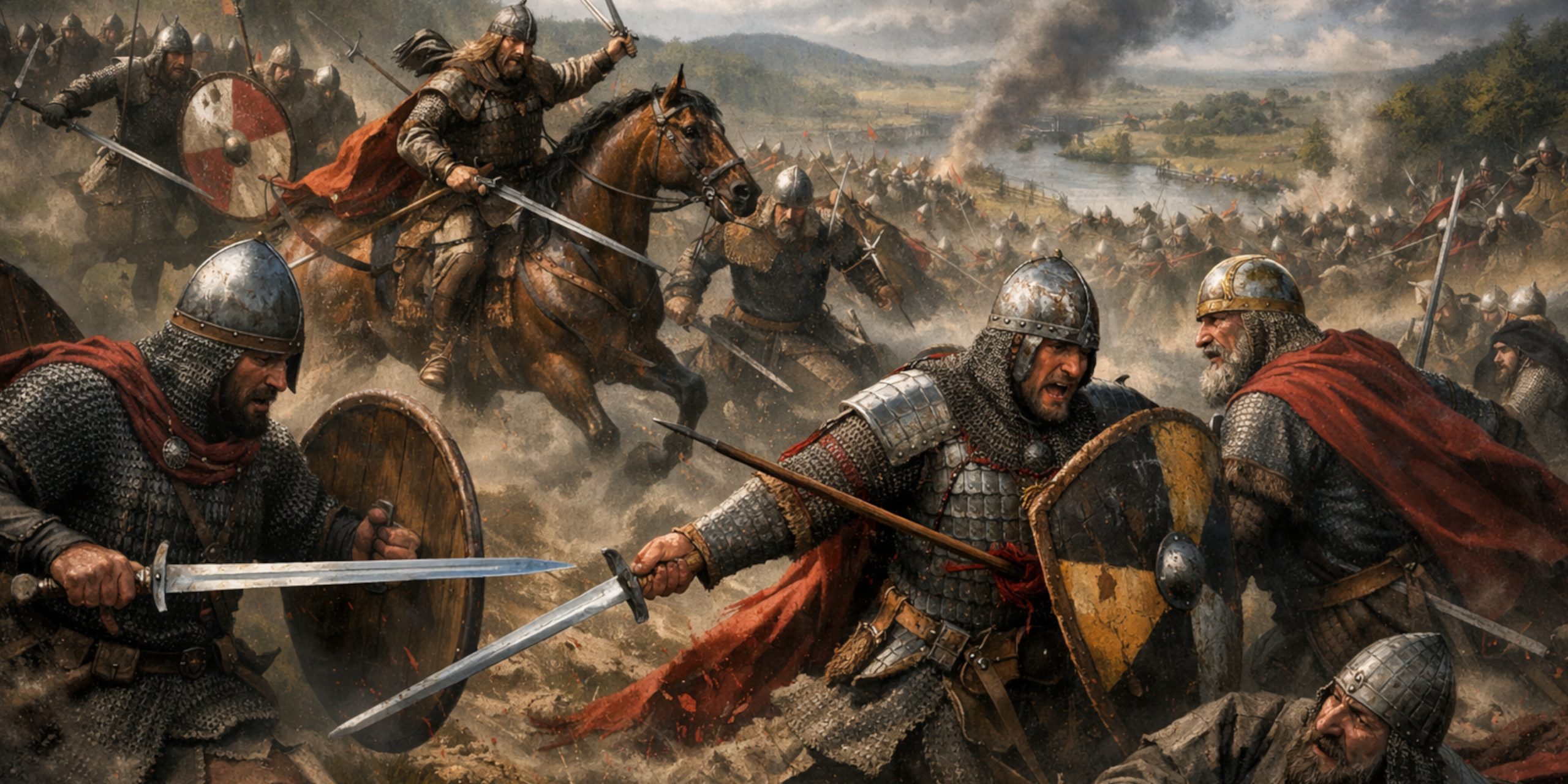
- Swords: Early medieval Slavic and imported Frankish pattern swords, typically broad, straight, and suited to cutting
- Spears: The primary weapon for most infantry
- Shields: Round wooden shields with iron bosses
- Armour: Mail shirts for elite warriors, padded garments for levies
- Helmets: Simple conical or segmented designs
Saxon Equipment
- Swords: Carolingian type spatha, often higher quality steel
- Spears and axes: Common among infantry
- Shields: Round or kite shaped transitional forms
- Armour: Mail more widespread among Saxon troops
- Helmets: Conical helmets with nasal protection
Equipment quality favoured the Saxons slightly, but terrain has never read catalogues.
The Battle Timeline
Morning:
Odo advances towards Cedynia, expecting a straightforward engagement.
Midday:
Initial clashes favour the Saxons. Polish forces give ground deliberately, drawing the enemy forward.
Early afternoon:
Czcibor leads a concealed force around the flank, emerging from wooded high ground.
Late afternoon:
The Saxon formation collapses under pressure from multiple directions. Retreat turns into rout.
Evening:
Polish forces secure the field. Odo withdraws with heavy losses.
Archaeology and Material Evidence
Archaeological work around Cedynia has revealed early medieval fortifications and settlement layers consistent with a defended frontier zone. Weapon finds are sparse, which is typical for battles of this period, as useful metal tended to walk away after the fighting stopped.
Topography remains the strongest witness. The slopes and valleys still explain the battle better than any artefact.
Contemporary Voices
Widukind of Corvey, writing later in the tenth century, noted the defeat of the Saxons with clear discomfort, describing how pride led to disaster. Thietmar of Merseburg, writing in the early eleventh century, referred to the engagement as a warning against disobedience to imperial authority.
Their tone matters. Cedynia embarrassed the Saxon frontier elite more than it threatened the Empire itself.
Aftermath and Significance
Otto I summoned both parties, and Odo was reprimanded. Mieszko emerged stronger, not only militarily but diplomatically. He had defended his territory without openly challenging imperial power, a balance many rulers failed to strike.
Cedynia did not found Poland, but it helped secure its borders at a critical moment. It also sent a message that this new Christian ruler in the east was not a temporary inconvenience.
Historical Perspective
Cedynia rewards close attention because it is small, sharp, and revealing. No knights charging in heroic arcs, no decisive annihilation. Just preparation, timing, and a well placed flank attack. Medieval warfare was often like this, messy, local, and decisive in hindsight.
If there is dry humour to be found, it lies in how often ambitious border lords learn that geography is not impressed by rank.
Sevenswords Takeaway
The Battle of Cedynia stands as an early example of Polish statecraft expressed through arms. Mieszko I showed that survival on a contested frontier required more than bravery. It required patience, planning, and a willingness to let the enemy make the first mistake. History, as ever, took notes.
Watch the documentary: