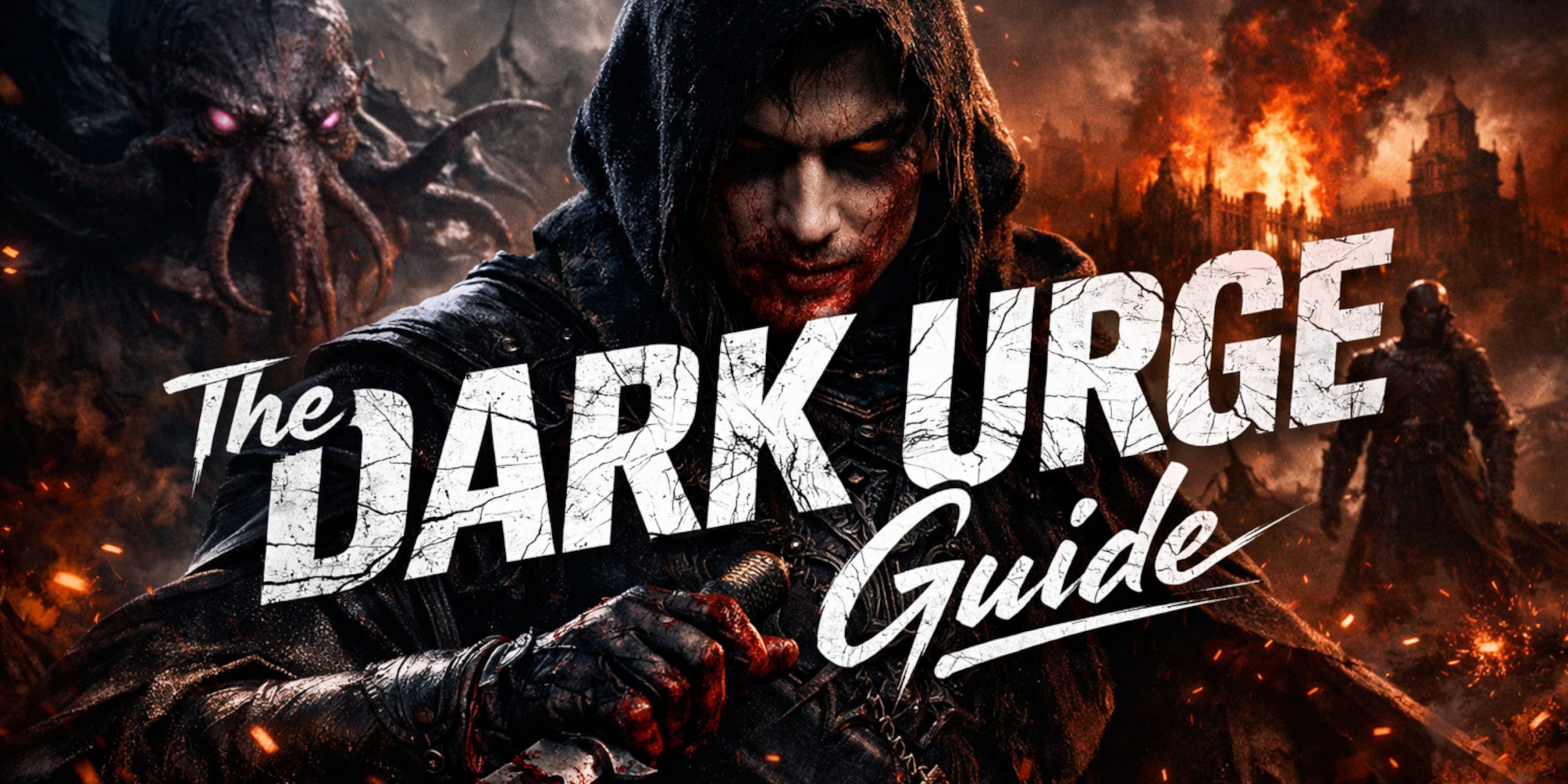
What Is the Dark Urge in Baldur’s Gate 3?
Baldur’s Gate 3 offers several origin paths, but none hit quite like the Dark Urge. Unlike a standard custom character, the Dark Urge comes with built in amnesia and a deeply unpleasant hobby: spontaneous murderous impulses.
You are not just roleplaying a morally flexible adventurer. You are uncovering a pre written backstory tied directly to the game’s central conflict. That means unique scenes, altered quest outcomes, and some moments that feel less like a choice and more like a test of your willpower.
If Tav is a blank slate, the Dark Urge is a cracked mirror.
Should You Play Dark Urge First?
Short answer, you can. Long answer, it depends on what you want.
If this is your first run and you enjoy chaos, moral tension, and heavy narrative weight, go for it. The Dark Urge adds layers to Act 1 that normal characters simply do not see.
If you prefer a slower introduction to the world, start with a custom Tav and come back later. The Dark Urge path reshapes companion arcs and can close doors permanently if you lean into the bloodier options.
It is less about difficulty and more about emotional volatility.
Act 1: Early Choices That Matter
The Alfira Incident
Early in Act 1, the tiefling bard Alfira may visit your camp. If you give in to the urge, she dies. No clever workaround unless you knock her out beforehand and manipulate the scene.
Consequence:
You lose a recurring character with Act 2 relevance. Your companions react. The tone of your camp shifts.
This is the first real signal that the Dark Urge is not flavour text. It changes the board.
Resisting vs Indulging
Throughout Act 1 you will face intrusive dialogue options. Sometimes resisting is a skill check. Sometimes it is pure roleplay.
Resisting tends to unlock approval from good aligned companions like Shadowheart and Wyll. Indulging leans you toward approval from Astarion, depending on context.
The game tracks your choices quietly. By the time you reach Act 2, that tally starts to speak louder.
Act 2: The Butler and the Truth
Enter Sceleritas Fel, your cheerful, deeply disturbing butler. He confirms what the game has been hinting at. You are not just troubled. You are connected to something far worse.
Here the Dark Urge becomes explicitly tied to the main villain and the cult structure in Baldur’s Gate. You are not a random pawn. You were important.
You face a critical turning point:
Resist the Urge and reject your heritage.
Embrace it and accept your role.
Consequence:
Resisting leads toward a redemption arc with a powerful Act 3 payoff.
Embracing it steers you into a darker alignment and a drastically altered final act.
This is where your playthrough stops being spicy and starts being decisive.
Companion Reactions and Romance Consequences
Your party notices everything.
If you indulge repeatedly, some companions may leave. Others will confront you. Romance paths can fracture depending on your choices.
Astarion often reacts with curiosity rather than horror. Shadowheart may sympathise with your internal struggle. Karlach will not tolerate casual cruelty for long.
The Dark Urge route creates more intense camp scenes. Confessions feel heavier. Confrontations feel earned.
You are not just picking dialogue options. You are shaping how people see you.
Act 3: Embrace or Defy Your Legacy
By the time you reach Baldur’s Gate, the full truth is revealed. Your character has a direct connection to Bhaal and the cult’s inner circle.
This is the climax of the Dark Urge storyline.
Major choice:
Submit fully to Bhaal.
Defy him and reclaim your identity.
Consequences differ dramatically.
Submitting locks you into a darker ending path. You gain power, but it comes with isolation and certain narrative closures.
Defying Bhaal allows for a redemption ending and some of the most emotionally satisfying dialogue in the game. Companions respond strongly to this decision. The ending shifts accordingly.
This is not cosmetic. The final scenes change in tone, narration, and implication.
Dark Urge Exclusive Rewards
You gain access to unique scenes, dialogue, and a powerful cloak early in the game.
The Deathstalker Mantle grants invisibility after a kill once per turn. Mechanically, it supports stealth builds and assassin style play.
It feels thematically appropriate, which is both cool and slightly concerning.
Best Builds for Dark Urge
From a mechanical perspective, the Dark Urge works especially well with:
Rogue Assassin for stealth execution synergy
Oathbreaker Paladin for narrative alignment
Gloom Stalker Ranger for ambush potential
Sorcerer for chaotic, power hungry flavour
The story does not force a class, but some combinations feel more cohesive. A lawful good cleric Dark Urge resisting every impulse has a very different energy from a dagger happy assassin embracing chaos.
Both are valid. One just sleeps better at night.
Is Redemption More Satisfying?
Personally, yes.
The redemption arc carries more emotional weight. You confront your past, reject it, and earn your ending. It feels intentional rather than inevitable.
The full embrace route is bold and unapologetic. It is darker, more ruthless, and fits players who want to see how far the game will let them go.
Both paths are well written. One feels tragic. The other feels earned.
Seven Swords Takeaway
The Dark Urge isn’t just an ‘evil’ mode toggle. It is a character study layered into the main narrative of Baldur’s Gate 3.
You are given power, temptation, and context. The game does not judge you loudly. It just remembers.
If you want a playthrough that feels personal, uncomfortable, and occasionally hilarious in a slightly unhinged way, this origin delivers.
Just maybe warn your camp before you go to sleep.