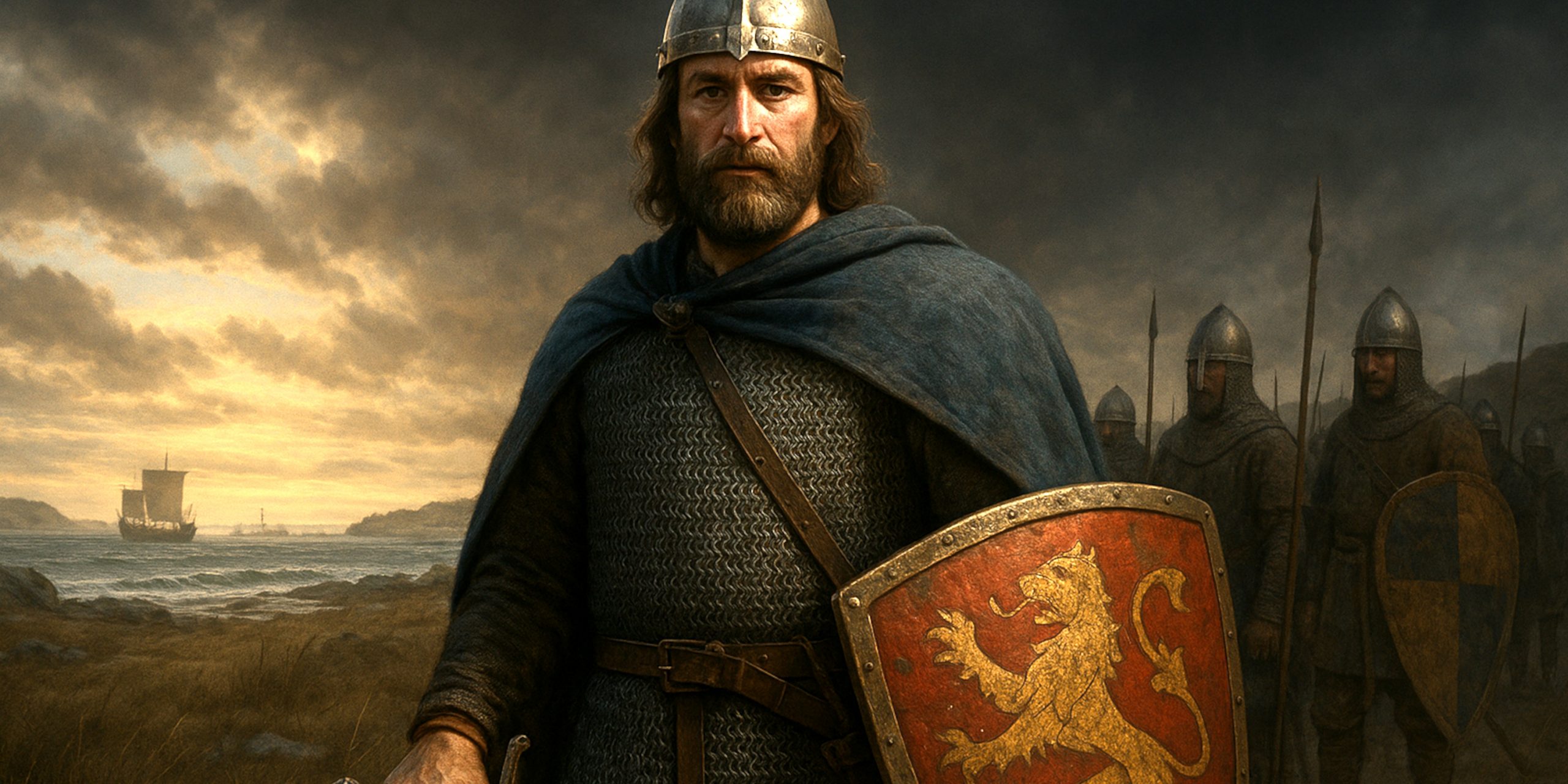
Richard II of Normandy, sometimes called Richard the Good, ruled from the final years of the tenth century into the early eleventh. His reign is often overshadowed by the violent charisma of Vikings before him and the world-altering deeds of Normans after him. Even so, he stands as a hinge figure. The duchy he inherited was still negotiating its Scandinavian roots while settling fully into the fabric of Western Christendom.
Writing about Richard II always gives me a faint sense of trying to sketch a man walking between two worlds. He grew up with older nobles who remembered raiding and pillaging, yet he governed through marriage alliances, church patronage and quiet political pressure. It is tempting to label him cautious, though caution in his position was a form of strength. He was, in effect, the steward of a young polity that was still deciding what it wanted to be.
Arms and Armour
Richard II lived during a period when aristocratic equipment was shifting from recognisably Viking forms to the kit that would define early medieval knighthood. We have no surviving set conclusively tied to him, but descriptions and comparable pieces allow a fair reconstruction of the type of gear he and his household warriors would have employed.
- Swords
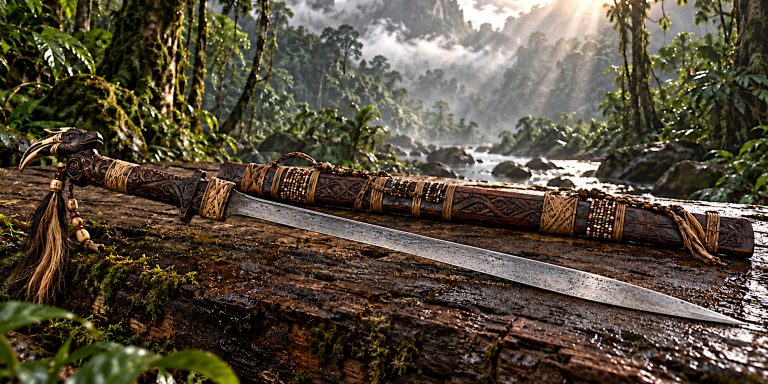
The typical noble sword of his era was a Type X blade with a broad fuller, a short guard and a simple Brazil nut or lobed pommel. These weapons still carried echoes of their Norse ancestors, though their decoration began to reflect the tastes of the Christian court. In truth, one might imagine Richard favouring a clean, elegant weapon rather than ornate showmanship. - Spears and Lances
Spearheads from Norman sites show tapered cutting edges suited for both thrusting and slashing. Mounted combat was growing in importance, and households like Richard’s were adapting the spear into a proto-lance intended for shock action. - Shields
The round shields of the Viking age were giving way to the kite shield. This development added leg protection and helped mounted warriors hold formation. The scenes from later Bayeux traditions often get projected backwards, and while we should resist easy assumptions, the shift to kite forms certainly began in Richard’s lifetime. - Armour
Mail hauberks, knee length and sometimes incorporating coifs, would have been standard for the better equipped. Helmets followed the nasal style, occasionally with segmented construction. Decorative mounts from the period reveal the growing taste for crosses, knotwork and animal ornamentation that blended Christian symbolism with older Norse patterns.
Even if Richard was not a warrior in the mould of his forebears, his court expected martial readiness, and the duke maintained an elite retinue that reflected this gradual Norman evolution.
History and Reign
Richard II succeeded his father Richard I during a time of political pressure from the Frankish crown, unrest among the Norman nobility and tension with the powerful churchmen of the region. His response was not bombast but careful governance.
He strengthened ties with the Capetian kings through marriage alliances. He supported monastic reform, notably at Fécamp, which became a beacon of Benedictine renewal under his patronage. The church, once wary of Viking converts who still smelled of sea-spray and bloodshed, came to view Richard’s court as a reliable partner.
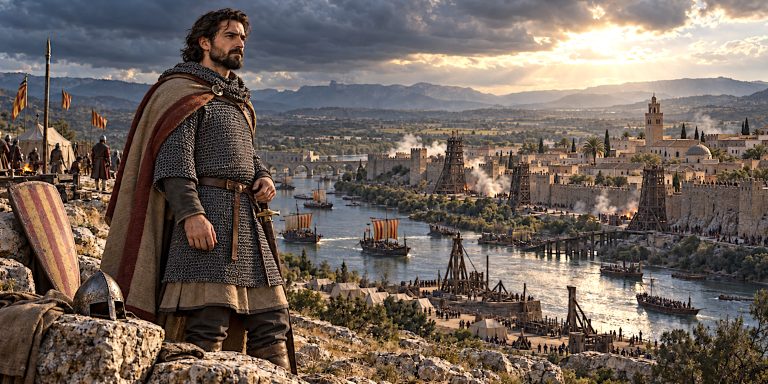
He also encouraged coastal trade, an often overlooked element of Norman growth. Ports that had once served as raiding bases adapted to commercial life. If one is inclined to romanticise, it is easy to picture Richard standing on the shore at Rouen, watching cargo ships where longboats had once launched.
Battles and Military Acumen
Richard II was not a battlefield duke in the sense of later Normans, yet he understood military power as a language. His campaigns were limited, targeted and usually defensive.
He put down unrest among rebellious vassals with prompt and firm action, particularly the revolt involving his brother and discontented nobles early in his reign. Contemporary remarks suggest he acted decisively, even sharply, though he avoided unnecessary bloodshed.
His dealings with Brittany show a man who preferred political leverage backed by the threat of force rather than the spectacle of invasion. Normandy’s borders remained stable, a small accomplishment only if one forgets how easily neighbouring lands unraveled at the time.
By building a disciplined ducal cadre and promoting mounted retainers, he laid groundwork for the formidable Norman cavalry ethos that his sons and grandsons would wield to astonishing effect.
Contemporary Voices
The chronicler Dudo of Saint-Quentin wrote admiringly, though with a poet’s tendency to gild the truth. He claims Richard ruled with a kind of serene justice and speaks of him as a prince who preferred peace but was never shy to rouse his knights when duty required it. One must read Dudo with raised eyebrows at times, yet his praise reflects genuine respect from men who valued tough, pragmatic leadership.
Where to See Artefacts From His Reign
Although objects directly linked to Richard II are scarce, museums and sites across Normandy preserve material culture from his era.
- Fécamp Abbey
The abbey church and surviving monastic buildings echo Richard’s investment in religious reform. Architectural phases from his patronage remain visible in foundations and carved fragments. - Rouen
The Musée des Antiquités de Rouen holds arms, dress accessories, and liturgical objects from the late tenth and early eleventh centuries. These give a sense of the craftsmanship of his court. - Caen and Bayeux Region
While the famous tapestry comes after his reign, the armour and equestrian gear found in excavations nearby reflect the transitional Norman identity that crystalised under Richard.
These sites provide a tactile impression of a world in motion, where Scandinavian craft slowly blended into the burgeoning Romanesque aesthetic.
Latest Archaeology
Recent excavations in Normandy continue to refine our understanding of Richard II’s time. Work at Fécamp has uncovered phases of earlier monastic construction, confirming that Richard’s reforms built upon an already significant but faltering religious centre. Soil analysis near the abbey has revealed evidence of increased agricultural activity, which aligns with accounts of the economic expansion fostered by his rule.
At coastal settlements like Quettehou and Barfleur, digs have revealed harbour installations and imported pottery. These discoveries reinforce the view that Normandy was becoming a maritime commercial hub rather than a launchpad for raids. It is one thing to read chroniclers waxing lyrical about prosperity. It is another to hold a shard of Iberian ware in your hand and realise it reached Normandy during Richard’s lifetime.
Legacy
Richard II’s reputation often suffers from comparison. He was not Rollo the conqueror, nor William the duke who would remodel England. Yet without Richard’s calm consolidation, neither of those figures would cast such long shadows.
He stabilised his duchy, strengthened its church, modernised its aristocratic culture and prepared the ground for the explosive Norman century that followed. His court became a training ground for the warriors and administrators who later crossed the Channel or rode to Italy and the eastern Mediterranean.
If history occasionally forgets the man who steadied the ship, we should resist that habit. Richard II may not have sought glory, but he shaped a realm that would soon shake Europe.
Seven Swords Takeaway
Studying Richard II is a pleasant reminder that medieval power was not always won by the loudest sword. Some rulers forged empires through ferocity. Others, like Richard, shaped their worlds through patience, strategy and well judged alliances. I find myself quietly admiring him. His Normandy feels like a landscape where the echoes of Viking raids were giving way to the rhythms of monasteries, markets and cavalry musters. A place in transition, guided by a duke who understood how to ride the change rather than be crushed beneath it.
If he were to wander into a modern museum and see the relics of his age, I suspect he would nod approvingly at the craftsmanship and then raise one eyebrow at generations who remembered everyone but him. History can be rude like that, though in Richard’s case, it is worth correcting.
Watch the documentary: