Few TV shows capture the grit, glory, and sheer audacity of ancient Rome quite like Spartacus. Premiering in 2010, the series didn’t shy away from blood, sex, or political scheming, but beneath the spectacle lay a surprisingly layered exploration of Roman society. Between the arena sand and the Senate halls, Spartacus paints Rome as a place both mesmerising and monstrous, where freedom was a luxury and power was the ultimate addiction.
The World of Rome: A Society Built on Contradictions
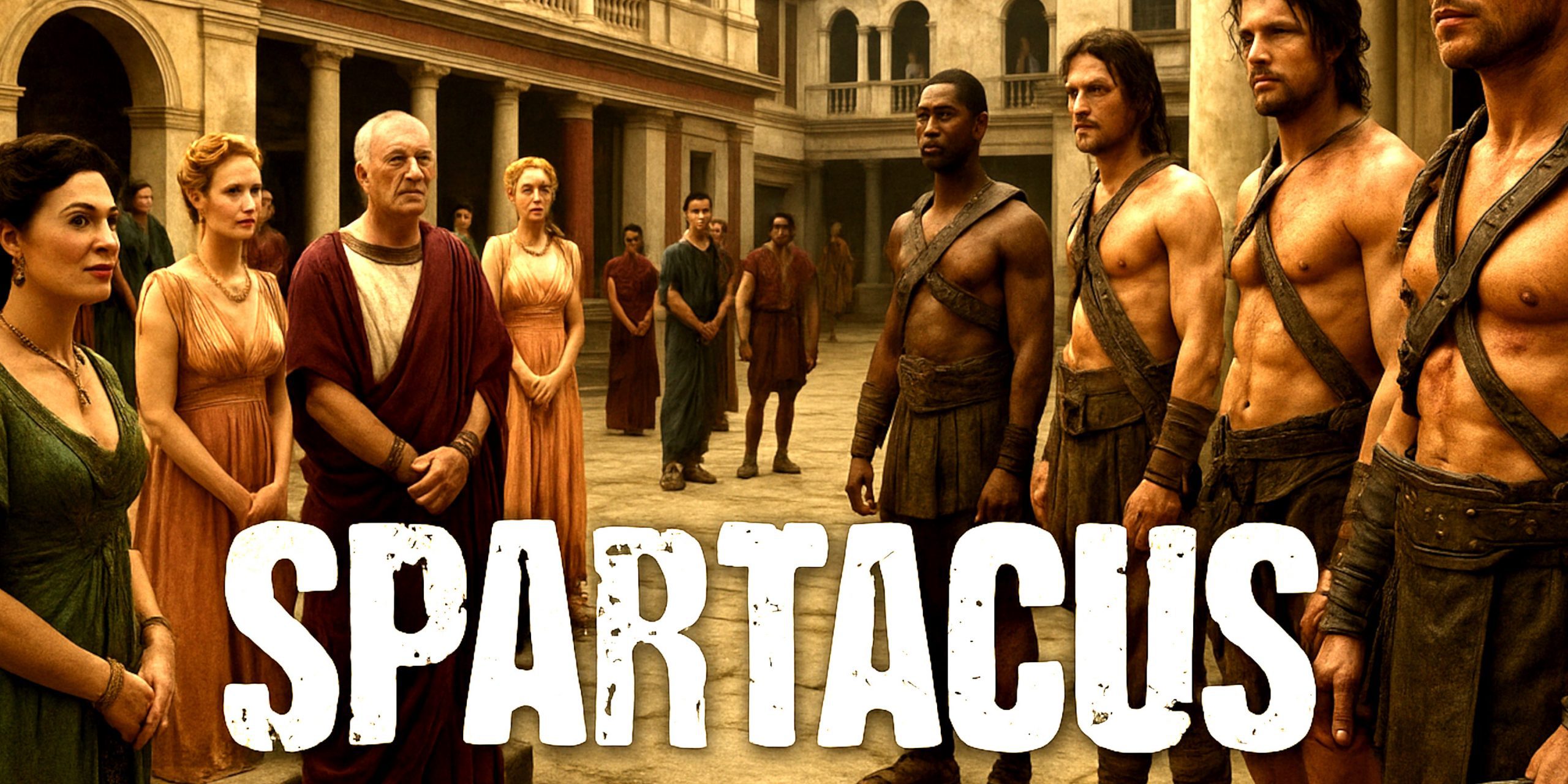
One of the most fascinating aspects of Spartacus is how it portrays Rome as both magnificent and grotesque. The architecture gleams, the banquets overflow, and everyone speaks of honour and civilisation. Yet the foundation of all that splendour is cruelty. Slavery fuels the economy, blood sports entertain the elite, and loyalty is a coin that’s easily traded.
The show cleverly uses contrast to reveal these contradictions. The ludus (gladiator school) mirrors Rome itself: a rigid hierarchy where strength and cunning decide fate. Gladiators rise by spilling blood, patricians climb through betrayal and political murder. Different arenas, same rules.
Class and Power: Rome’s Invisible Chains
At the heart of the series lies a blunt truth: Roman society runs on inequality. Spartacus refuses to romanticise that. The upper classes are dazzlingly dressed but morally bankrupt, their sense of superiority built on the backs of slaves. Meanwhile, the lower classes live under constant threat, whether they are gladiators forced to fight or servants punished for existing in the wrong place at the wrong time.
Characters like Batiatus and Lucretia embody the ruthless middle class, desperate to claw their way into Rome’s higher circles. They buy gladiators like status symbols, hoping prestige will wash away their provincial roots. It’s hard not to see a reflection of modern social climbing here, just with fewer hashtags and more decapitations.
Gender, Desire, and Control
The show’s portrayal of women is complicated, and intentionally so. Roman women, particularly those of status, are shown to wield influence in private but remain trapped by the social order. Lucretia, Ilithyia, and Naevia each navigate a world that weaponises their beauty while denying them agency.
But Spartacus also lets them bite back. These women manipulate, plot, and fight for survival, proving that power in Rome wasn’t always held by men with swords. The series may exaggerate for drama, but it nails one core truth: in Roman society, every interaction was a negotiation of dominance, whether in the Senate, the bedroom, or the arena.
The Politics of Blood
Rome’s obsession with violence wasn’t just for show. Spartacus makes it clear that bloodshed was political theatre. Gladiatorial games served as tools of distraction, pacifying the masses while reinforcing social hierarchy. The elite watched men die to remind everyone who held power and who didn’t.
The rebellion led by Spartacus exposes that hypocrisy. His defiance forces Rome to confront what it had built. The enslaved man becomes the mirror in which Rome sees its own decay. The fact that the Senate’s response is even more brutality says everything about a system too corrupt to reform itself.
Historical Exaggeration vs. Social Truth
Sure, Spartacus isn’t a documentary. It amps up the blood and slow-motion sword swings to cinematic extremes, and historical purists could write essays on its inaccuracies. But emotionally, it’s often dead-on. The corruption, the class tension, the decadence and desperation of Rome all feel painfully real.
It’s a reminder that history isn’t just what happened. It’s also about what those events meant, and how we interpret them. Spartacus may fictionalise, but it captures the essence of a society that was equal parts awe-inspiring and horrifying.
Seven Swords Takeaway
Watching Spartacus is like staring into a cracked mirror version of civilisation. The Romans believed they were at the peak of human achievement, yet the show reveals a world addicted to domination and spectacle. It’s not subtle, but neither was Rome.
As a portrayal of society, Spartacus succeeds because it doesn’t just show us Rome’s triumphs, it makes us feel the cost. Every lavish banquet has a body buried behind it, every victory a rebellion waiting to happen. And somewhere in that tension between glory and guilt lies the reason Spartacus still hits as hard as a sword to the gut.