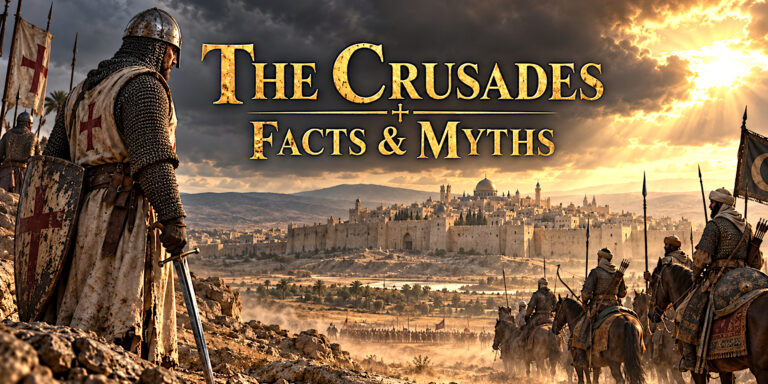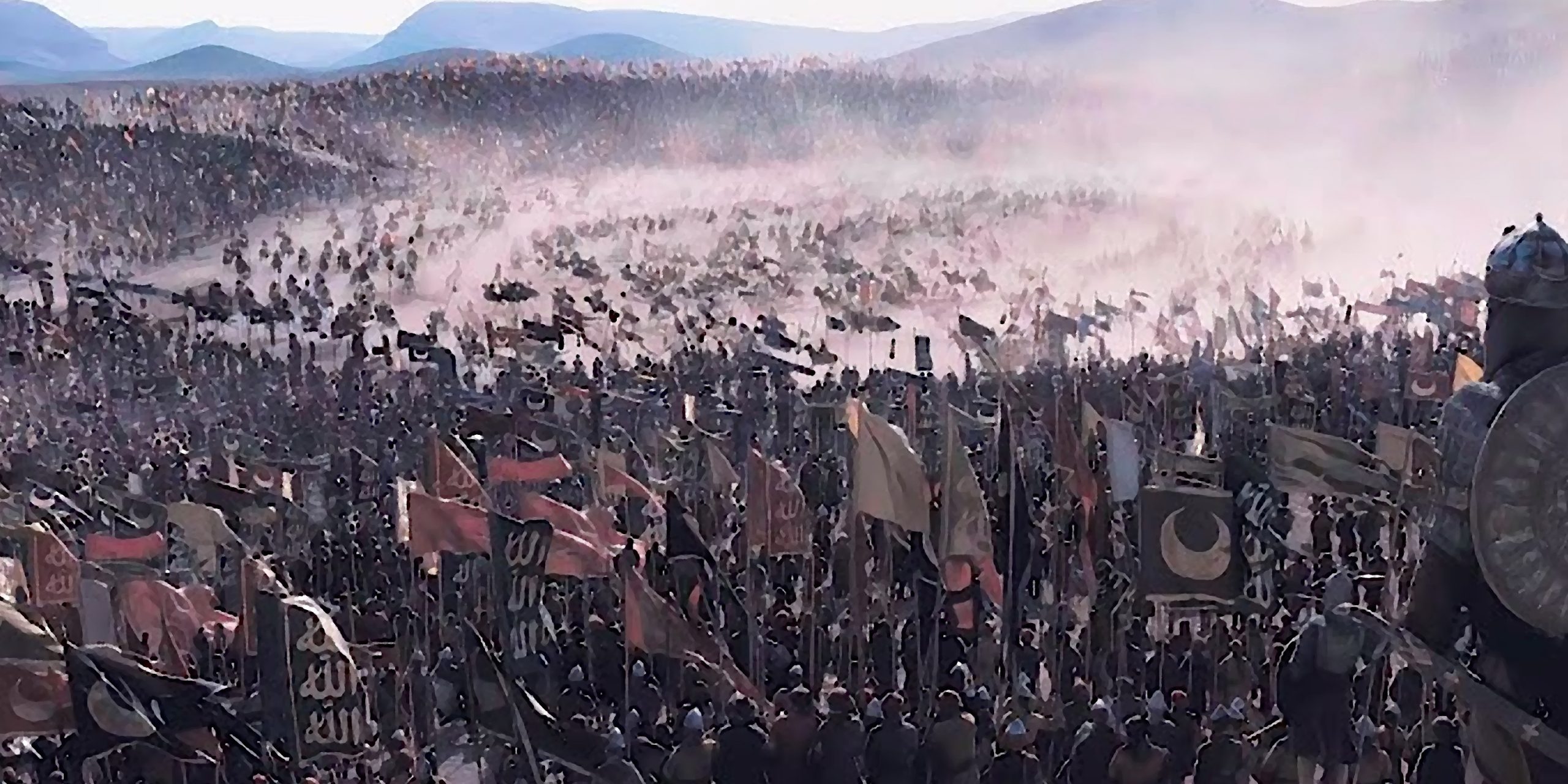
Ridley Scott’s Kingdom of Heaven presents a stylised version of the Crusades, centred on the defence of Jerusalem in the late 12th century. While the film takes liberties with historical accuracy, one of its most significant underlying themes is the lead-up to the catastrophic Battle of Hattin in 1187. This battle, fought between the Crusader states and Saladin’s forces, marked a turning point in the struggle for the Holy Land.
Historical Context
Following the Second Crusade, the Latin Kingdom of Jerusalem became increasingly fragile, plagued by internal disputes among the nobility and the constant pressure of Muslim reconquest. The Kingdom’s stability was undermined by figures such as Raynald of Châtillon, whose attacks on Muslim caravans violated truces and inflamed tensions, and by weak or divided leadership at court.
Saladin, the Sultan of Egypt and Syria, had spent years unifying the Muslim world and preparing to reclaim Jerusalem. His military campaigns were not random acts of aggression, but part of a long-term strategy grounded in both religious conviction and pragmatic politics.
The Film’s Interpretation
Kingdom of Heaven portrays Balian of Ibelin as a heroic and tolerant figure who rises to prominence through a combination of skill, humility, and moral clarity. While the real Balian did play a crucial role in the events following Hattin, including the defence of Jerusalem, his story in the film is heavily dramatised.
The film omits the Battle of Hattin entirely, choosing instead to focus on the siege of Jerusalem. Yet it hints at the tensions and misjudgements that led to the disaster. The character of Guy de Lusignan, depicted as a reckless warmonger, mirrors the historical figure’s real-life role in provoking the confrontation with Saladin.
The Real Battle of Hattin
The Battle of Hattin took place on 4 July 1187 near Tiberias in present-day Israel. The Crusader army, led by King Guy, marched out from the fortress of Sephoria in an attempt to relieve the siege of Tiberias, despite being advised to remain in their fortified positions. The decision was made in part due to political pressure from Raynald and other aggressive lords, reflecting deep divisions within the Crusader leadership.
Saladin exploited their mistakes with ruthless precision. His forces harassed the Crusaders in the heat of summer, denying them access to water and forcing them into open battle in a weakened state. The Frankish army was surrounded and destroyed. Nearly all of its leaders were captured, including King Guy. Raynald was executed shortly afterwards by Saladin himself.
Impact on Jerusalem
The defeat at Hattin left the Kingdom of Jerusalem virtually defenceless. Within months, Saladin had taken most of the Crusader-held cities, including Jerusalem in October 1187. This loss triggered the launch of the Third Crusade, which brought figures like Richard the Lionheart to the Holy Land but failed to recapture the city.
Balian of Ibelin did indeed lead the defence of Jerusalem. Negotiating directly with Saladin, he secured terms that allowed many of the city’s inhabitants to leave peacefully. His actions earned him respect from both sides, though they were more pragmatic than the idealism shown in the film.
Legacy and Representation
The Battle of Hattin stands as one of the most decisive defeats in Crusader history. It broke the military strength of the Latin Kingdom and paved the way for Saladin’s victories. For the Islamic world, it represented a moment of triumph and religious vindication. For Christendom, it was a call to arms and a sobering reminder of the consequences of disunity and overconfidence.
Kingdom of Heaven, while historically loose, manages to capture the atmosphere of decay and tension that preceded the disaster. Its portrayal of religious tolerance, although anachronistic in parts, speaks to modern sensibilities rather than the harsh realities of 12th-century warfare. Still, the echoes of Hattin are felt throughout the film’s narrative.
The Seven Swords Takeaway
The Battle of Hattin reshaped the map of the Levant and the future of the Crusades. Though it is absent from Kingdom of Heaven, its consequences underpin much of the film’s story. Understanding the real events adds depth to the viewing experience and highlights how fragile the Latin Kingdom had become by the late 12th century.
Watch the clip: