History likes its generals simple. Alexander used the hammer and anvil. Hannibal encircled people. Wellington stood behind a hill. Napoleon moved quickly and, until 1812, usually in the correct direction.
These summaries are useful, but only as a beginning. Great commanders did not win because they possessed one secret manoeuvre. They built armies, read opponents, managed imperfect information, kept coalitions together and made decisions while tired men, frightened horses and uncertain weather interfered with every tidy plan. Their reputations were also shaped by chroniclers, court politics and later military theorists. A famous victory can become a diagram so clean that the blood, confusion and luck disappear from it.
This is what we can reasonably say about six of history’s most celebrated commanders, the methods associated with them, the evidence behind their legends and the limits of their generalship.
What Makes a General Legendary?
A brilliant battlefield performance is not quite enough. The commanders who dominate military history tend to combine several qualities:
- Strategic judgement: choosing aims that an army can realistically achieve
- Operational skill: moving and supplying forces across an entire campaign
- Tactical control: using troops effectively once battle begins
- Adaptability: recognising when the original plan has become a historical curiosity
- Leadership: persuading soldiers and subordinates to endure risk, hunger and exhaustion
- Political awareness: understanding that military victory is meant to produce a political result
No commander in this article possessed all six qualities at every stage of his career. That matters. Alexander conquered an empire but left no durable succession. Hannibal won his most famous battle but not his war. Napoleon repeatedly rebuilt France’s military position, then exhausted the state in pursuit of an increasingly impossible settlement. A useful history of command studies failure as closely as triumph.
Alexander the Great: Combined Arms and the Decisive Point
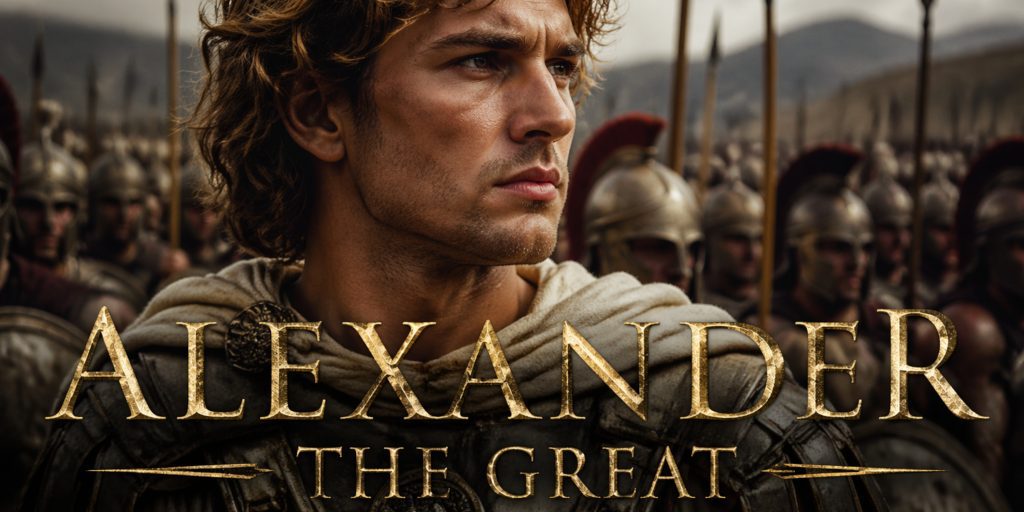
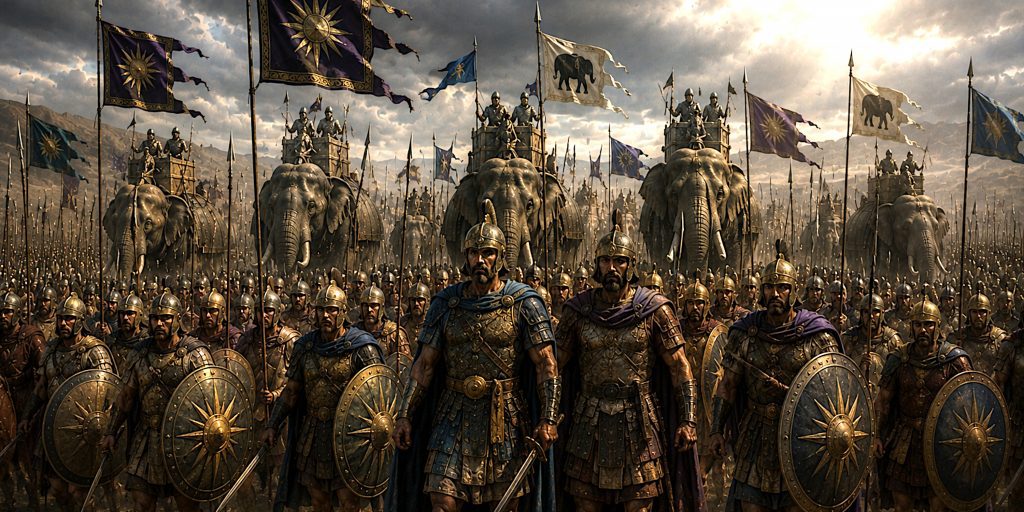
Alexander III of Macedon inherited an exceptional military instrument from his father, Philip II. The Macedonian army combined the sarissa-armed phalanx with Companion cavalry, lighter infantry, missile troops and specialist siege units. Alexander’s genius lay less in inventing these elements than in making them work together at extraordinary speed.
The familiar description of his method is the hammer and anvil. The phalanx fixed the enemy in place while cavalry delivered the decisive attack against a flank, a gap or the opposing command. It is a fair outline, although real battles were untidier. At Issus in 333 BCE, Alexander exploited restricted ground that prevented the much larger Persian force from using its full breadth. At Gaugamela in 331 BCE, he advanced obliquely, drew Persian troops away from the centre and then drove his Companion cavalry towards the opening near Darius III.
His command style depended upon personal presence. Alexander led charges and was wounded repeatedly. This could inspire troops and allow him to judge the crucial moment from close range, but it was also a terrifyingly inefficient way to preserve the only man holding the empire together. His army’s loyalty was personal, and his willingness to share danger reinforced it.
Plutarch, writing centuries later but drawing on earlier accounts, has Alexander reject a night attack before Gaugamela with the celebrated line, “I will not steal a victory.” The wording may have been polished in transmission. The strategic idea is more credible: defeating Darius openly and decisively mattered because Alexander needed to destroy Persian confidence, not merely win another encounter. Plutarch’s Life of Alexander remains essential reading, provided it is treated as moral biography rather than an eyewitness transcript.
What Alexander did particularly well
- Coordinated different troop types around a decisive attack
- Maintained a rapid campaign tempo across enormous distances
- Adapted to field battles, sieges, mountain warfare and counter-insurgency
- Turned personal courage into an instrument of command
Where the legend needs restraint
Alexander benefited from Philip’s reforms, veteran officers and a kingdom already prepared for Asian conquest. His later campaigns became more costly and coercive, and his army finally refused to continue at the Hyphasis in India. His death in 323 BCE exposed the central weakness of his achievement: the empire depended on him and had no agreed means of surviving him.
Hannibal Barca: Deception, Intelligence and Encirclement
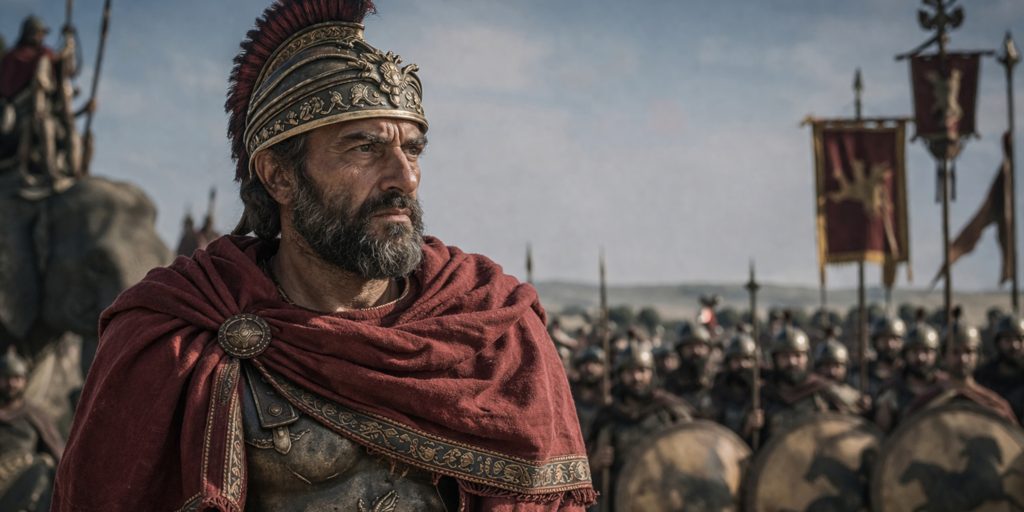
Hannibal’s reputation rests above all on the Italian campaign of the Second Punic War. He crossed the Alps in 218 BCE, defeated Roman armies at the Trebia and Lake Trasimene, and produced his masterpiece at Cannae in 216 BCE. Yet reducing him to double envelopment misses the larger achievement. Hannibal repeatedly understood what Roman commanders expected him to do, then made that expectation dangerous.
At the Trebia, he provoked the consul Tiberius Sempronius Longus into committing cold and hungry troops across a river. At Lake Trasimene, he used terrain and concealment to arrange a vast ambush. At Cannae, his formation invited the Roman infantry to press into a yielding centre while stronger African infantry turned against its flanks. Carthaginian cavalry defeated the Roman horse, returned to attack the infantry from behind and completed the encirclement.
Polybius describes how Hannibal arranged the curved centre and gradually altered its shape under Roman pressure. His account is valuable because he interviewed participants and studied the war within living memory, although he wrote from a Roman political world. The third book of Polybius’s Histories gives the fullest surviving ancient analysis of the campaign.
Livy attributes to the Carthaginian cavalry commander Maharbal a cutting judgement after Cannae: “You know how to win a victory, Hannibal, but not how to use one.” It is wonderfully memorable and therefore suspiciously perfect. The story was written down roughly two centuries after the battle and should not be treated as a verbatim exchange. It does, however, frame the central debate about Hannibal’s strategy.
Why Cannae did not win the war
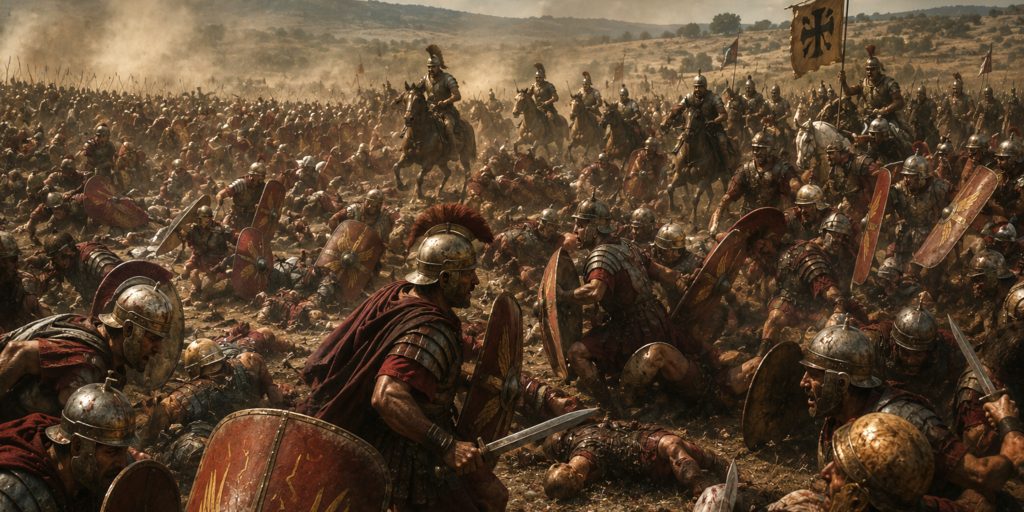
Rome did not negotiate. Its alliance system bent without completely breaking, while its reserves of manpower and political will outlasted Carthage’s expeditionary army. Hannibal lacked the siege capability to take Rome by a quick assault, and his government did not send enough reinforcements to turn Italian defections into a final settlement. The Romans also learned. They avoided giving him the sort of battle he wanted and attacked Carthaginian power elsewhere.
Hannibal therefore demonstrates both tactical brilliance and the limits of tactics. He destroyed an army on a scale rarely matched in antiquity, but Rome could replace armies. There is the awkward little detail every worshipper of decisive battle eventually encounters.
Genghis Khan: Organisation, Intelligence and Relentless Mobility
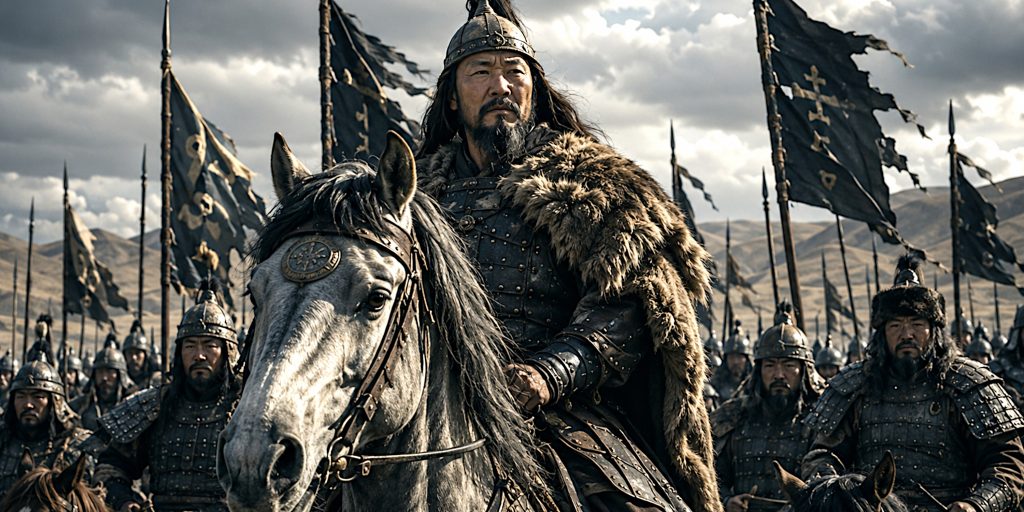
Temüjin, proclaimed Genghis Khan in 1206, did not simply gather excellent horse archers. Steppe peoples had possessed mobile cavalry traditions long before him. His achievement was political and organisational: he united rival groups, weakened old tribal loyalties and created a command structure capable of campaigning over immense distances.
Mongol forces were commonly organised in decimal units, with commanders responsible for tens, hundreds, thousands and ten-thousands. Discipline, signalling and planned coordination allowed separate columns to move widely apart before converging. Mounted warriors used several horses, preserving mobility while settled armies wore out a single mount. Scouts and spies gathered information about routes, water, fortifications and political divisions.
The feigned retreat became a famous Mongol tactic, but it was only one part of a wider system. A withdrawal had to remain controlled, persuasive and coordinated. Against an opponent eager for glory, that was often enough. Against an opponent who declined the invitation, Mongol commanders could probe, isolate, bombard or negotiate. They also absorbed engineers and siege methods from conquered societies, which makes the old image of purely nomadic horsemen rather misleading.
In The Secret History of the Mongols, composed within the Mongol world not long after Genghis Khan’s death, he tells his followers: “Let us reward those who served together with us in establishing the nation.” Translations differ, but the passage reflects a central feature of his rule: advancement could follow service and loyalty rather than ancestry alone.
Terror as policy
Mongol warfare included calculated displays of terror. Cities that resisted could face exemplary destruction, while submission might bring protection. The intention was to influence the next city before the army arrived. This saved time and lives for the conquerors, but inflicted mass killing, enslavement and displacement on conquered populations. Calling it psychological warfare does not make it clinically tidy. It was strategy conducted through human catastrophe.
Genghis Khan’s strongest legacy was therefore a military state able to learn. It incorporated foreign craftsmen, administrators and technologies, then used them in later campaigns. The system outlived its founder because it was more than an extension of his personality, even though succession disputes eventually divided the empire.
Khalid ibn al-Walid: Operational Speed and Battlefield Recovery
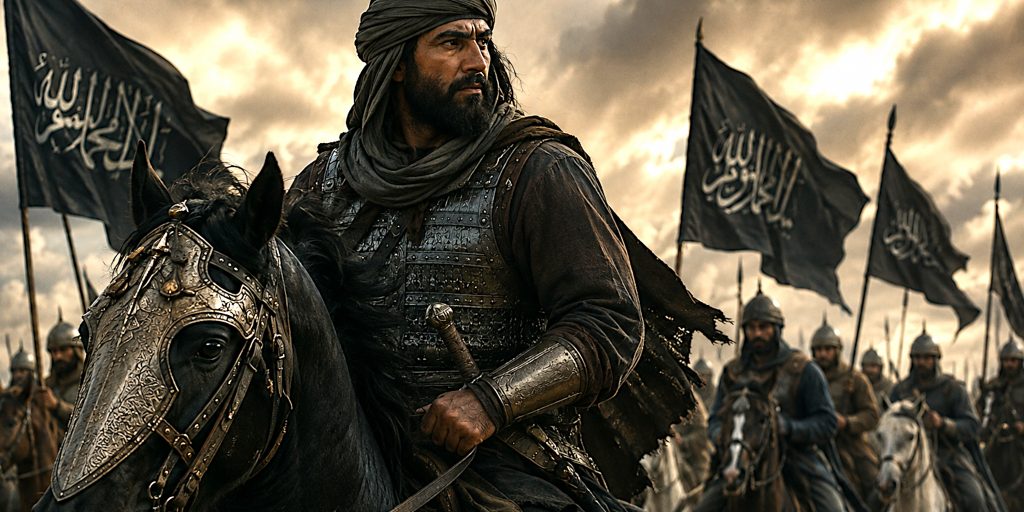
Khalid ibn al-Walid emerged from the wars of early Islam as one of the most celebrated commanders of the seventh century. He first fought against Muhammad’s followers and played an important role in the Meccan success at Uhud in 625. After converting to Islam, he commanded in the Ridda Wars and in campaigns against the Sasanian and Byzantine empires.
His reputation centres on movement, adaptability and the effective use of cavalry reserves. Traditional accounts describe demanding marches across desert routes, including a celebrated movement towards Syria that reduced travel time and bypassed expected approaches. Details vary among the Arabic narrative sources, most of which were compiled generations later, so precise routes and troop strengths remain debated.
At Yarmouk in 636, Muslim forces defeated a Byzantine army in a battle that helped decide control of Syria. Later narratives credit Khalid with using mobile cavalry to respond to threats across the field, restore pressured sections and then turn defence into a broader counterattack. The general principle is convincing, but polished diagrams of Yarmouk often claim more certainty than the sources permit.
A saying widely associated with Khalid declares: “The earth prevents me from sleeping on beds.” It conveys the traditional image of a commander restless for campaign, although its exact wording and context cannot be securely treated as contemporary testimony. That evidential caution is necessary. Khalid’s career is historical; many of the neat speeches and exact tactical sequences attached to it are products of later remembrance.
What can be said with confidence
- Khalid was a highly successful commander during the rapid expansion of the early Islamic state
- Mobility and cavalry manoeuvre were central to his reputation
- He served under political authority rather than becoming an independent ruler
- Later Islamic historical tradition magnified his career, sometimes smoothing out uncertainty
His removal from command by Caliph Umar did not end Muslim success, which is revealing. The army had effective commanders and institutions beyond one celebrated figure. A truly capable state should be able to survive the reassignment of its star general, however unimpressed the star general may be.
Napoleon Bonaparte: Concentration, Tempo and the Destruction of Separate Armies
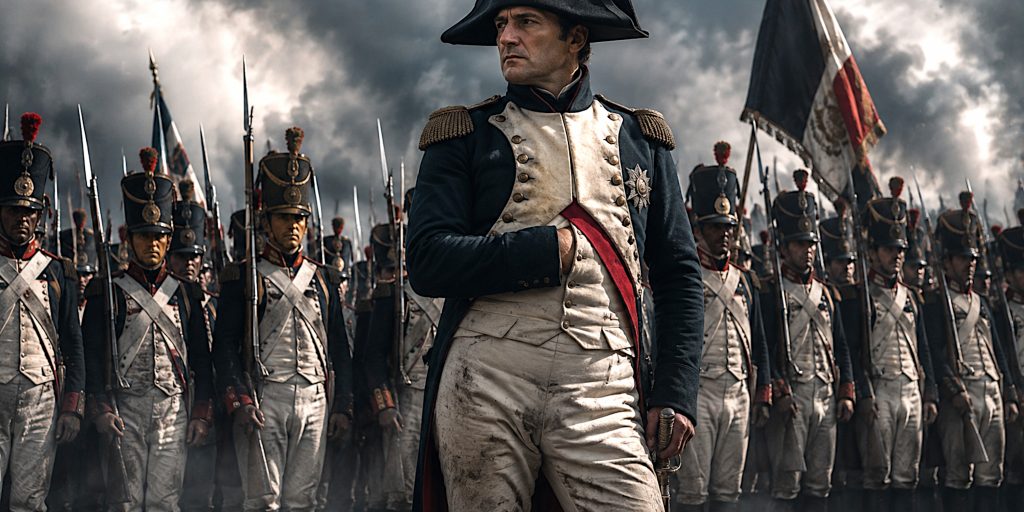
Napoleon operated on a larger administrative and geographic scale than the ancient commanders. Revolutionary France had introduced mass mobilisation, while the corps system allowed substantial formations to march separately, support themselves for limited periods and combine for battle. Napoleon exploited these developments with unusual energy.
His operational method often involved dispersing forces for movement and supply, then concentrating them faster than the enemy expected. A central position could allow him to defeat separated opponents in sequence. Strategic cavalry screened his movements and gathered information, while artillery supplied concentrated fire at the decisive point. His headquarters processed reports and issued a stream of orders, although the popular image of perfect central control exaggerates what any commander could know in real time.
The 1805 campaign remains the clearest demonstration. Napoleon manoeuvred around the Austrian army at Ulm, forcing its surrender, then defeated the combined Russian and Austrian forces at Austerlitz. By appearing to weaken his right, he encouraged the Allies to descend from the Pratzen Heights. French forces then struck the weakened centre and divided the enemy army.
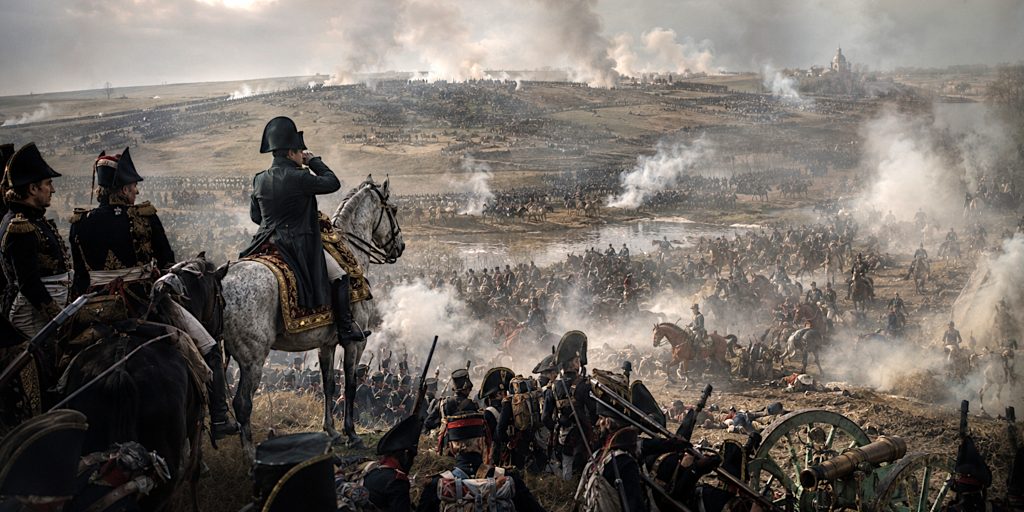
Napoleon wrote that “the art of war consists, with a numerically inferior army, in always having larger forces than the enemy at the point which is attacked or defended.” The maxim captures his emphasis on local superiority. A useful selection of his correspondence and campaign material is available through the Fondation Napoléon.
The system’s limits
Napoleon’s methods demanded trained troops, capable subordinates, reliable intelligence and armies able to sustain hard marching. As his wars expanded, these conditions deteriorated. Spain drained resources and exposed the weakness of occupying hostile territory. Russia in 1812 demonstrated that rapid advance could become a trap when distance, supply failure, disease and an enemy refusing decisive defeat worked together.
By 1813 and 1814, Napoleon still won battles, but coalition armies had learned to avoid him when possible, attack his marshals and exploit their superior numbers. His greatest opponents adapted. That is the less romantic explanation for his fall, but rather more useful than blaming everything on winter.
The Duke of Wellington: Position, Logistics and Coalition Warfare
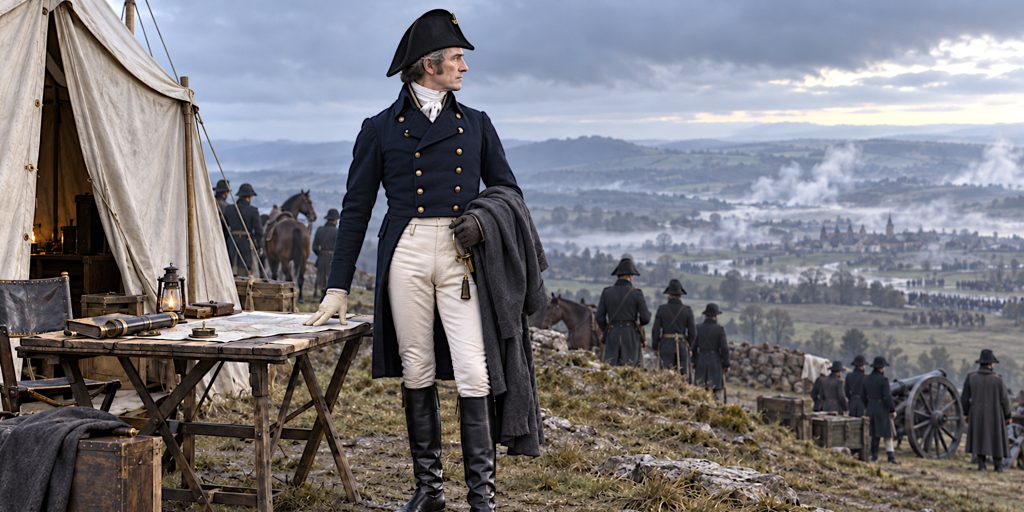
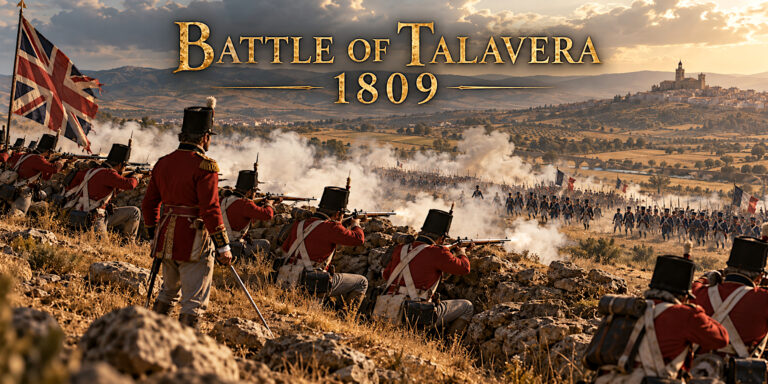
Arthur Wellesley, later Duke of Wellington, is often presented as Napoleon’s defensive opposite. There is truth in that contrast, but it can become a caricature. Wellington conducted aggressive operations when conditions suited him, particularly during the later Peninsular War. His deeper strength was judgement: he understood what his army could do, what allied governments would tolerate and which risks were unnecessary.
In Portugal, the Lines of Torres Vedras combined fortified positions, naval supply and a devastated zone that denied French forces easy provisions. Wellington could withdraw behind prepared defences while the invading army’s logistics deteriorated. It was strategy through patience, engineering and supply, three subjects less likely than a cavalry charge to acquire their own dramatic soundtrack.
On the battlefield, he made skilful use of terrain and reverse slopes. Keeping infantry behind a ridge protected them from observation and some artillery fire, then allowed them to meet French attacks at close range. He also relied on disciplined line infantry, carefully placed strongpoints and reserves committed at the necessary moment.
Before Waterloo, Wellington reportedly called his position “the best place I have seen for fighting a battle.” The remark survives through later recollection rather than an official transcript, but it fits his eye for ground. His victory on 18 June 1815 also depended upon Prussian recovery after Ligny and their arrival on Napoleon’s flank. Waterloo was a coalition victory, despite the vigorous efforts of national memory to make it a solo performance.
The Waterloo dispatch published in the London Gazette shows Wellington’s own official presentation of the battle. It praises allied troops and acknowledges that the Prussian attack forced Napoleon to use reserves that might otherwise have been directed against Wellington’s line.
Wellington’s distinctive strengths
- Chose ground that multiplied the value of his infantry
- Paid close attention to supply and secure communications
- Managed armies containing British, Portuguese, Spanish, Dutch, Belgian and German troops
- Preserved political confidence by avoiding reckless losses
Wellington’s caution was sometimes frustrating to subordinates and allies, and his battlefield arrangements could leave local commanders with limited knowledge of the wider plan. Yet caution is not timidity when the strategic purpose is to preserve an army until the balance becomes favourable.
How Their Strategies Compare
| Commander | Central strength | Typical method | Essential support | Principal limitation |
|---|---|---|---|---|
| Alexander the Great | Combined-arms shock | Fix the enemy, then strike a decisive point | Veteran Macedonian army | Personalised rule and no secure succession |
| Hannibal Barca | Reading and manipulating opponents | Ambush, deception and envelopment | Intelligence and diverse allied troops | Could not convert victories into Roman surrender |
| Genghis Khan | Organised mobility | Dispersed movement, reconnaissance and convergence | Remounts, signals and adaptable commanders | Conquest relied on extreme coercion and generated succession pressures |
| Khalid ibn al-Walid | Operational flexibility | Rapid marches and mobile cavalry intervention | Cohesive command and resilient troops | Later sources make exact reconstruction difficult |
| Napoleon Bonaparte | Rapid concentration | Defeat separated armies in sequence | Corps organisation and administrative depth | Expansion strained logistics and troop quality |
| Duke of Wellington | Economy of force | Strong ground, disciplined defence and timed counterattack | Supply, coalition cooperation and naval support | Caution could surrender initiative |
The comparison also shows why rankings of the “greatest general” tend to wobble under inspection. These men commanded different forces, pursued different political objectives and operated with very different technologies. Alexander never had to coordinate a multinational army by telegraph, and Wellington never had to persuade a phalanx to cross Central Asia. A league table is entertaining, but it is not a serious method.
Strategy, Tactics and the Problem of Famous Labels
Several phrases attached to these commanders describe tactics rather than strategy. Double envelopment explains how Hannibal destroyed the Roman army at Cannae; it does not explain how Carthage intended to compel Rome to end the war. Reverse-slope defence describes part of Wellington’s battlefield practice; it does not encompass the diplomatic and logistical work of maintaining the Peninsular campaign.
The distinction is simple:
- Tactics concern how forces fight an engagement
- Operations connect battles, movements and supply across a campaign
- Strategy uses military action to secure political objectives
The greatest commanders linked all three, at least during their best campaigns. Their failures often appeared when the connection broke. Hannibal’s tactical victories did not produce a workable path to Roman capitulation. Napoleon’s operational brilliance increasingly served political objectives that no battlefield victory could secure for long.
What the Sources Can and Cannot Tell Us
Ancient and medieval commanders present an obvious evidence problem. Accounts were often written decades or centuries later. Speeches were reconstructed according to literary convention. Numbers were exaggerated, motives simplified and victories shaped into moral lessons. Even modern commanders controlled reports and cultivated public images.
Contemporary quotations should therefore be handled in three categories:
- Words recorded directly in letters, orders or official dispatches
- Remarks reported by witnesses or near-contemporary historians
- Famous sayings preserved only in much later tradition
All three can reveal something, but not the same thing. A later saying may tell us more about a commander’s legend than his actual vocabulary. That is still historically valuable, as long as nobody quietly puts quotation marks around wishful thinking.
The Most Important Lessons From These Commanders
No single formation or manoeuvre joins these careers. Their common strength was the ability to create an advantage before the decisive clash.
Alexander combined troop types and attacked the point that mattered. Hannibal engineered enemy decisions. Genghis Khan made information and mobility part of an imperial system. Khalid used speed to alter the balance at moments of danger. Napoleon concentrated force before slower opponents could respond. Wellington made terrain, logistics and coalition endurance do part of the fighting for him.
Their records also offer a warning. Battlefield mastery cannot rescue an incoherent political aim forever. Armies tire, enemies learn, allies change sides and supply columns stubbornly refuse to be impressed by genius. The best military history does not ask which commander had the cleverest trick. It asks how each man joined people, institutions, geography and violence into a working system, and why that system eventually stopped working.
Frequently Asked Questions
Who was the greatest general in history?
There is no objective answer because commanders faced different technologies, institutions and political aims. Alexander, Genghis Khan and Napoleon achieved extraordinary territorial results. Hannibal produced perhaps the most admired single tactical victory. Wellington was exceptionally effective in coalition warfare. Any ranking depends upon the criteria chosen.
Which general had the best battlefield strategy?
Hannibal at Cannae is the classic answer for a single battle plan. Alexander’s coordination at Gaugamela and Napoleon’s manipulation of the Allied centre at Austerlitz are equally important studies in creating and exploiting a decisive opening.
Did great generals personally invent their tactics?
Rarely in isolation. They inherited military traditions, learned from predecessors and depended upon experienced officers. Their distinction usually lay in combining existing methods, adapting them to circumstances and executing them more effectively than their opponents.
Why did so many successful generals eventually fail?
Success encouraged larger ambitions while opponents adapted. Distance, attrition, political resistance and weaker replacements gradually reduced the advantages that had made earlier campaigns possible. Military systems have limits, even when their commanders acquire flattering statues.