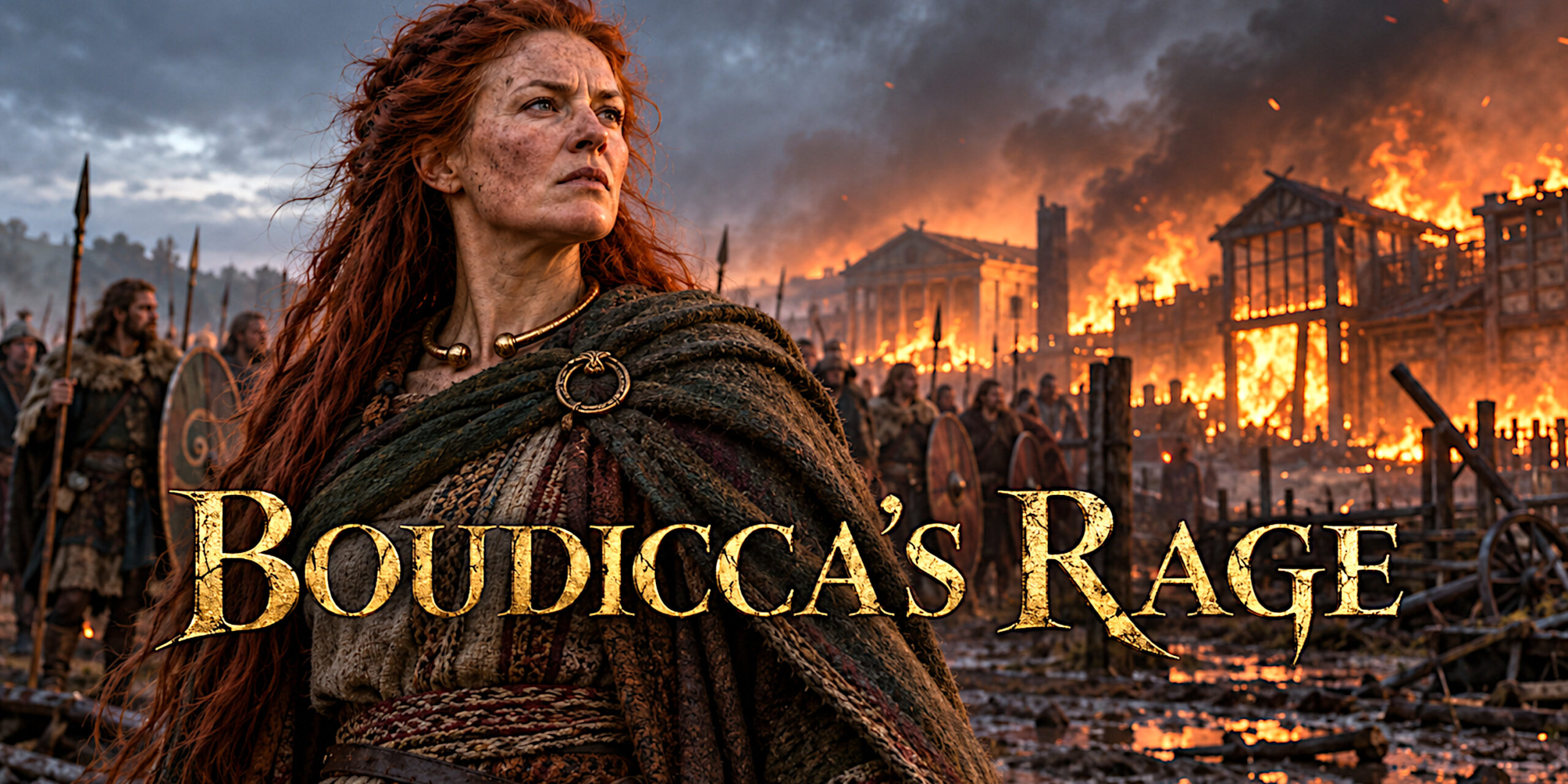
Beneath modern streets in Colchester and London lie the remains of buildings destroyed almost two thousand years ago. Burnt timber, scorched floors and possessions abandoned in the debris preserve something that Roman historians could only describe: the physical consequences of Boudica’s revolt.
In AD 60 or 61, the queen of the Iceni led an uprising that devastated some of Roman Britain’s most important settlements. Archaeology supports the broad story of destruction, particularly at Colchester and London. It becomes less obliging when asked to identify her marching route, count the dead or locate her final battlefield.
That distinction matters. I find Boudica more compelling when we allow the evidence its uncertainties. She hardly needs invented discoveries to make her remarkable.
Who Was Boudica?

Boudica, also commonly spelt Boudicca, was the wife of Prasutagus, ruler of the Iceni. Their territory lay principally in modern Norfolk, within an eastern Britain increasingly drawn into Roman political and economic control.
Prasutagus maintained a relationship with Rome that allowed his kingdom a degree of autonomy. After his death, that arrangement collapsed. According to Tacitus, Roman agents plundered the kingdom, confiscated estates, flogged Boudica and raped her daughters.
The Iceni joined forces with the neighbouring Trinovantes and other opponents of Roman rule. What followed was a rebellion rooted in dispossession, political betrayal and personal violence. Book XIV Chapters 29‑39
Calling it simply an explosion of anger misses the circumstances that made collective resistance possible. Rome had created grievances across several communities, then discovered that those communities could communicate.
What Can We Trust in the Roman Accounts?
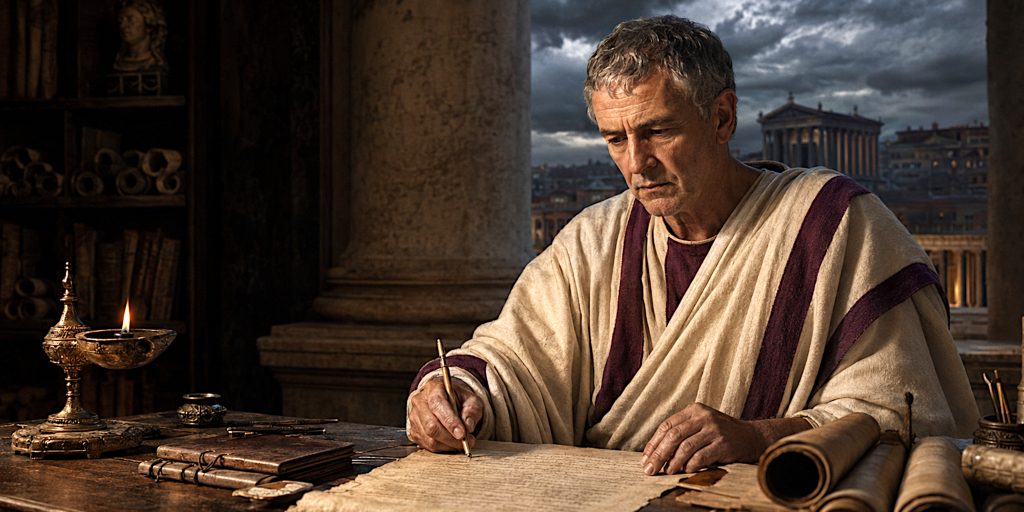
The principal surviving narratives come from Tacitus and Cassius Dio. Neither provides an eyewitness account of the revolt, and neither preserves a British version of events.
Tacitus wrote decades afterwards. Dio wrote much later still. Their accounts remain essential, but descriptions of speeches, motives and immense armies require care. Ancient historians composed speeches to express what they thought a person ought to have said. They were not working from a recording.
Archaeology offers a different kind of evidence. It can establish that a building burned, identify objects trapped beneath its collapse and help date the destruction. It rarely identifies the individual responsible.
The strongest reconstruction comes from comparing the written narratives with independently dated archaeological deposits, while resisting the temptation to make every discovery fit the story.
Where Did Boudica’s Revolt Begin?
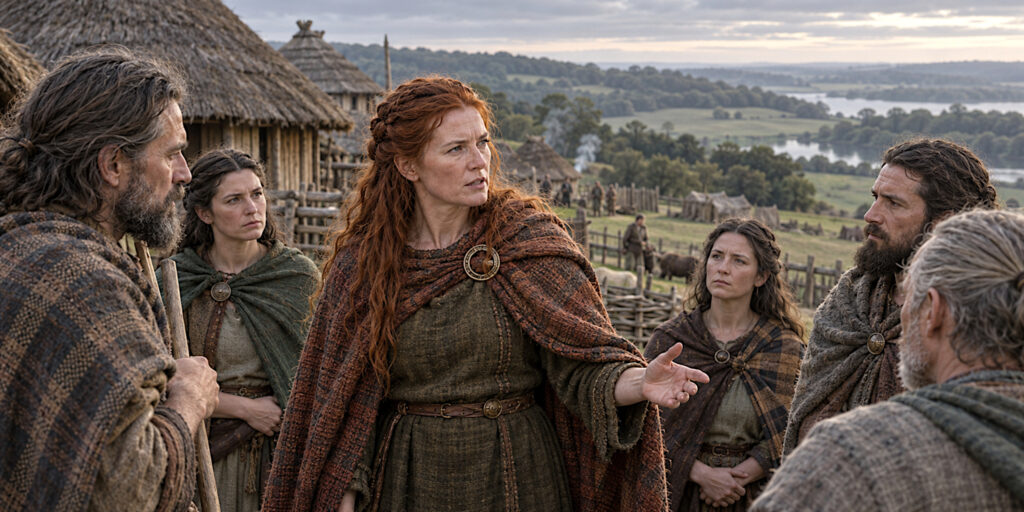
The uprising emerged from Iceni territory in eastern Britain. Its precise assembly point is unknown.
Venta Icenorum, at Caistor St Edmund near Norwich, often appears in popular accounts as Boudica’s capital or the starting point of her campaign. That is too definite. The Roman town’s foundation and early development belong around the period of the revolt and its aftermath, with different records proposing dates around AD 60 or AD 70.
Its later importance as an administrative centre does not establish that Boudica lived there or gathered her army within its streets. Norfolk Heritage Explorer
The defensible starting point is the Iceni heartland, rather than a particular town, palace or battlefield.
A map can show the territory. It should leave the exact departure point open.
Colchester: The Strongest Archaeological Evidence
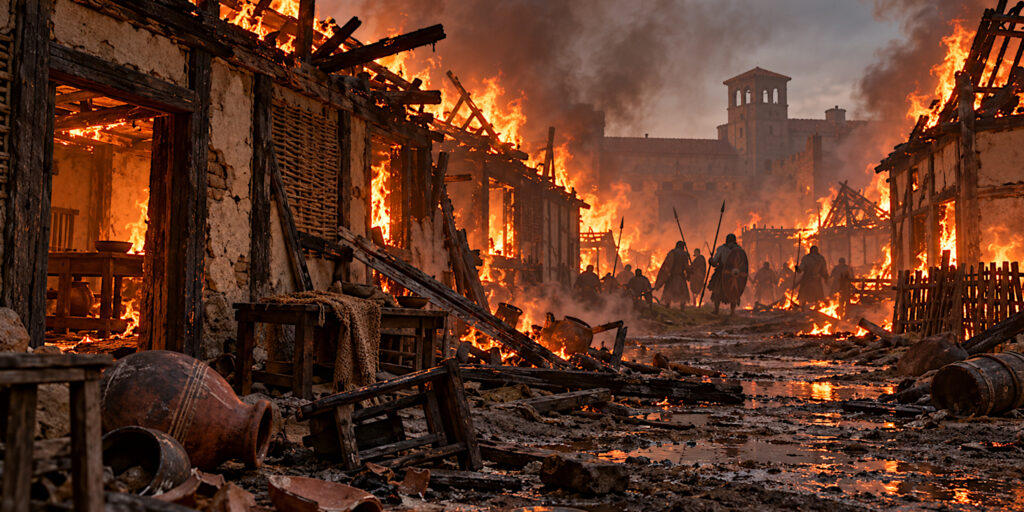
Camulodunum, modern Colchester, became the first major urban target. Its Roman veteran settlement and association with imperial authority made it a particularly charged place.
Across excavated parts of the early town, archaeologists have identified deposits associated with the Boudican destruction. These include burnt building materials and carbonised household contents.

Some of the most affecting discoveries are thoroughly ordinary. Excavations have recovered burnt food, including dates, figs, wheat and peas, alongside the remains of domestic furnishings. At Lion Walk, archaeologists found the charred remains of a bed.
These objects bring the destruction down to the scale of a room. A military history can describe a settlement falling. A burnt bed makes it harder to forget that somebody lived there. Colchester Heritage Explorer
The Fenwick Treasure
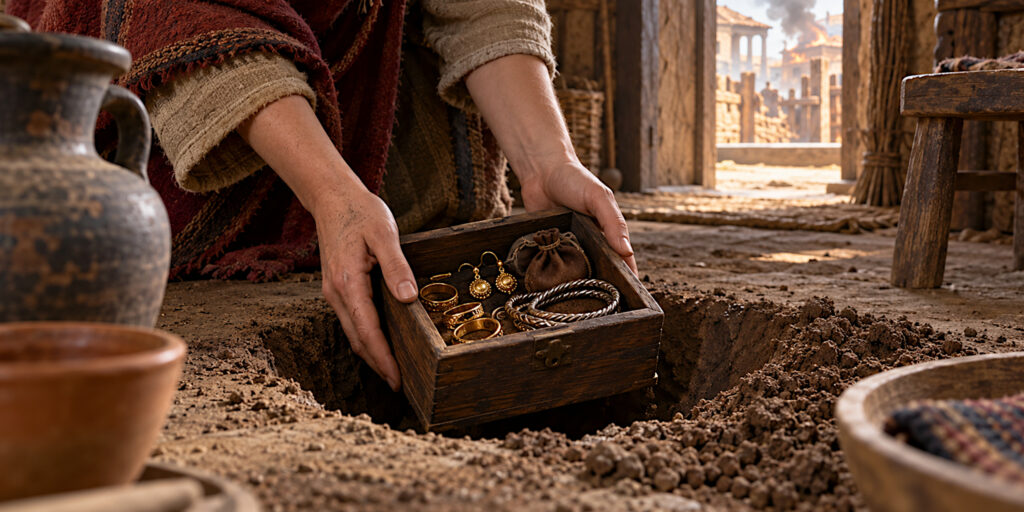
In 2014, Colchester Archaeological Trust discovered gold and silver jewellery beneath the floor of a house at the Williams & Griffin department store site, later associated with Fenwick.
The valuables had been placed in a small pit below the floor and sealed beneath debris from the building’s destruction. Their position provides a strong connection with the crisis of AD 60/61.
The likely explanation is safekeeping before the attack. We cannot identify the owner or establish precisely what happened to them. The treasure’s survival tells us that it was never successfully recovered, rather than supplying a complete biography of its last custodian. Colchester Archaeological Trust
For me, that unfinished human story is more powerful than the gold itself.
London: A Young Settlement Destroyed
Londinium was a developing commercial settlement when the revolt reached it.
Tacitus describes the governor, Gaius Suetonius Paulinus, deciding that he lacked the forces to defend it. Those able to accompany his departure could leave; others remained exposed to the approaching rebels.
Excavations in central London have revealed substantial layers of burnt debris associated with the attack. Pottery and personal possessions recovered from destroyed buildings support the written account of a major urban catastrophe.
London Museum also holds carved gemstones buried in Eastcheap around this period. Concealment during the revolt is a plausible explanation, although the connection is less secure than that of objects sealed within well-dated destruction deposits. London Museum
The distinction is useful: some discoveries directly document destruction, while others suggest how people may have responded to danger.
Verulamium: A More Complicated Archaeological Picture
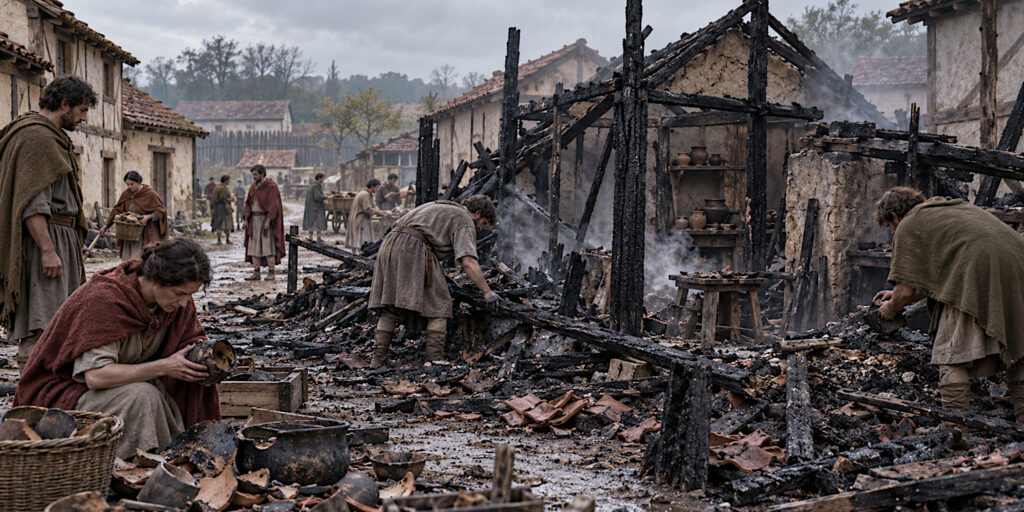
Verulamium, near modern St Albans, is the third major settlement named in the ancient narrative.
Its archaeological evidence needs more qualification than a simple statement that the whole town was burned flat. Early fire deposits have been associated with the revolt, but identifying and dating the destruction is more difficult here than at Colchester and London.
Clearance, rebuilding and subsequent activity altered what survived. Verulamium also suffered a major fire in the second century, creating another opportunity for confusion if deposits are discussed without their dates. An archaeological evaluation by Oxford Archaeology explicitly notes the greater difficulty of identifying the Boudican event at this site.
This does not remove Verulamium from the history of the revolt. It means the material evidence should be presented with its limitations intact.
What Does a Boudican Destruction Layer Actually Show?
A destruction layer is a deposit created by the burning, collapse and subsequent treatment of buildings and their contents.
Its interpretation depends on context.
| Evidence | What it can establish | What it cannot establish alone |
|---|---|---|
| Charred structural timber | A building suffered fire | Who started it |
| Scorched floors and burnt wall material | Intense heat affected the structure | The exact day of destruction |
| Pottery and coins in sealed deposits | A date range for the event | A precise date from every object |
| Valuables hidden beneath a floor | Deliberate concealment before later deposits formed | The owner’s identity or fate |
| Similar destruction across excavated sites | A potentially widespread event | That every building burned simultaneously |
Archaeologists combine these clues with the sequence of occupation and rebuilding. A convincing attribution rests on several lines of evidence.
Burnt material alone is insufficient. Roman towns experienced accidental fires too, a possibility that tends to receive less attention because it makes a disappointing headline.
Were Mass Graves Found Along Boudica’s Route?
Claims of extensive, securely identified Boudican mass graves need considerable caution.
Human remains associated with the revolt are comparatively rare at Colchester. Discoveries at the Williams & Griffin excavation included a human jaw and part of a shin bone bearing evidence interpreted as a sharp-force injury.
These are significant finds, but they do not constitute a chain of mass graves tracing the army’s progress. Colchester’s own heritage account highlights the contrast between the enormous death tolls in the literary sources and the limited human remains recovered archaeologically.
The destruction is much easier to demonstrate than the number of people killed.
That gap does not make the violence imaginary. It limits how confidently we can measure it.
Can We Follow Boudica’s Exact Route?
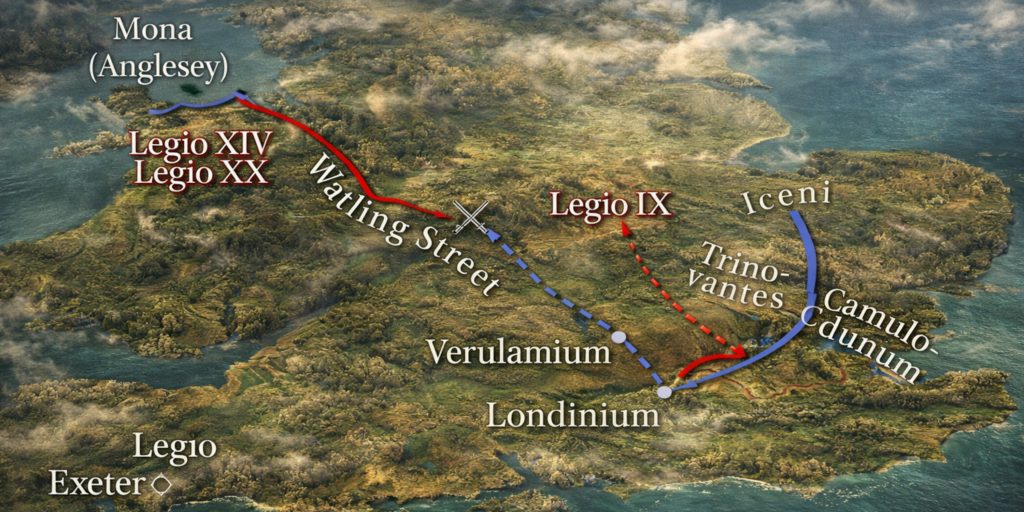
We can identify the principal settlements named as targets. We cannot confidently reconstruct every movement between them.
| Location | Connection with the revolt | Main uncertainty |
|---|---|---|
| Iceni territory | Homeland of the uprising | Exact assembly point |
| Camulodunum, Colchester | Extensive destruction evidence | Detailed movements around the settlement |
| Londinium, London | Major fire deposits and ancient testimony | Precise approach and departure routes |
| Verulamium, St Albans | Ancient testimony and associated early fire evidence | Extent and identification of destruction |
| Final battlefield | Roman accounts describe a decisive engagement | Location remains unconfirmed |
Roads, river crossings and terrain help historians propose routes. Such proposals remain reconstructions.
There is also no guarantee that the rebel coalition moved throughout the campaign as one compact army. A clean arrow on a modern map can conceal a great deal of uncertainty.
Where Was Boudica’s Final Battle?
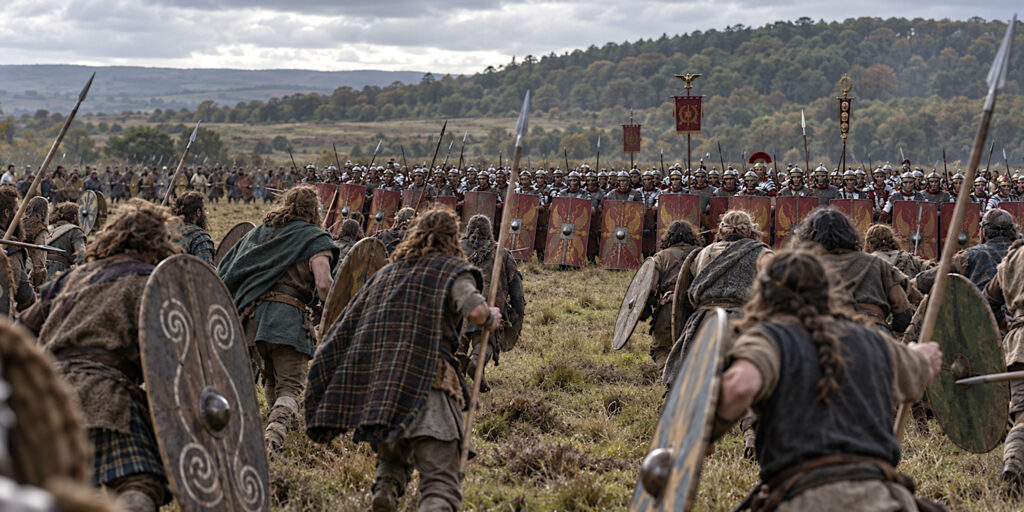
The battlefield has not been securely identified.
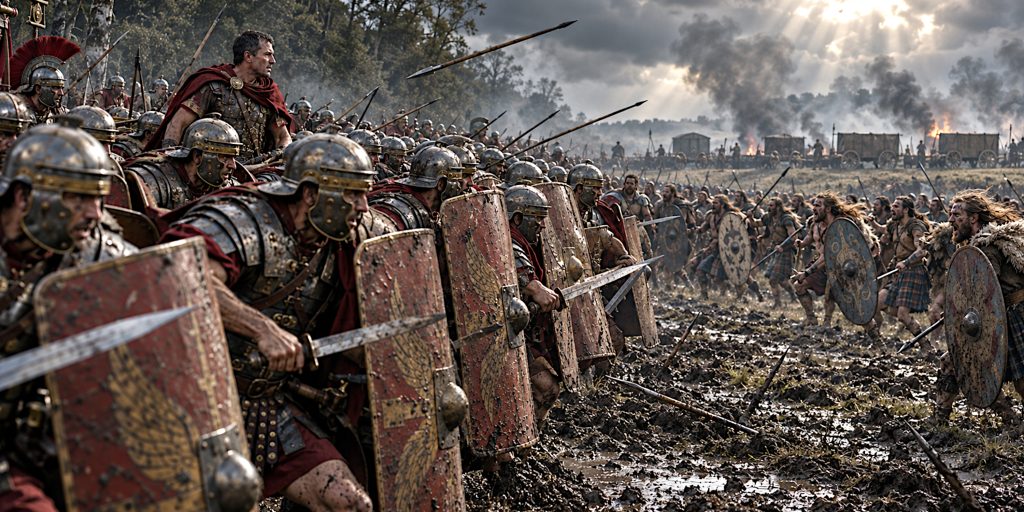
The engagement is often called the Battle of Watling Street, but the familiar name should not be mistaken for a confirmed location. Tacitus describes a restricted approach, woodland behind the Roman position and open ground ahead. Several proposed sites have been compared with that description.
According to his account, Suetonius assembled roughly 10,000 troops, including the Fourteenth Legion, part of the Twentieth and auxiliaries. The Romans defeated the rebel force, but their reported casualty figures cannot be treated as an audited count.
A persuasive identification would require securely dated battlefield evidence that fits the campaign, rather than terrain that merely resembles a short literary description.
How Did Boudica Die?
The surviving accounts disagree.
Tacitus says she took poison after the defeat. Dio’s tradition attributes her death to illness. Archaeology has not resolved the question, and no securely identified grave is known.
The story placing her burial beneath King’s Cross station has no supporting evidence. It belongs to Boudica’s later mythology.
An unidentified grave is frustrating. Giving it a railway platform does not make it better identified.
What Archaeology Reveals About Rome’s Response
The material story continues beyond the burning.
At Plantation Place in London, MOLA excavations identified part of an early Roman fort interpreted as a response to the revolt. Dated to around AD 63, it had substantial timber-and-earth defences and double ditches.
The discovery adds an important corrective to accounts that end with Roman victory. Recovering a province required troops, infrastructure and the ability to hold vulnerable settlements.
Rebuilding also varied between places and individual sites. A town could resume some trade while damaged plots remained empty. Recovery was a process, with security and ordinary commerce developing alongside the consequences of destruction.
Boudica’s Legacy: Resistance and Its Human Cost
Boudica is an unusually visible woman in the history of Roman Britain. That visibility deserves attention, but it also invites later generations to turn her into whatever symbol they require.
I understand the appeal of a woman refusing to accept imperial violence. I am less comfortable when admiration requires us to look away from the people killed in the settlements her followers attacked.
Those positions can coexist. Roman abuse helps explain the rebellion. It does not make every act committed during it defensible.
The archaeology keeps that tension present. Hidden jewellery, burnt food and ruined homes bring civilians back into a story often dominated by a queen and a governor.
Boudica’s revolt failed to end Roman rule. Its surviving traces still expose the fragility of that rule, and the cost paid when conquest, exploitation and resistance became open war.