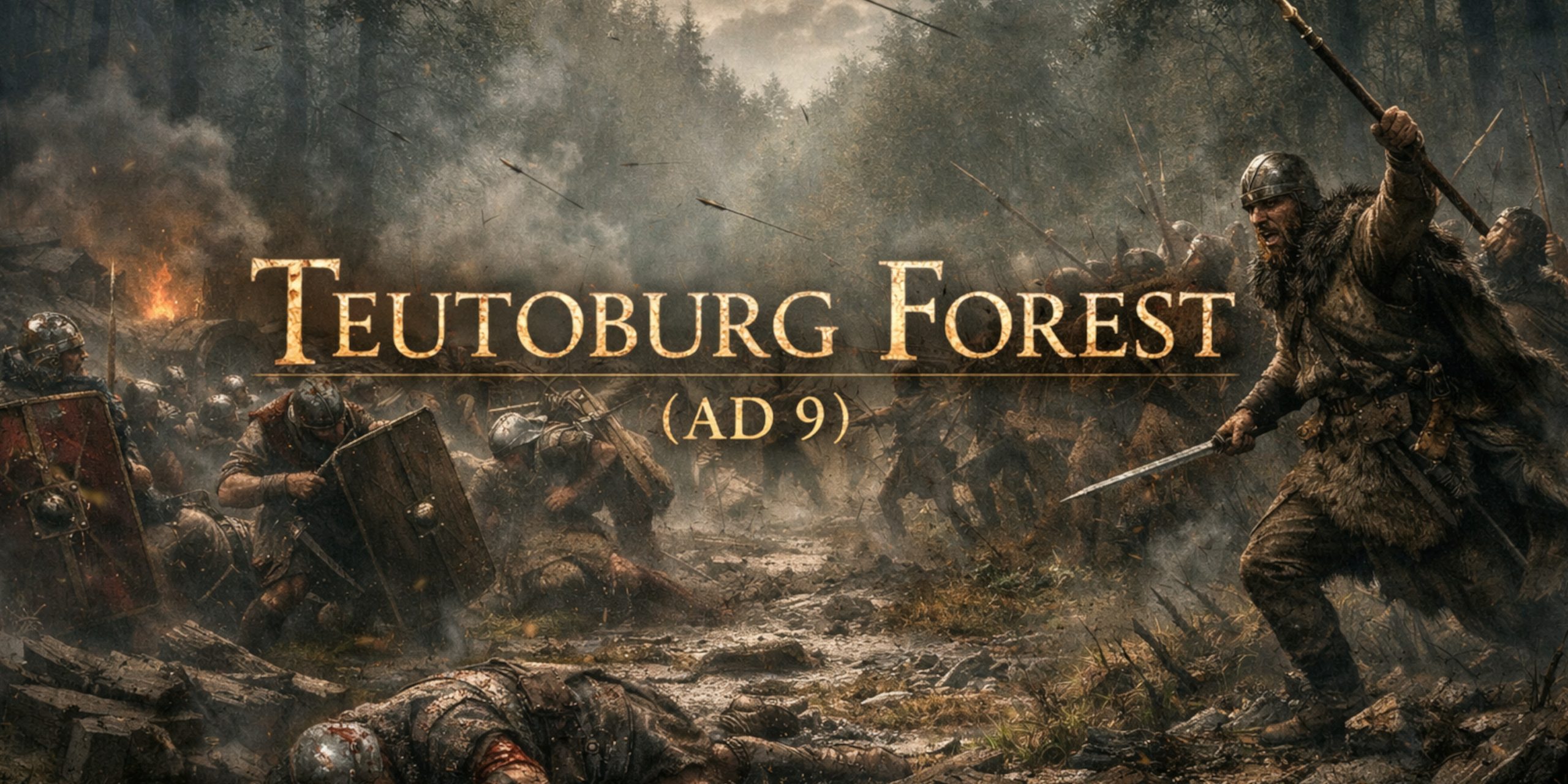
The Battle of Teutoburg Forest sits among Rome’s most uncomfortable memories, the sort of event that lingers long after the bodies are buried. In AD 9, three Roman legions marched into Germania expecting a routine show of authority. They did not march out again.
What followed was not a single dramatic clash but a slow unravelling. Discipline, engineering, and imperial confidence met mud, trees, and a carefully laid trap. The result was a catastrophe so complete that even Rome, usually very good at pretending nothing had gone wrong, had to admit defeat.
Historical Background
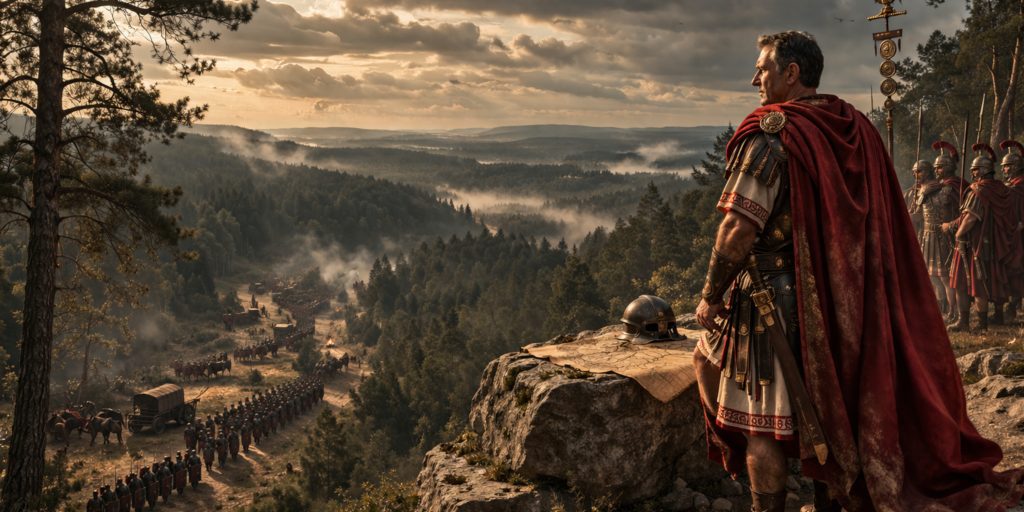
By the early first century AD, Rome had pushed deep into Germania. Governors such as Publius Quinctilius Varus were tasked with turning newly conquered territories into orderly provinces. Taxes, laws, and Roman administration followed the legions.
This approach worked in Gaul. Germania proved less cooperative. Tribal loyalties were fluid, landscapes unforgiving, and Roman assumptions often misplaced.
Among Varus’s allies was Arminius, a Germanic noble who had served with Roman forces. He understood their methods, their strengths, and more importantly, their habits. That knowledge would prove decisive.
Forces
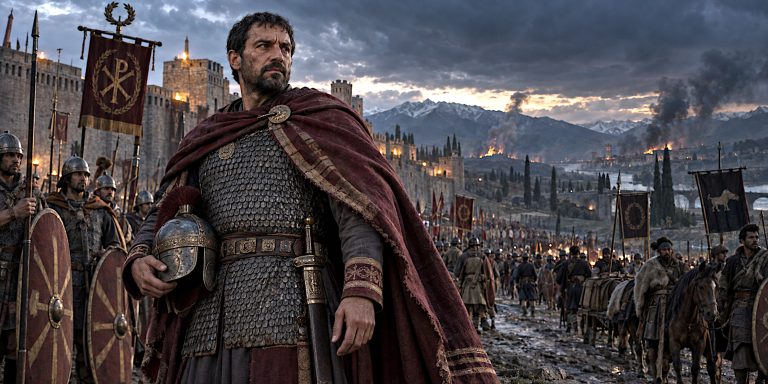
Roman Army
| Component | Details |
|---|---|
| Legions | XVII, XVIII, XIX |
| Strength | 15,000 to 20,000 soldiers |
| Auxiliaries | Germanic and allied troops |
| Command | Publius Quinctilius Varus |
Composition
- Legionary infantry, heavily armoured and drilled
- Auxiliary cavalry and light infantry
- Camp followers, baggage train, civilians
The presence of non-combatants slowed movement considerably. This was not an army ready for battle. It was a column on the move, stretched and vulnerable.
Germanic Coalition
| Component | Details |
|---|---|
| Tribes | Cherusci, Bructeri, Marsi and allies |
| Strength | Estimated 15,000 to 25,000 warriors |
| Command | Arminius |
Composition
- Light infantry with spears, axes, and shields
- Minimal armour, high mobility
- Deep familiarity with terrain
There was no formal army in the Roman sense. What Arminius assembled was something far more adaptable, and far better suited to the forest.
Arms and Armour
Roman Equipment
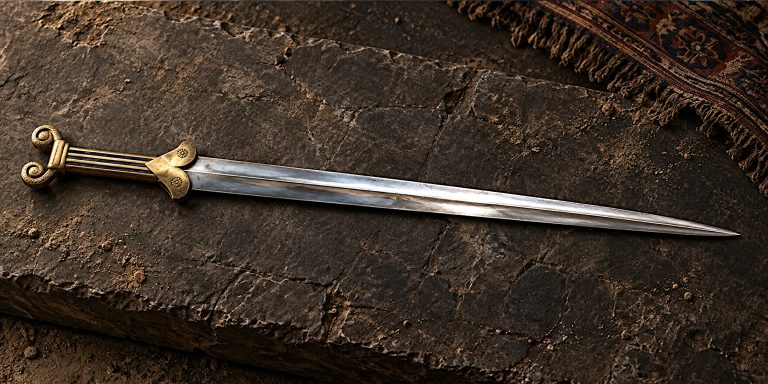
- Gladius (Mainz and Pompeii types)
Short stabbing sword designed for close formation fighting - Pilum
Heavy throwing spear intended to disrupt enemy lines - Scutum
Large rectangular shield, excellent in formation, awkward in tight woodland - Lorica hamata
Mail armour offering reliable protection but adding weight
Roman equipment excelled in open battle. In narrow forest tracks, surrounded by trees and mud, it became restrictive.
Germanic Equipment
- Spatha
Longer sword than the Roman gladius, useful for slashing in looser combat - Spears and javelins
Flexible and easy to use in ambush conditions - Round shields
Lighter and more manoeuvrable - Minimal armour, often limited to helmets or simple protection
Germanic warriors traded protection for speed. In this setting, it was a sensible exchange.
The Battle Timeline
Day One
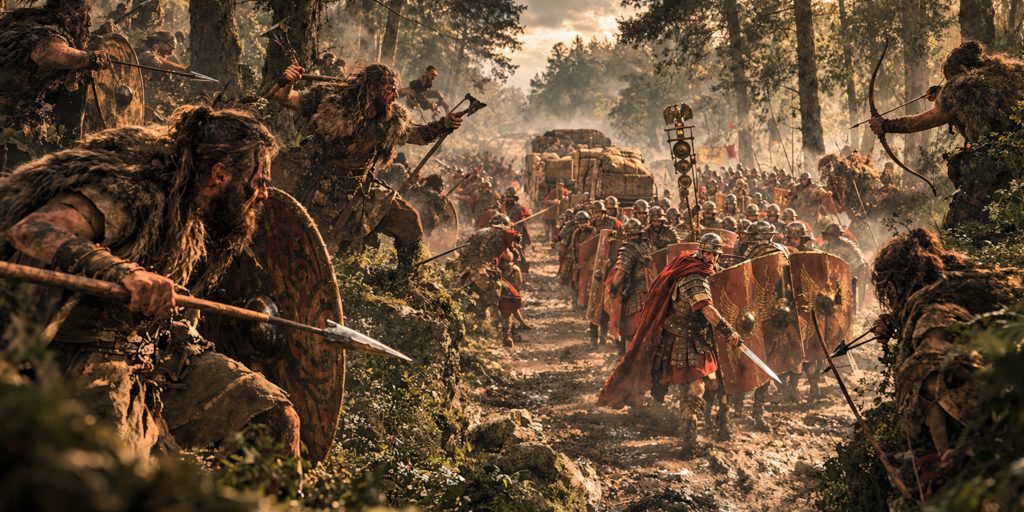
Varus leads his forces through forested terrain after receiving reports of unrest. The column stretches out over several kilometres. Rain begins to fall, turning paths into mud.
Arminius slips away under the pretext of gathering reinforcements. He does not return.
Ambushes begin. Small attacks harass the Roman column, testing its cohesion.
Day Two
The Romans attempt to regroup and construct a defensive camp. Progress is slow. Attacks intensify.
Missiles rain from concealed positions. Formations break apart as soldiers struggle to respond in confined terrain.
Day Three
The Romans attempt a breakout. By now, order has collapsed. Units are isolated and overwhelmed.
Varus, recognising the situation, reportedly takes his own life rather than face capture.
The remaining forces are destroyed. The legions XVII, XVIII, and XIX cease to exist.
Archaeology
The most important archaeological site lies at Kalkriese in modern Germany. Finds there have reshaped how historians understand the battle.
Key discoveries
- Roman coins dated to the reign of Augustus
- Fragments of armour and weapons
- Human remains scattered across a wide area
- Defensive earthworks attributed to Germanic forces
The distribution of finds suggests a prolonged running battle rather than a single engagement. This aligns with written accounts, which describe days of attrition rather than a decisive clash.
Contemporary Accounts
Roman writers did not forget Teutoburg. They returned to it with a mixture of horror and quiet embarrassment.
Tacitus wrote of the aftermath when Roman forces revisited the site:
“Bleached bones lay everywhere, scattered or piled up, just as the men had fallen.”
Velleius Paterculus, who served under Tiberius, offered a more restrained but telling account:
“Never was there a more complete disaster than that inflicted on the Romans by the Germans.”
Even Augustus is said to have been deeply affected, reportedly crying out, “Varus, give me back my legions.”
One suspects he knew that was unlikely.
Why Rome Lost
- Terrain
Dense forest neutralised Roman formations - Weather
Rain and mud reduced mobility and morale - Overconfidence
Varus treated the region as pacified - Betrayal
Arminius exploited Roman trust and planning - Logistics
The extended column became impossible to control
Rome was not defeated in a fair fight. It was dismantled piece by piece.
Legacy
Teutoburg Forest changed the direction of Roman expansion. The Rhine became the effective frontier of the empire. Germania remained beyond Rome’s full control.
The loss also had symbolic weight. Three legion numbers were never used again, a quiet acknowledgement of something Rome preferred not to revisit.
For Germanic identity, Arminius became a figure of resistance. For Rome, he was a reminder that even the most organised empire can be undone by poor assumptions and difficult terrain.
Where to Visit
- Kalkriese Museum and Park (Germany)
The primary archaeological site, with extensive artefacts and reconstructions - Hermannsdenkmal (Detmold)
Monument dedicated to Arminius, later romanticised but still striking - Haltern am See Roman Camp
Offers context on Roman presence in Germania before the disaster
Final Thoughts
There is something almost grimly instructive about Teutoburg Forest. Rome brought structure, discipline, and confidence. Germania offered rain, trees, and patience.
Only one of those proved adaptable.