Edmund Ironside at a Glance
| Detail | Information |
|---|---|
| Full name | Edmund Ironside |
| Born | c. 990 |
| Died | 30 November 1016 |
| Father | Æthelred II “the Unready” |
| Mother | Ælfgifu of York |
| Reigned | April to November 1016 |
| Dynasty | House of Wessex |
| Successor | Cnut |
| Known for | Fighting five major battles against the Danish invasion |
History has a habit of celebrating winners. Cnut became one of England’s greatest medieval kings. Edmund Ironside became the footnote.
That has never felt entirely fair.
Edmund inherited a kingdom already collapsing beneath years of Danish invasion, political betrayal and royal indecision. His reign lasted only a matter of months, yet in that short time he fought campaign after campaign against one of the most formidable Viking armies ever assembled.
He refused surrender when many nobles had already accepted defeat. He repeatedly rebuilt armies after devastating losses. Even when the kingdom fractured around him, Edmund simply found another battlefield.
As a historian, I find him strangely compelling. He appears almost too late in history, like the final chapter of a book already written. His determination could not save Anglo-Saxon England, but it ensured that its end came only after extraordinary resistance. If stubbornness alone won kingdoms, Edmund would have ruled for decades.
Early Life
Edmund was born around 990, one of several sons of King Æthelred II.
England during his childhood was deeply unstable. Danish raids had become increasingly destructive and royal authority weakened with every passing decade. Large sums of Danegeld bought temporary peace but encouraged further invasions.
Little survives concerning Edmund’s education, although as a royal prince he almost certainly received instruction in:
- Swordsmanship
- Horsemanship
- Hunting
- Military leadership
- Christian learning
- Royal administration
Unlike several of his brothers, Edmund quickly developed a reputation as an energetic military leader rather than a court politician.
Marriage and Family
One of Edmund’s boldest decisions came before he became king.
He married Ealdgyth, the widow of the powerful noble Sigeferth. His father had previously imprisoned Sigeferth’s family after political disputes, making Edmund’s marriage an open challenge to royal policy.
The marriage strengthened Edmund’s influence across the Midlands and won important supporters.
Their children included:
- Edward the Exile
- Edmund Ætheling
Edward’s descendants would eventually include Edgar Ætheling, the final legitimate claimant of the House of Wessex after the Norman Conquest.
History has an amusing habit of preserving family trees long after kingdoms disappear.
England in Crisis
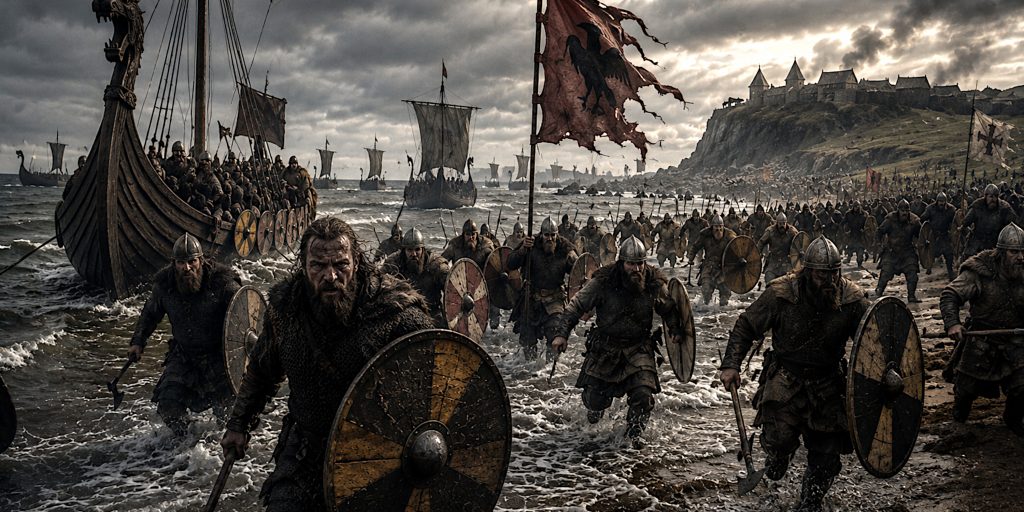
By 1015, Danish prince Cnut launched a full-scale invasion.
Many English nobles switched allegiance with alarming speed.
King Æthelred remained gravely ill.
England effectively split into competing regions of loyalty.
While others hesitated, Edmund began raising armies independently across Wessex and the Midlands.
This determination earned enormous respect among ordinary warriors, although some leading nobles considered him dangerously independent.
Becoming King
Æthelred died on 23 April 1016.
London immediately proclaimed Edmund king.
Elsewhere, much of England recognised Cnut.
The result was not one king, but two.
England descended into civil war.
Edmund’s Campaign Against Cnut
Few kings have fought so much in such little time.
Throughout 1016 Edmund repeatedly assembled fresh armies despite suffering setbacks that would have ended many reigns.
Major Battles
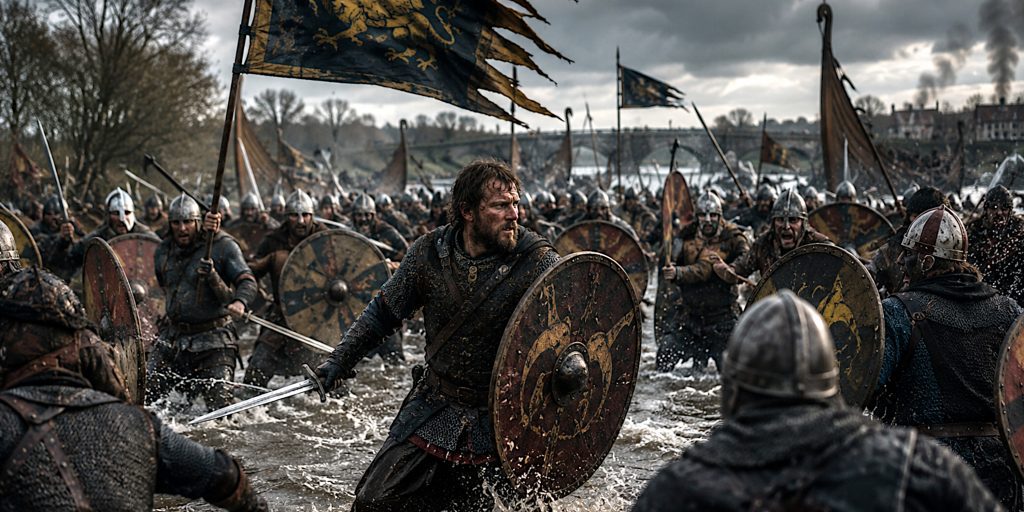
| Battle | Result | Significance |
|---|---|---|
| Penselwood | Inconclusive | Edmund’s first major engagement |
| Sherston | Inconclusive | Fierce two-day battle |
| Brentford | English victory | Danish forces temporarily pushed back |
| Otford | Strategic success | Danes withdrew |
| Assandun | Danish victory | Decisive defeat ending resistance |
His greatest strength lay in his ability to recover.
Lose an army?
Raise another.
Lose territory?
March elsewhere.
Lose support?
Find loyal men willing to fight.
Few commanders have shown such relentless determination.
The Battle of Assandun
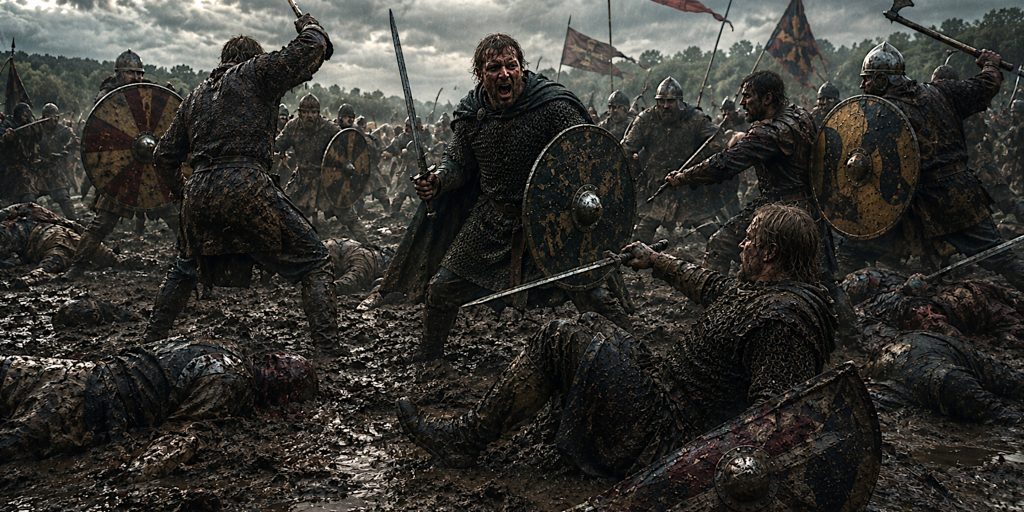
Everything ultimately came down to Assandun in October 1016.
Before the battle, English commander Eadric Streona once again changed sides.
His desertion almost certainly helped decide the outcome.
The English army collapsed after fierce fighting.
Many leading nobles died alongside Edmund.
Although defeated, Edmund escaped alive.
Even after such a disaster he remained determined to continue resistance.
Division of England
Rather than continue fighting indefinitely, Edmund and Cnut negotiated peace.
England was divided.
| Edmund | Cnut |
|---|---|
| Wessex | Mercia |
| London | Northumbria |
| Southern England | Danish-controlled territories |
The agreement probably reflected military exhaustion rather than friendship.
Neither ruler trusted the other.
Everyone understood the arrangement would probably prove temporary.
They were correct.
Death
Edmund died on 30 November 1016, only weeks after the agreement.
He was probably around twenty-six years old.
His death transformed England’s future.
Cnut inherited the whole kingdom soon afterwards.
The cause remains uncertain.
Some medieval writers accused Cnut of arranging murder.
Others suggested illness.
The more dramatic legends describe assassination while using a privy, involving a spear thrust from beneath the seat.
It is certainly memorable.
It is also almost certainly medieval storytelling rather than reliable history.
No contemporary source confirms such an extraordinary death.
Arms and Armour
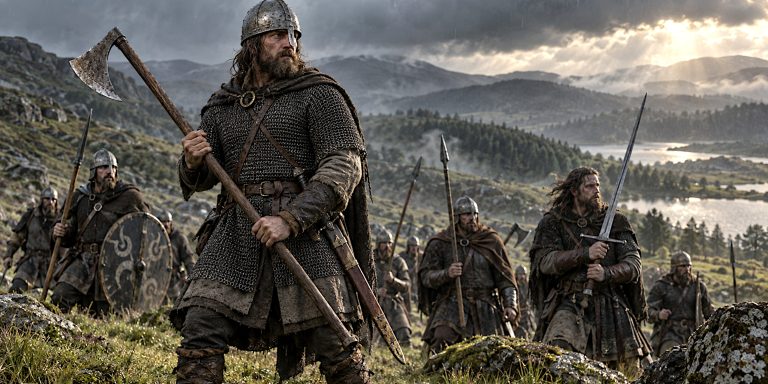
As an Anglo-Saxon king leading armies in 1016, Edmund would have fought using equipment typical of England’s elite warriors.
| Equipment | Description |
|---|---|
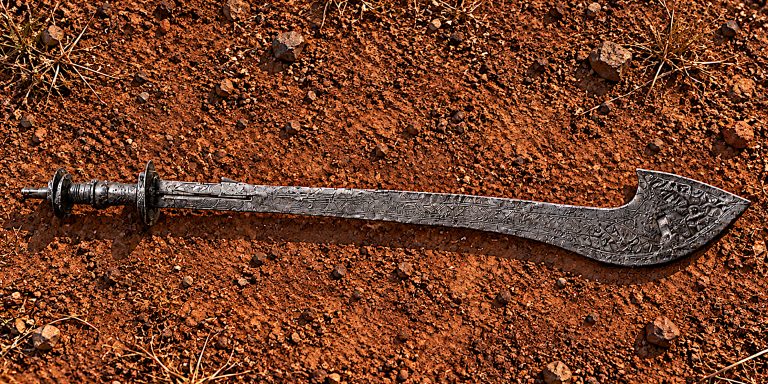
| Sword | Pattern-welded double-edged sword, probably Petersen Type X or closely related form |
| Spear | Primary battlefield weapon |
| Shield | Large round wooden shield with iron boss |
| Helmet | Iron helmet, possibly with nasal protection |
| Knee-length mail hauberk | |
| Seax | Fighting knife worn as a sidearm |
Although modern artwork usually shows kings constantly swinging swords, spears remained the principal battlefield weapon.
The sword represented noble status as much as military practicality.
Military Leadership
Edmund displayed several impressive qualities.
Strengths
- Exceptional personal courage
- Rapid mobilisation of armies
- Strong leadership under pressure
- Refusal to surrender
- Popular support in Wessex
Weaknesses
- Dependent upon unreliable nobles
- Limited resources
- Inherited an already fragmented kingdom
- Faced one of Europe’s finest Viking commanders
Perhaps Edmund’s greatest disadvantage was timing.
He inherited England when years of poor leadership had already weakened the kingdom beyond easy repair.
Contemporary Opinions
The Anglo-Saxon Chronicle praised Edmund’s determination, recording that:
“King Edmund fought boldly for his kingdom.”
The chronicler clearly admired his willingness to continue fighting despite overwhelming odds.
Later writers developed Edmund into an almost legendary warrior whose bravery became more celebrated with each passing century.
Archaeology
Unlike earlier Anglo-Saxon rulers, no confirmed archaeological discoveries can be directly linked to Edmund himself.
However, archaeology has illuminated the world in which he fought.
Important evidence includes:
- Anglo-Saxon weapon burials
- Viking-age battlefield finds
- Coinage issued during his reign
- Defensive earthworks around London
- Excavated settlement evidence across Wessex
The Battle of Assandun remains debated, with several possible locations proposed by historians.
No definitive battlefield has yet been identified.
Coinage
Edmund continued issuing silver pennies based upon his father’s designs.
These coins remain among the most tangible reminders of his reign.
Examples typically feature:
- Crowned royal portrait
- Latin inscriptions
- Moneyer’s name
- Mint location
Their rarity reflects the remarkable brevity of his kingship.
Legacy
Edmund lost his kingdom.
That much cannot be disputed.
Yet measuring rulers solely by victory feels rather narrow.
His resistance prevented England from collapsing without a fight. He inspired loyalty at a time when many nobles sought only self-preservation. His determination also preserved the prestige of the House of Wessex, allowing its bloodline to survive through Edward the Exile and later Edgar Ætheling.
Without Edmund, the story of Anglo-Saxon England might have ended not with one final heroic struggle, but with quiet resignation.
That alone makes him memorable.
What Happened to His Family?
Following Cnut’s victory, Edmund’s sons were sent abroad.
Edward the Exile eventually returned during the reign of Edward the Confessor.
Although the direct royal line never regained the throne, Edmund’s descendants remained central to English dynastic politics until the Norman Conquest.
Where Can You See Artefacts Connected to Edmund Ironside?
Visitors interested in Edmund’s world should consider:
| Site | Highlights |
|---|---|
| British Museum | Anglo-Saxon swords, helmets, coins and jewellery |
| Ashmolean Museum, Oxford | Late Anglo-Saxon coin collections |
| Museum of London | Finds from Anglo-Saxon London |
| Winchester | Capital of the House of Wessex with important surviving archaeology |
Why Edmund Ironside Matters
Edmund Ironside occupies one of history’s most bittersweet positions.
He was not England’s greatest conqueror, longest reigning monarch or most successful politician. What he offered instead was resilience. Faced with an invasion that had already broken much of the kingdom, he refused to accept that defeat was inevitable. Even after repeated setbacks he continued raising armies and leading them into battle, a quality that earned him the nickname “Ironside” and secured his place in English history.
There is something quietly admirable about rulers who continue fighting when success has become unlikely. Edmund knew the odds were against him. He marched anyway. His reign lasted barely seven months, yet it has echoed through more than a thousand years of English history. For the final great king of Anglo-Saxon England, that is no small achievement.