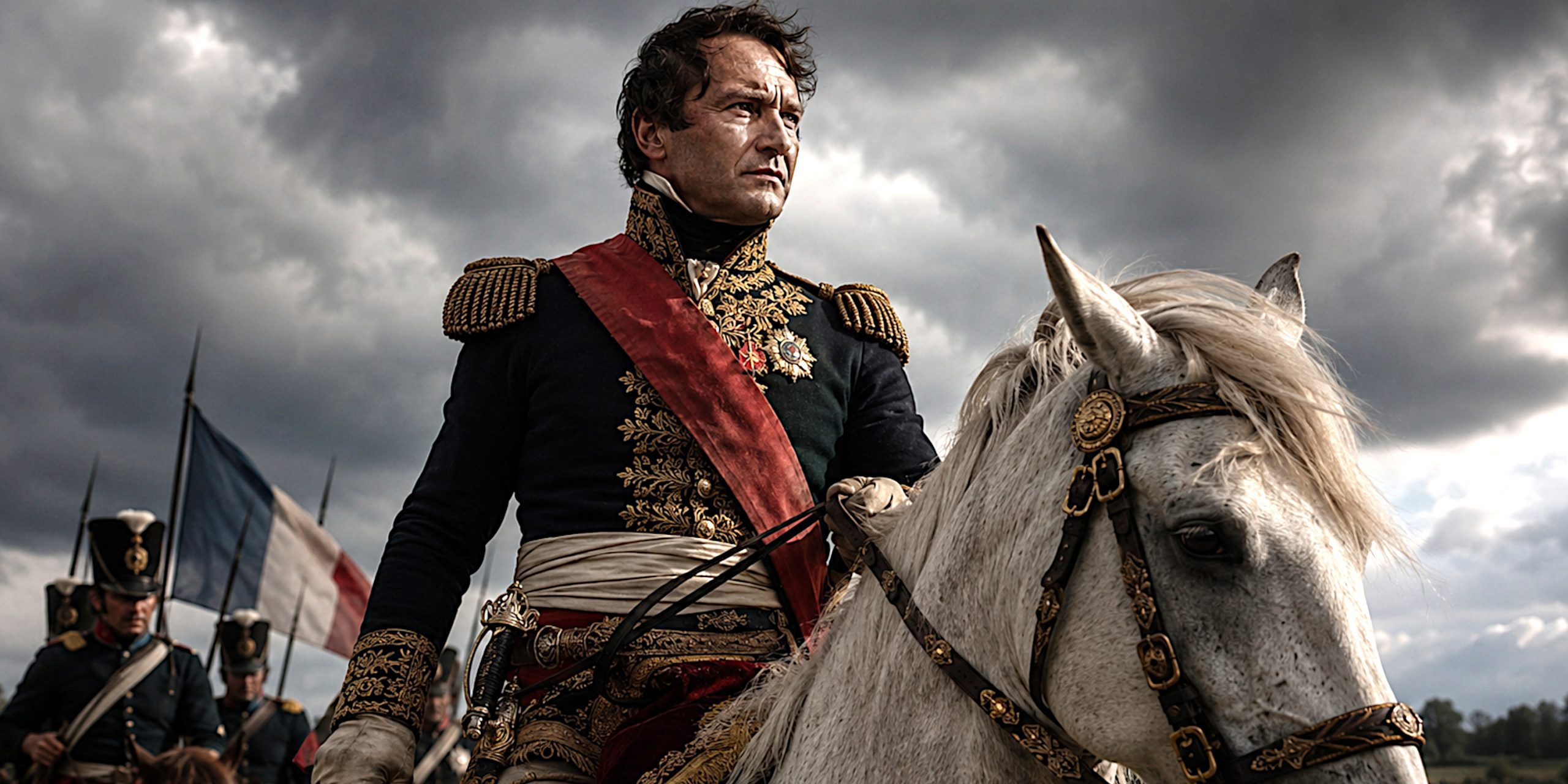
Among Napoleon Bonaparte’s marshals, few inspire as much admiration as Jean Lannes. Others possessed greater administrative talent, political skill, or strategic vision, but none consistently displayed the same combination of courage, tactical instinct, and personal loyalty. Napoleon once remarked that he had found Lannes a pygmy and lost him a giant. It was one of the few genuinely heartfelt tributes he ever offered.
Lannes was not born into privilege. He was the son of a modest dyer from southern France, educated only briefly before entering work as an apprentice. By the time Europe knew his name, kings feared him and soldiers would willingly follow him into almost impossible situations.
Unlike many of Napoleon’s commanders, Lannes never appeared comfortable behind a desk. He belonged on horseback, close to the fighting, often exposing himself to extraordinary danger. Historians sometimes describe him as reckless. I think that misses the point. Reckless men usually die young without achieving much. Lannes repeatedly survived because his courage was matched by remarkable battlefield judgement.
Early Life
Jean Lannes was born on 10 April 1769 in Lectoure, Gascony.
His father, Jean Lannes Sr., worked as a dyer, and the family possessed neither wealth nor noble connections. The French Revolution transformed his prospects. Before 1789 a man of his background would have struggled to become anything more than a non-commissioned officer.
He enlisted in the revolutionary armies in 1792.
Promotion came rapidly because the Revolutionary Army rewarded ability rather than ancestry. Lannes possessed natural authority, physical bravery and an uncanny ability to judge combat situations.
His early campaigns in the Pyrenees demonstrated all three.
Rise Under Napoleon
Napoleon first encountered Lannes during the Italian campaign of 1796.
The Corsican general quickly recognised something exceptional.
Lannes repeatedly volunteered for dangerous assignments, captured enemy positions through aggressive manoeuvres and maintained discipline despite the chaos common in Revolutionary armies.
During the crossing of the Bridge of Arcole, Lannes helped rally troops under devastating Austrian fire. The campaign forged a close relationship between the two men.
Although they occasionally quarrelled, Napoleon consistently relied upon Lannes whenever difficult fighting lay ahead.
He became one of the original Marshals of the Empire in 1804.
Jean Lannes at a Glance
| Detail | Information |
|---|---|
| Full name | Jean Lannes |
| Born | 10 April 1769 |
| Birthplace | Lectoure, Gascony, France |
| Died | 31 May 1809 |
| Age | 40 |
| Rank | Marshal of the Empire |
| Service | French Revolutionary and Napoleonic Armies |
| Major campaigns | Italy, Egypt, Austerlitz, Jena, Friedland, Spain, Aspern-Essling |
| Nickname | Roland of the Army |
Military Career
Lannes participated in nearly every major phase of Napoleon’s rise.
His reputation rested upon offensive warfare, rapid decision making and the ability to inspire exhausted troops.
Unlike some marshals who excelled in independent commands or logistics, Lannes specialised in decisive battlefield action.
He frequently commanded the army’s advance guard.
That role required exceptional confidence because advance formations often encountered the enemy first and faced uncertain situations without immediate support.
Time after time, Lannes proved equal to the responsibility.
Major Battles
| Battle | Year | Role | Outcome |
|---|---|---|---|
| Dego | 1796 | Brigade commander | French victory |
| Arcole | 1796 | Assault leader | French victory |
| Rivoli | 1797 | Division commander | French victory |
| Montebello | 1800 | Division commander | French victory |
| Austerlitz | 1805 | V Corps commander | Decisive French victory |
| Saalfeld | 1806 | Corps commander | French victory |
| Jena | 1806 | Corps commander | French victory |
| Pultusk | 1806 | Corps commander | Tactical draw |
| Friedland | 1807 | Corps commander | Decisive French victory |
| Zaragoza | 1808 | Corps commander | French capture of city |
| Aspern-Essling | 1809 | Corps commander | French defeat |
Military Acumen
Lannes excelled because he understood combat as a constantly changing problem rather than a rigid exercise.
His strengths included:
- Aggressive tactical leadership
- Outstanding battlefield awareness
- Rapid exploitation of enemy weaknesses
- Exceptional morale building
- Calm decision making under heavy fire
- Effective coordination between infantry, cavalry and artillery
Unlike Marshal Ney, whose bravery occasionally bordered on impulsiveness, Lannes generally attacked only after recognising a genuine opportunity.
Napoleon often trusted him with independent responsibilities because he required remarkably little supervision.
Several historians rank him alongside Davout as the Empire’s finest battlefield commander.
There is certainly a compelling argument for that position.
Leadership Style
Lannes shared the hardships of ordinary soldiers.
He marched beside them, slept under the same conditions and exposed himself to the same dangers.
Soldiers respected him because they believed he never demanded anything he would not attempt himself.
He also possessed a famously explosive temper.
Arguments with fellow marshals were common.
His relationship with Napoleon occasionally became strained, particularly when Lannes believed political considerations interfered with military judgement.
Yet mutual respect always endured.
Arms and Armour
Although Napoleonic warfare had moved far beyond the heavily armoured knights of previous centuries, senior officers still carried impressive personal equipment.
Weapons
Sabre de bataille
The curved cavalry sabre remained the marshal’s principal personal weapon while mounted.
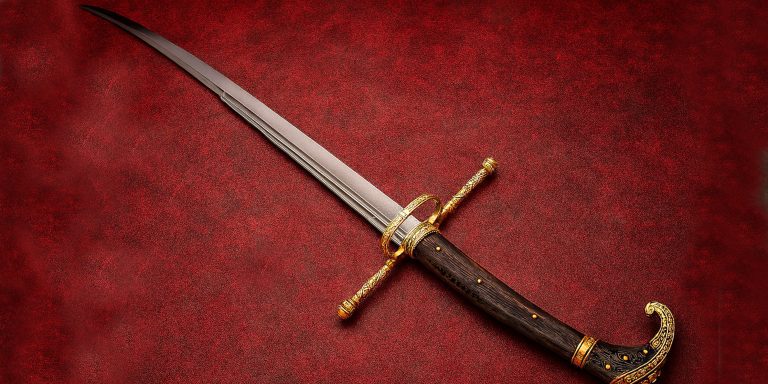
Straight Dress Sword
Senior officers frequently wore elegant straight swords during inspections, ceremonies and headquarters duties.
Pair of Flintlock Pistols
High quality pistols accompanied officers during campaigns.
Small Fighting Knife
Utility blades remained common for everyday military use.
Uniform and Equipment
| Item | Description |
|---|---|
| Marshal’s bicorne | Decorated with gold embroidery and cockade |
| Blue marshal’s coat | Rich embroidery denoting rank |
| Gold epaulettes | Symbol of senior command |
| Crimson sash | Traditional mark of marshal rank |
| High cavalry boots | Designed for extended riding |
| Gloves | Leather riding gloves |
| Spyglass | Essential for battlefield observation |
| Baton of a Marshal | Symbol of supreme military authority |
Unlike medieval commanders, Napoleonic marshals rarely wore armour.
The increasing effectiveness of artillery and muskets rendered plate armour almost entirely obsolete.
Instead, visibility, mobility and command presence became more important.
The Battle of Austerlitz
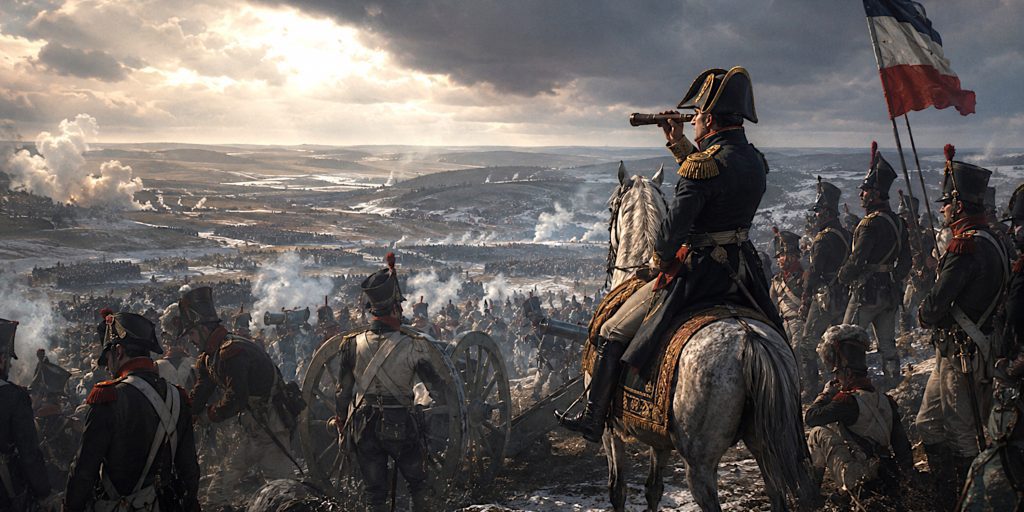
Austerlitz in December 1805 showcased Lannes at his finest.
Commanding V Corps on Napoleon’s northern flank, he faced the experienced Russian General Bagration.
The fighting remained intense throughout the day.
Lannes prevented Russian forces from overwhelming the French left while Napoleon executed his famous attack against the Allied centre.
His calm handling of repeated attacks contributed significantly to one of history’s greatest victories.
The Battle of Friedland
At Friedland in 1807, Lannes displayed perhaps his greatest defensive performance.
Outnumbered for several hours, he delayed the Russian army long enough for Napoleon’s reinforcements to arrive.
This required remarkable tactical judgement.
Every minute gained increased French chances of victory.
When Napoleon finally launched the decisive assault, the Russian army collapsed.
Without Lannes, Friedland might have developed very differently.
The Tragedy of Aspern-Essling
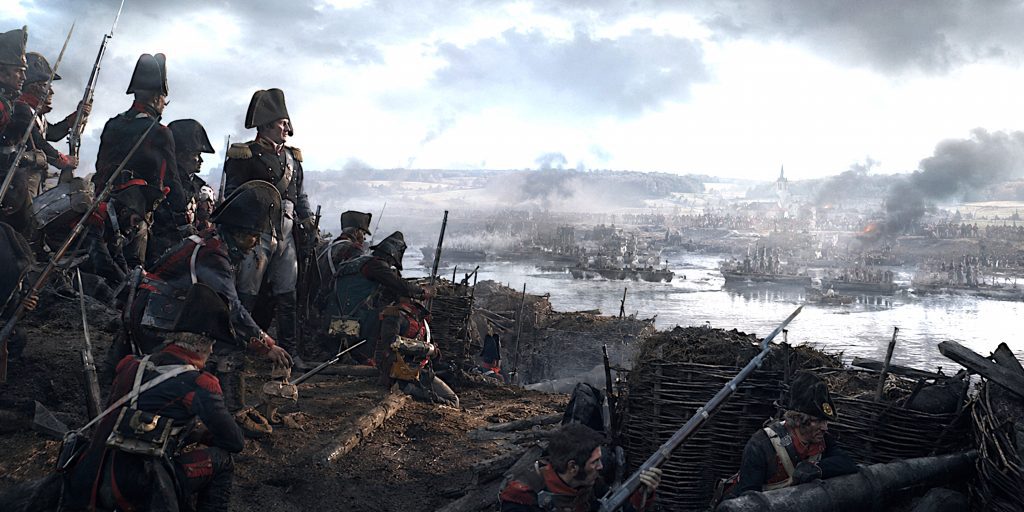
The Battle of Aspern-Essling in 1809 proved fatal.
French forces attempted to cross the Danube and establish a bridgehead against Archduke Charles.
During the fighting, Lannes calmly sat beside Napoleon discussing the battle while cannon fire continued around them.
A ricocheting cannonball struck his legs.
Both limbs suffered catastrophic injuries.
Surgeons amputated one leg, but infection and trauma proved overwhelming.
Lannes died on 31 May 1809.
Napoleon reportedly remained deeply affected by the loss for years afterwards.
Few deaths among his marshals carried greater emotional weight.
Contemporary Views
Napoleon famously declared:
“I found him a pygmy and lost him a giant.”
Marshal Marmont observed:
“His courage inspired confidence in everyone around him.”
General Marbot later recalled the immense affection ordinary soldiers held for Lannes throughout the army.
Family
Lannes married twice and fathered several children.
His second marriage to Louise Antoinette de Guéhéneuc strengthened his social position after becoming one of Napoleon’s leading commanders.
Following his death, Napoleon ensured the family continued to receive honour and financial support.
Death and Burial
Lannes initially received burial honours befitting one of the Empire’s greatest commanders.
His remains were eventually transferred to the Panthéon in Paris, where France commemorates many of its most distinguished national figures.
His name also appears on the Arc de Triomphe among Napoleon’s greatest military leaders.
Artefacts and Where to See Them
Several museums preserve objects connected with Jean Lannes and the Napoleonic period.
Musée de l’Armée, Paris
Visitors can see:
- Marshal’s batons
- Napoleonic uniforms
- Officer swords
- Pistols
- Campaign equipment
- Portraits of Lannes and fellow marshals
It remains one of the world’s finest collections relating to Napoleon’s armies.
Château de Versailles
The palace houses paintings depicting many of Napoleon’s campaigns, including works featuring Lannes during major victories.
Arc de Triomphe
His name is permanently inscribed among the Empire’s greatest commanders.
Panthéon, Paris
His tomb continues to attract historians and visitors interested in Revolutionary and Napoleonic France.
Archaeology and Recent Discoveries
Modern battlefield archaeology has significantly improved understanding of the campaigns in which Lannes fought.
Austerlitz
Metal detecting surveys and landscape analysis have identified concentrations of musket balls, artillery shot and uniform equipment that closely correspond with historical accounts of French and Allied troop movements.
Friedland
Archaeologists have recovered musket ammunition, artillery fragments and military equipment, helping reconstruct the prolonged defensive fighting undertaken by Lannes’ corps.
Aspern-Essling
Investigations along former Danube crossing points continue to uncover cannonballs, musket projectiles, personal equipment and bridge construction remains associated with Napoleon’s unsuccessful crossing.
Digital terrain modelling has also refined historians’ understanding of troop deployments and artillery positions.
Each new discovery reinforces how fiercely contested these battlefields were.
Character and Legacy
Lannes represented the ideal Revolutionary soldier.
He earned promotion through ability rather than birth.
He remained fiercely loyal to friends while refusing to flatter those above him.
His courage bordered on legendary, yet he combined it with clear tactical thinking.
As a historian, I find Lannes fascinating because he never appears manufactured. Some marshals carefully cultivated reputations. Lannes simply fought. His achievements emerged naturally from relentless determination, remarkable instincts and genuine concern for the men under his command.
Napoleon produced many brilliant generals.
Only a handful became indispensable.
Jean Lannes unquestionably belonged in that select company.
Quick Facts
| Fact | Detail |
|---|---|
| Born | 10 April 1769 |
| Died | 31 May 1809 |
| Highest rank | Marshal of the Empire |
| Greatest victories | Austerlitz, Friedland, Jena |
| Fatal battle | Aspern-Essling |
| Famous for | Frontline leadership and tactical brilliance |
| Memorial | Arc de Triomphe and Panthéon, Paris |
| Reputation | One of Napoleon’s finest battlefield commanders |