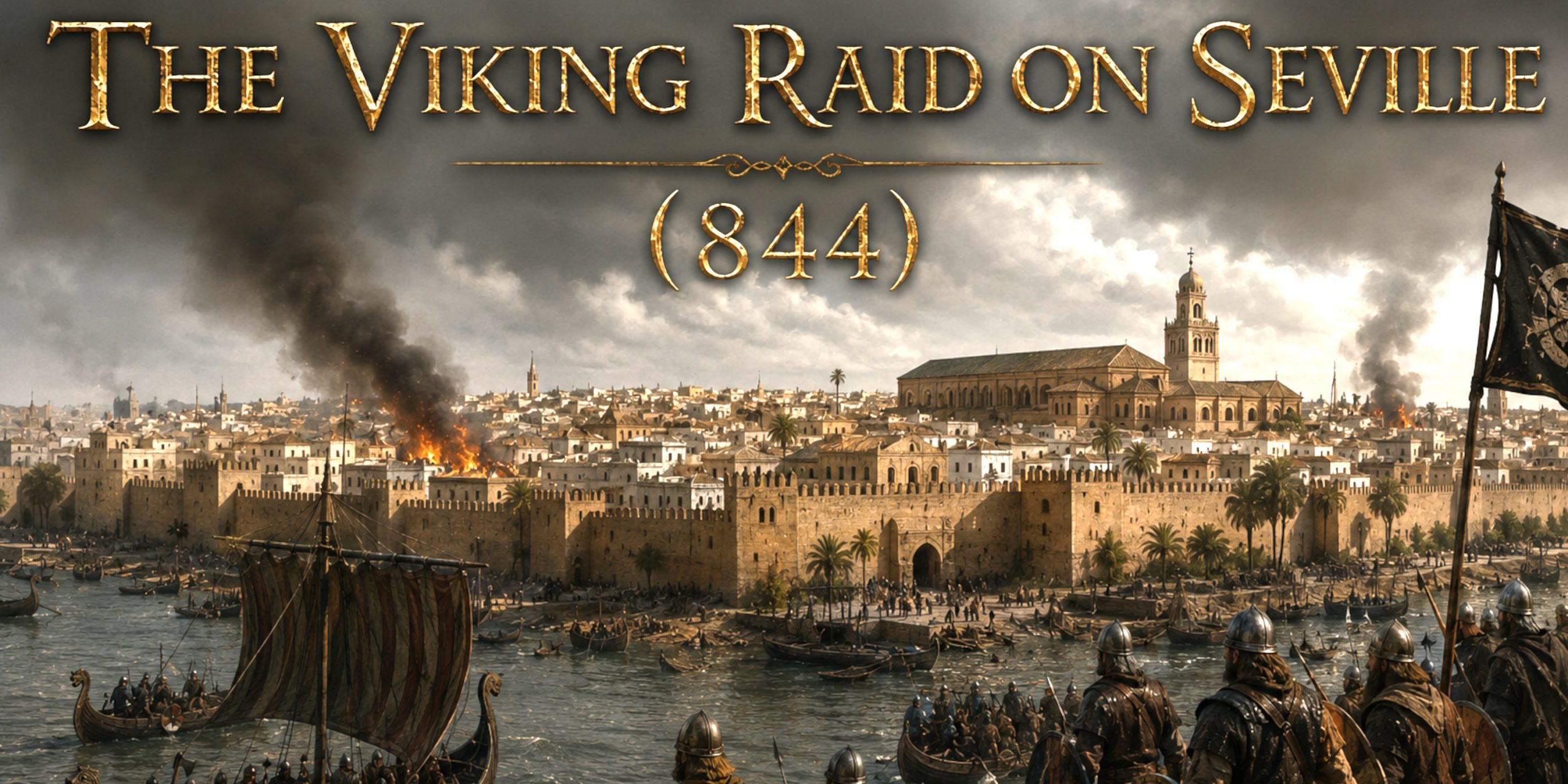
The Viking Raid on Seville in 844 remains one of the most remarkable episodes of the Viking Age. Most people picture Norse longships appearing in England, Ireland, or along the rivers of Francia. Far fewer imagine dragon-headed vessels sailing through the Strait of Gibraltar before striking one of the richest cities in the Islamic world.
Yet that is precisely what happened.
For several weeks, Viking warriors terrorised parts of southern Iberia before being met with a determined military response from the Umayyad Emirate of Córdoba. Their initial success revealed weaknesses in Andalusi coastal defences. Their eventual defeat prompted military reforms that would protect the region for generations.
As a historian, I find this episode endlessly fascinating because it brings together two worlds that rarely appear in popular imagination side by side. Scandinavian raiders and the sophisticated civilisation of Al-Andalus seem unlikely opponents, yet history has little interest in our expectations.
Overview
| Detail | Information |
|---|---|
| Conflict | Viking Raid on Seville |
| Date | Autumn 844 |
| Location | Seville and the Guadalquivir River, Al-Andalus |
| Result | Umayyad victory |
| Opponents | Viking raiders vs Emirate of Córdoba |
| Significance | First major Viking attack on Islamic Iberia |
Background
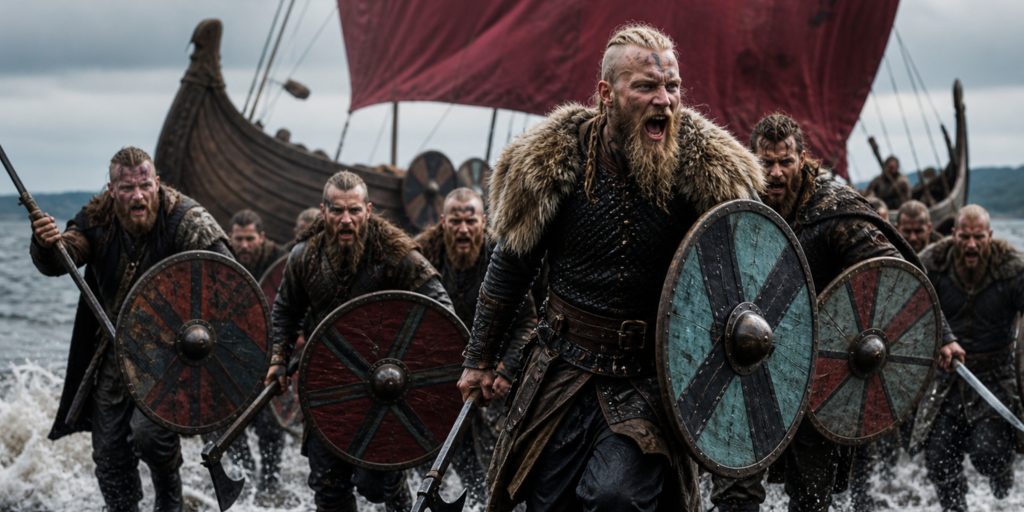
During the early ninth century Viking fleets had become increasingly adventurous.
They had already devastated monasteries in Britain, established bases in Ireland and raided deep into Francia. Rivers became their highways, allowing attacks hundreds of miles inland.
The Iberian Peninsula naturally became another attractive target.
The wealthy cities of Al-Andalus possessed thriving markets, prosperous agriculture and extensive trade links stretching across the Mediterranean. Viking captains had every reason to believe these settlements offered rich rewards.
Before reaching Seville, the raiders attacked settlements along the Galician coast before sailing south around Portugal and entering the Guadalquivir estuary.
This was no accidental voyage. It demonstrated impressive navigation and confidence in operating far from Scandinavia.
Why Seville?
In 844 Seville ranked among the most prosperous cities within the Emirate of Córdoba.
Its advantages included:
- Access to the Guadalquivir River
- Major commercial markets
- Rich agricultural hinterland
- Important religious and administrative centres
- Limited permanent naval defences
Although Córdoba remained the political capital, Seville represented a tempting combination of wealth and accessibility.
Unfortunately for its inhabitants, the Vikings noticed.
Leaders
| Viking Raiders | Emirate of Córdoba |
|---|---|
| Unknown Norse chieftains | Emir Abd al-Rahman II |
| Various local jarls | Governors of Seville |
| Fleet commanders remain unidentified | General Abd Allah ibn Kulayb (among commanders mentioned in later traditions) |
One frustrating aspect of the raid is the absence of named Viking leaders.
Unlike figures such as Ragnar or Björn Ironside, the commanders of this expedition remain anonymous. Medieval chroniclers concentrated far more on the devastation than the identities of the men responsible.
Forces
Viking Raiders
| Element | Estimate |
|---|---|
| Longships | Approximately 50 to 80 |
| Warriors | Around 2,000 to 4,000 |
| Combat Style | Shock raids, river assaults, rapid movement |
| Strengths | Mobility, aggression, surprise |
Umayyad Forces
| Element | Estimate |
|---|---|
| Infantry | Several thousand |
| Cavalry | Strong mounted contingents |
| Archers | Numerous professional units |
| Local militia | Reinforced city defences |
Exact numbers remain uncertain.
Most historians agree that the Vikings initially enjoyed tactical superiority through surprise before the Umayyads assembled overwhelming regional forces.
Battle Timeline
| Date | Event |
|---|---|
| Early Autumn 844 | Viking fleet reaches Atlantic coast of Iberia |
| Shortly afterwards | Raids on Galicia |
| October 844 | Fleet sails into the Guadalquivir |
| Vikings land near Seville | Initial resistance collapses |
| City captured | Widespread looting and destruction |
| Following weeks | Emir Abd al-Rahman II mobilises army |
| Battle of Tablada | Umayyad forces defeat Viking army |
| After the battle | Surviving Vikings retreat to their ships |
| End of campaign | Viking fleet withdraws from Al-Andalus |
How the Raid Unfolded
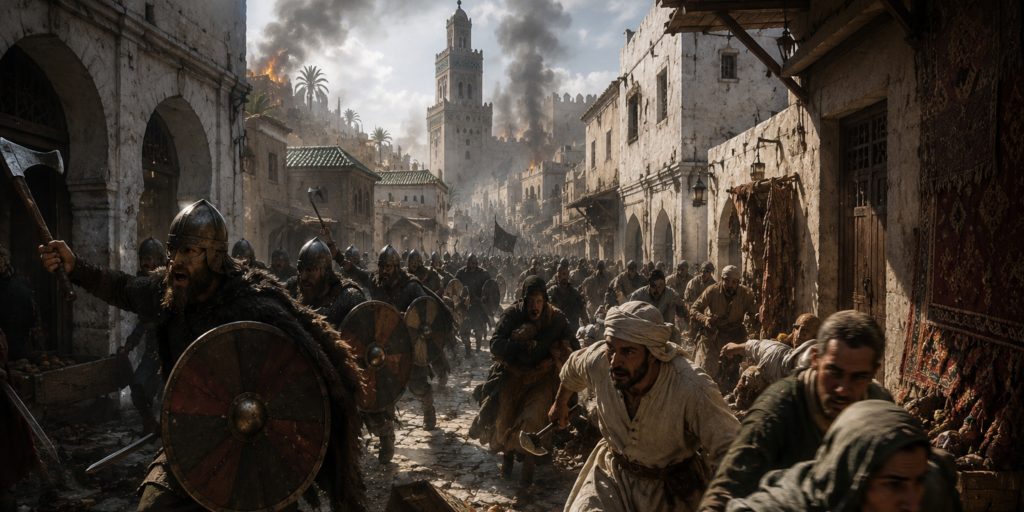
The Vikings advanced rapidly up the Guadalquivir.
Communities along the river had little warning.
When they reached Seville they overwhelmed local resistance and occupied large parts of the city. Churches, warehouses, homes and public buildings suffered extensive damage.
Looting followed the familiar Viking pattern seen across Europe.
Valuables disappeared first.
Livestock followed.
Anyone slow enough to remain behind faced grim prospects.
The occupation lasted several days while the Norse gathered supplies and treasure.
Meanwhile, Emir Abd al-Rahman II refused to panic.
Messengers spread across Al-Andalus gathering troops from multiple provinces. Professional soldiers joined local levies until a sizeable force assembled outside the city.
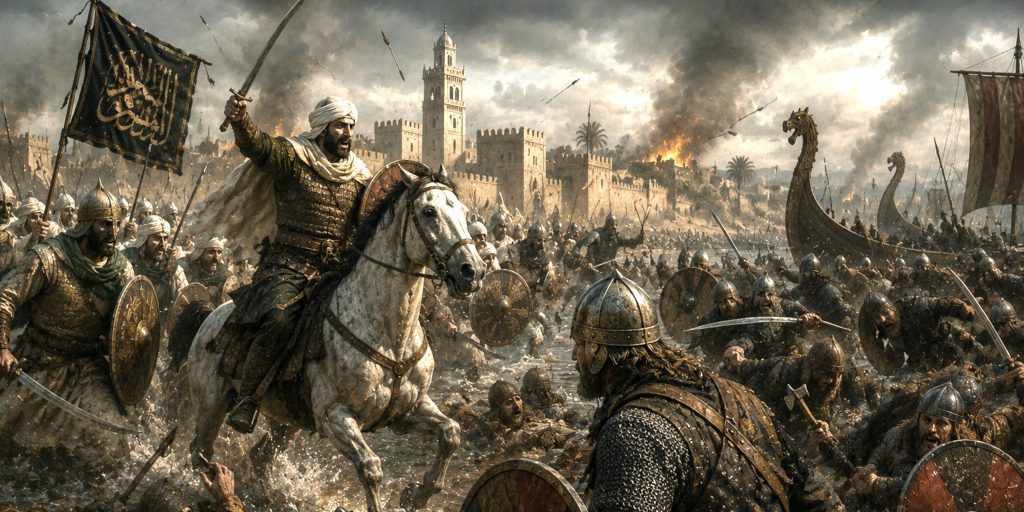
The decisive engagement occurred near Tablada.
Here the Vikings encountered an organised army prepared for battle rather than frightened civilians.
The result proved disastrous for the raiders.
Many longships were burned.
Large numbers of Vikings were killed.
Others were captured or enslaved.
The survivors abandoned the campaign and escaped downriver.
Arms and Armour
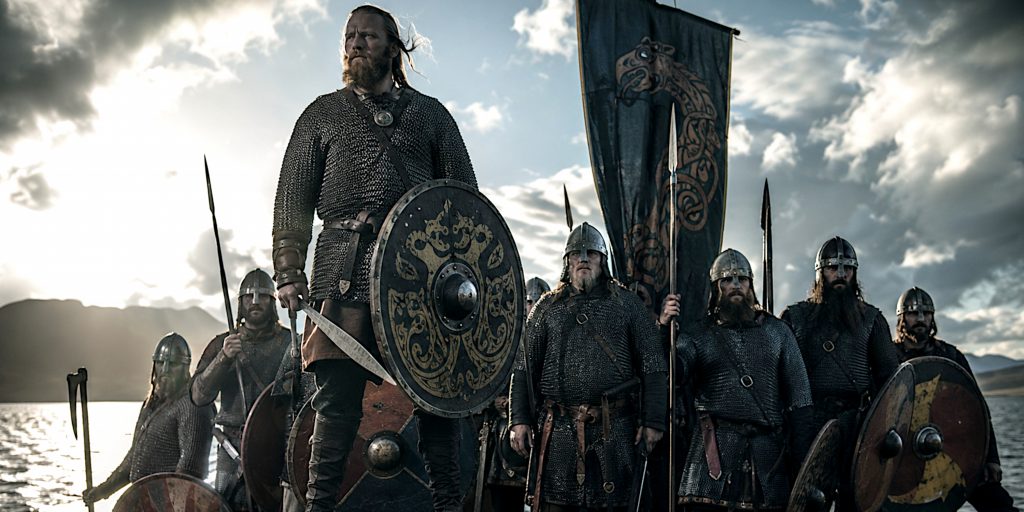
Viking Equipment
| Weapon | Description |
|---|---|
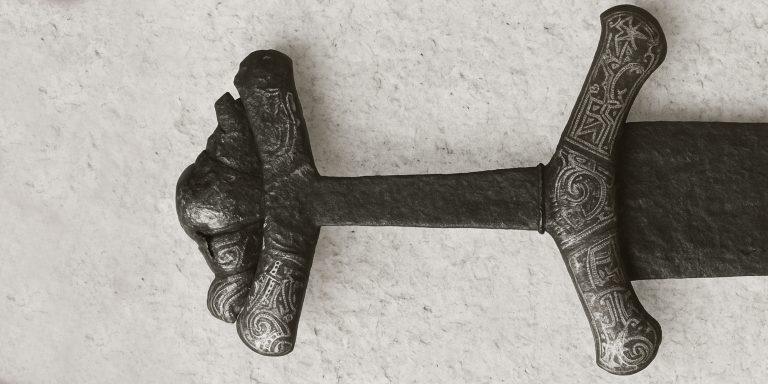
| Petersen Type H sword | Broad double-edged sword common during the ninth century |
| Petersen Type K sword | High quality Frankish influenced blade |
| Seax | Single-edged fighting knife |
| Dane axe | Powerful two-handed axe, although not universal in 844 |
| Spears | Most common battlefield weapon |
| Round shields | Wooden shields with iron boss |
| Bows | Used during raids and skirmishing |
Most Viking warriors did not own expensive swords.
Spears remained the weapon of ordinary fighting men.
A quality sword represented status as much as battlefield effectiveness.
Umayyad Equipment
| Weapon | Description |
|---|---|
| Early Andalusi straight swords | Double-edged cavalry and infantry weapons |
| Saif | Broad term for swords used across the Islamic world |
| Spears and lances | Standard military equipment |
| Composite bows | Highly effective missile weapon |
| Javelins | Used by cavalry and infantry |
| Large shields | Leather-covered wood with metal reinforcement |
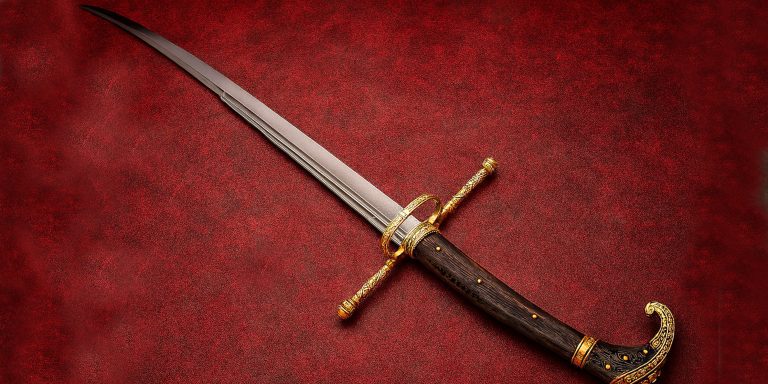
The famous curved Islamic sabres had not yet become dominant.
Straight blades remained the norm across much of the Islamic world during the ninth century.
Armour
Vikings
- Mail hauberks for wealthy warriors
- Iron helmets with simple conical design
- Wool and leather clothing
- Round shields
Umayyad Troops
- Mail armour
- Lamellar armour among elite troops
- Iron helmets
- Quilted protective garments
- Large shields
Tactics and Military Analysis
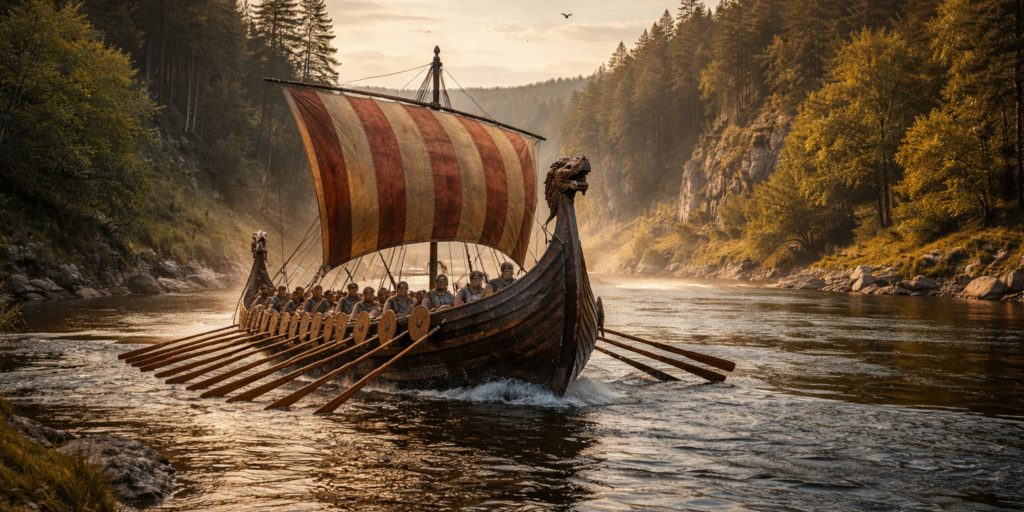
The Vikings relied upon familiar methods.
- River mobility
- Speed
- Surprise
- Psychological shock
- Independent warbands
Against poorly prepared settlements these tactics proved devastating.
Against a coordinated state army they became much less effective.
The Umayyads responded intelligently.
Rather than rushing into battle immediately, Abd al-Rahman II concentrated forces before engaging.
The Battle of Tablada demonstrated disciplined command, effective cavalry and coordinated missile fire.
It also highlighted a recurring weakness of Viking expeditions.
Longships could carry warriors astonishing distances.
They could not easily replace losses once trapped inland.
Contemporary Accounts
The principal descriptions come from Muslim chroniclers writing within Al-Andalus.
One account describes the Vikings as:
“A people resembling wild asses.”
The phrase reflected astonishment at their appearance, behaviour and fighting style rather than providing a careful ethnographic study.
Another chronicle recounts the widespread panic caused by the attack before celebrating the eventual Umayyad victory.
Although naturally favourable towards Abd al-Rahman II, these sources remain invaluable for reconstructing events.
Frankish sources also acknowledge Viking operations around Iberia, helping confirm the broad outline of the expedition.
Archaeology
Unlike famous battlefields in England, direct archaeological evidence for the Raid on Seville remains relatively limited.
Important discoveries include:
- Ninth century defensive improvements along the Guadalquivir.
- Archaeological evidence for rebuilding within parts of medieval Seville.
- Excavations revealing expansion of river fortifications following the raid.
- Material evidence supporting increased naval investment by the Umayyads.
The greatest archaeological legacy is not a battlefield littered with weapons.
It is the transformation of Andalusi military infrastructure.
Legacy
The raid fundamentally changed Umayyad defence policy.
After 844 the emir invested heavily in:
- Permanent naval forces
- Coastal watch systems
- River patrols
- Fortified settlements
- Faster military mobilisation
Future Viking expeditions into Al-Andalus encountered far stronger resistance.
Ironically, the Vikings succeeded brilliantly in the short term but encouraged reforms that made similar attacks much harder.
History has a habit of rewarding victories with overconfidence and defeats with innovation.
Interesting Facts
- The Vikings sailed thousands of miles to reach Seville.
- The expedition travelled through the Strait of Gibraltar.
- Many Vikings captured after the campaign entered slavery.
- Some later traditions suggest a few Scandinavians settled within Islamic territories.
- The raid inspired one of the earliest organised naval defence programmes in medieval Iberia.
Why the Raid Still Matters
The Raid on Seville reminds us that the Viking world stretched far beyond northern Europe.
Their ships connected Scandinavia with Ireland, England, Francia, the Mediterranean, the Byzantine Empire and even the Islamic world.
For the Umayyads, the attack exposed vulnerabilities but also demonstrated the strength of a centralised state capable of recovering quickly.
It was a brief campaign measured in weeks, yet its consequences lasted centuries.
Whenever someone claims Vikings only raided monasteries in England, Seville quietly raises a hand from the back of the classroom and asks to be remembered too.