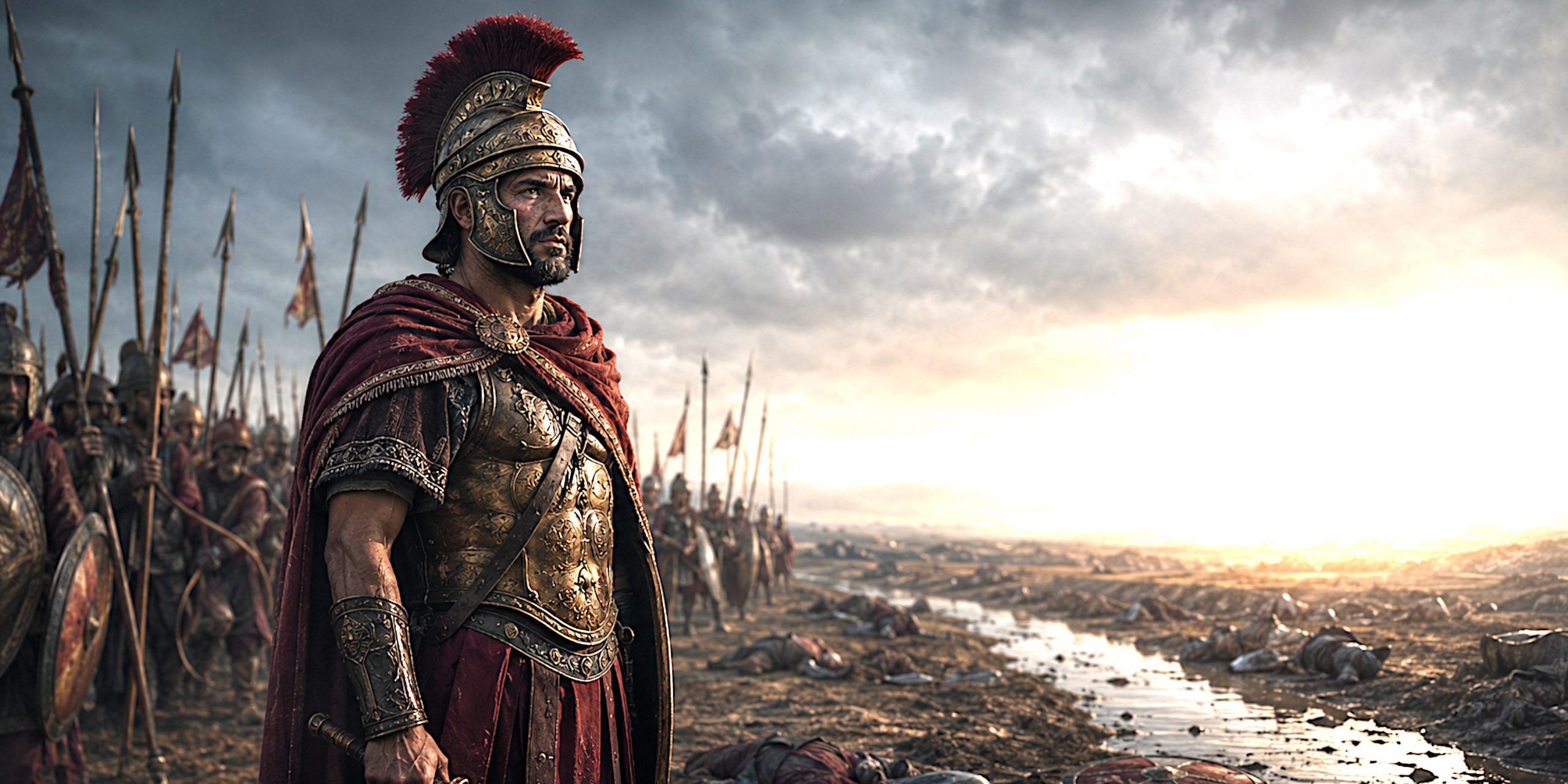
Hasdrubal Barca is one of history’s great “what if” figures. Overshadowed by his older brother Hannibal, he nevertheless proved himself to be an exceptional commander in Spain and one of Carthage’s finest strategists during the Second Punic War. Had he successfully joined forces with Hannibal in Italy, Roman history, and perhaps European history, might have looked very different.
It is tempting to dismiss Hasdrubal as merely Hannibal’s supporting act. Ancient sources certainly devote more ink to his famous brother. Yet when you examine his campaigns, diplomacy and battlefield leadership, another picture emerges. This was a commander trusted with rebuilding armies, governing newly conquered territories and attempting one of the boldest strategic marches of antiquity.
Sadly for Carthage, his story ended not in triumph but on the banks of the Metaurus River.
Who Was Hasdrubal Barca?
Hasdrubal Barca was the second son of the celebrated Carthaginian general Hamilcar Barca and the younger brother of Hannibal Barca. He was born around 245 BC during the turbulent years following the First Punic War.
The Barca family became the driving force behind Carthage’s recovery after losing Sicily to Rome. Rather than accept decline, Hamilcar established a powerful Carthaginian empire in Iberia, rich in silver mines, manpower and strategic resources.
Following Hamilcar’s death, command passed to Hasdrubal the Fair, Hannibal’s brother-in-law. When Hasdrubal the Fair was assassinated in 221 BC, Hannibal assumed command. Hasdrubal Barca became one of his principal lieutenants before eventually receiving independent command in Spain.
Unlike Hannibal, Hasdrubal spent much of his career balancing military operations with administration. He recruited local tribes, maintained alliances and secured the economic foundation that allowed Carthage to continue fighting Rome for years.
Quick Facts
| Detail | Information |
|---|---|
| Born | c.245 BC |
| Died | 207 BC |
| Allegiance | Carthage |
| Father | Hamilcar Barca |
| Brother | Hannibal Barca |
| Major War | Second Punic War |
| Final Battle | Battle of the Metaurus |
| Known For | Campaigns in Iberia and attempted march into Italy |
Early Life and Military Training
Growing up in the Barca household meant growing up surrounded by warfare.
Ancient writers describe Hamilcar as determined to continue resisting Rome even after Carthage’s defeat in the First Punic War. His sons accompanied him during campaigns in Iberia, where they learned leadership firsthand.
Rather than studying military theory from scrolls, Hasdrubal almost certainly learned through experience:
- Cavalry command
- Siege warfare
- Diplomacy with Iberian tribes
- Naval logistics
- Combined arms warfare
- Campaign planning
Like Hannibal, he became fluent in managing the diverse armies that characterised Carthage, composed of Libyans, Numidians, Iberians, Gauls and African veterans.
Military Career in Iberia
After Hannibal crossed the Alps in 218 BC, Hasdrubal inherited responsibility for defending Carthaginian Spain.
This was hardly an easy assignment.
Rome quickly recognised Iberia’s importance. The region supplied silver, soldiers and food that kept Hannibal’s campaign alive.
For years Hasdrubal successfully resisted Roman commanders Publius and Gnaeus Scipio.
His victories included:
- Defeating Roman expeditions
- Recovering rebellious territories
- Recruiting fresh Iberian troops
- Protecting Carthaginian mining operations
- Maintaining communications with Africa
He was not merely defending territory. He was preserving Carthage’s ability to wage war.
The March to Italy
In 208 BC Hasdrubal made one of antiquity’s boldest decisions.
He would follow Hannibal’s route across the Alps.
His objective was simple.
Join his brother.
Combined, their armies might overwhelm Rome.
Remarkably, Hasdrubal succeeded where many expected failure. He crossed Gaul, negotiated with local tribes and traversed the Alps with considerably fewer losses than Hannibal had suffered a decade earlier.
This achievement alone deserves greater recognition.
Unfortunately, Roman intelligence intercepted messages revealing his movements.
Rome realised that preventing the brothers from meeting had become its highest priority.
The Battle of the Metaurus (207 BC)
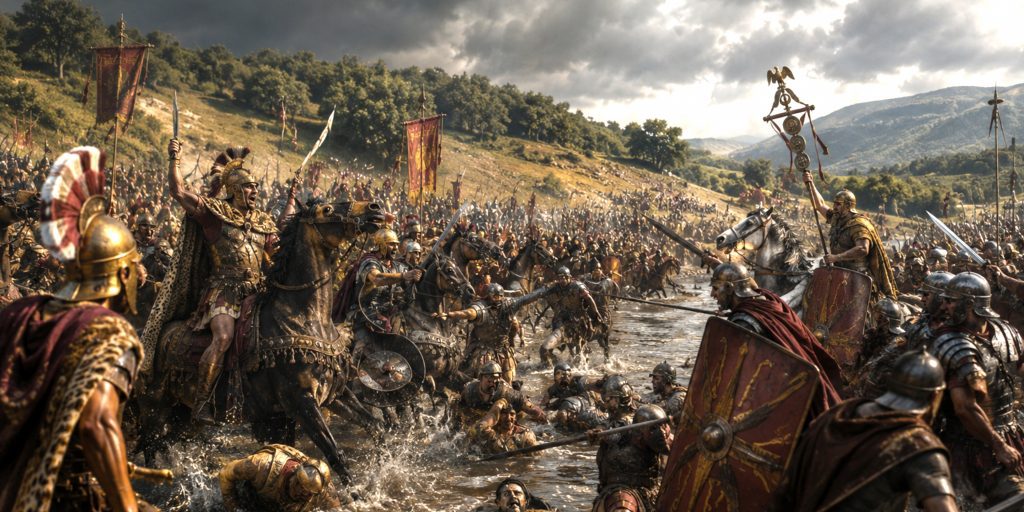
The decisive confrontation came near the Metaurus River.
Roman commanders Marcus Livius Salinator and Gaius Claudius Nero combined their forces against Hasdrubal before Hannibal could reinforce him.
Despite fighting skilfully, Hasdrubal found himself heavily outnumbered.
When defeat became inevitable, ancient accounts suggest he deliberately charged into the Roman lines rather than surrender.
His death effectively ended Carthage’s hopes of winning the Second Punic War.
The following day, Roman troops reportedly threw Hasdrubal’s severed head into Hannibal’s camp.
Even by ancient standards, this was psychological warfare of exceptional brutality.
Hannibal is said to have recognised immediately that Carthage’s fate had been sealed.
Major Battles
| Battle | Date | Result |
|---|---|---|
| Battle of Dertosa | 215 BC | Roman victory |
| Upper Baetis Campaign | 211 BC | Carthaginian success |
| Battle of Baecula | 208 BC | Roman victory but organised withdrawal |
| Battle of the Metaurus | 207 BC | Roman victory, Hasdrubal killed |
Military Skill and Leadership
Hasdrubal has often suffered unfair comparisons with Hannibal.
Very few generals compare favourably with arguably history’s greatest battlefield commander.
Judged independently, however, Hasdrubal demonstrates impressive qualities.
His strengths included:
- Strategic patience
- Excellent logistical planning
- Strong diplomatic ability
- Effective recruitment
- Competent battlefield leadership
- Calm decision making under pressure
Unlike Hannibal, Hasdrubal tended to avoid unnecessary risks.
He preferred preserving experienced troops over seeking dramatic victories.
Modern historians increasingly recognise this as a rational approach rather than evidence of lesser talent.
Arms and Armour
Like senior Carthaginian commanders, Hasdrubal probably fought wearing a mixture of Hellenistic and Iberian military equipment.
Personal Equipment
| Item | Description |
|---|---|
| Helmet | Bronze Hellenistic or Phrygian-style helmet with horsehair crest |
| Body Armour | Bronze muscle cuirass or high-quality linen armour reinforced with bronze scales |
| Shield | Circular cavalry shield or Greek-inspired aspis depending upon campaign |
| Cloak | Purple or richly dyed officer’s cloak indicating command |
Weapons
Hasdrubal likely carried several weapons depending upon circumstances.
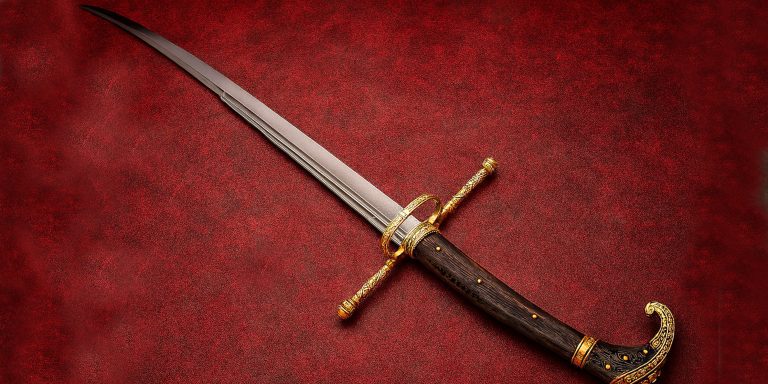
Iberian Falcata
The famous forward-curving Iberian sword remained popular among Carthaginian officers campaigning in Spain.
Its chopping power made it devastating in close combat.
Xiphos
The Greek xiphos remained common throughout the Mediterranean.
Many Carthaginian nobles equipped themselves with this double-edged sword.
Iberian Straight Sword
Straight Celtic and Iberian blades also appeared regularly in Carthaginian service.
These longer cutting swords influenced later Roman designs.
Spear
Like most ancient commanders, Hasdrubal probably relied primarily upon a thrusting spear during battle.
It provided greater reach while directing troops.
The Carthaginian Army Under Hasdrubal
His army reflected the diversity of Carthage itself.
| Troop Type | Origin |
|---|---|
| Heavy Infantry | Libya |
| Cavalry | Numidia |
| Infantry | Iberia |
| Warriors | Gaul |
| Slingers | Balearic Islands |
| War Elephants | North Africa |
Managing such varied forces demanded remarkable organisational ability.
Maintaining unity among soldiers speaking different languages remains one of Carthage’s greatest military achievements.
Leadership Style
Hasdrubal appears to have commanded through steady professionalism rather than flamboyant charisma.
Ancient writers portray him as disciplined, thoughtful and reliable.
He lacked Hannibal’s legendary flair but possessed qualities every successful army requires.
A dependable commander rarely becomes the subject of heroic legend.
He does, however, win campaigns.
Contemporary Views
Several ancient historians commented on Hasdrubal’s abilities.
Polybius regarded him as an experienced commander who handled difficult strategic circumstances with considerable competence.
Livy presents him as determined and courageous, particularly during his final battle.
The Roman respect shown toward Hasdrubal after his death suggests they understood the threat he represented.
Rome celebrated the victory at Metaurus precisely because defeating him had required extraordinary effort.
Archaeology and Recent Discoveries
Although no confirmed personal artefacts belonging to Hasdrubal have survived, archaeology continues to illuminate his campaigns.
Important discoveries include:
- Carthaginian military camps across southern Spain.
- Iberian hill forts destroyed during Punic campaigns.
- Carthaginian silver coin hoards linked to Barca administration.
- Weapons recovered from Second Punic War battlefields.
- Excavations around Baecula identifying troop movements through distribution of weapons and projectiles.
- Ongoing landscape archaeology tracing routes used through the Iberian interior.
Recent work at Baecula has significantly improved historians’ understanding of Hasdrubal’s withdrawal after the battle. Rather than a disorderly retreat, archaeological evidence suggests a disciplined escape that preserved much of his army for the march towards Italy.
This reinforces the picture of a commander who understood operational warfare rather than simply chasing battlefield glory.
Where to See Artefacts
Many artefacts connected with Hasdrubal’s world survive in museums across Spain and Italy.
Notable collections include:
| Museum | Highlights |
|---|---|
| National Archaeological Museum, Madrid | Iberian weapons, Punic coins, armour |
| Archaeological Museum of Cartagena | Carthaginian military finds from New Carthage |
| Jaén Museum | Artefacts associated with Baecula and Iberian campaigns |
| National Archaeological Museum, Naples | Roman and Punic military artefacts from the Second Punic War |
| Bardo National Museum, Tunis | Carthaginian sculptures, weapons, inscriptions and Punic material culture |
Legacy
Hasdrubal’s death altered history.
Had he reached Hannibal with thirty thousand additional troops, Rome would have faced two experienced Barca armies operating together in Italy.
Could Rome have survived?
No historian can answer with certainty.
What we can say is that Roman leaders believed the danger was existential. Their frantic concentration of forces against Hasdrubal speaks volumes.
As a historian, I find Hasdrubal fascinating precisely because he occupies the space between fame and obscurity. He was neither a failed commander nor merely Hannibal’s younger brother. He was an accomplished strategist who inherited an almost impossible task and came remarkably close to changing the ancient world.
History often remembers spectacular victories. It is less generous to capable men whose final gamble failed.
Hasdrubal Barca deserves to be remembered among Carthage’s finest generals, not simply because of who his brother was, but because of what he achieved in his own right.